33 Lovely Mocha Hair 2027 with Curtain Bangs & Layers
Lovely Mocha Hair 2027 features long layered styles and trendy curtain bangs, offering dimension with caramel highlights. See the prettiest looks.

You are eyeing a rich brown at the color wall, the one that reads warm without tipping into red. Mocha holds that middle ground well, deep enough to feel grounded, soft enough to catch light without a heavy gloss commitment. It photographs cleanly and grows out kinder than a harsh black or a fading brunette.
33 looks that actually work, from a ten-minute blowout to a Sunday shag refresh. This collection solves the scroll-and-second-guess problem for anyone with medium to thick density, a round or oval face, or a grow-out line that needs a reset. Which is why Lovely Mocha Hair 2027 fill so many saved boards.
Long, flowing layers in rich mocha brown
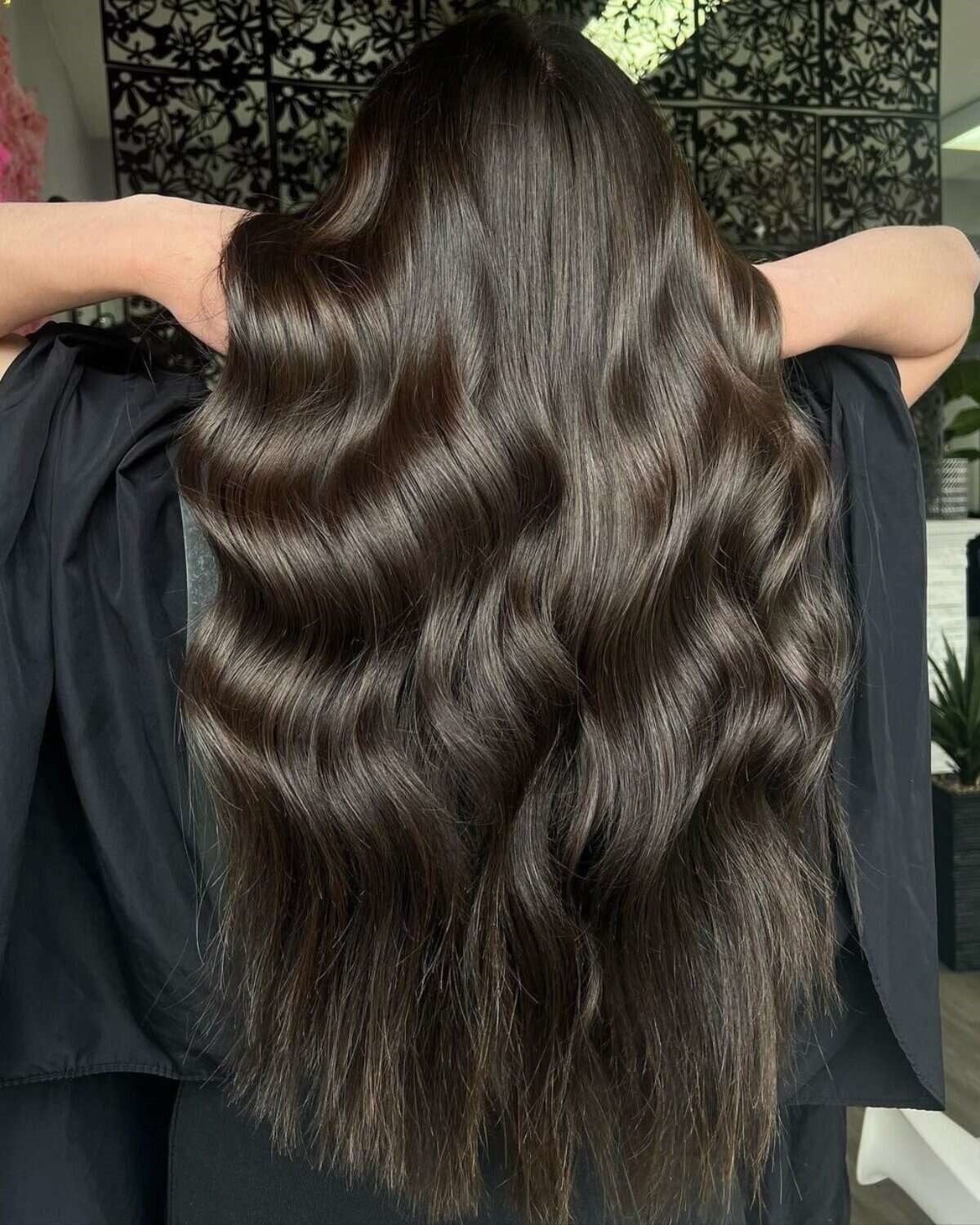
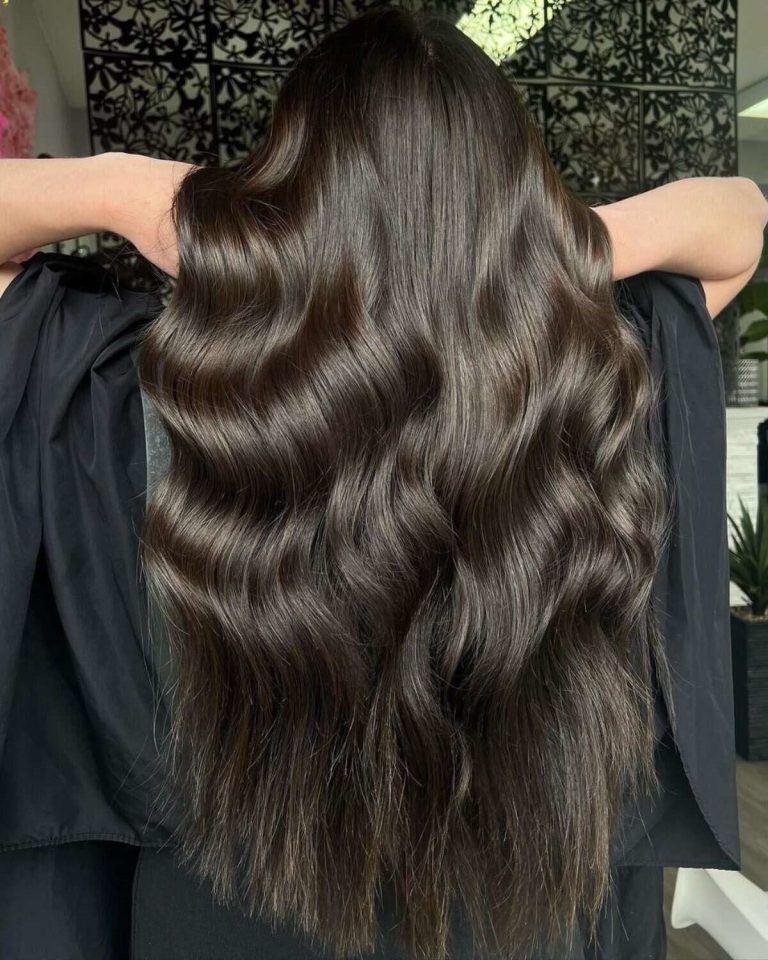
Uniform waves on a thick, wavy base give this cut a neat finish that a straight blowout cannot match. The long layers keep the dark mocha brown color from sitting flat. Each wave catches a different note of the shade. You need starting length at the shoulder or longer to let the layers stack properly. Oval and long face shapes benefit most from the vertical line. Skip it if your hair is fine enough that volume fades by lunch. A large barrel curling iron creates these even waves. Plan a trim every eight to ten weeks so the layers keep their shape.
Book it as: long layers with uniform soft waves in rich mocha brown. The color stays true with a gloss treatment every six weeks, but the cut does the real work here. Thick texture holds the wave pattern longer than you expect.
Soft curtain bangs and waves for face framing
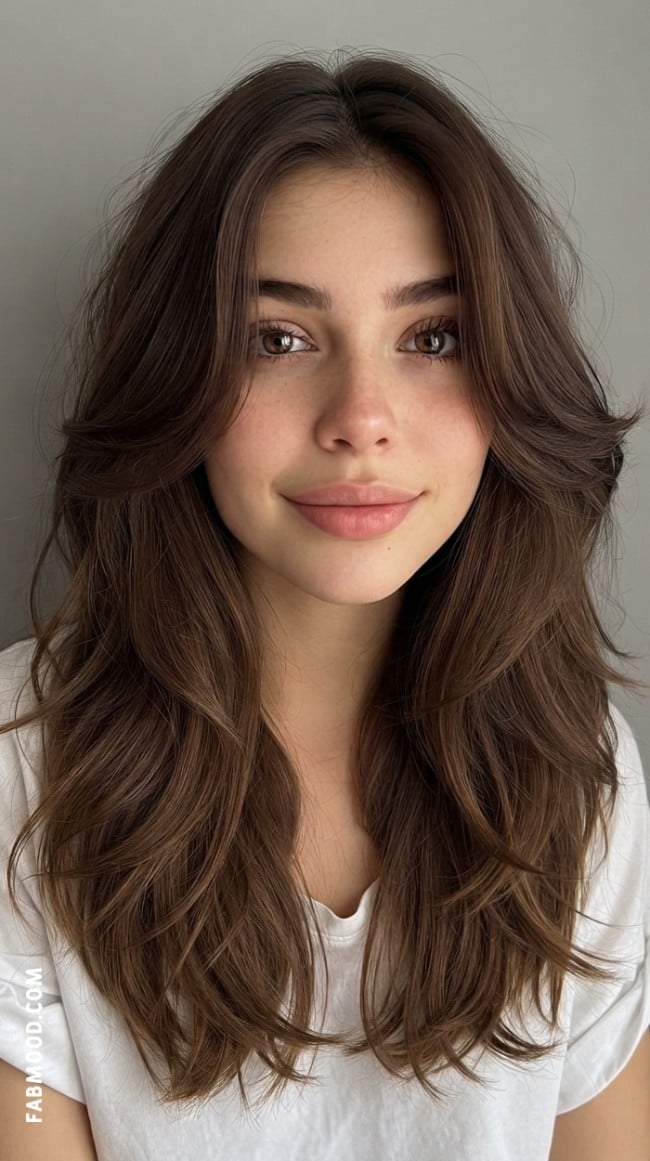
Curtain bangs solve the question of how to soften a haircut without losing length. These sweep away from the center part and blend into the long layers, so the transition looks intentional rather than grown out. The mocha brown base with subtle highlights keeps the front pieces from looking one solid block. Fine to medium density hair at collarbone length works best. The bangs need enough weight to drape but not so much that they push apart. Round faces get the most flattering effect from the diagonal line. The catch: you style the fringe every morning. A round brush and warm air point the bangs where you want them.
Curtain bangs need a trim every four to six weeks or they slide into your eyes. The payoff is face framing that no amount of layering alone can replicate.
Voluminous blowout with face-framing layers and curtain bangs
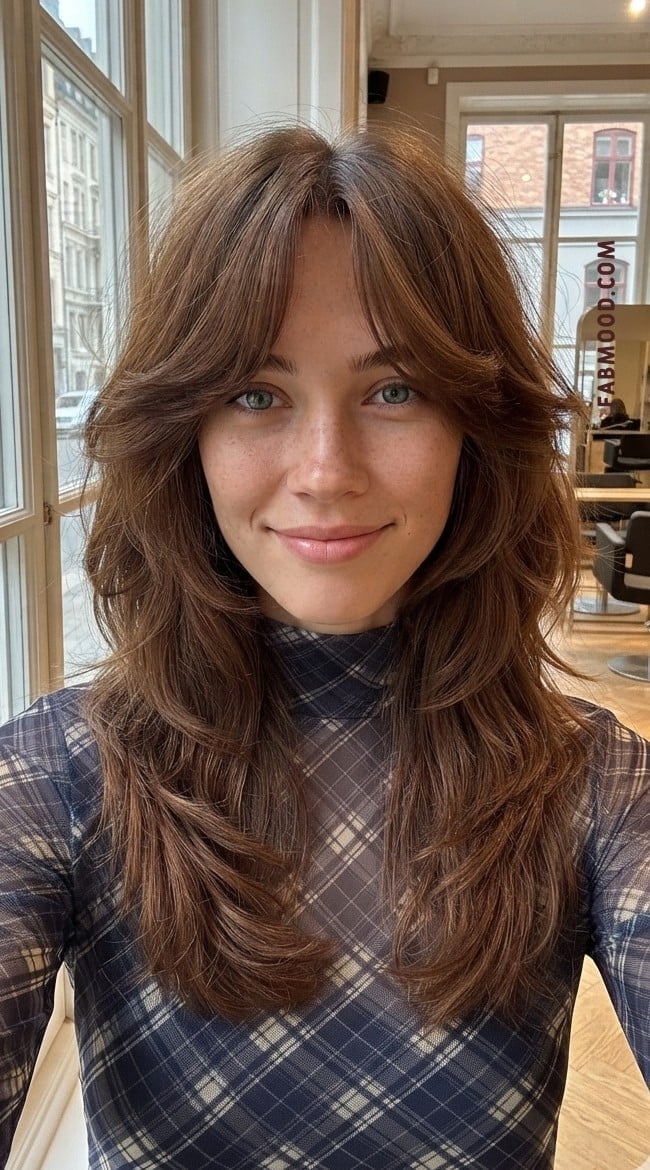
Face-framing layers start shorter at the cheekbone and graduate down through the length, which builds volume at the crown without losing density at the ends. The curtain bangs split at the center part and feather outward, so the silhouette reads full rather than heavy. This is not a cut you replicate at home. The precision of the graduation matters. Ask your stylist for: long face-framing layers with curtain bangs and a voluminous blowout. Thick, wavy texture at collarbone length or longer gives the best lift. Oval and square face shapes benefit from the width at the cheekbone. Skip it if you air-dry daily, because the volume depends on the round-brush technique.
Shag haircut with textured layers and curtain bangs
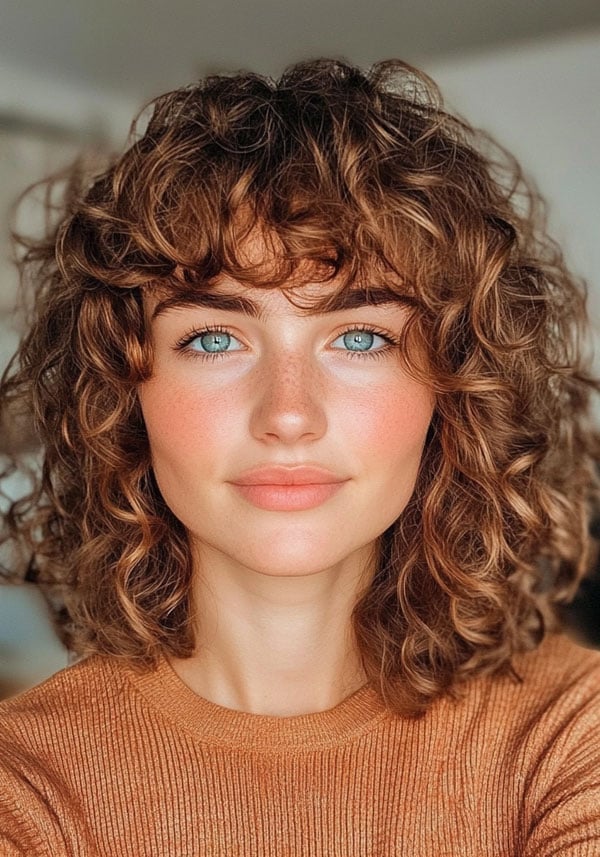
A shag builds its shape from the inside out. The textured layers remove bulk from the interior while keeping the perimeter intact, which lets wavy and curly hair spring up rather than hang down. Curtain bangs cut into the same choppy rhythm keep the front consistent with the rest. The mocha brown base with caramel highlights looks separate strands rather than a single color block. This cut relies on the natural wave pattern, straightening it defeats the purpose. Thick hair of any length suits the shag structure. Most face shapes work because the layers adjust at the jaw.
The technique matters more than the tools. A stylist who understands curl patterns will point-cut the layers so they stack, not stick.
Dimensional mocha with caramel highlights and waves
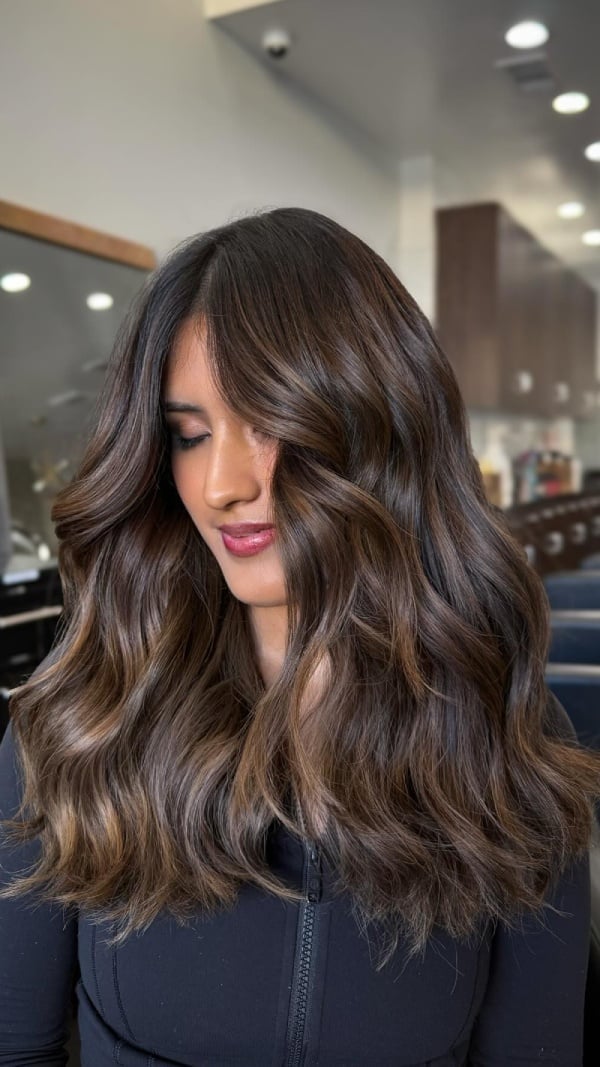
Caramel highlights on a rich mocha base create the same depth that a solid color cannot. The lighter pieces sit closer to the face and at the ends, so the wave pattern has something to catch. Long layers and curtain bangs keep the shape soft while the color does the dimensional work. Thick, wavy hair at collarbone length or longer holds both the wave and the color separation. A large barrel iron or a velcro roller set gives these loose waves without a tight curl pattern. Ask your stylist for: long layers, curtain bangs, mocha brown with caramel highlights, and loose waves.
Use a texture spray on dry hair to separate the highlights from the base. The color fades slower than a full highlight because the base stays dark.
Fine highlights add dimension in blowout
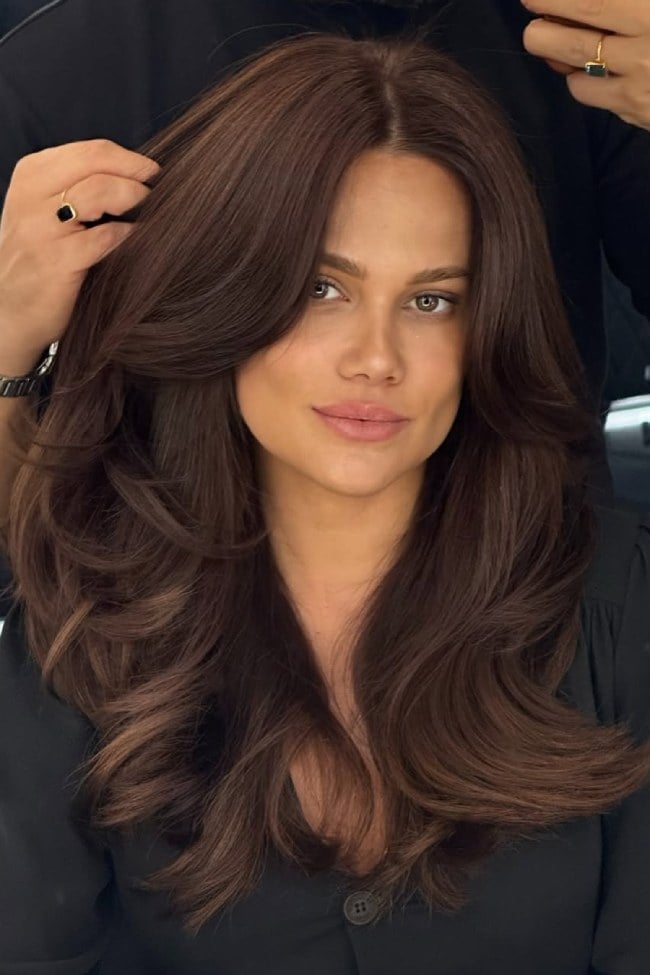
Wondering if fine highlights make enough difference to justify the chair time? On thick, wavy hair like this, they do. The mocha brown base stays rich while the lighter strands catch light at different angles, giving each wave its own shadow. A center part and curtain bangs pull the volume forward rather than spreading it flat across the crown. The catch: this is a blow-dry commitment. Air-drying won’t produce the same lift, and the layers rely on heat to sit properly. Thick, wavy hair starting at collarbone length handles this best.
The layers stay subtle enough that grow-out looks intentional rather than shaggy.
Layered shag with voluminous curtain bangs
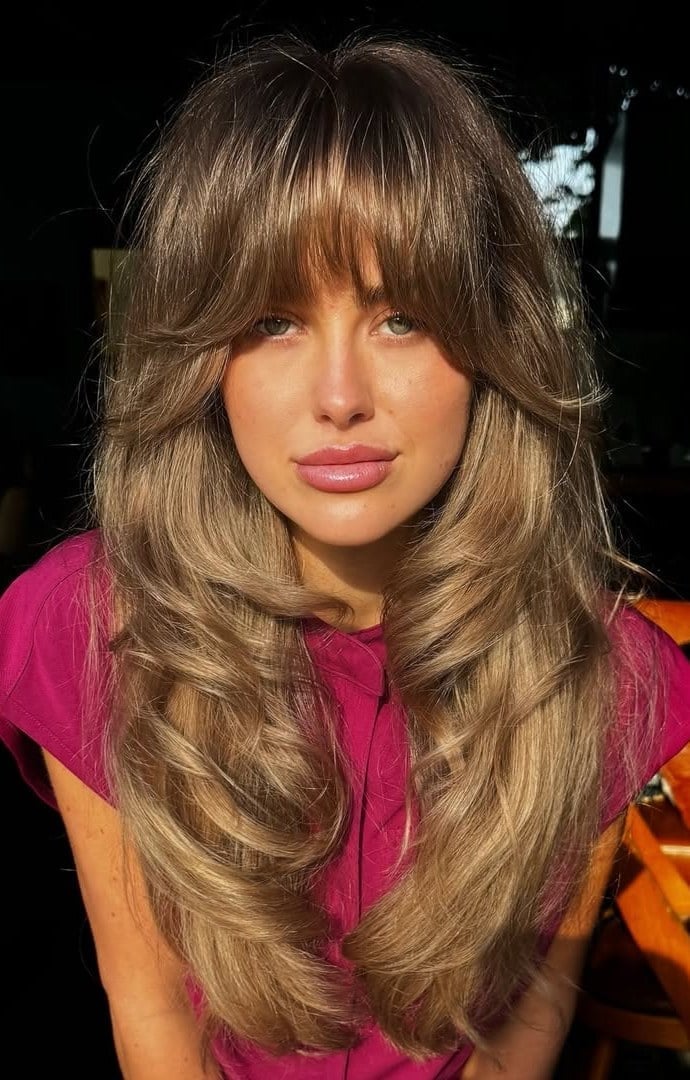
A layered shag with voluminous curtain bangs builds width at the cheekbones and temples, which balances longer lengths below. The mocha base with blonde highlights adds contrast without turning brassy in the first few washes. This cut favors thick, wavy hair that can hold the shag’s internal structure without deflating. Choose a smooth, one-length line or have fine hair that disappears inside heavy layering. A salon cut is required here. The graduation between layers determines whether the shape reads intentional or accidental.
Air-dried wavy shag with wispy bangs
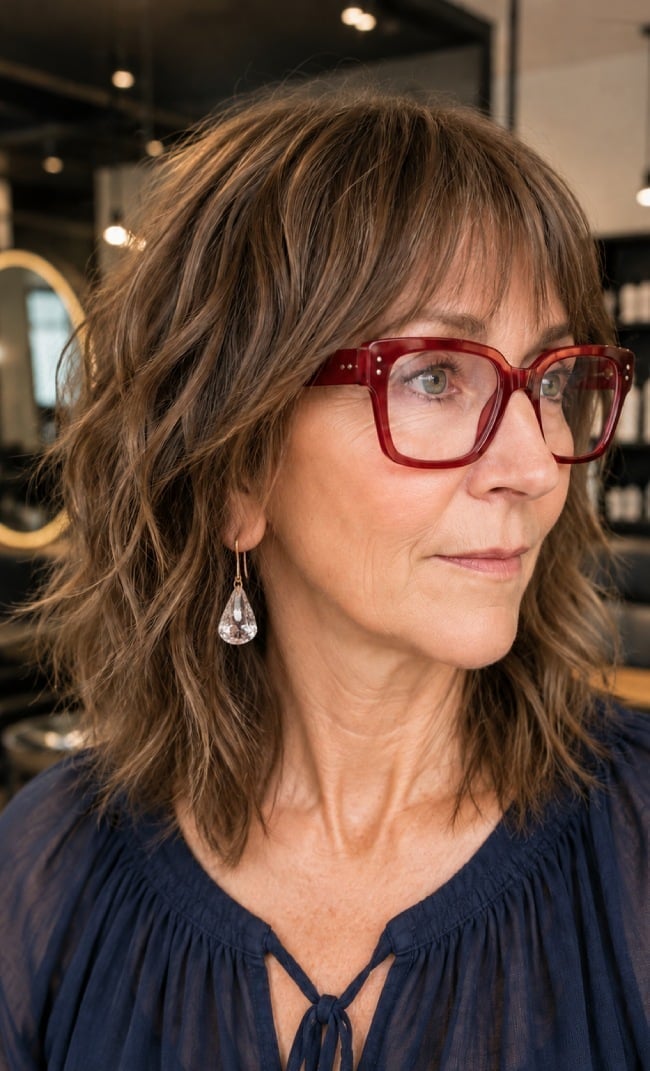
A shag cut with wispy bangs and an air-dried finish relies on the weight of the layers doing the work. The mocha brown base with subtle highlights keeps the texture readable rather than muddy. This shape holds best on medium-density wavy hair.
The upkeep is the appeal. No round brush, no hot tools, just damp hair, a scrunch, and time. Wispy bangs dry faster than the rest, so check them first before leaving the house.
Center parting with air-dried waves

Compared to a full blowout, this center part with air-dried waves looks lower effort but not lower maintenance. The long layers and curtain bangs are cut so the shorter front sections fall naturally around the jaw, which softens the transition to the longer length behind. Dark brown with subtle caramel highlights prevents the base from looking flat. Thick, straight hair starting at collarbone length holds these soft waves best. Very fine hair will lose the wave pattern within an hour, making the shape look more like uneven ends than intentional texture. A leave-in conditioner keeps the strands separated without stiffness.
Blunt bangs on a layered mocha cut
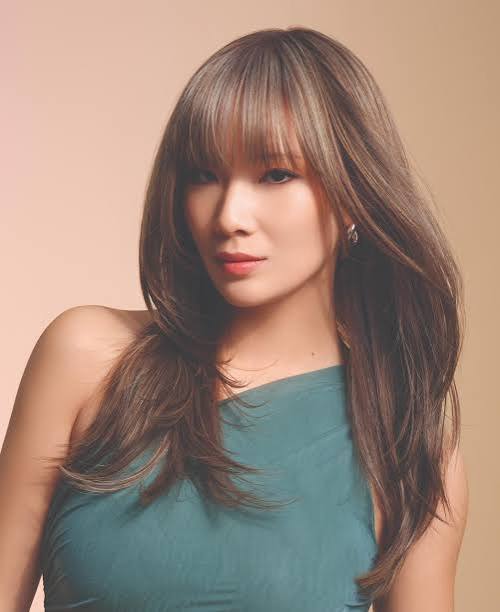
Blunt bangs require precision cutting and a tolerance for weekly trims. On this layered mocha cut, the bangs hit just above the brow, and the thin lighter strands woven through the base keep the heavy line from looking dense. Fine to medium wavy hair starting at shoulder length carries this shape well. The drawback: blunt bangs reveal every split end and grow unevenly fast. A DIY trim between salon visits is risky. One crooked snip and the whole line needs resetting. Tell your stylist: layered cut, blunt bangs, mocha brown with subtle highlights. The rest of the hair air-dries, but the bangs need a quick blow-dry each morning.
Mocha with ash highlights and a soft blowout
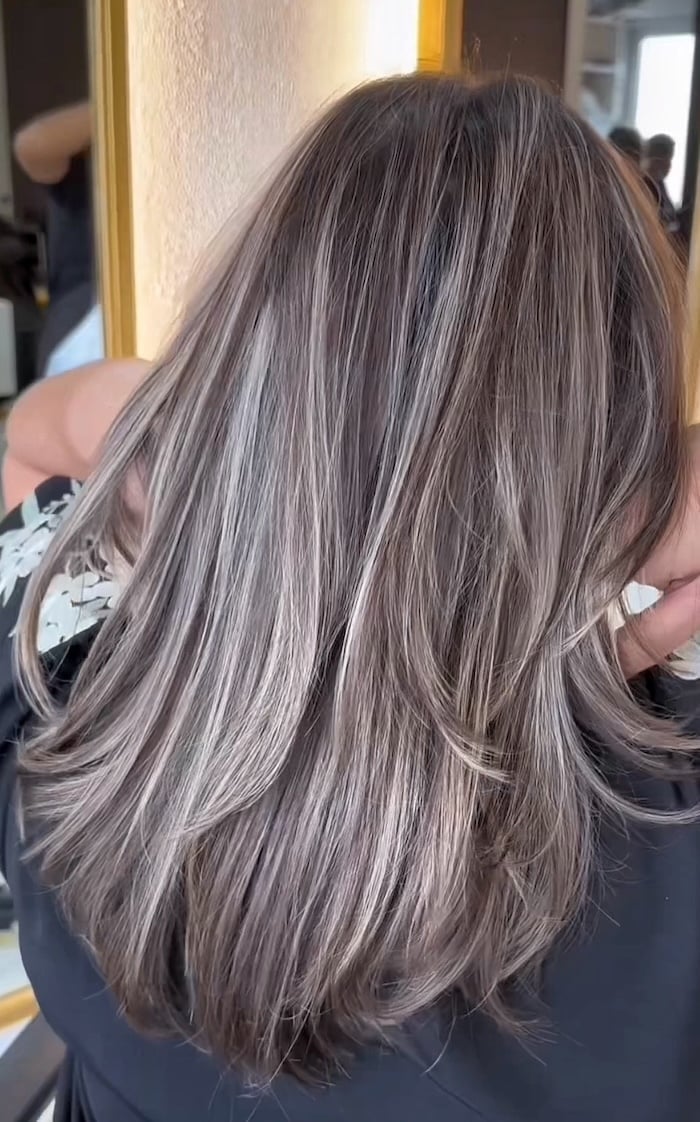
Warm mocha meets ash highlights, and somehow it works. This layered cut keeps fine, wavy hair from looking flat by adding contrast at the ends. The middle part and soft blowout create a neat finish that holds its shape. A smoothing serum before drying controls flyaways. Book it as: layers, mocha brown with ash highlights, soft blowout. Skip this if you prefer warm tones or have very thick hair. The ash needs a fine canvas to read clearly.
Collarbone bob with blonde highlights
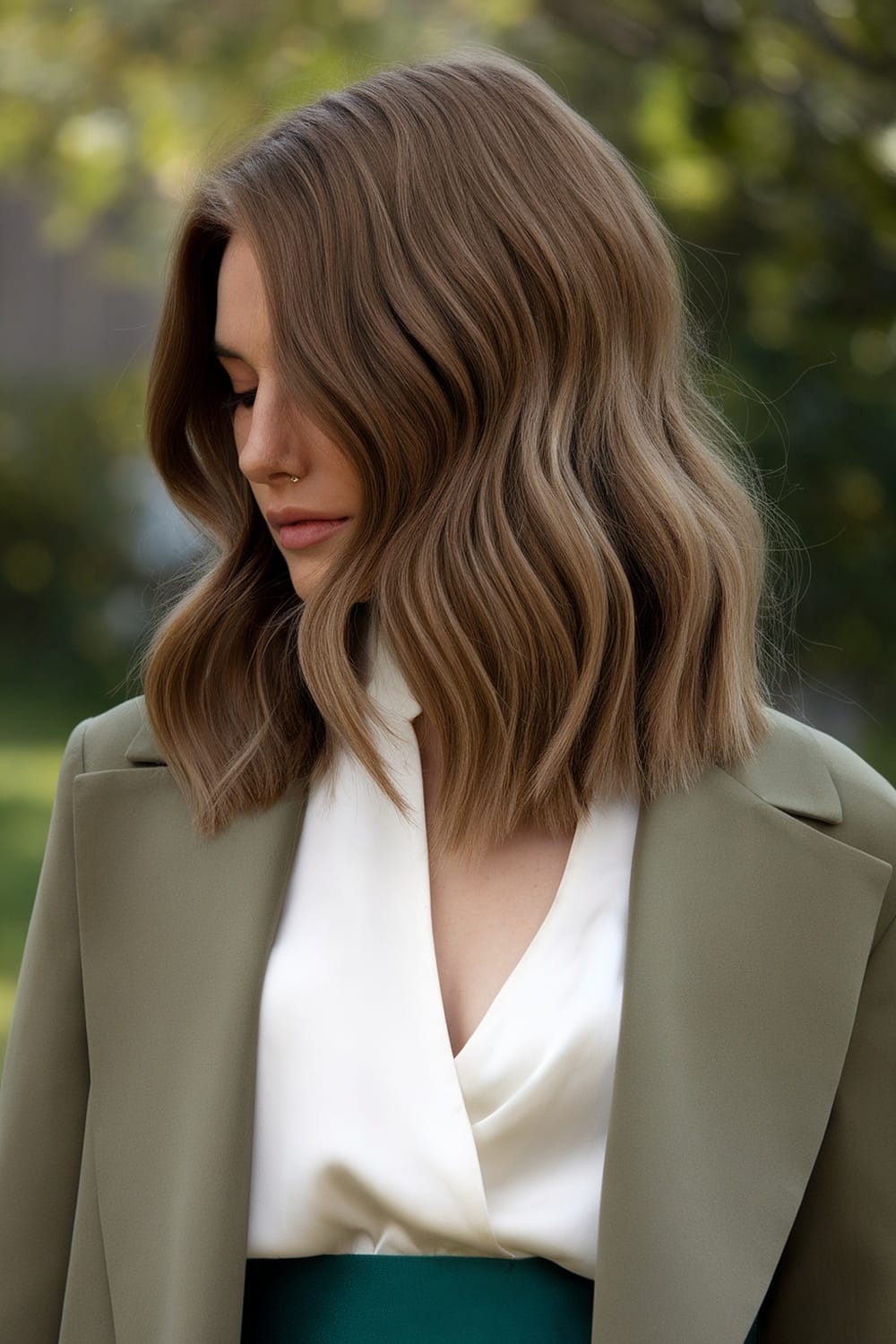
A collarbone bob trades length for impact. The subtle layers keep the shape from feeling heavy, while blonde highlights lift the mocha brown base. Loose waves and a middle part give it a relaxed finish. It suits fine to medium density hair that needs more body. Pass when you dislike highlights or want hair past your shoulders.
Chin bob with sleek straight style
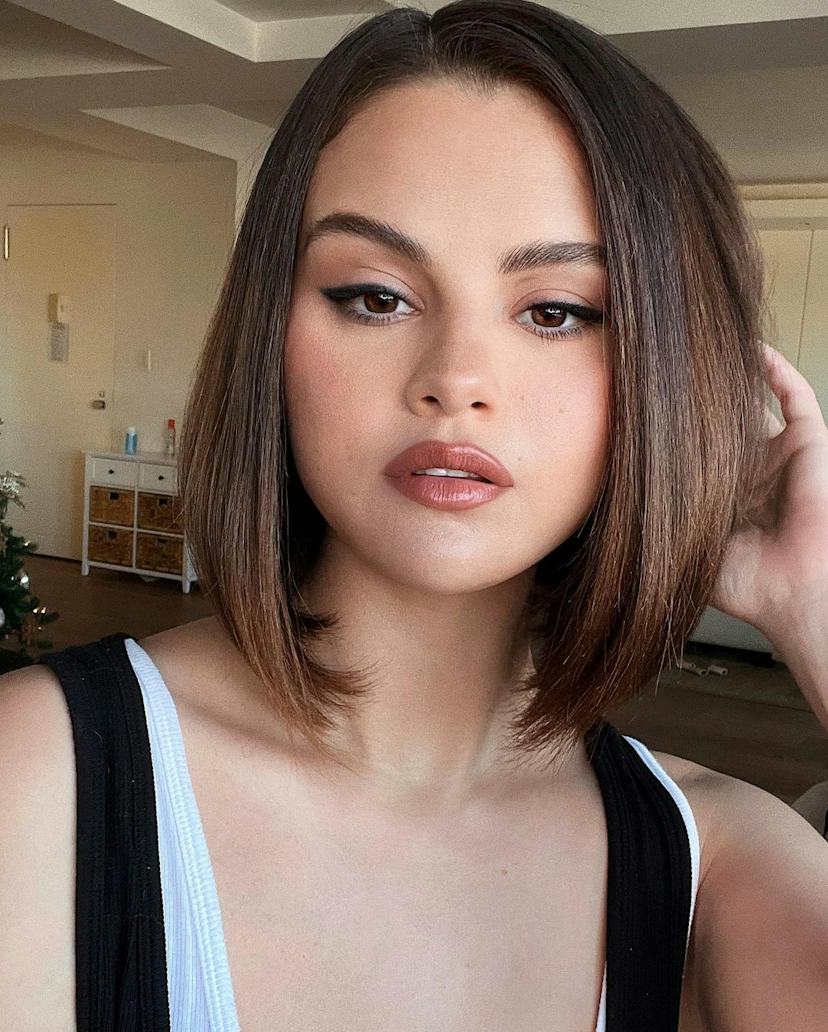
Precision matters here. A blunt bob at the chin with a middle part and sleek straight finish shows every uneven line. Caramel highlights add subtle depth to the mocha brown. It works best on fine, straight hair that holds a crisp edge. A flat iron seals the ends for that sharp look. Layers or wavy texture can disrupt the blunt line. The blunt line needs smooth hair to land correctly. A salon cut is required for the geometry.
Lob with soft waves and highlights
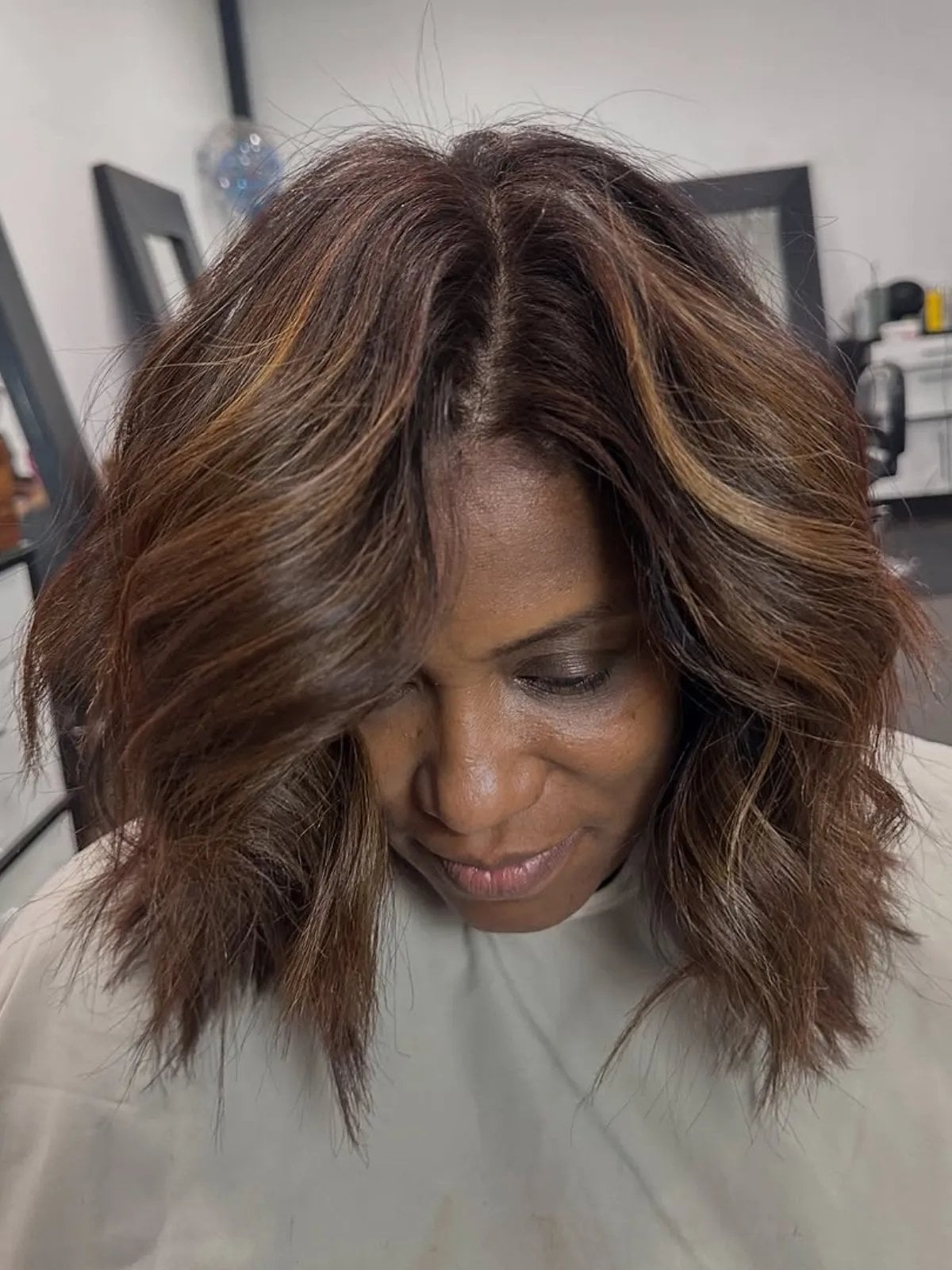
Words matter when you sit down. Tell your stylist: lob with layers, mocha brown with caramel highlights, soft waves. The collarbone length keeps it flexible for both work and weekends. Layers add movement without losing the shape. Caramel highlights warm the base without a full color commitment. A texturizing spray refreshes the waves between washes.
Lighter strands add dimension in waves
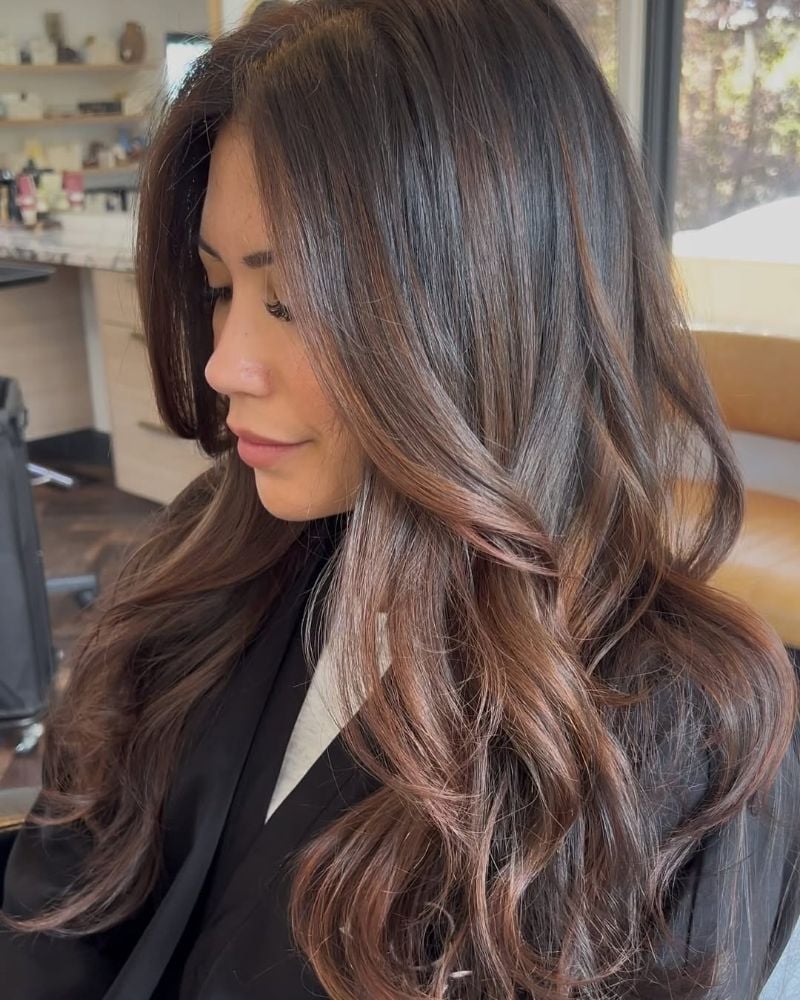
Long layers and a soft blowout create a shape that moves with you. The mocha brown base is rich enough to anchor thin lighter strands woven through the ends. Gentle waves catch light differently with each turn. It suits thick, wavy hair that needs weight removed. A smoothing cream and round brush build the blowout in under twenty minutes. The subtle highlights grow out naturally, so you can stretch salon visits to eight weeks.
Face-framing layers in dark mocha brown
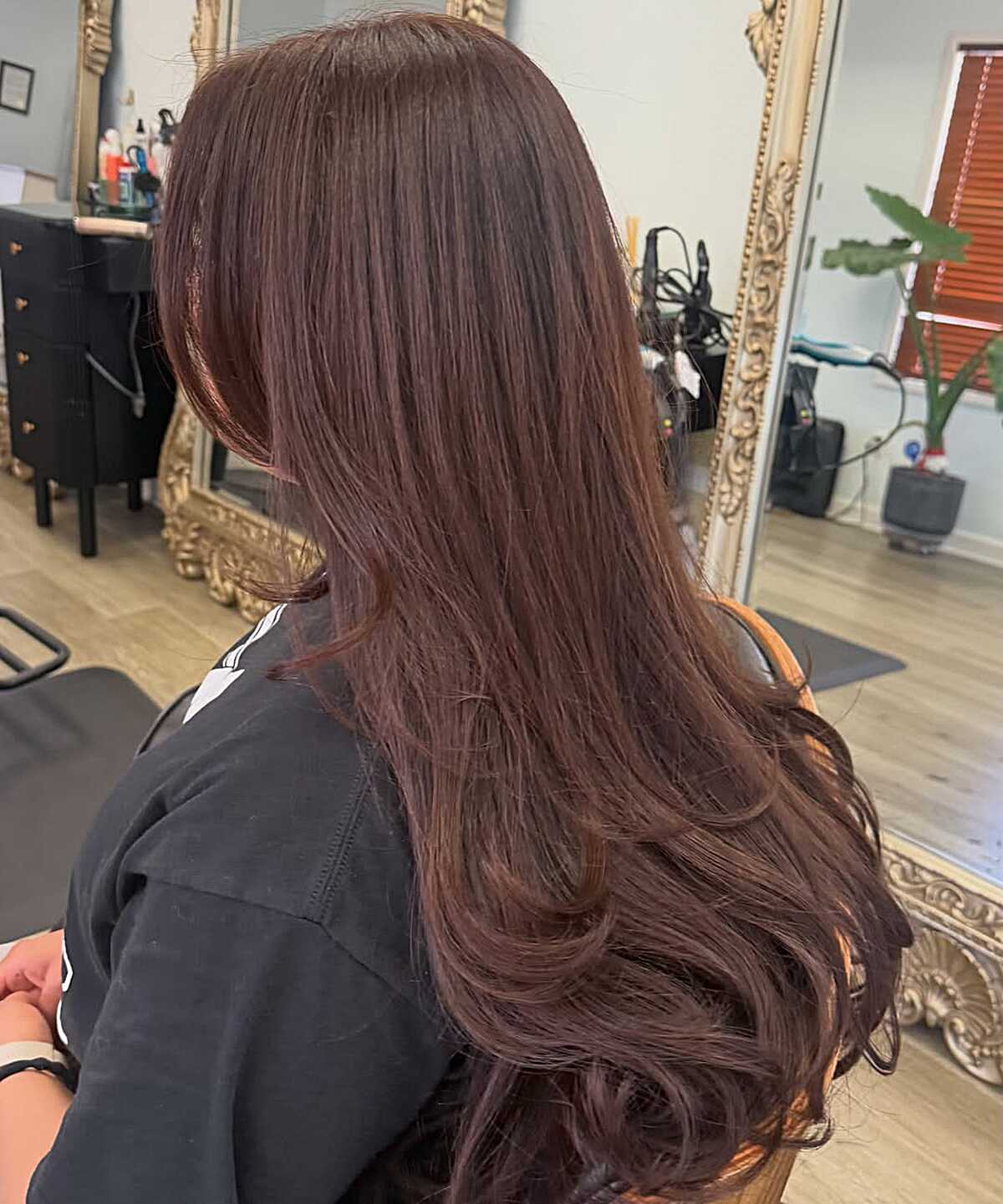
Long pieces around the face sweep to the side, a design choice that softens the jaw without losing length. The layers start just below the chin, so the dark mocha brown color stays rich and deep through the ends. A middle parting and a smooth blowout with subtle waves keep the texture controlled. Blunt cuts or very fine hair may not suit this style. Tell your stylist: long face-framing layers, dark mocha brown, smooth blowout with waves.
Loose flowing waves in rich dark mocha brown
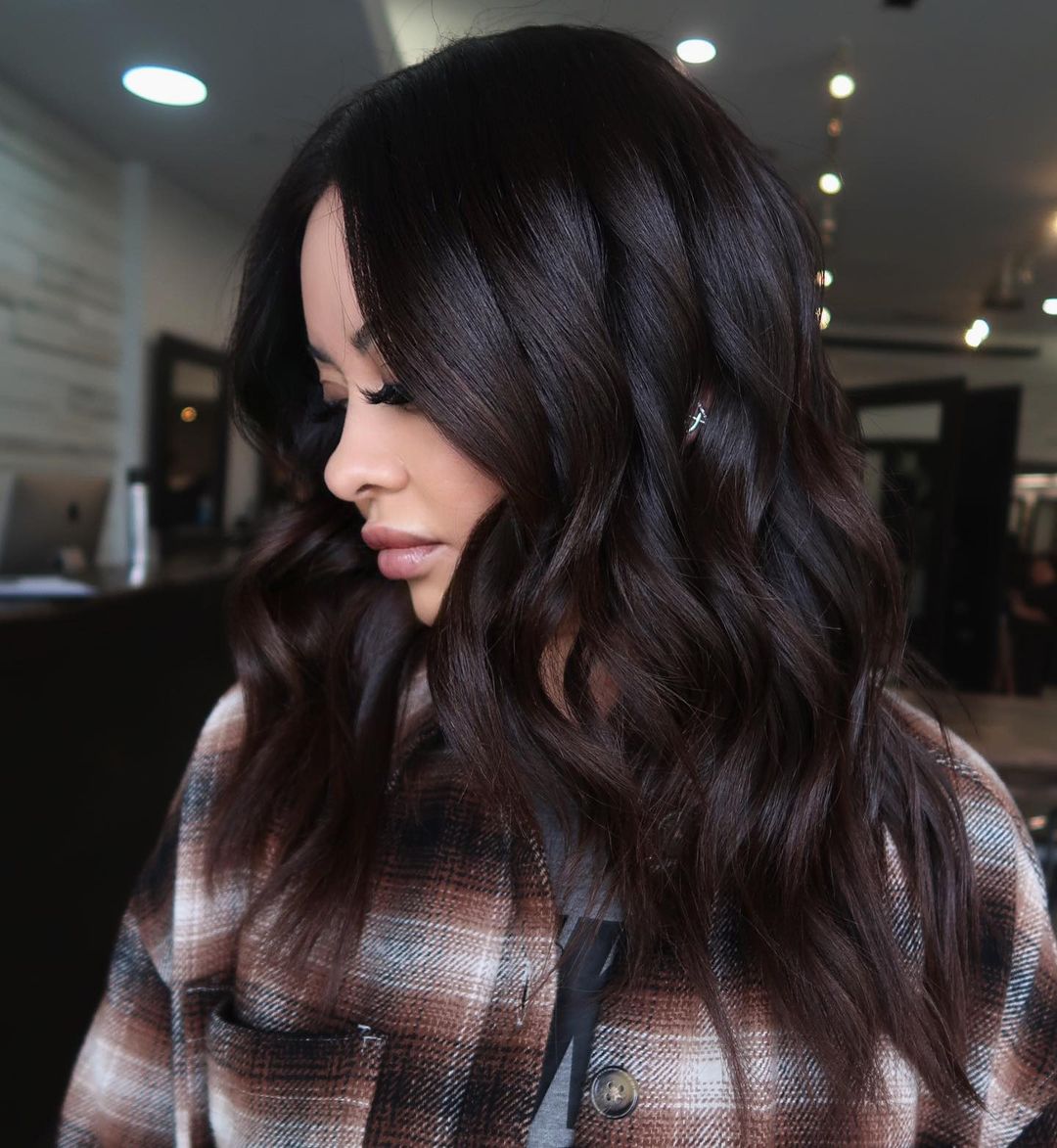
Structured waves require a curling iron and a firm hold. Loose flowing waves let the hair do more of the work. Long layers give this rich dark mocha brown color room to shine, and the thick texture holds the shape without product overload. The middle parting frames the face evenly. It works best for those with thick or wavy hair.
Soft voluminous waves in rich mocha espresso
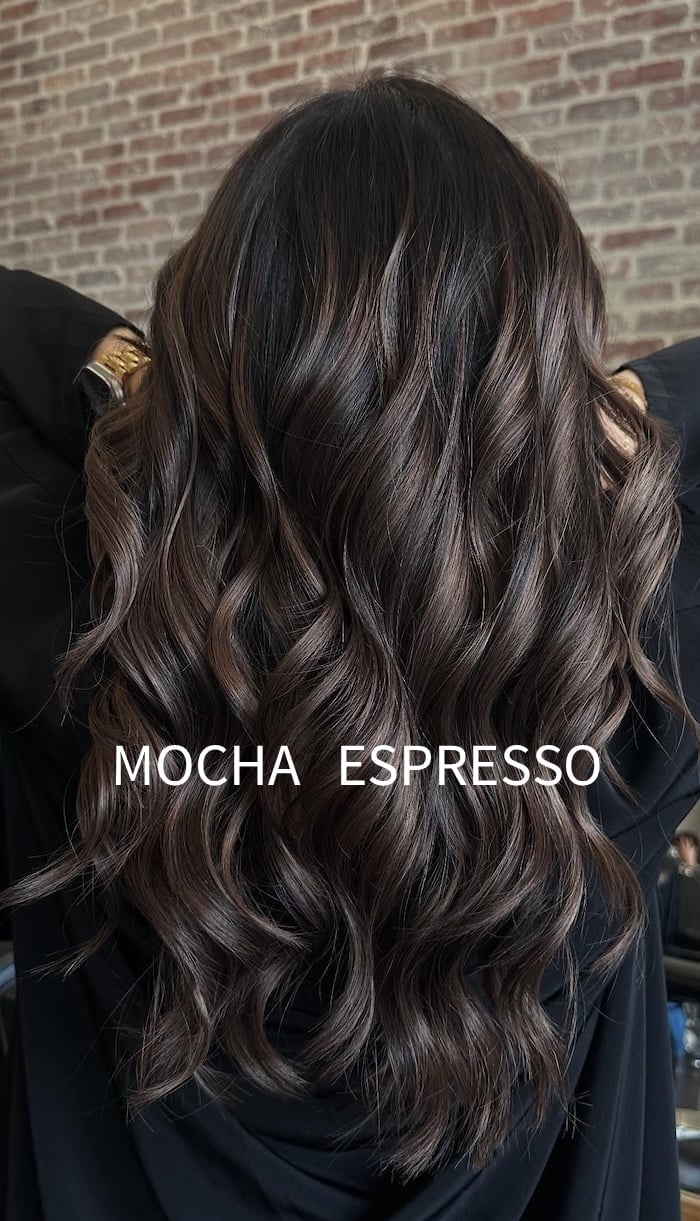
Subtle barely-there highlights keep the dark mocha brown base from reading flat. The thick hair is styled in soft voluminous waves, a blowout technique that lifts at the roots. This is a salon-only look for the color application. Ask your colorist for: rich dark mocha brown, subtle highlights, soft voluminous waves. A texturizing spray and diffuser add volume at home.
A softer take on mocha with uniform waves
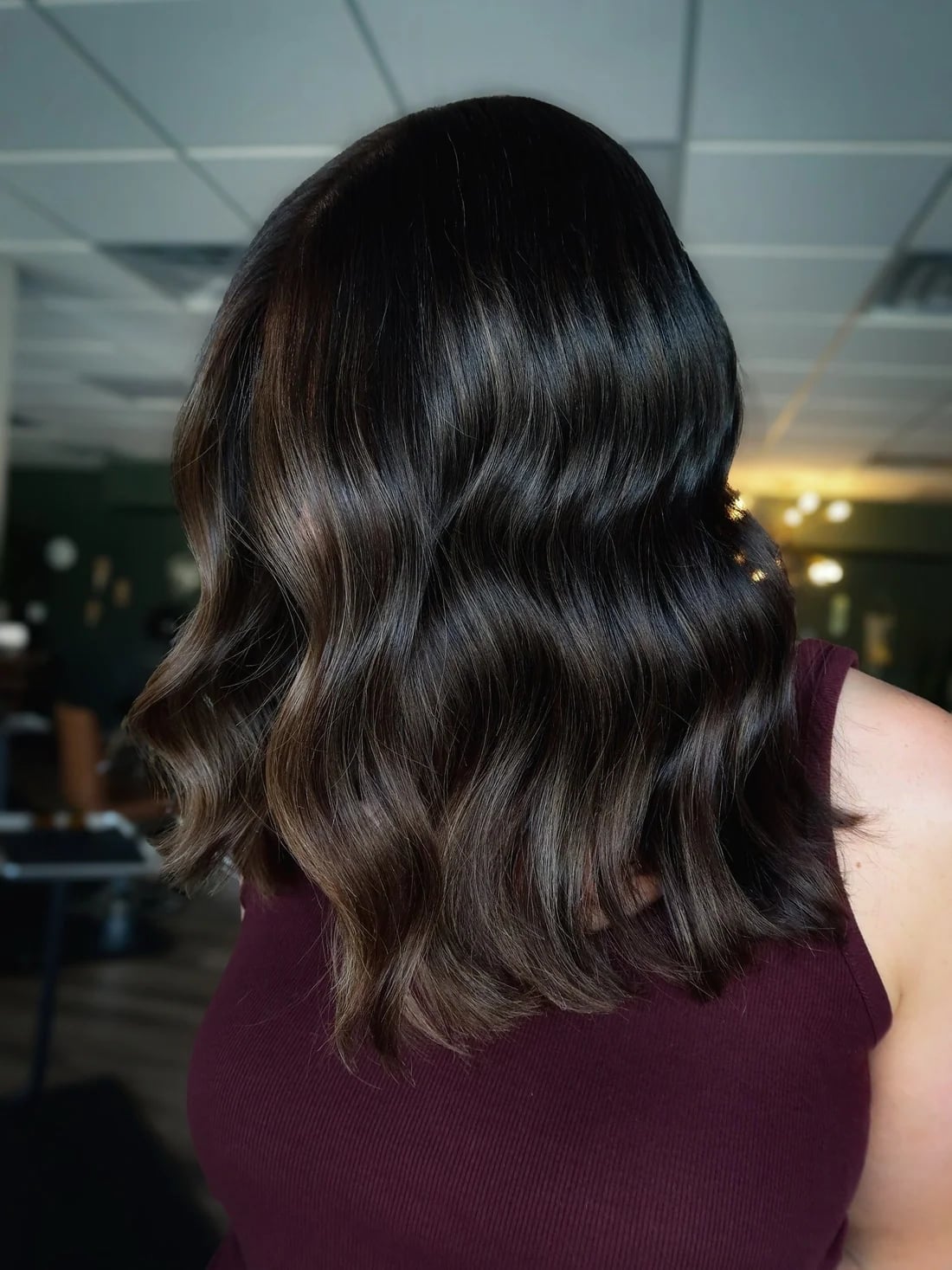
Dark brown base transitions into caramel highlights, a color melt that avoids a harsh root line. The subtle layers keep the thick texture from feeling heavy. Styled in soft uniform waves, the look is neat without being stiff. The catch: the melt requires a gloss every six weeks to keep the tones connected.
Caramel highlights in a mocha color melt
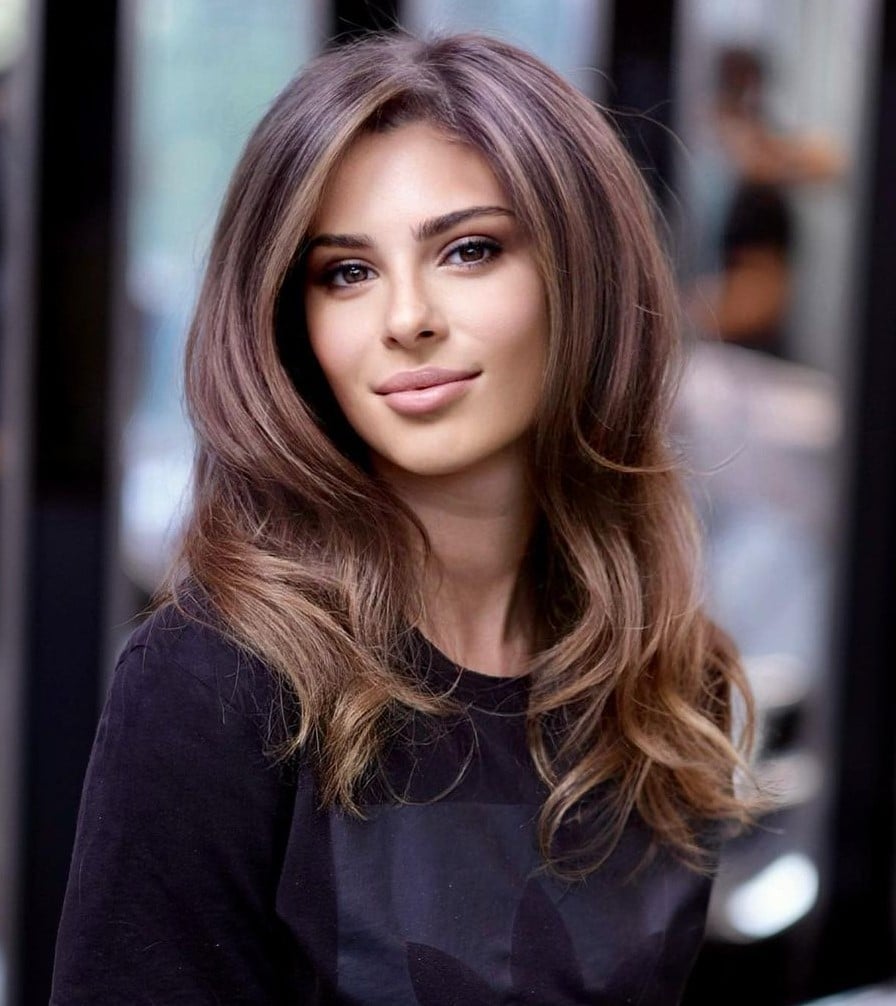
Shorter front sections draw attention to the face, a practical rule for anyone wanting lift. A centered parting and a smooth blowout enhance the fine texture and make the caramel highlights read clearly against the mocha brown base. Ask your colorist for: mocha brown with caramel highlights color melt, soft waves. The technique uses a lowlight between the highlights to avoid a striped look.
Warm caramel highlights on a rich mocha base
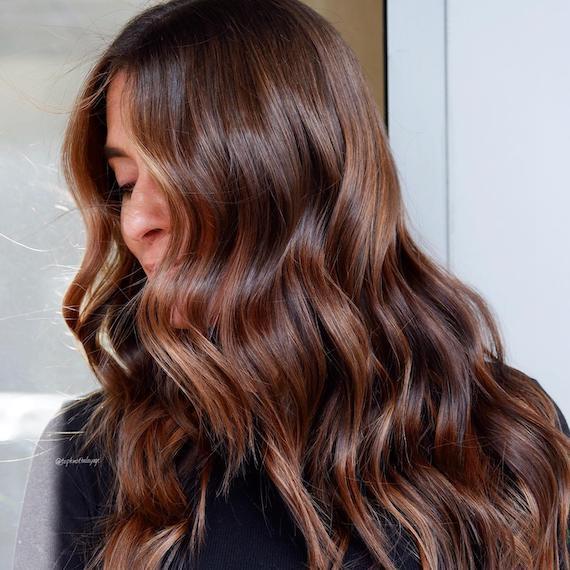
Mocha brown this deep needs a partner, not a rival. Warm caramel highlights sit close to the base, so the contrast appears as light catching the wave, not as a separate color. Thick, wavy texture carries the blend naturally. The warmth is the whole argument here. Use a heat protectant before you blow-dry and round the ends under.
Balayage technique for caramel highlights
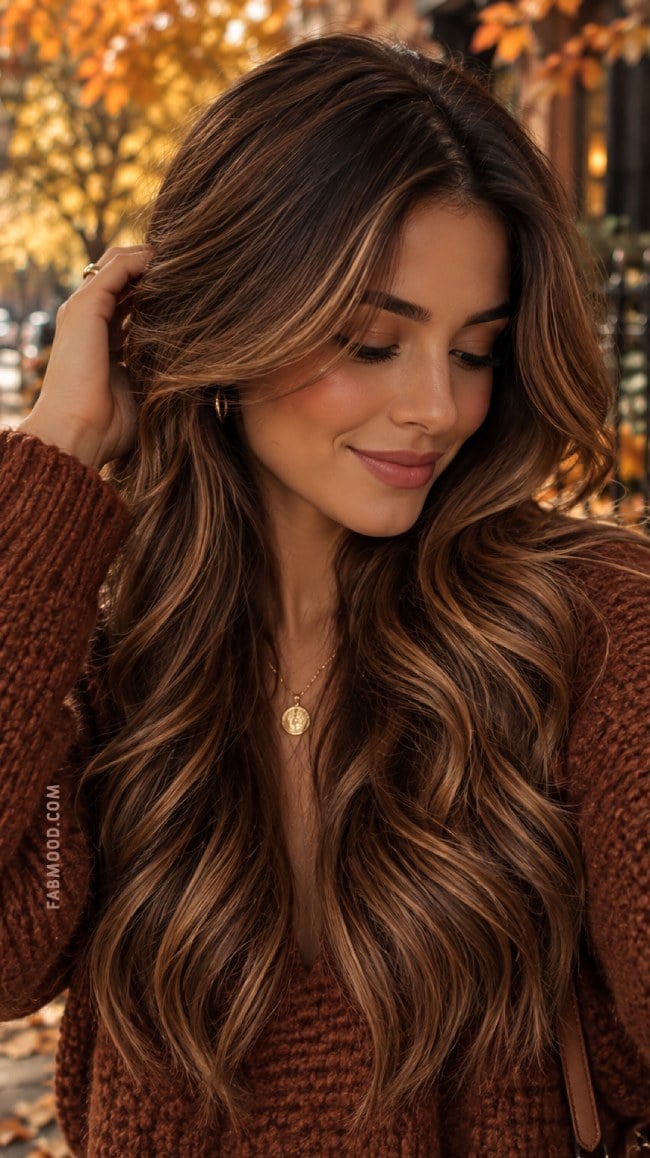
Balayage versus foils is the question, and the answer depends on how much lift you want. Foils give you a more uniform stripe; balayage lets the caramel settle where the hair naturally falls. With a middle part and soft waves, the hand-painted placement keeps the highlights subtle around the face. This one is strictly salon-only. The painterly application means no two sections lift the same, which is exactly what you want for a lived-in look that grows out softly.
Caramel highlights on a rich dark brown base
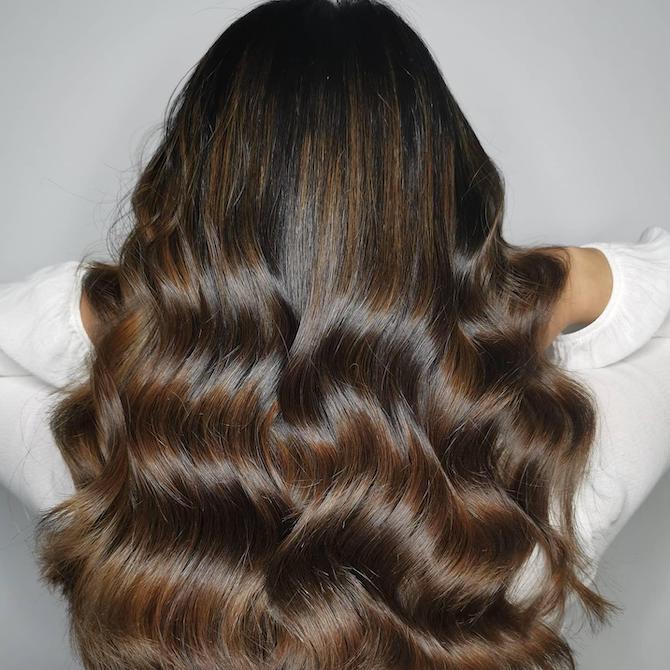
Dark brown with caramel highlights works because the base is rich and dense. A few warm ribbons create dimension without looking like an attempt at blonde.
This suits anyone with natural wave or the patience for a curling wand. The loose, flowing style needs length to show the highlight placement. Pass when your hair is very fine. The contrast can look stark instead of soft. Subtle layers carved through the ends keep the movement from turning into a triangle shape. A smoothing serum on damp hair before you blow-dry cuts the frizz without weighing down the wave.
Thick texture adds volume and movement
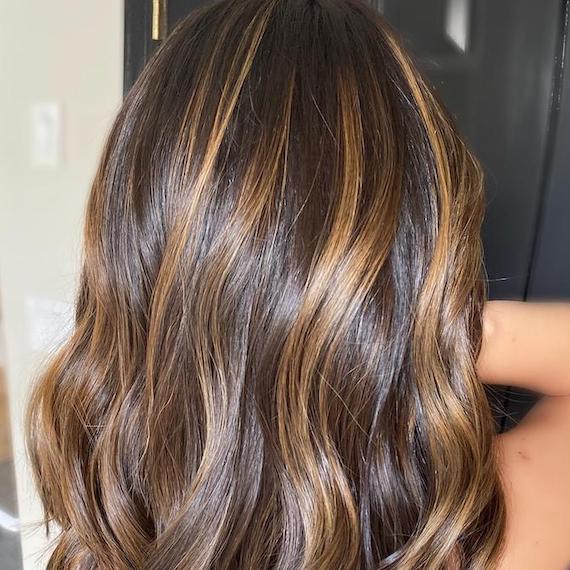
Thick hair with layers is a reliable combination. The balayage effect on a dark brown base with soft caramel highlights keeps the color from feeling flat, and the waves give the cut a shape that holds all day.
Use a color-safe shampoo and conditioner to protect the caramel from fading warm. The texture itself does the work here. A round brush during blow-drying lifts the roots, and the layers fall into place without product. This cut relies on wave to show the layering, so it suits those who style with heat.
Wavy blowout with thick texture
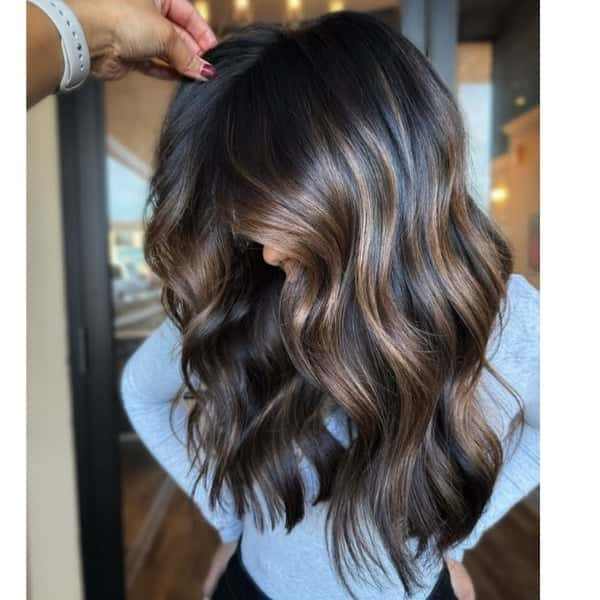
Tell your stylist: layers, dark brown with caramel highlights, wavy blowout. The middle part and thick, wavy texture are the foundation, so the cut needs to remove weight from the ends without losing density. A salon blowout gives the neat finish, but you can replicate it at home with a large round barrel brush and a heat protectant. The caramel highlights sit a few shades lighter than the base, so the wave pattern shows the color shift. Choose a solid shade if you prefer no highlights.
Auburn highlights on a rich mocha base
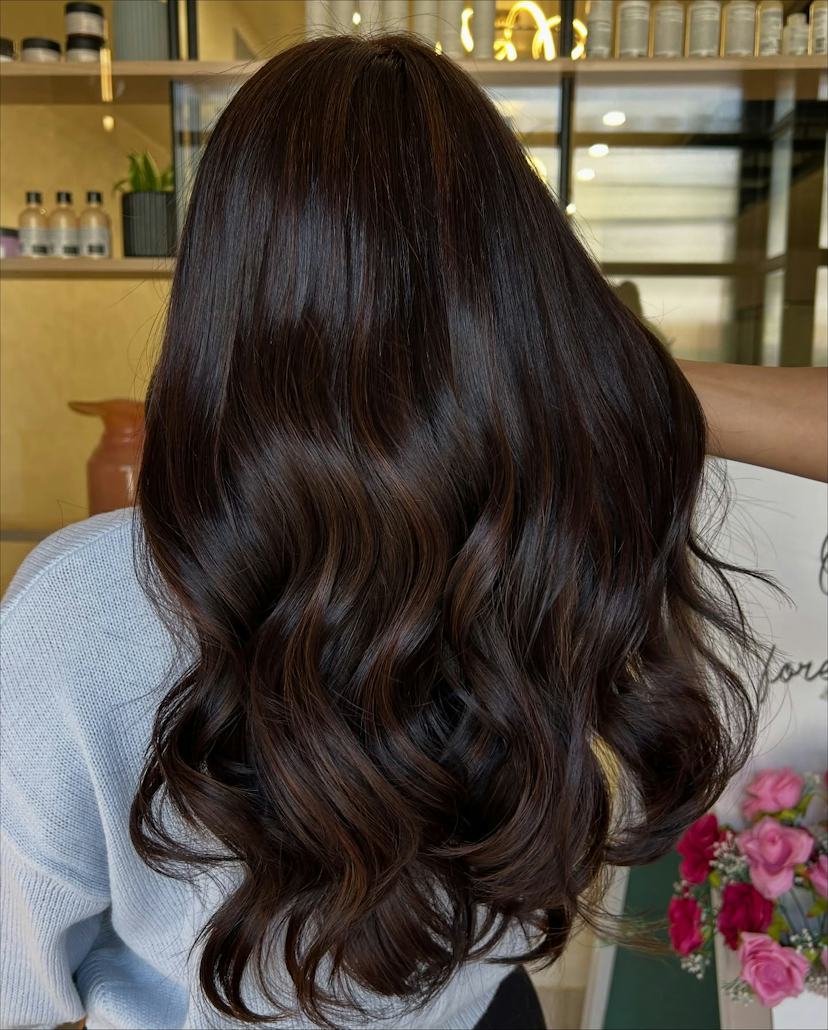
Before you settle on straight mocha, consider this: auburn highlights against a dark brown base add warmth without changing the overall depth. Long layers keep the thick, wavy texture from becoming a triangle. No bangs here. The face-framing comes from the shortest layers hitting around the jaw. The auburn is a subtle shift, not a separate color. Cool tones or a straight style most days are not ideal for this look. The highlights need the wave pattern to catch light.
Thick hair starting at shoulder length gives this cut the weight it needs to hold the layers open. The blend requires a professional eye; a DIY attempt at auburn highlights on a mocha base can land muddy.
Heavy waves cascade beautifully with long layers
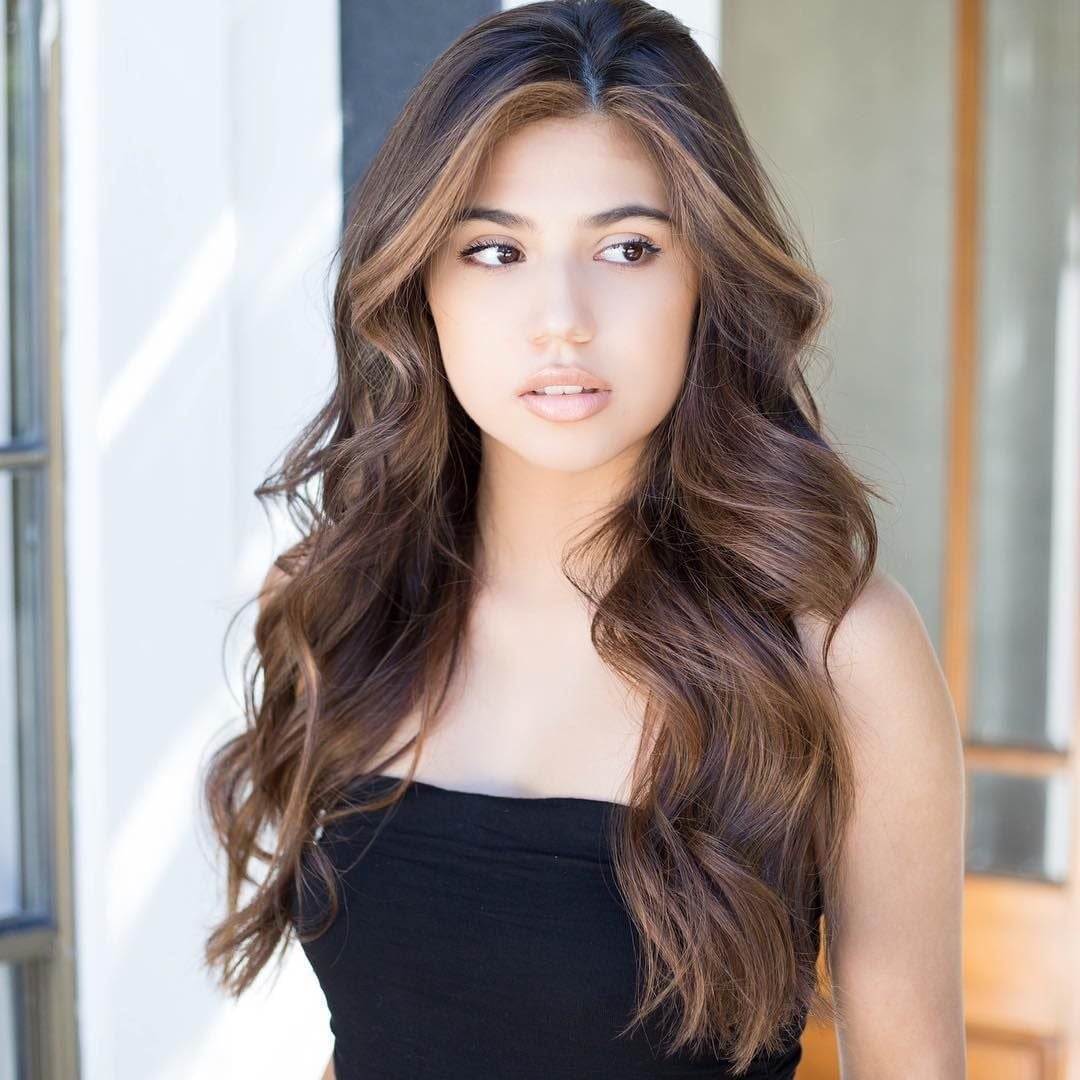
Long layers and a middle part build the foundation for a wave pattern that holds its shape without constant touch-ups. The heavy waves here start at the cheekbone and roll through the ends, a technique that relies on the cut, not the curling iron, to create the cascade. Thick, wavy hair starting at shoulder length carries this best. The mocha brown base with subtle caramel highlights adds depth to each turn of the wave. Straight styles or fine texture are not compatible with this cut; the weight of the wave will collapse without enough density.
A texturizing spray and diffuser are the tools for this finish. The diffuser dries the wave without disrupting the pattern, and the spray adds grip so the shape lasts into the evening. Tell your stylist: long layers, mocha brown with caramel highlights, heavy waves.
Side-swept bangs on thick wavy mocha brown hair
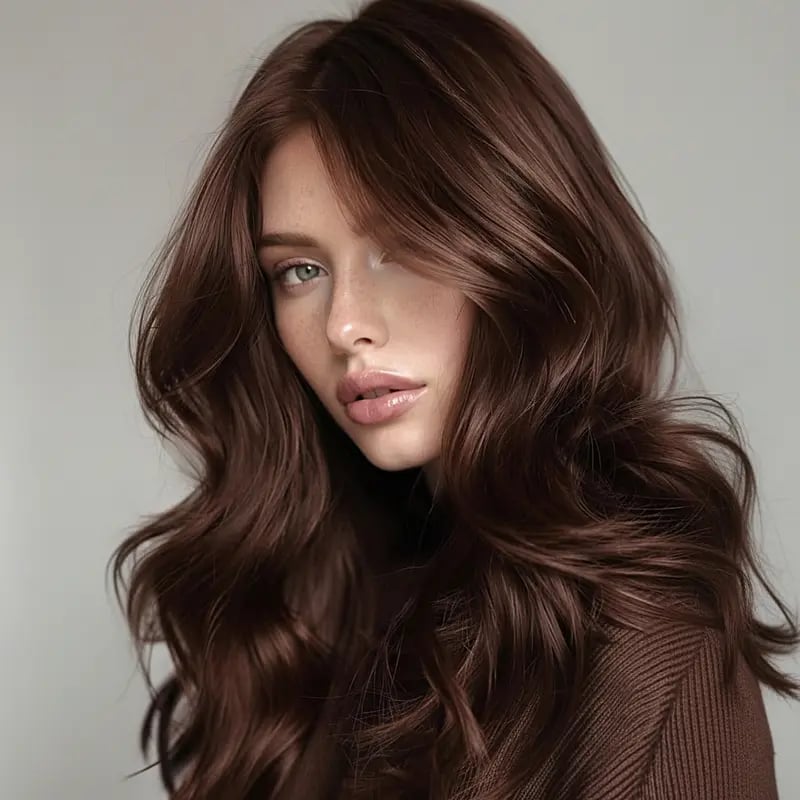
Side-swept bangs work when your hair has enough weight to keep them from drifting into your eyes. This cut pairs them with subtle long layers and a side part, so the bangs blend into the rest of the shape rather than sitting as a separate piece. The thick, wavy texture gives the bangs a soft curve that a straight fringe cannot match. Collarbone length or longer is the starting point, anything shorter and the bangs eat the cut.
You can trim the bangs yourself between salon visits if you are careful. Point-cut straight across, then angle the scissors to blend the corner into the layers. Skip this if you prefer no bangs or wear your hair slicked back.
Voluminous face-framing layers with heavy waves
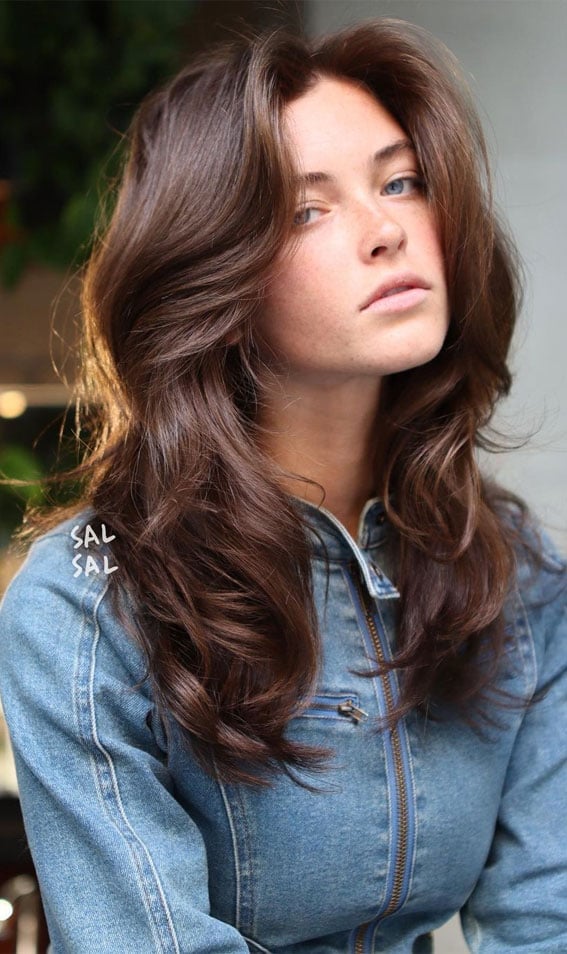
A voluminous blowout with a middle part requires a round brush and a heat protectant. The reality: this look takes a full dry and style session, not a five-minute refresh. The long face-framing layers start at the jaw and graduate down, so the heavy wave pattern creates a soft, full shape that does not collapse at the ends. Ask your stylist for: long face-framing layers, voluminous blowout, mocha brown, heavy waves. The cut alone gives the volume, no teasing needed.
The catch: this style loses its shape by the second day. Thick hair holds the wave longer than fine hair does.
Dense waves create a neat look
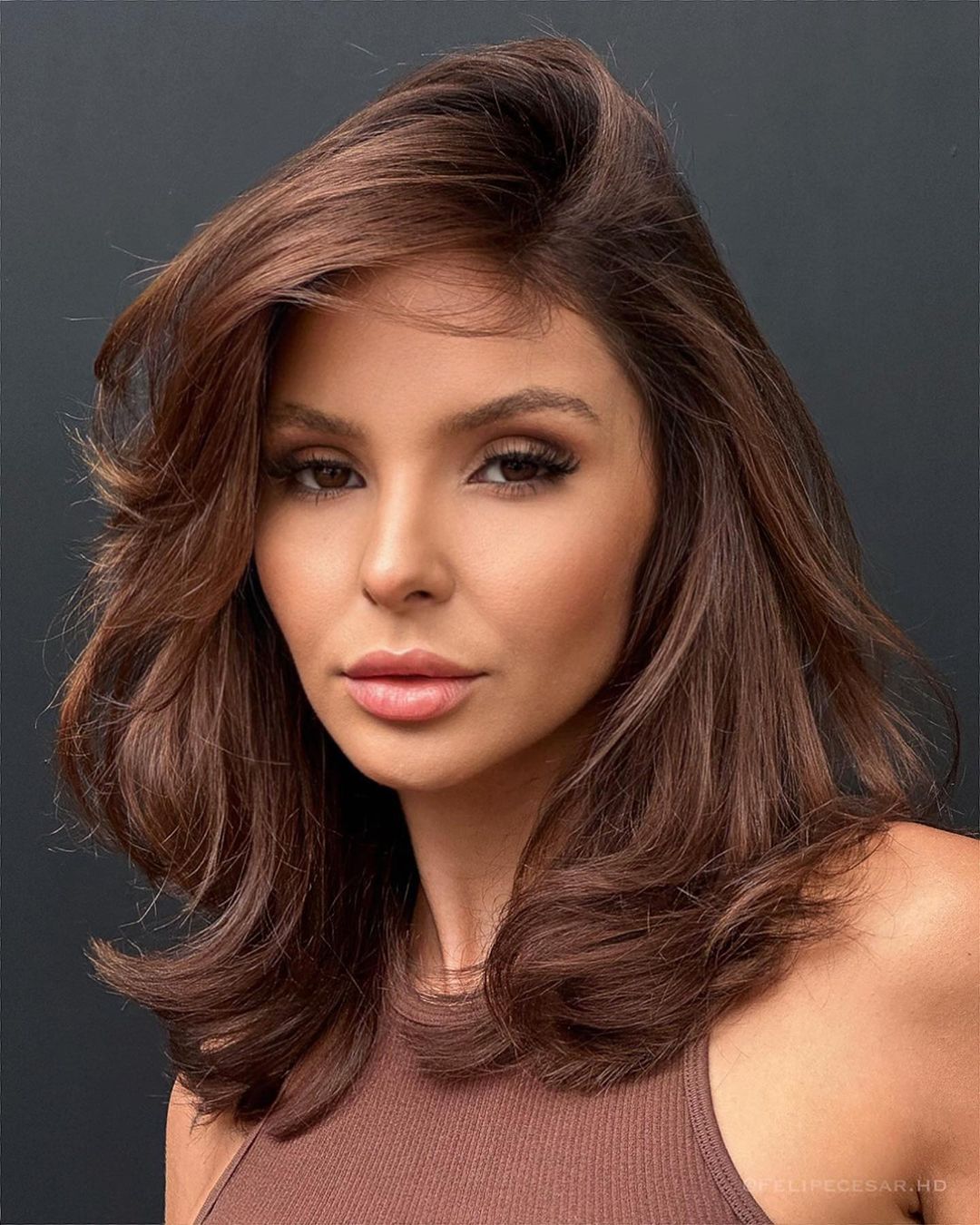
Dense waves and a smooth blowout work together here. The cut uses voluminous layers that remove weight from the interior while keeping the outer edge heavy, so the wave pattern stays full without looking fluffy. A middle part and a round brush create the neat finish. The subtle lighter strands are woven through the mid-lengths, not the roots, so the mocha base stays solid at the scalp.
Thick, wavy hair of any length can carry this shape. The layers need to be cut dry to account for the natural wave pattern.
Rich dimensional color catches light
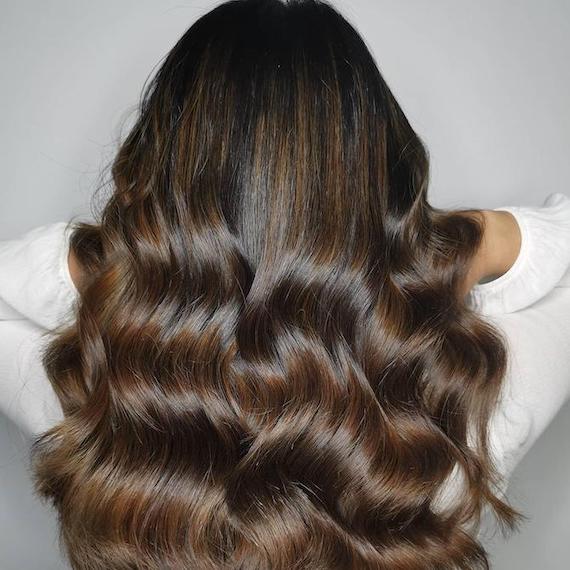
Color that catches light starts with placement, not just shade. Ask your stylist for: mocha brown with subtle highlights, placed where the sun hits naturally. The thick, wavy texture here amplifies every reflection. Layers support the loose waves without collapsing them. Skip it if your hair is fine. The weight of thick hair is what holds this shape. A texturizing spray before you wave keeps the finish from falling flat by evening.
Blended highlights create dimensional effect
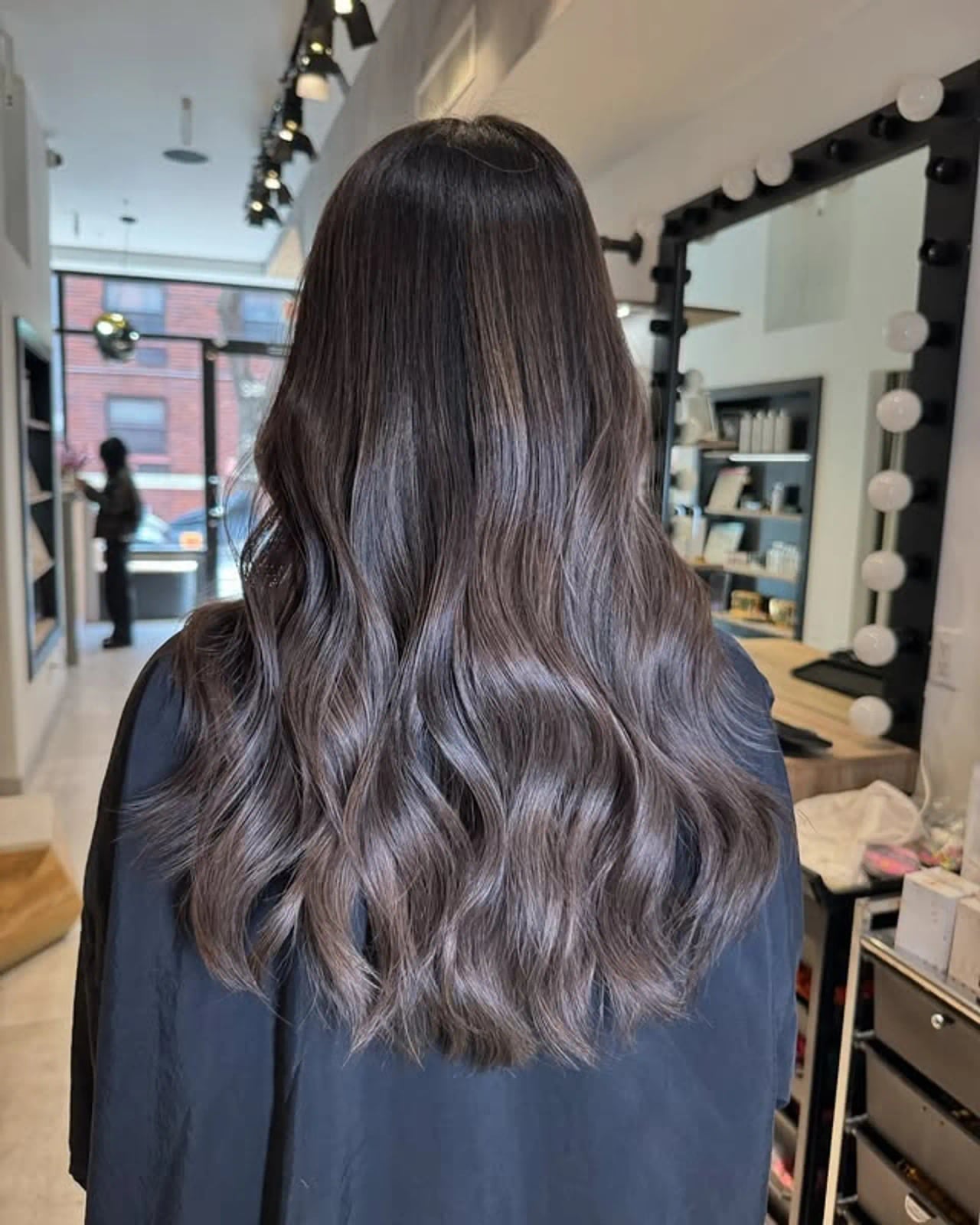
Blended highlights look a richer version of your natural color. The mocha brown base here has subtle highlights woven through the long layers, not painted in obvious streaks. The effect is soft and flowing, with fine wavy texture catching the light at every turn.
Compare that with chunkier highlights that land in distinct ribbons. Blended suits fine hair because it never draws attention to thin spots. Chunkier works better on thick hair where each piece can stand apart. Both have their place. This one belongs on anyone with shoulder-length fine hair who wants dimension without a hard line.
Air-dried fine hair with face-framing layers
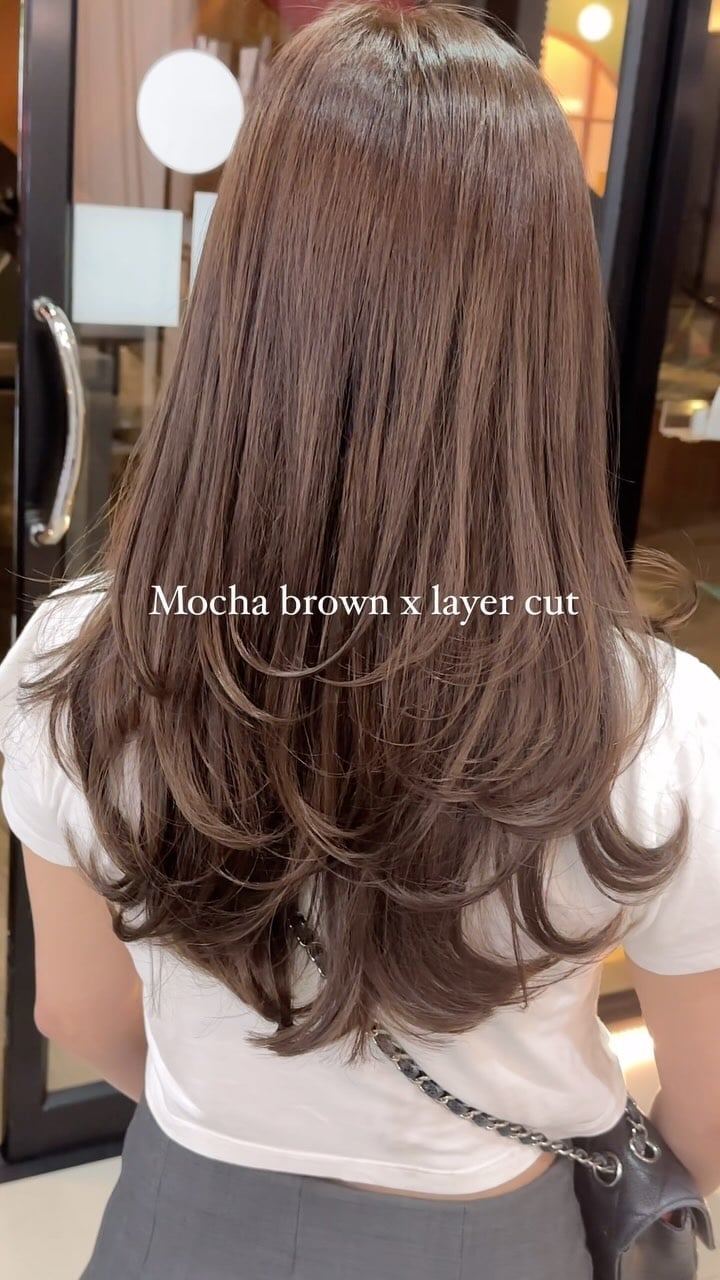
Air-dried fine hair needs a cut that does the shaping, not the blow dryer. The layered cut here places face-framing pieces around the jaw, so the shape is visible even when the texture is straight. The catch: precise layering is salon-only work. One uneven snip and the face-framing effect disappears into the rest of the length. Start with collarbone length or longer, or the layers will stack too close to the root.
Final Thoughts
Pick the mocha look that matches your morning timer and your texture.
- Fine hair: long layers with fine highlights for visible movement.
- Ten minutes in the morning: a lob with soft waves and curtain bangs.
- Cool base that pulls brassy: ash highlights on a mocha foundation.
- Low-maintenance grow-out: a root-smudge color melt with caramel ends.
Mocha hair offers endless possibilities for depth and dimension.