31 Aesthetic Bronde Hairstyles with Face Framing Balayage 2027
Aesthetic Bronde Hair 2027 feature sun kissed looks and face framing balayage for thick wavy hair, offering easy air dried highlights. See 31 styles.

You are scrolling saved boards, looking at bronde that is either too blonde or too brown, and the grow-out line in your current color is starting to annoy you. Bronde in 2027 means a base that sits between brown and blonde, with highlights placed so the line between them blurs, which buys you weeks between appointments.
This collection of 31 looks covers the range, from air-dried waves to neat blowouts, from ash-toned strands to warm caramel pieces. Aesthetic Bronde Hair 2027 fills so many saved boards because the technique adapts to your natural depth and your schedule. The struggle this solves: finding a color that does not demand a root touch-up every four weeks.
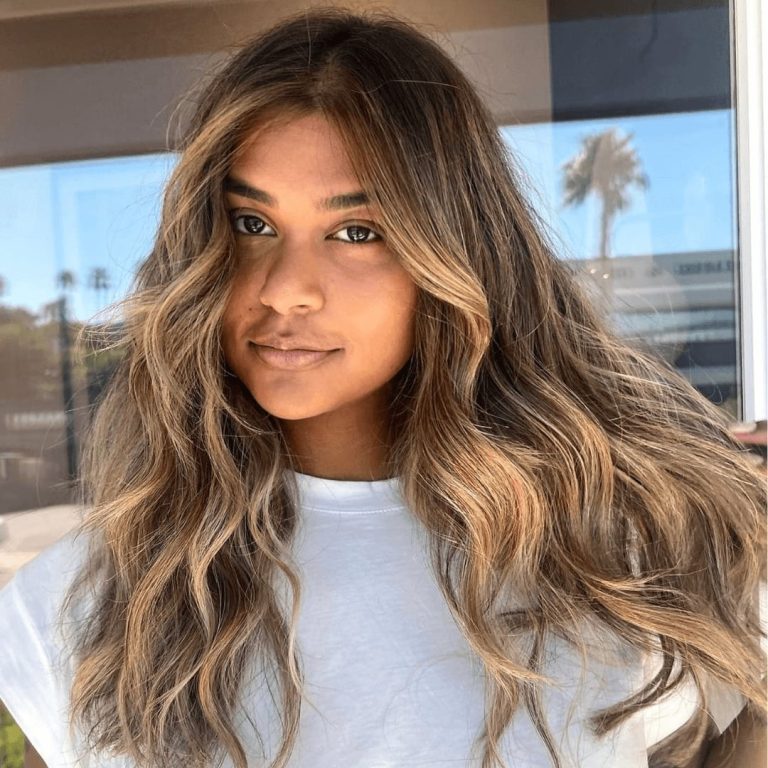
Air-dried bronde with lighter blonde highlights
Fine, wavy texture meets a middle part and subtle layers. The bronde base carries lighter blonde highlights that look grown, not painted. Air-dried styling keeps the finish soft and the line between shades blurred. It works best for fine, wavy hair and requires a layered cut starting at least at the collarbone. Ask your colorist for: bronde base with blended lighter blonde highlights, subtle layers. A texturizing spray on damp hair sets the shape; a trim every eight to ten weeks keeps the ends clean.
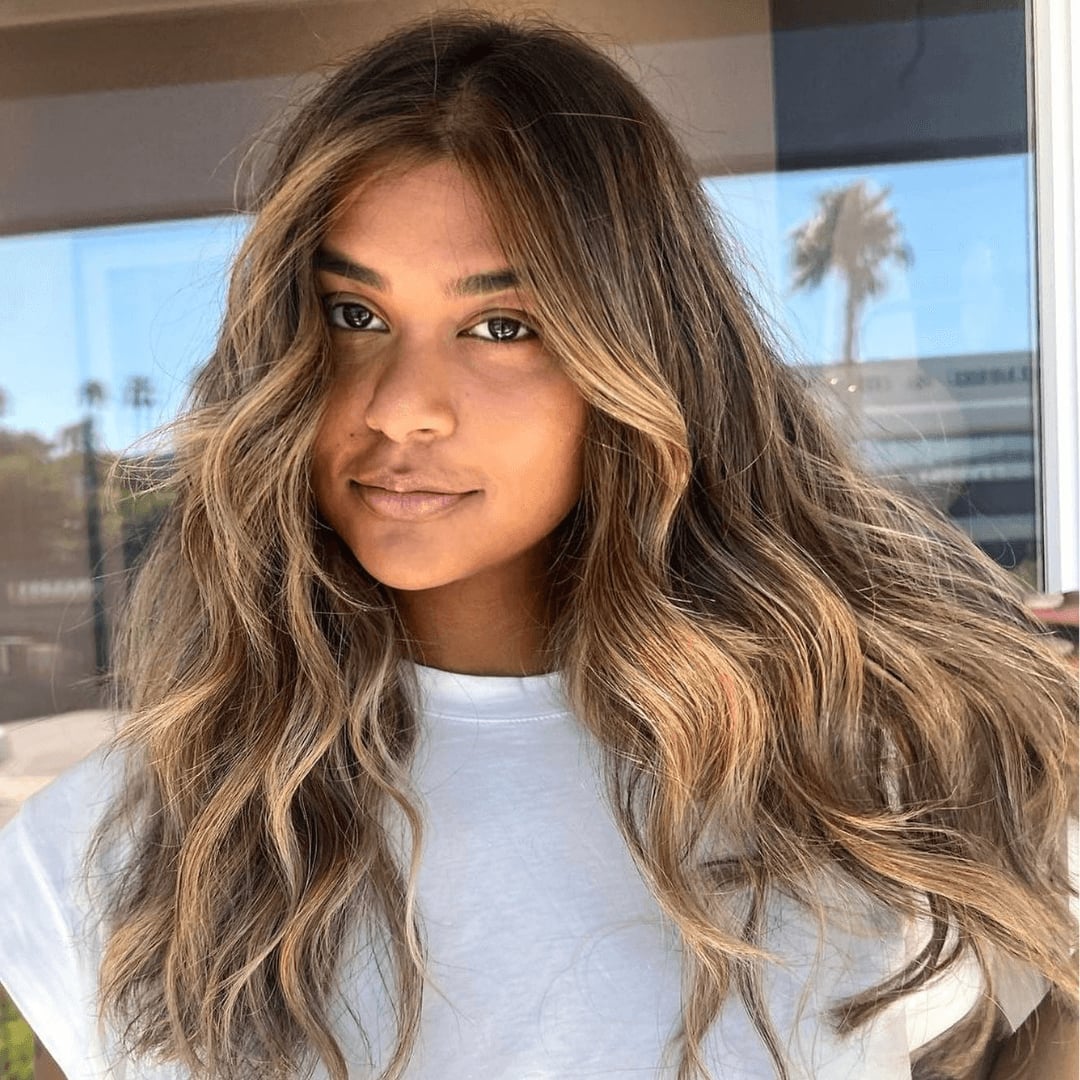
Balayage bronde for a lighter effect on thick waves
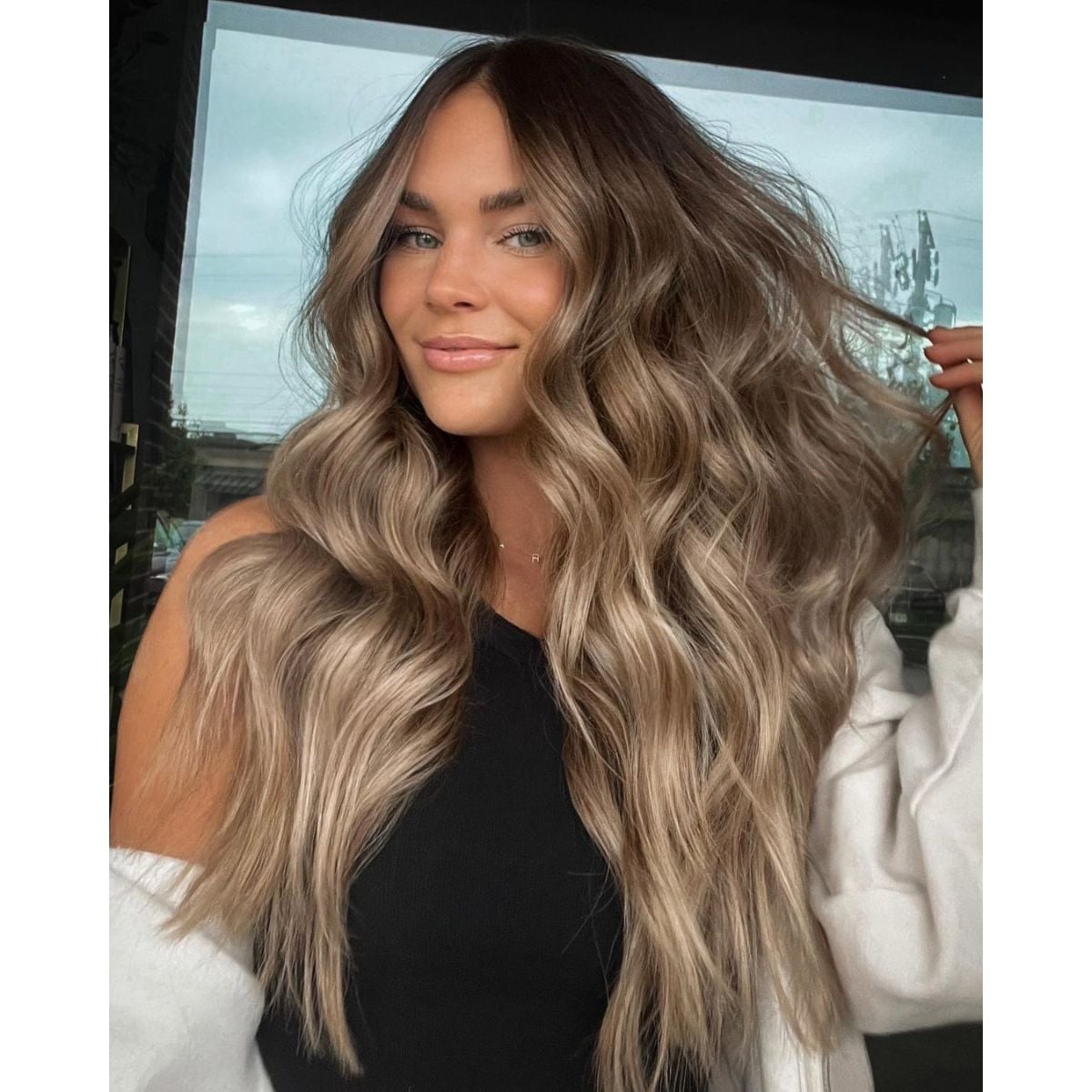
Thick, wavy hair holds a blowout well, which is exactly what this balayage needs. Brown and blonde tones blend through the ends, leaving the root area darker. The middle part shows the highlight placement evenly on both sides. Fine hair that lacks natural volume may not hold this style. Thick, wavy hair requires a layered cut to keep the shape from feeling heavy. A round brush during the blowout defines the wave pattern; a trim every six to eight weeks maintains the layers.
Smooth balayage bronde with face-framing highlights
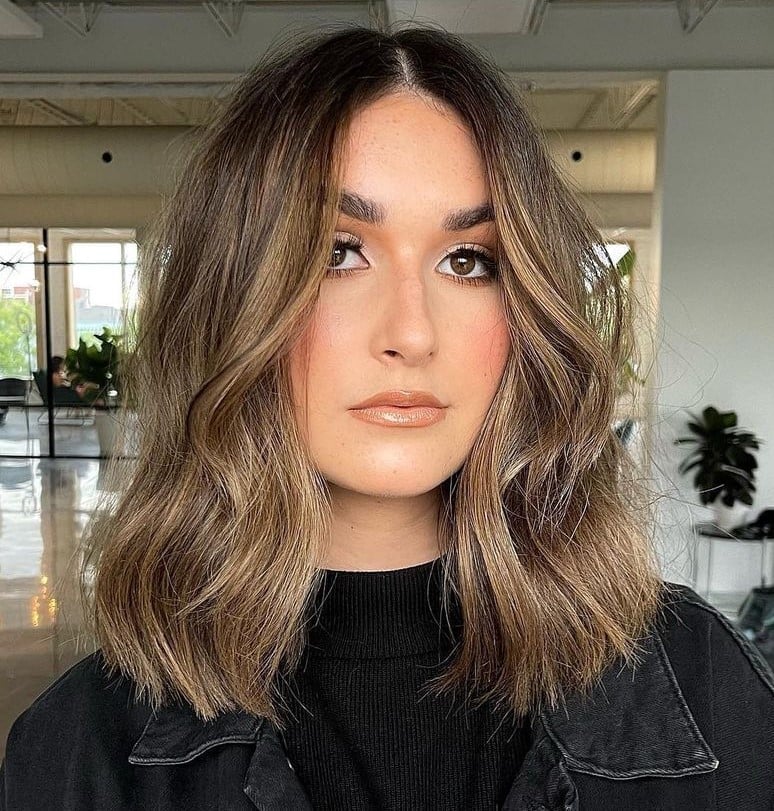
Compared to a full-head highlight, this keeps the back darker and concentrates the light pieces around the face. Light and dark brown tones blend through the mid-lengths, with the face-framing sections pulling slightly brighter. Medium density hair suits this placement best. The catch: dark natural hair requires more frequent toning to keep the face-framing pieces from turning brassy. Ask your colorist for: balayage bronde with face-framing highlights, soft waves. The waves add separation without stiffness.
Lighter bronde highlights on fine wavy hair
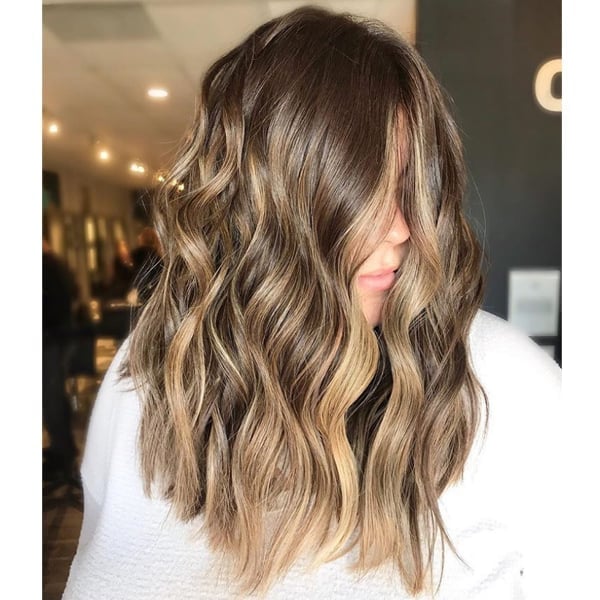
How do you get lighter highlights without the stripe effect? Fine, wavy hair needs a balayage application that paints the color onto the surface rather than weaving it through the whole section. The blend of brown and blonde sits mostly on the top layer, so the hair reads bronde from the front and darker underneath. Skip it if you desire high contrast or have very coarse hair. Fine, wavy hair benefits from blended highlights that don’t create a harsh line. A smoothing serum on the waves reduces frizz without weighing the hair down.
Dark brown base with lighter blonde highlights
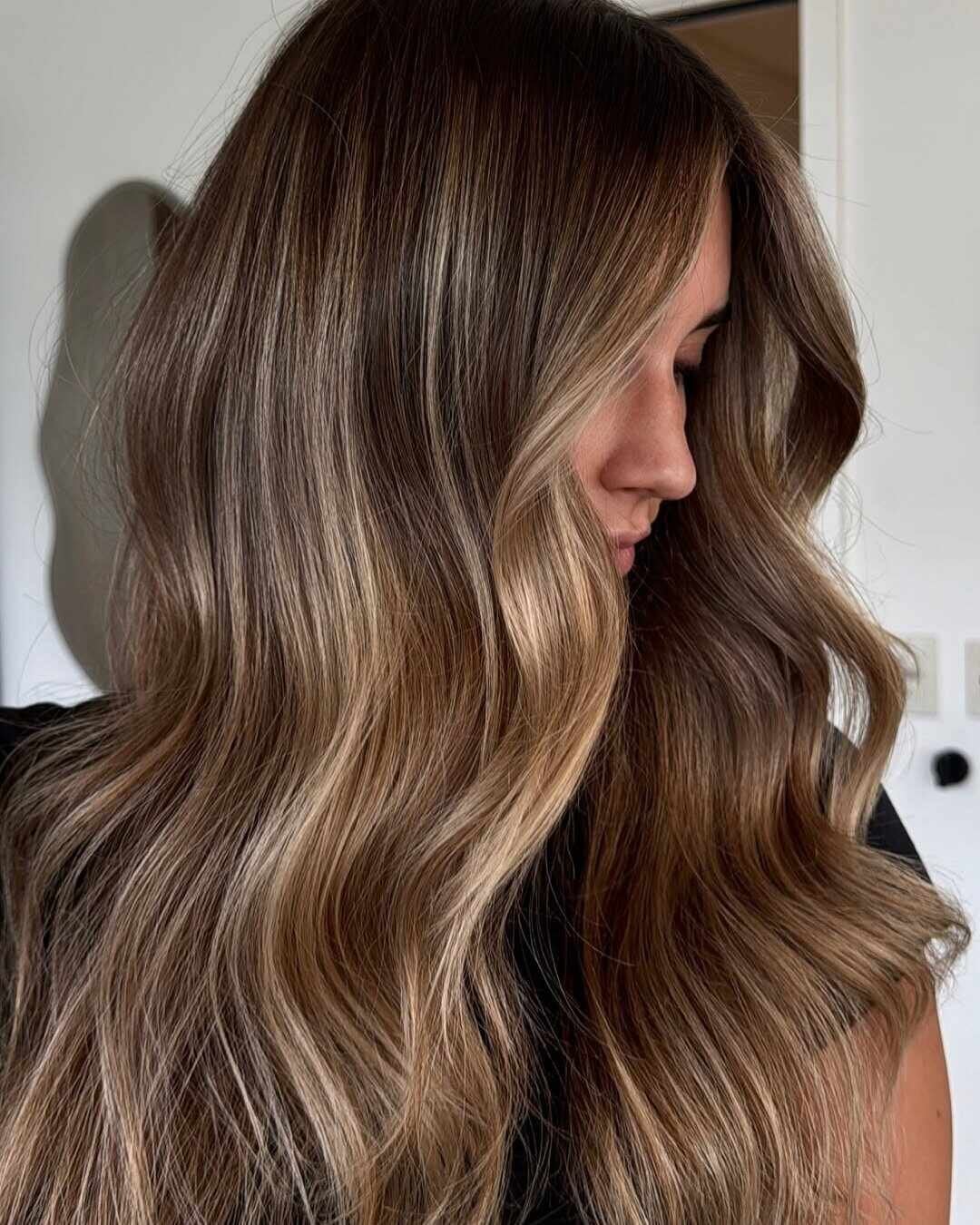
Where a light base with dark lowlights feels constructed, this does the opposite. A dark brown base keeps the root area deep while lighter blonde highlights sit on the surface, creating the effect of hair that lightened from the sun rather than the salon. Fine hair with a darker natural color works best here. Not for anyone with a very light natural base color. The contrast will feel too wide. The layered cut with a middle parting lets the highlights fall forward around the face. Ask your colorist for: dark brown base with subtle lighter blonde highlights, layers. A texturizing spray on the waves keeps the lived-in finish.
Ash blonde highlights on a bronde base
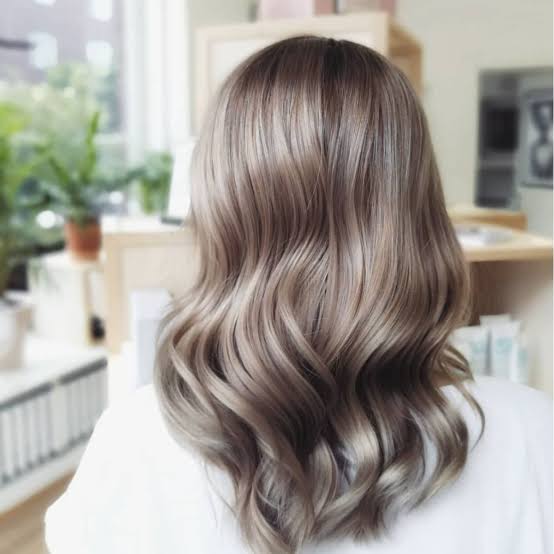
Ash blonde highlights sit against a bronde base here, and the back view makes the blend the whole story. No face-framing pieces needed when the color itself carries the weight. The tone is cool without turning silver, which keeps the wavy blowout looking deliberate rather than washed out. Fine texture holds this shape well because the layers give it lift without bulk. Skip it if your hair is very coarse or curly. The subtlety can get lost in the texture.
Cool ash blonde highlights create dimension on bronde
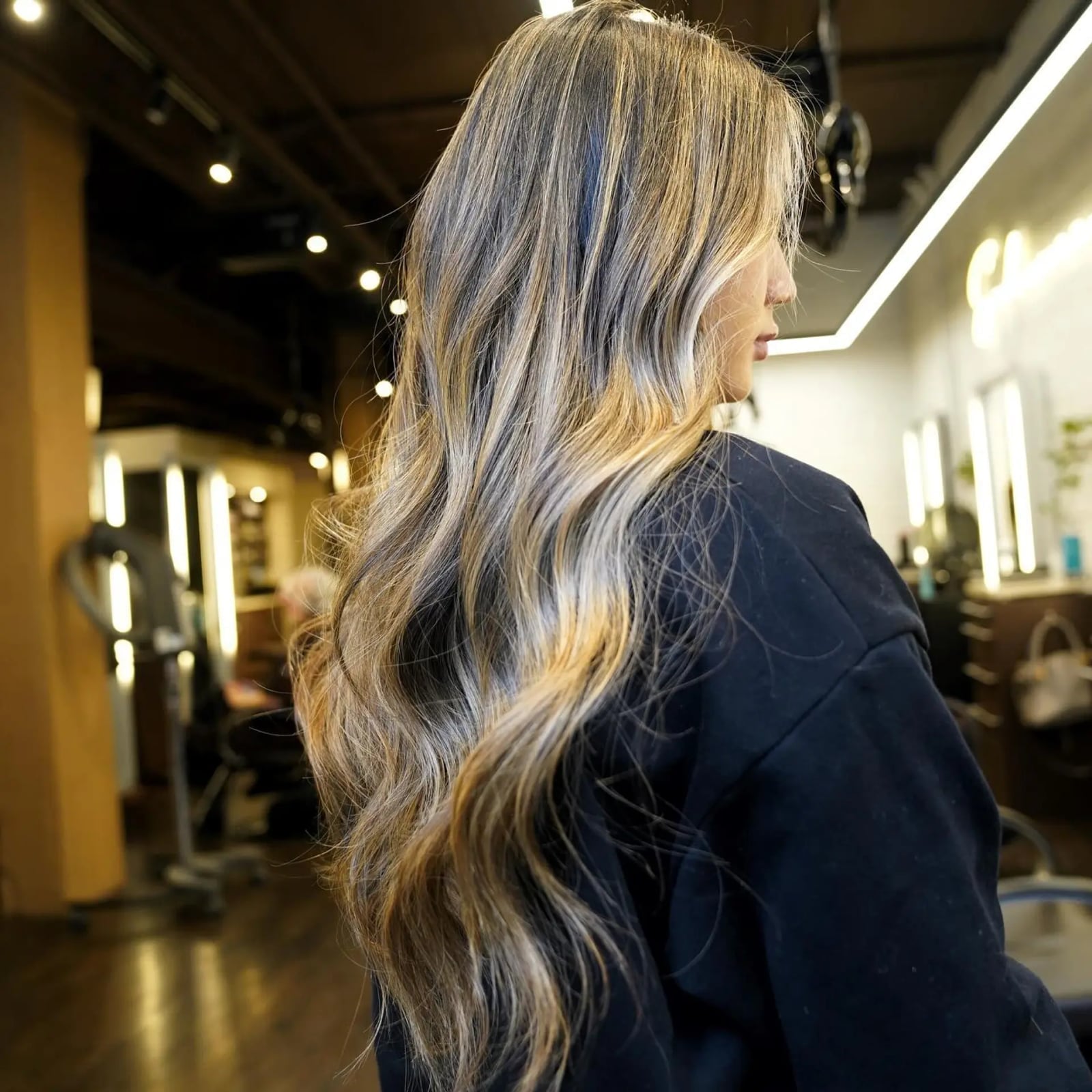
Two tones work here: a warm bronde base underneath and cool ash blonde highlights woven through the surface. The contrast is what creates the dimensional effect, and it only shows when the light hits the loose waves. Fine hair gains visual weight from this approach because the highlights add depth without extra bulk. A purple shampoo once a week keeps the ash tone from drifting warm. Pass when your natural skin tone reads strongly warm. The clash is real and hard to tone out.
Thick wavy bronde with delicate highlights
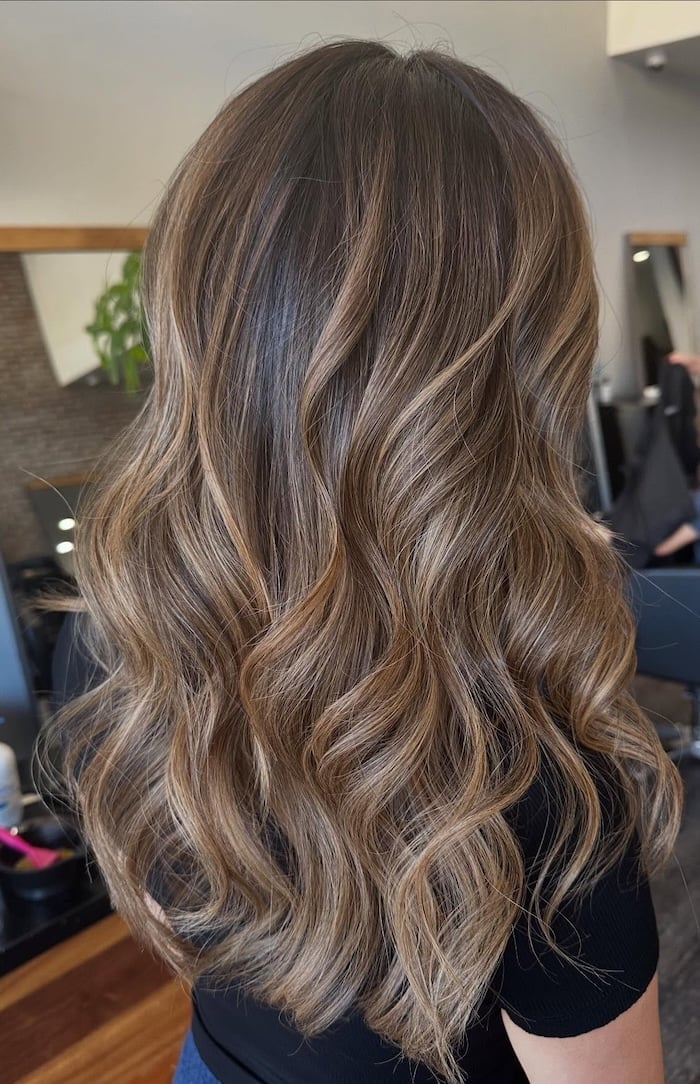
Delicate highlights on thick, wavy hair walk a fine line between subtle and invisible. This version lands on the right side: the highlights are fine enough to look natural but placed often enough to create a dimensional effect across the whole head. The catch is that thick texture eats fine color work. You need a layered cut to let those lighter pieces surface, and even then, the contrast is quiet. Good for anyone who wants a change without a color line. Not for those who need maximum volume from highlights alone.
Dark brown base with warm golden blonde highlights, wavy
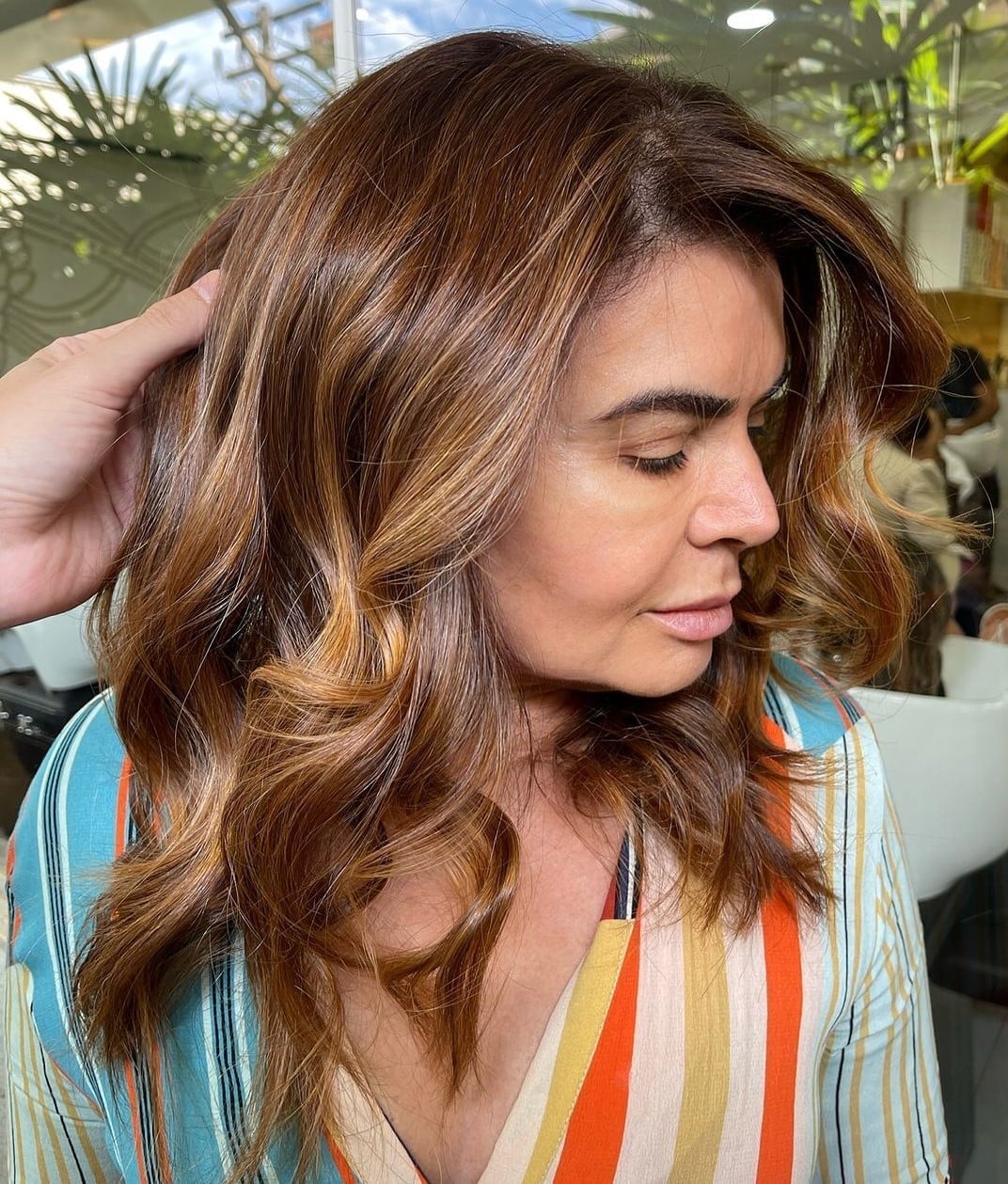
Warm golden blonde highlights on a dark brown base give a sun kissed look. The soft layers and fine texture prevent the darker base from feeling heavy. A center part and waves allow the color to fall naturally without a specific styling angle. Tell your colorist: dark brown base with warm golden blonde highlights, soft layers. This look is not for those committed to ash tones. The warmth is essential and will not cool down with toning.
Caramel highlights on a dark brown base
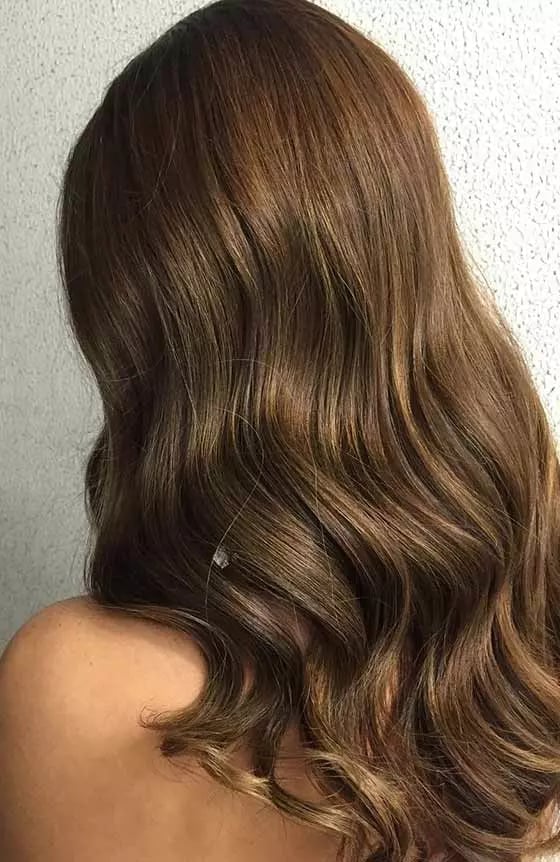
Caramel highlights on a dark brown base avoid the stripe effect with subtle placement, a wavy blowout, and layered cut. The caramel tone is warm but not orange, and it sits close enough to the base that the transition is soft. Fine hair benefits from this because the highlights add warmth without weighing the strands down. A blowout with smoothing serum keeps the shine even.
Wavy fine bronde with face-framing highlights
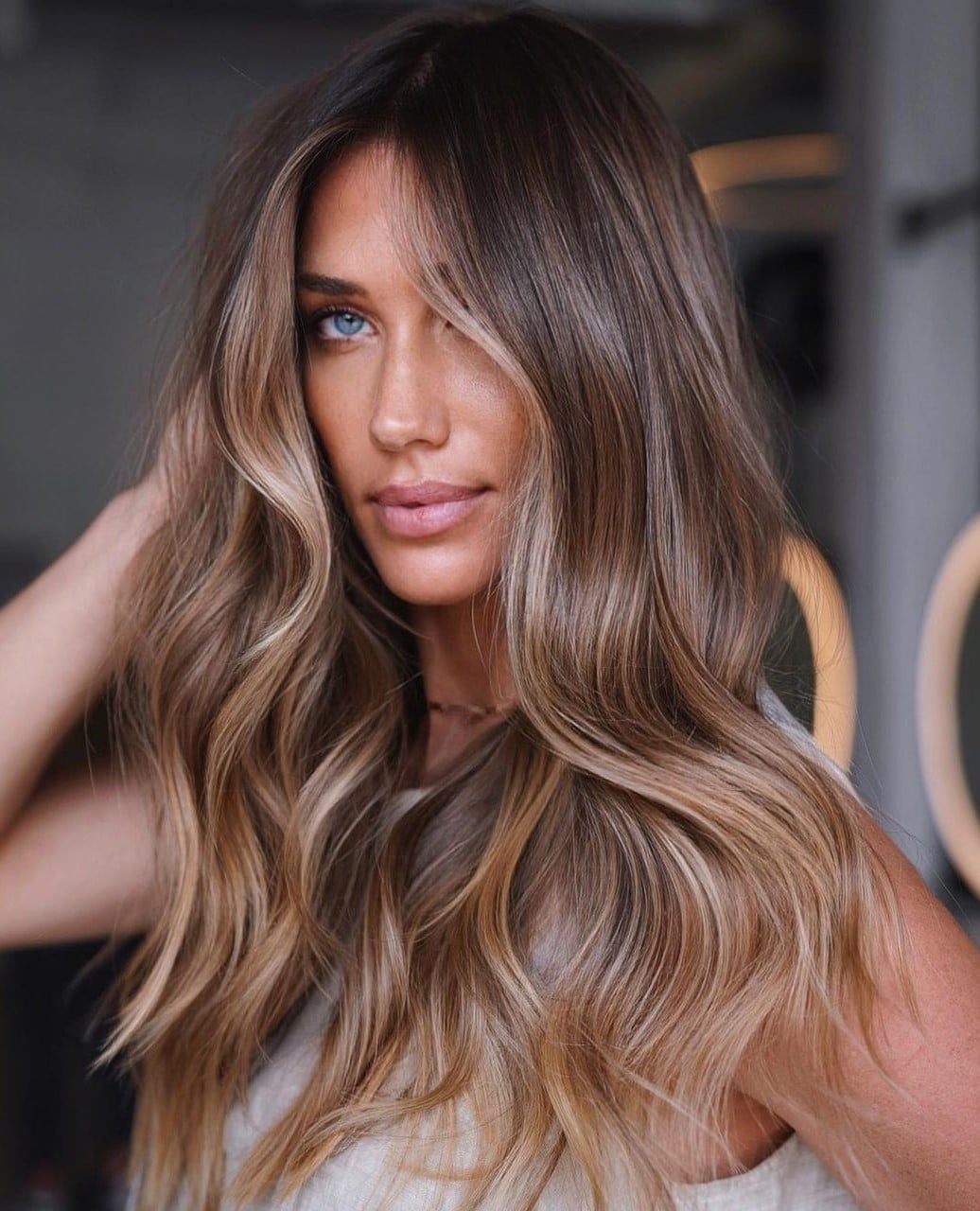
Side-swept bangs and a middle parting work together here, which is a trickier balance than it sounds. The face-framing highlights sit close to the cheekbone, so the fine texture gets definition without looking weighed down. A layered cut keeps the wavy blowout from collapsing at the ends. Skip it if your hair runs thick or you prefer a blunt hemline; the layers do the heavy lifting for the shape. Ask your colorist for: bronde with face-framing highlights, wavy fine texture. A texturizing spray at the mid-lengths stops the waves from looking limp by midday.
Face-framing blonde highlights on warm bronde
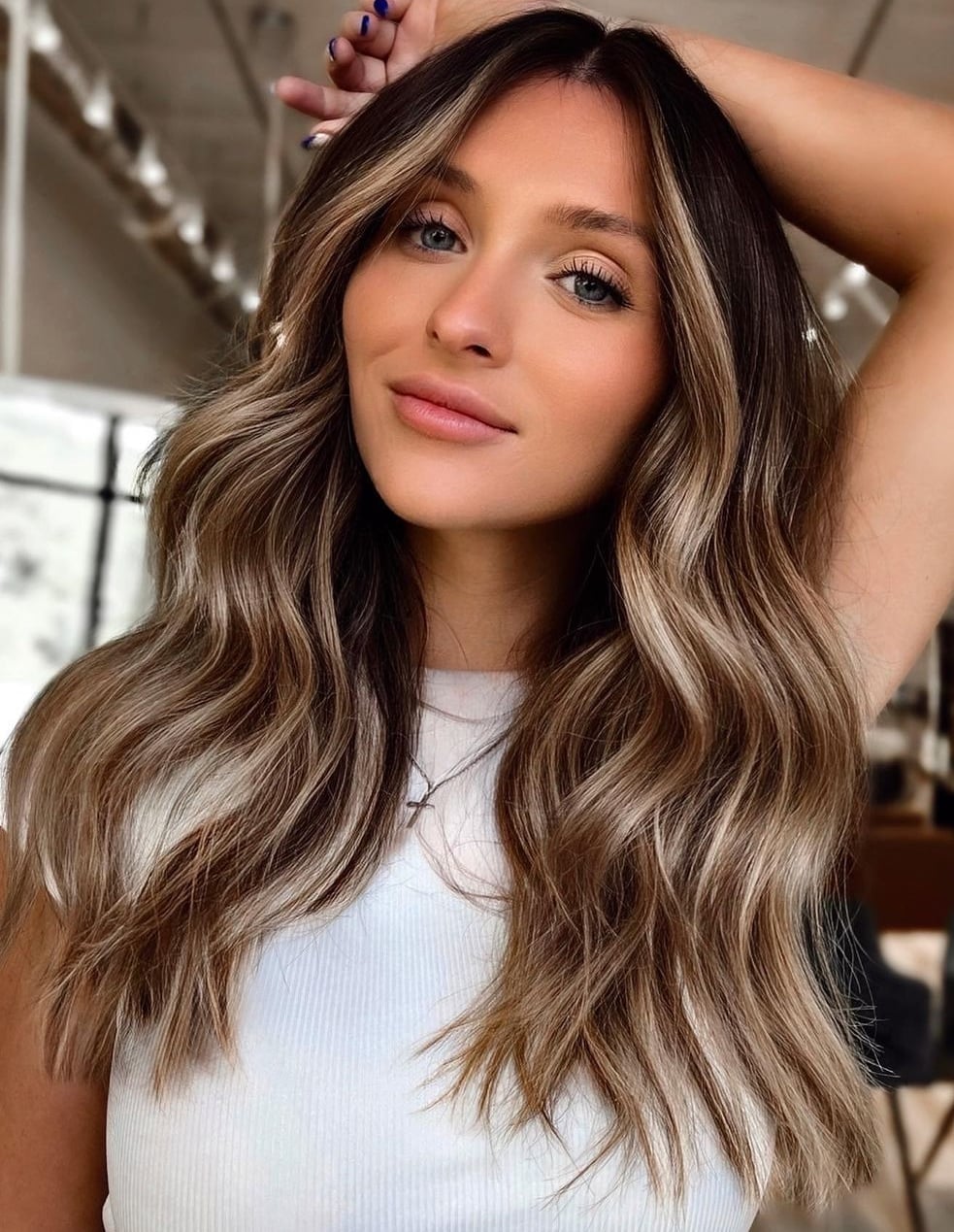
Two distinct tones frame the face here. The blonde is noticeably lighter than the warm brown base, not a whisper of a difference. That contrast makes the cut look deliberate. The layers stop just past the jaw, which gives the wavy texture room to move without losing shape. A smoothing serum on the waves keeps the ends from catching on each other.
Messy updo with wispy curtain bangs and bronde
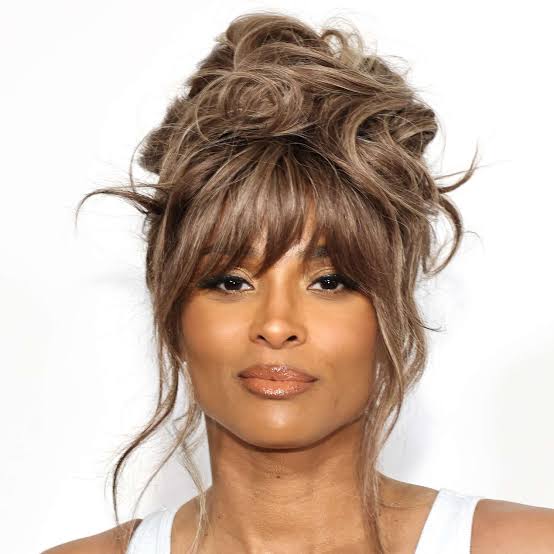
Wispy curtain bangs and a messy updo rely on the same trick: loose strands that look accidental but are not. The subtle highlights throughout the bronde base stop the updo from looking a solid block of color. A layered cut gives the hair enough texture to hold the twist without pins slipping. Ask your colorist for: layered cut, wispy curtain bangs, bronde with subtle highlights. Leave a few pieces out at the temples to soften the line.
Dark blonde base with ash blonde highlights and root shadow
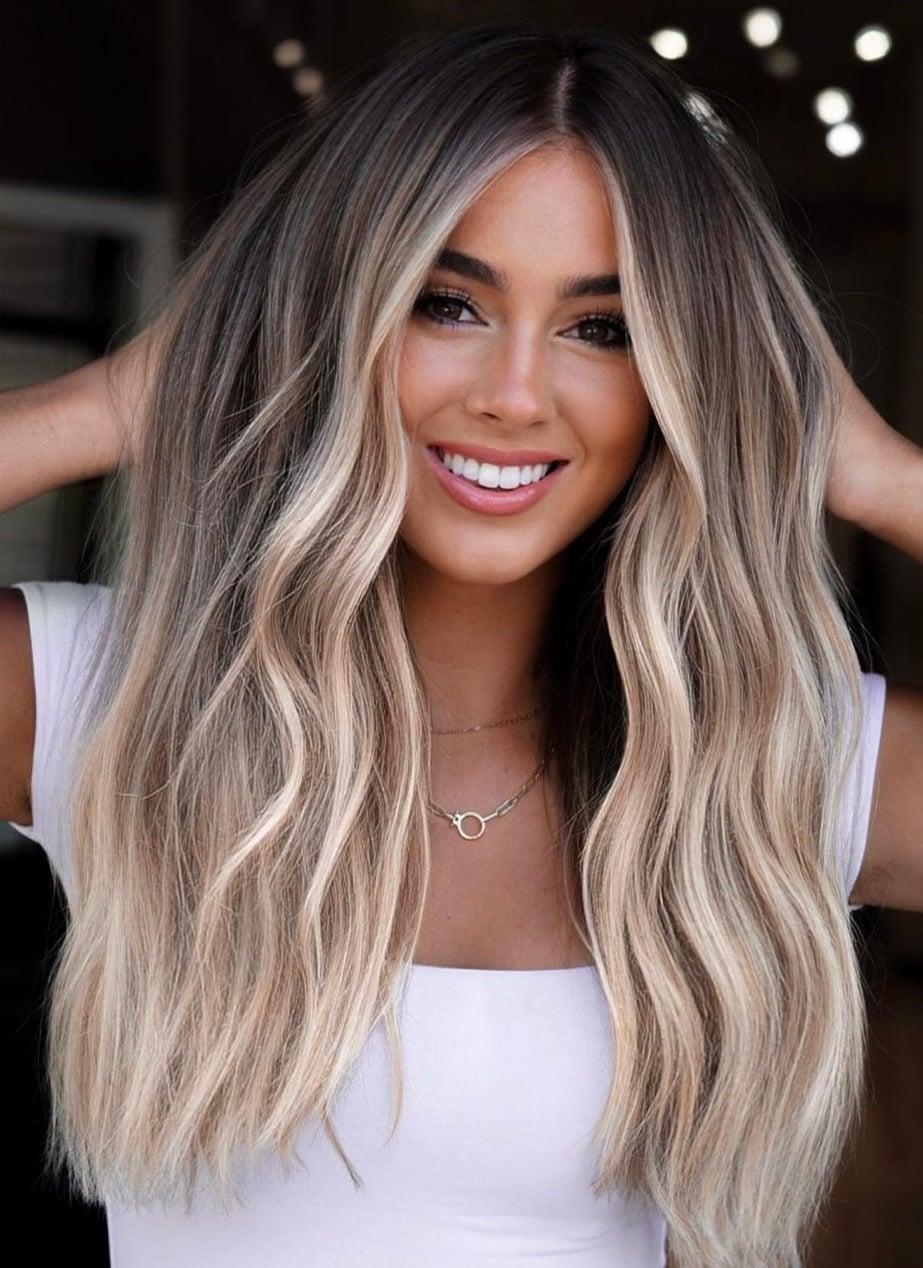
Compare this to a solid ash blonde and the difference is the depth. The dark blonde base keeps the root shadow from looking like a separate color, while the ash blonde highlights sit just light enough to catch the eye. Fine texture benefits from the balayage technique because the paint stays off the scalp, so regrowth is a soft fade rather than a harsh line. The catch: ash tones grab faster on a dark base, so a purple shampoo is non-negotiable at week four. Skip it if your natural color is already light blonde. The root shadow will look grow-out, not technique.
Layered cut with curtain bangs and bronde with root shadow
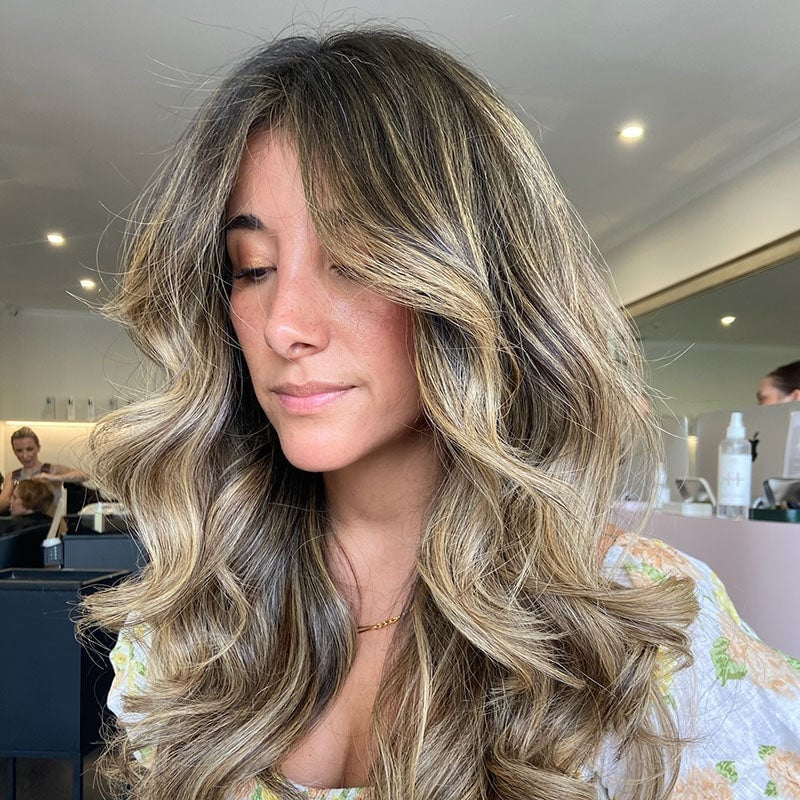
Curtain bangs and a soft root shadow share the same logic: a gentle fade from one length to another. The bronde base sits warm enough that the subtle blonde highlights look natural light, not salon work. A layered cut gives the wavy texture enough internal movement to keep the bangs from sitting like a solid sheet. Ask your colorist for: layered cut, curtain bangs, bronde with subtle blonde highlights and root shadow. Blow-dry the bangs forward and then let them fall where they want.
Dark brown base with ash blonde highlights on thick hair, layers
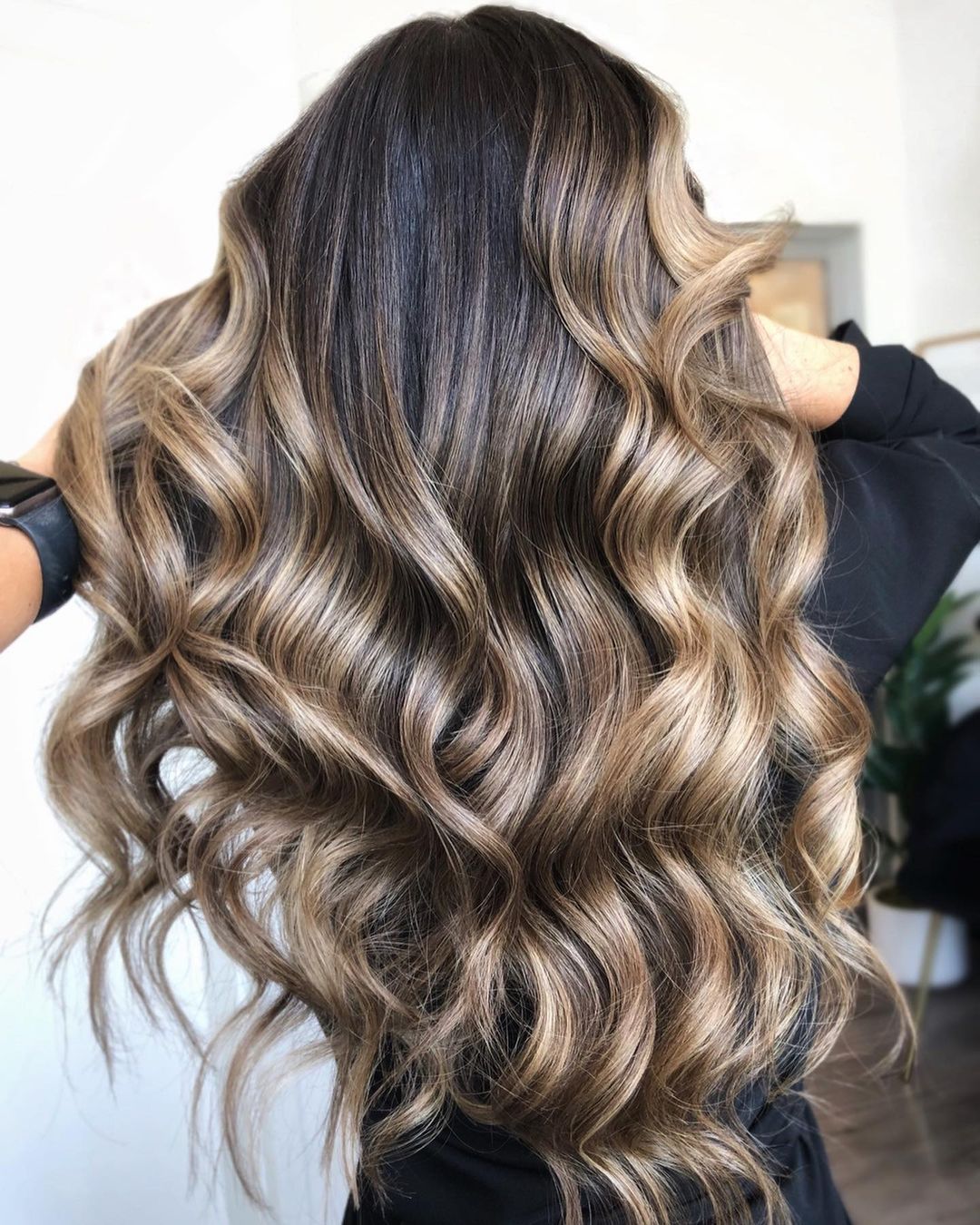
Call it the opposite of a warm caramel melt. This one keeps the dark brown base deep and the ash blonde highlights subtle, so the contrast reads cool rather than sunny. Thick, wavy texture holds the layered cut open, which stops the ash tones from falling flat against the darker sections. A middle part and a blowout let each highlight sit where it was painted. The catch: fine hair tends to look weighed down by this much depth, so pass if you want more lift at the roots.
Blonde highlights and root shadow on smooth brown
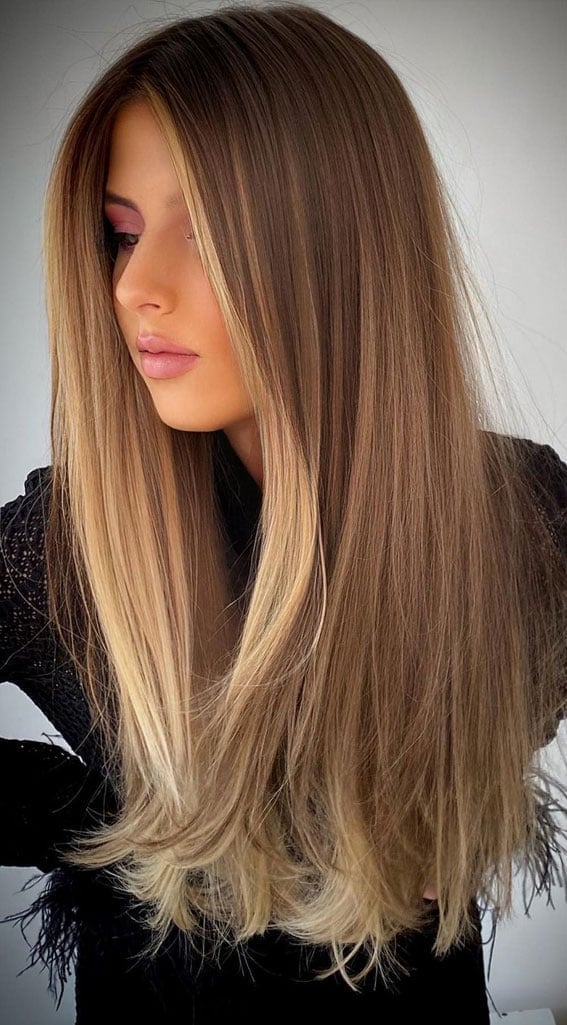
Two details separate this from a standard highlight job. First, the root shadow is soft, not sharp, so the grow-out blends naturally for weeks. Second, the face-framing pieces land on the lighter side of blonde, which draws attention outward without a heavy money piece. Fine, straight texture works well here because the smooth blowout keeps the root shadow smooth and the ends neat. Book it as: bronde with face-framing highlights and root shadow, smooth blowout. If your hair is naturally wavy or curly and you want to wear it that way, the root shadow needs a smooth canvas to blend correctly.
Neat bronde with lighter balayage highlights
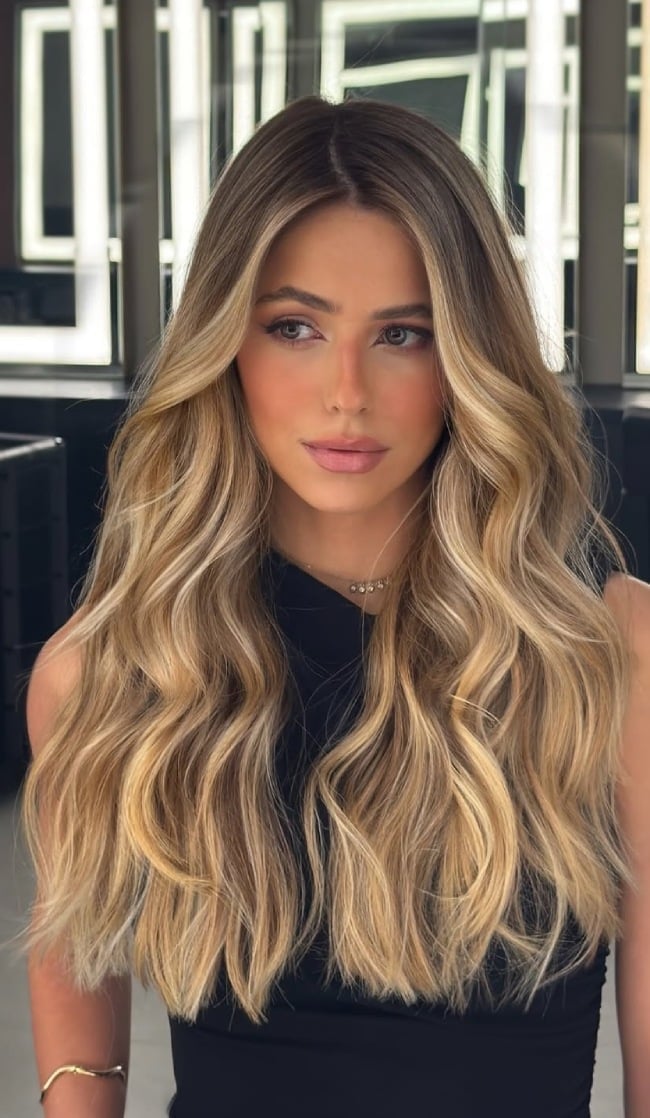
This is what happens when balayage stays subtle. The smooth blend of brown and blonde lands somewhere between natural and deliberate, with no hard lines between the two. Thick, wavy texture gives the lighter effect enough surface area to read, while the middle part and soft waves keep the look neat. Ask your colorist for: bronde with lighter balayage highlights, subtle layers.
Thick wavy bronde with face-framing highlights, layers
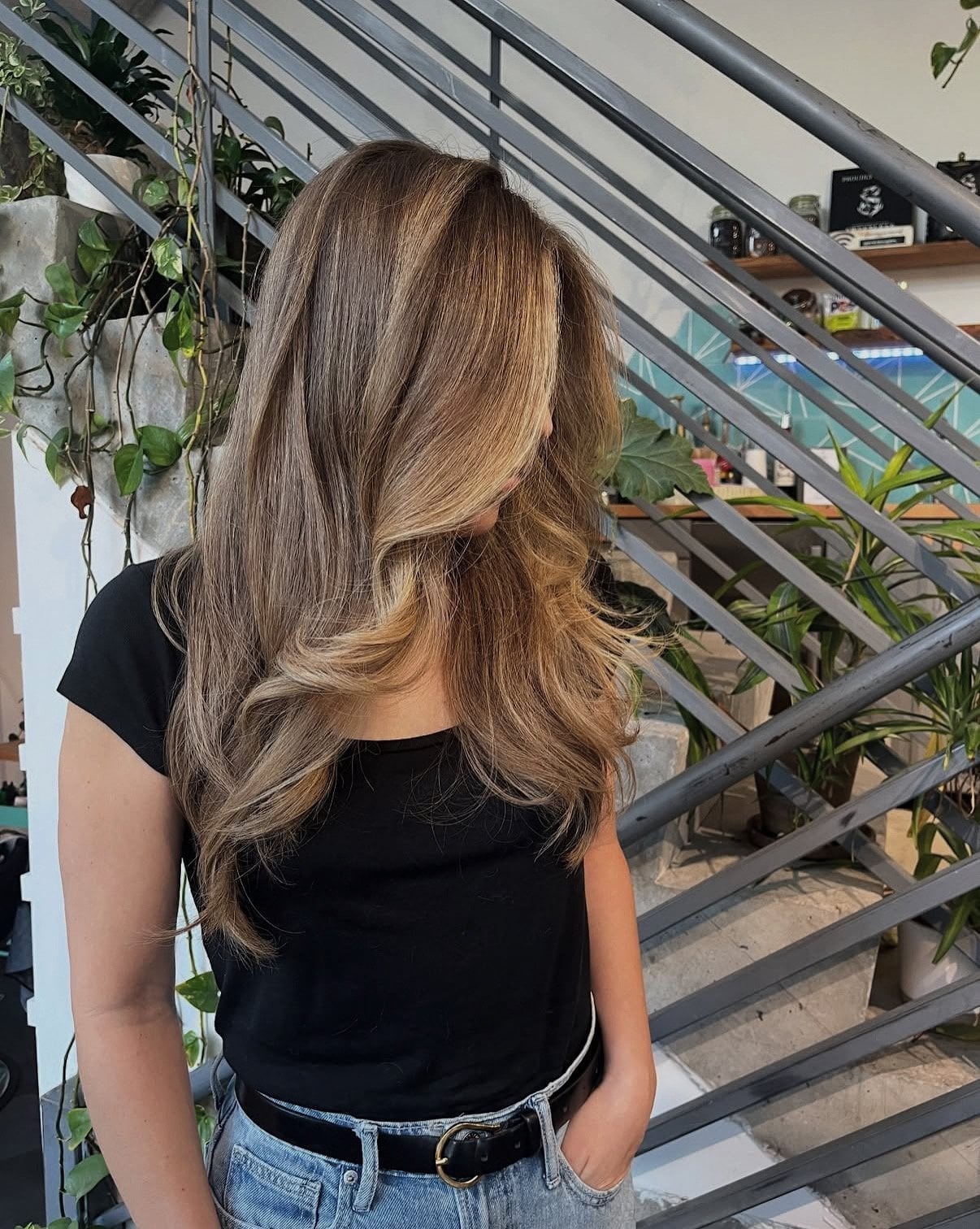
Face-framing highlights work best when they are distinct, not whispered. Here the blonde pieces sit clearly against the bronde base, creating a frame that starts at the cheekbone and softens toward the ends. Thick, wavy texture gives the layered cut volume without needing extra product. A blowout keeps the waves defined and the highlights visible. Not for fine hair, the weight of the thick waves and the layering can collapse a finer texture.
Lighter bronde highlights on thick wavy hair, layers
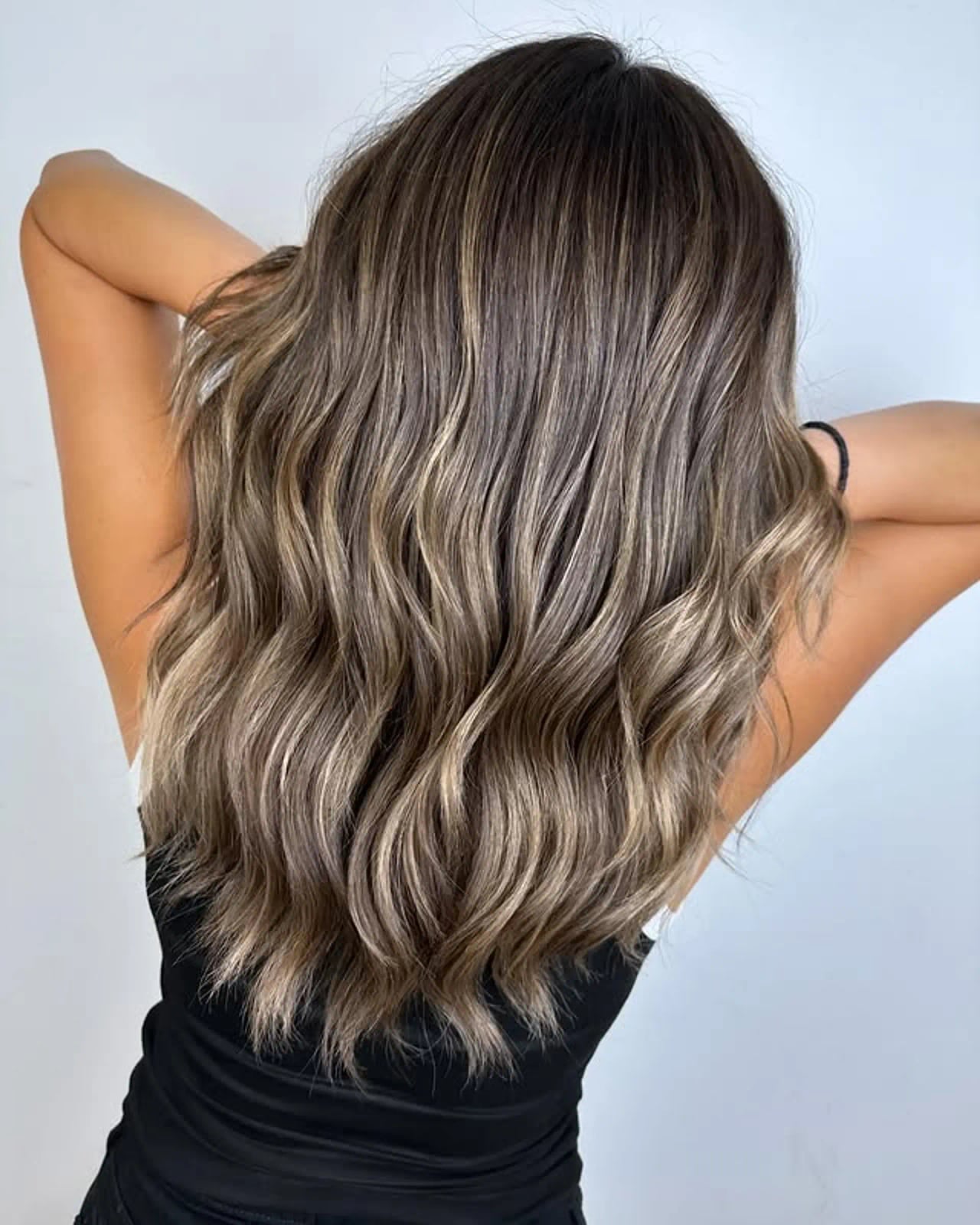
Lighter implies randomness, but this design is anything but. The blended blonde highlights are placed to hit the high points of the waves, so the dimension follows the natural movement of the hair rather than fighting it. A rich bronde base keeps the overall tone warm without going golden. Thick, wavy texture is essential here. The layers need enough body to hold the blowout open and let the highlights catch.
Ask your colorist for: rich bronde base with blended blonde highlights, layered cut. The drawback: the blended effect means less contrast, so if you want obvious streaks, this is not the one.
Voluminous curly bronde with root shadow and side parting
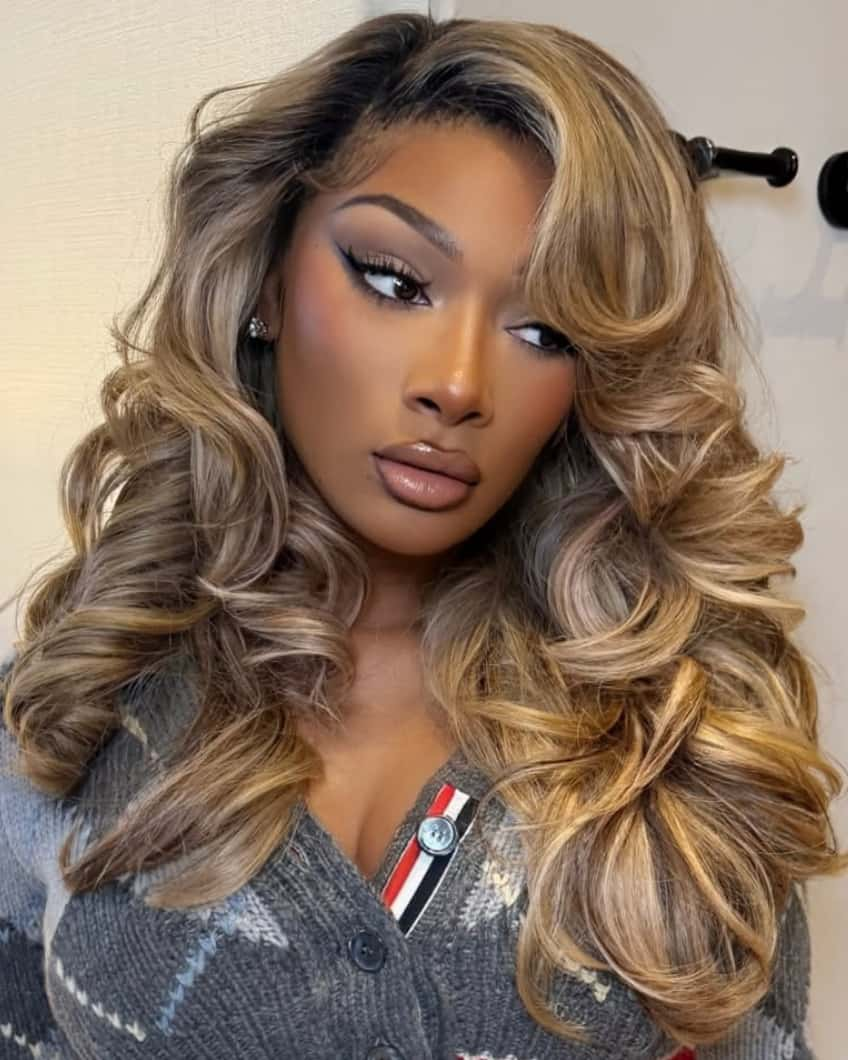
Voluminous curls need a root shadow to keep the top from reading flat. This layered cut uses a side parting to lift the crown, with bronde tones and distinct blonde highlights woven through the waves. The technique blends a subtle root shadow into lighter ends so the color grows out soft, not stripey. Skip it if you prefer straight hair or a middle parting, the volume lives in the asymmetry.
Warm brown base with cool ash blonde highlights
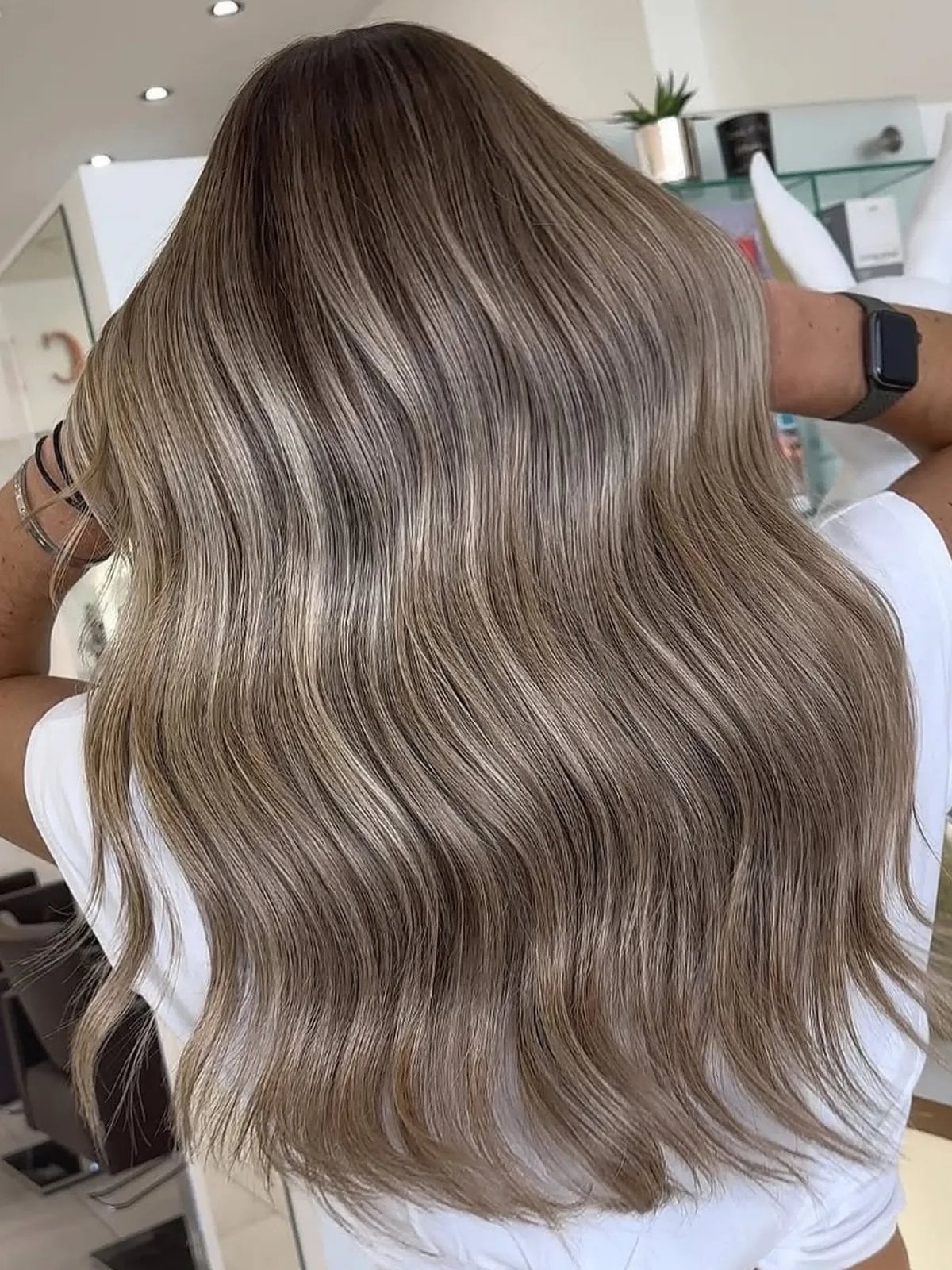
Two tones that should fight but don’t. The warm brown base anchors the color while cool ash blonde highlights cut through it, creating a dimensional look that works for fine wavy hair. The back view shows how the layers let the ash pieces surface without overwhelming the base. A middle parting keeps the distribution even. Tell your colorist: warm brown base with cool ash blonde highlights, layers.
Dimensional bronde with ash blonde highlights, wavy
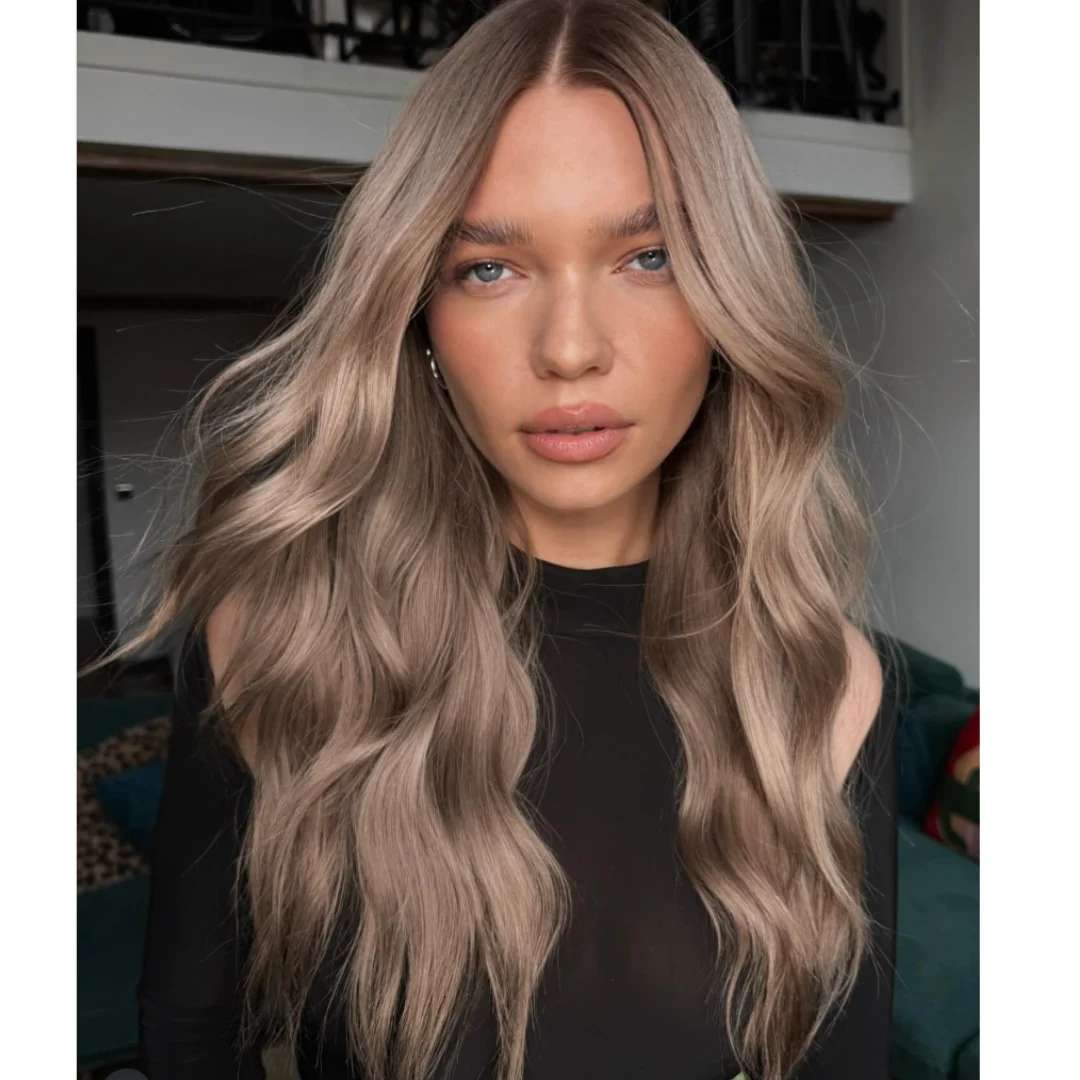
Soft dimension comes from the ash blonde highlights sitting on a bronde base, not too light, not too dark. The subtle layers let the color move with the loose waves, and the centered parting gives it a balanced frame. The combination looks more grown-up than a full blonde and less heavy than a solid brown. Pass when your hair is very coarse, which can swallow the ash tones. A lightweight texturizing spray on the waves keeps the lift without weighing the fine texture down.
Natural lighter bronde with balayage highlights, wavy
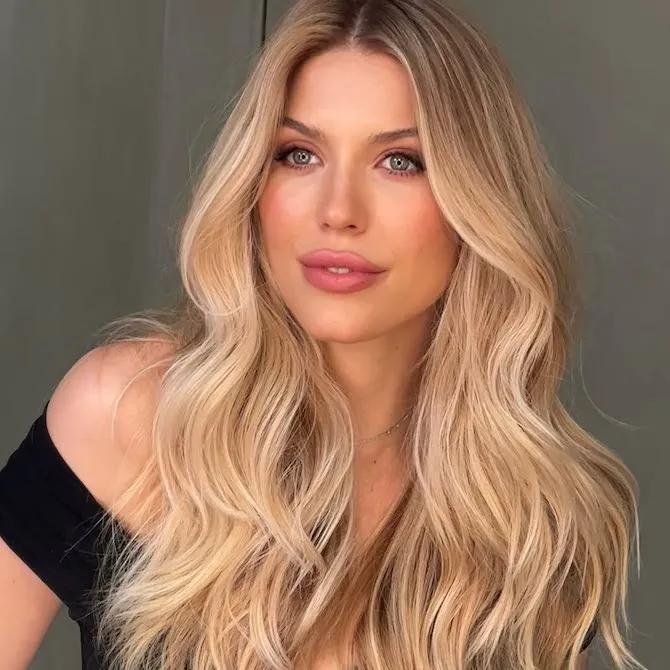
The mistake people make with balayage is asking for too much contrast. This version keeps the bronde base close to the lighter blonde highlights, so the seam is barely there. The balayage technique paints the lighter pieces onto thick wavy hair, and the middle parting lets the lighter finish read naturally. The subtle blending can get lost on fine hair. Ask your colorist for: bronde base with lighter blonde highlights, balayage, layered cut. A texturizing spray on the waves holds the shape.
Medium brown base with root shadow and blonde highlights, wavy
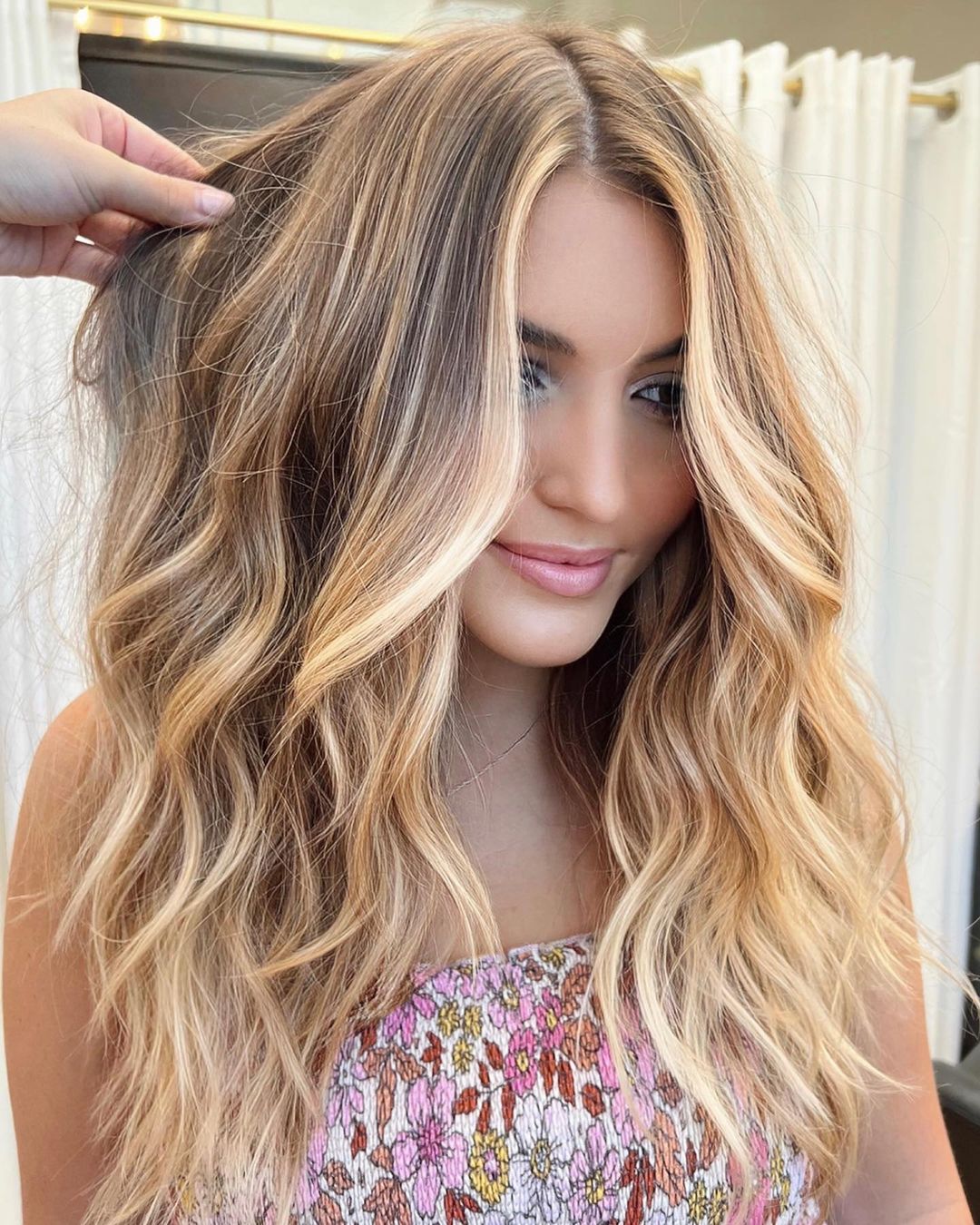
Root shadow on a medium brown base does two things: it lowers the upkeep and it pushes the blonde highlights forward. The face-framing pieces land at the front, while the root shadow keeps the regrowth line soft. The wavy styling and middle parting let the contrast read without looking harsh. Not for those who prefer a very dark or very light base. The medium brown is the anchor. A smoothing serum on the waves keeps the shine up.
Blended highlights create dimension on wavy bronde
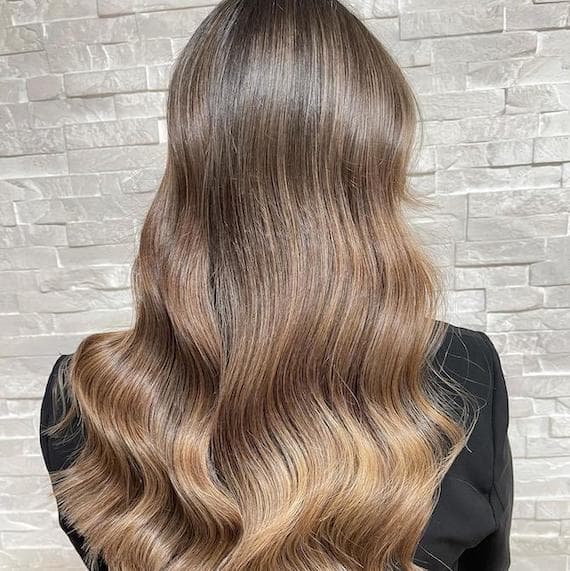
Fine hair gets the most out of a color that does not stop at one shade. Subtle blended highlights on a bronde base add depth without the weight of chunky pieces. Waves from a blowout catch those lighter strands and show the dimensional effect from every angle. The layered cut keeps the ends from looking stringy.
Pass when your hair is very thick. The soft transition between tones can get lost in denser textures, and the effect looks flat rather than blended. A texturizing spray on dry waves keeps the shape alive for a second day.
Dark brown base with striking ash blonde highlights, salon-leaning
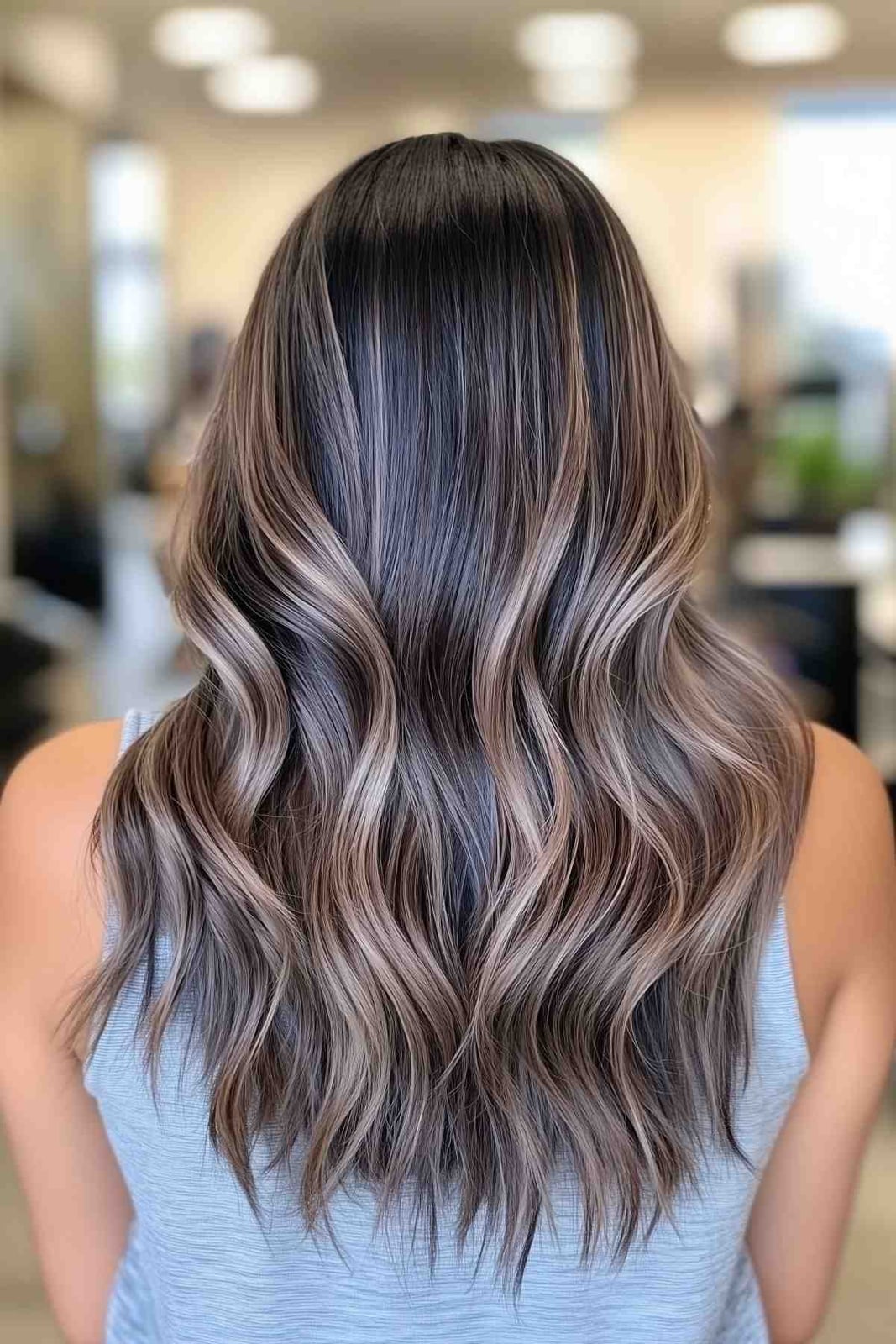
Contrast is the point here. A dark brown base paired with striking ash blonde highlights creates a sharp, deliberate separation that looks salon work. The middle part shows the full width of the layered cut, and soft waves soften the transition between the two tones. Thick hair carries this weight well; fine hair may find the dark base too heavy. A lightweight oil on the waves keeps the ash tone from looking dusty.
Face-framing layers and curtain bangs with bronde highlights
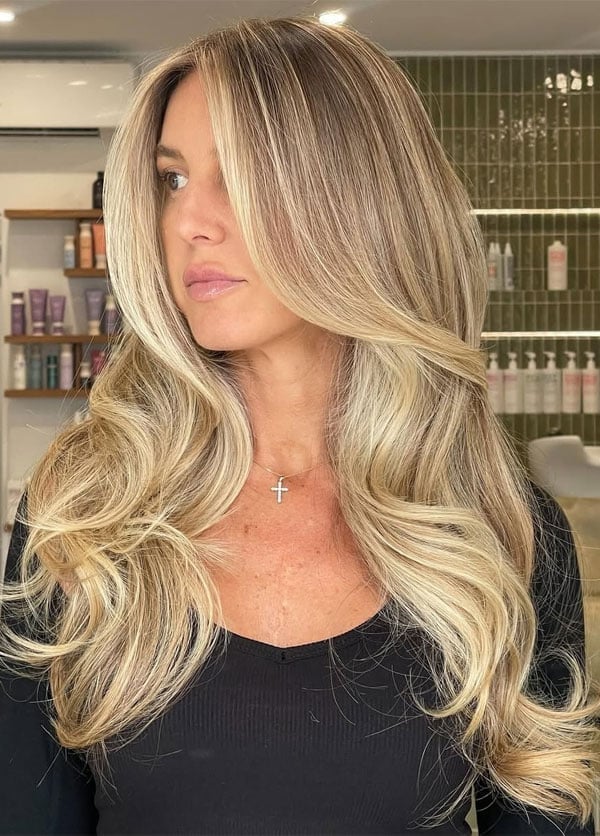
Curtain bangs and face-framing layers do the work of shaping the face without a dramatic cut. The bronde base carries subtle blonde highlights that land mostly around the front sections, so the lightness follows the line of the layers. Thick, wavy hair holds the shape of a blowout well, and the middle part lets the bangs fall naturally to each side. Tell your colorist: bronde with subtle blonde highlights, face-framing layers, curtain bangs. Blow-dry the bangs forward first, then sweep them to the sides.
Air-dried bronde with lighter highlights on thick waves, wavy
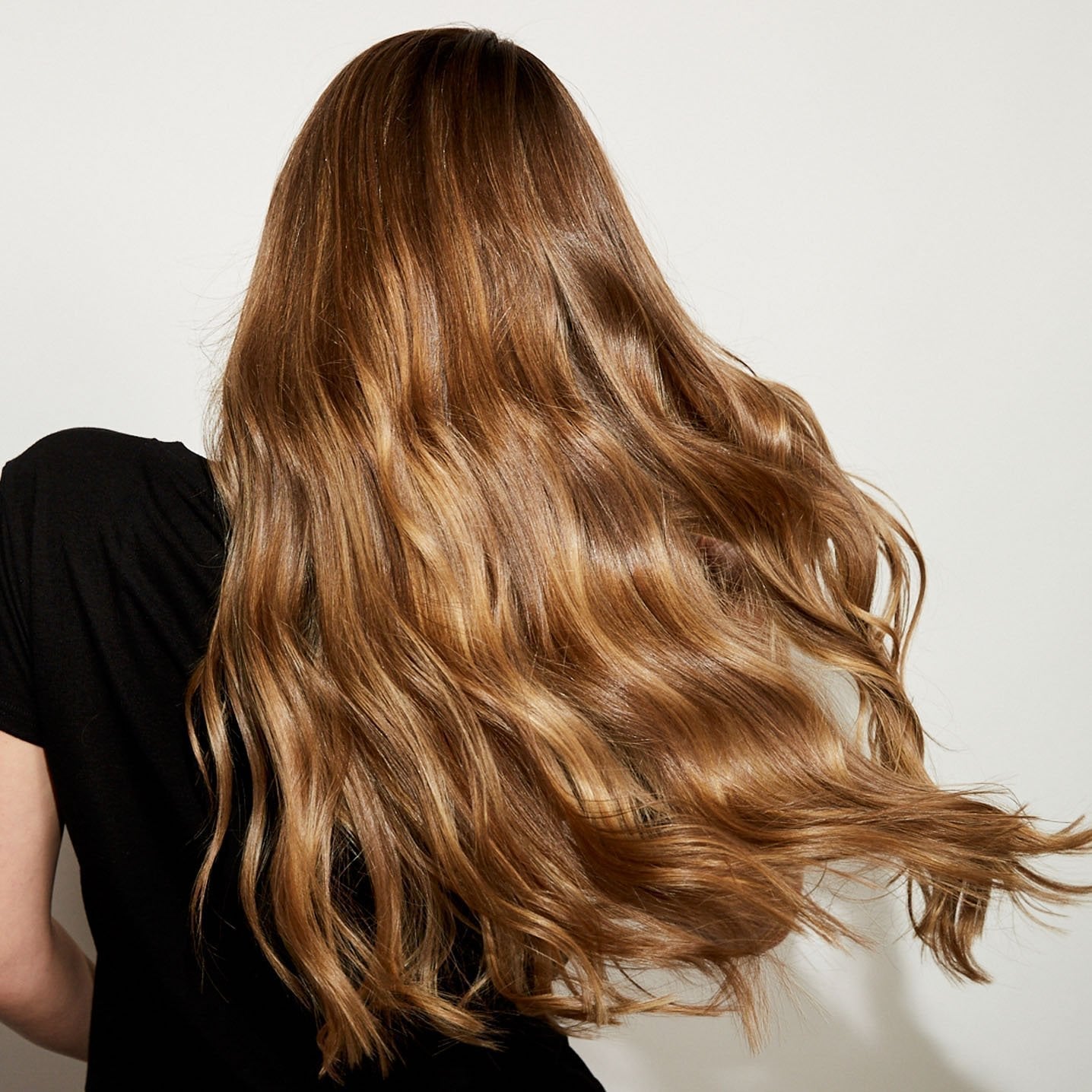
An air-dried finish versus a blowout: which one suits your morning? Thick, wavy hair takes well to an air-dried approach when the cut has layers. The lighter highlights on a bronde base look natural because they are not neat into place. A texturizing cream applied to damp hair encourages the wave pattern and reduces frizz. Skip this look if you prefer a smooth, heat-styled finish every day. The layered cut adds movement, and the color stays soft without sharp lines.
Dark brown base with face-framing highlights
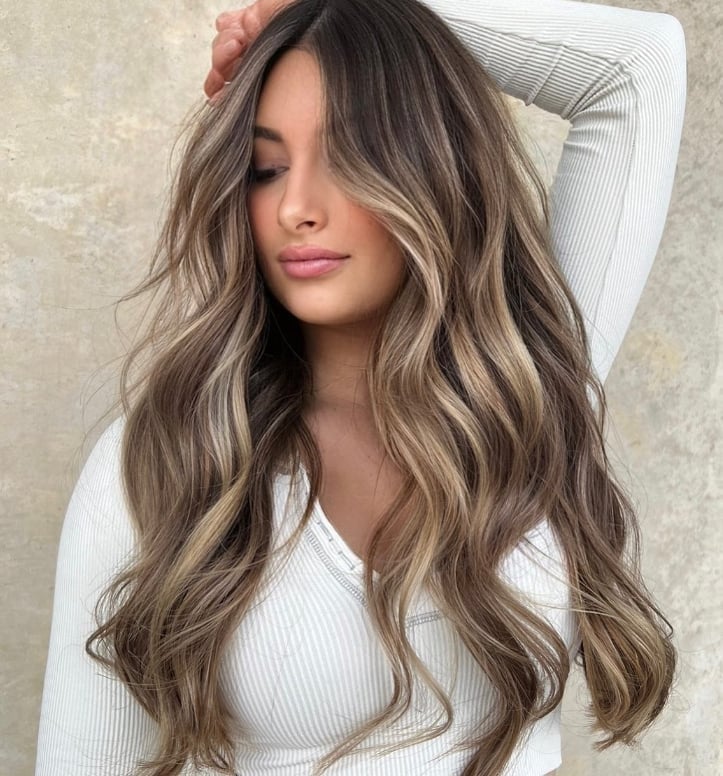
Balayage places the blonde highlights where they matter most: around the face. A dark brown base keeps the hair deep and rich, while the lighter strands at the front add brightness. The centered part and face-framing layers direct the eye forward. Thick, wavy hair holds the wave pattern through a blowout without extra product. The technique avoids a solid line of color at the root, so grow-out stays soft. A smoothing serum controls any flyaways.
Voluminous bronde blowout with face-framing highlights and root shadow
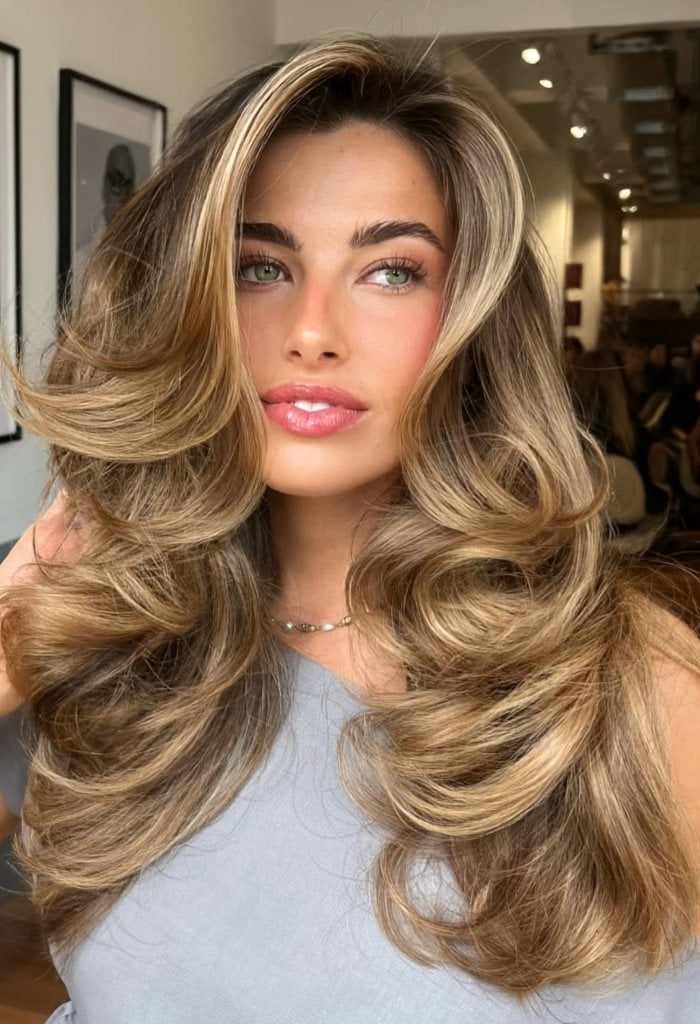
You want this look but your blow dryer skills top out at barely dry. That is the honest math of a salon-only balayage with a root shadow on warm brown and blonde tones. Thick, wavy hair with layers takes the volume best; the face-framing highlights are the standout, lifting the front without needing a full head of blonde. Skip it if your hair is fine or you reach for a flat iron more than a round brush. Tell your colorist: bronde with balayage, root shadow, and face-framing highlights. A volumizing spray at the roots buys you an extra day between washes.
Final Thoughts
Pick the bronde shade and technique that matches your natural base and your real calendar.
- Ash tones that pull brassy: schedule toning every 6-8 weeks.
- Color-treated waves: use a color-safe shampoo and deep condition weekly.
- Ten minutes in the morning: choose balayage or root shadow for slower grow-out.
- Fine hair: fine highlights avoid a stripe effect at the roots.
Find your ideal bronde, from lighter to ash-kissed.