29 Gorgeous Highlights on Dark Hair 2027 with Dimensional Caramel Tones
Gorgeous Highlights on Dark Hair 2027 feature dimensional caramel tones and face-framing accents for a subtle yet striking effect.

You have the dark base and the salon appointment, but the high-contrast highlight reel has you stalling. Caramel, ash, silver. Every tone pulls differently on a dark starting point, and the grow-out line is the real test. What you want is a shade that photographs well and fades politely, which is why Gorgeous Highlights on Dark Hair 2027 fill so many saved boards.
This roundup of 29 ideas spans the subtle to the statement: face-framing babylights that soften a square jaw, balayage that stretches touch-ups to twelve weeks, and cool-toned streaks that need a purple shampoo every other wash. For medium to thick textures and any length above the shoulders, these are the tones and techniques worth booking.
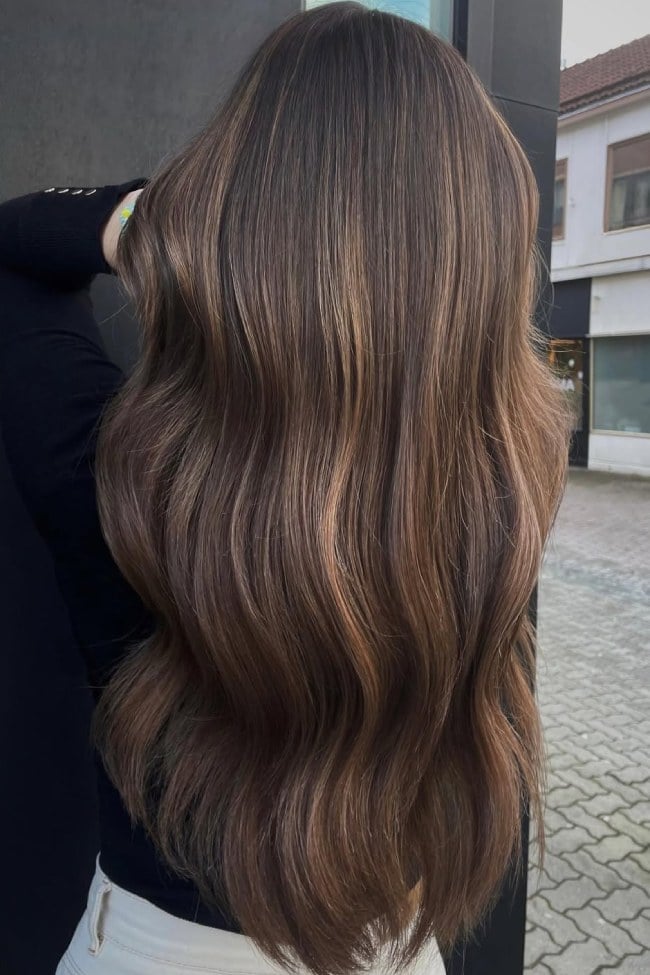
Dark brown base with subtle caramel highlights and soft waves
Back view shows the full scope of the design: a dark brown base carries caramel highlights that weave through the interior, not just the surface layer. The middle part lets the lighter pieces fall symmetrically down the back, while soft waves break up the color line so the blend looks natural. Thick, wavy texture gives the highlights room to sit within the hair rather than on top of it. A layered cut keeps the movement from going flat by midday. Skip if you prefer a high-contrast look, the subtlety here is the point. Ask your colorist for: dark brown base with blended caramel balayage.
Dimensional caramel highlights for a gorgeous dark brown base
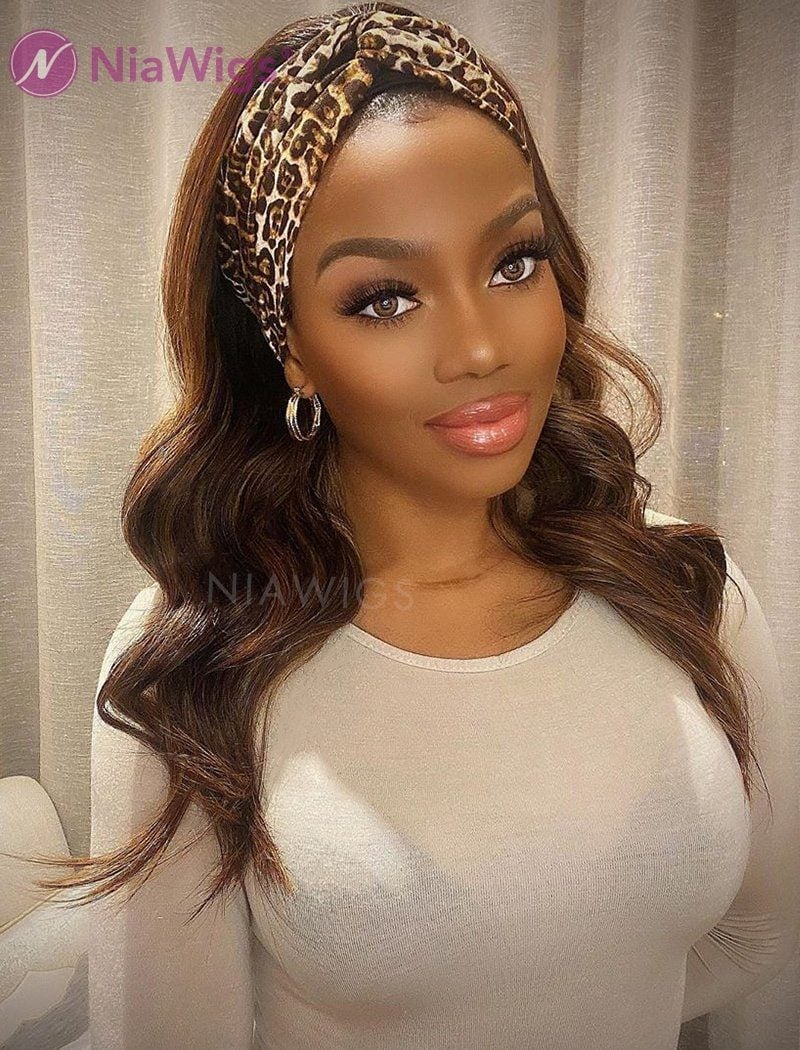
Compare this to the same base with highlights that sit only on top. Here the caramel pieces weave through the interior, so the dimension reads from every angle, not just the front. Thick, wavy hair with a middle part and loose waves allows the lighter strands to surface in different spots as the hair moves. The dark brown base stays dominant, the highlights add depth rather than compete. Skip it if you prefer a more uniform color or a straight style that would hide the interior dimension.
Caramel highlights framing the face on dark brown hair
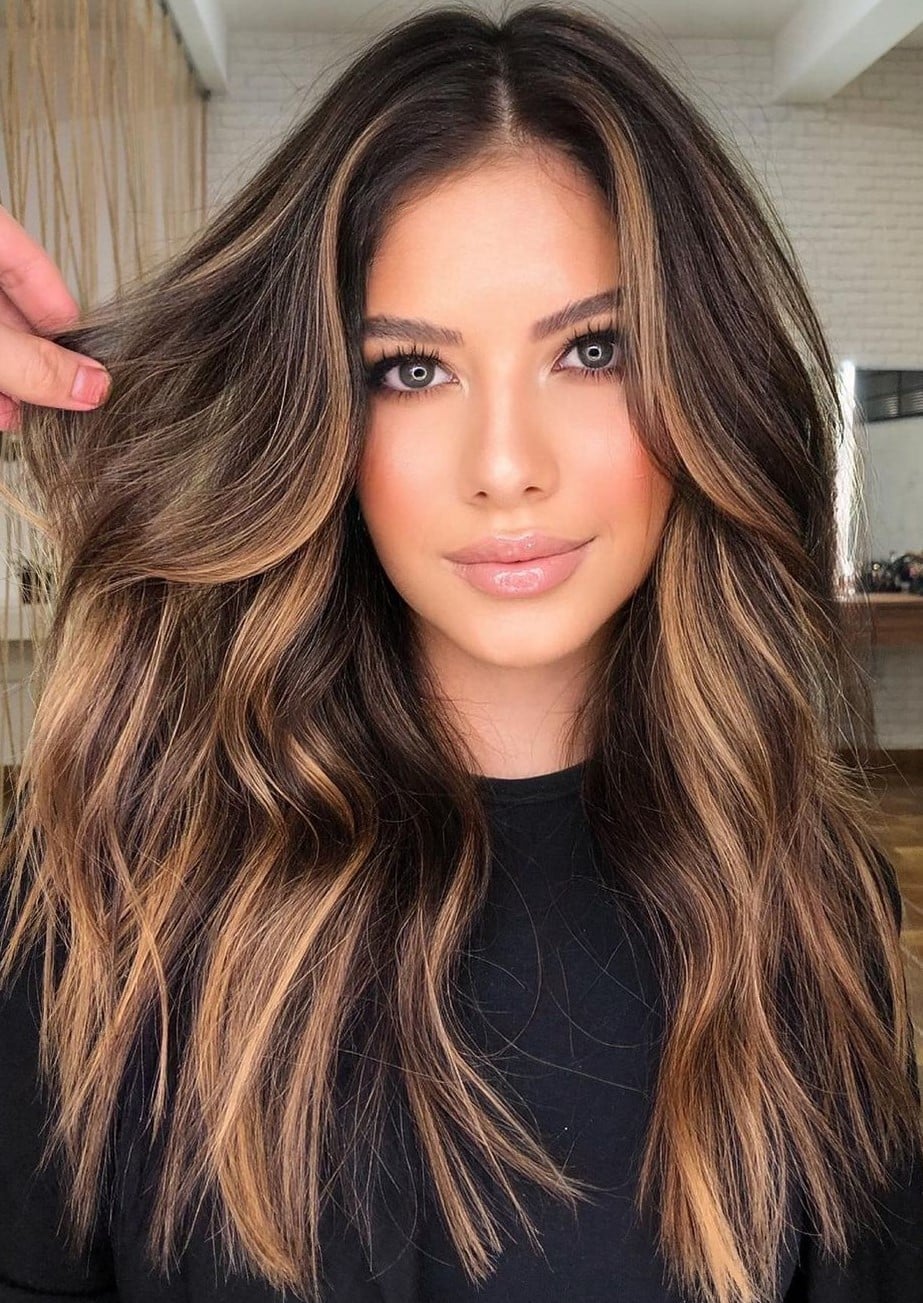
What do you say when you want warmth around the face but not through the whole head? Dark brown base with caramel highlights placed at the front layers, leaving the rest of the hair in its natural shade. Thick, wavy texture and a middle part let the face-framing pieces fall where they catch the eye first. The layers in the cut ensure the lighter strands sit forward, not tucked behind. Tell your colorist: dark brown base, face-framing caramel highlights.
Balayage caramel highlights for a natural blend on dark hair
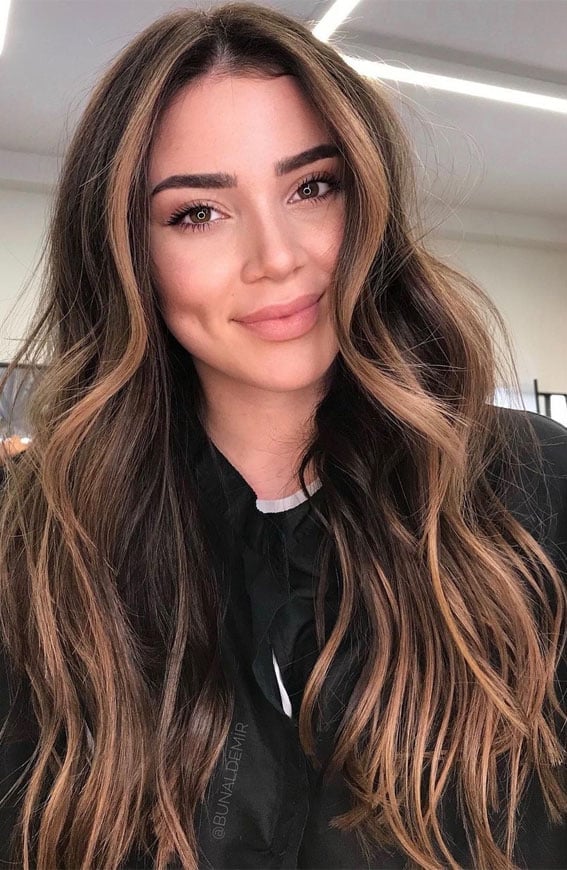
Balayage does not touch the root. That is the mechanical difference, and it is why the regrow looks soft rather than obvious. On a dark brown base, caramel highlights are hand-painted through the mid-lengths and ends, with the heaviest concentration around the face. Thick, wavy texture and a middle part let the lighter pieces surface in the bends, not just at the ends. A layered cut keeps the transition from looking blocky.
This technique looks grown-in from day one, which is the point or the problem, depending on your taste.
Face-framing caramel highlights on fine, wavy dark hair
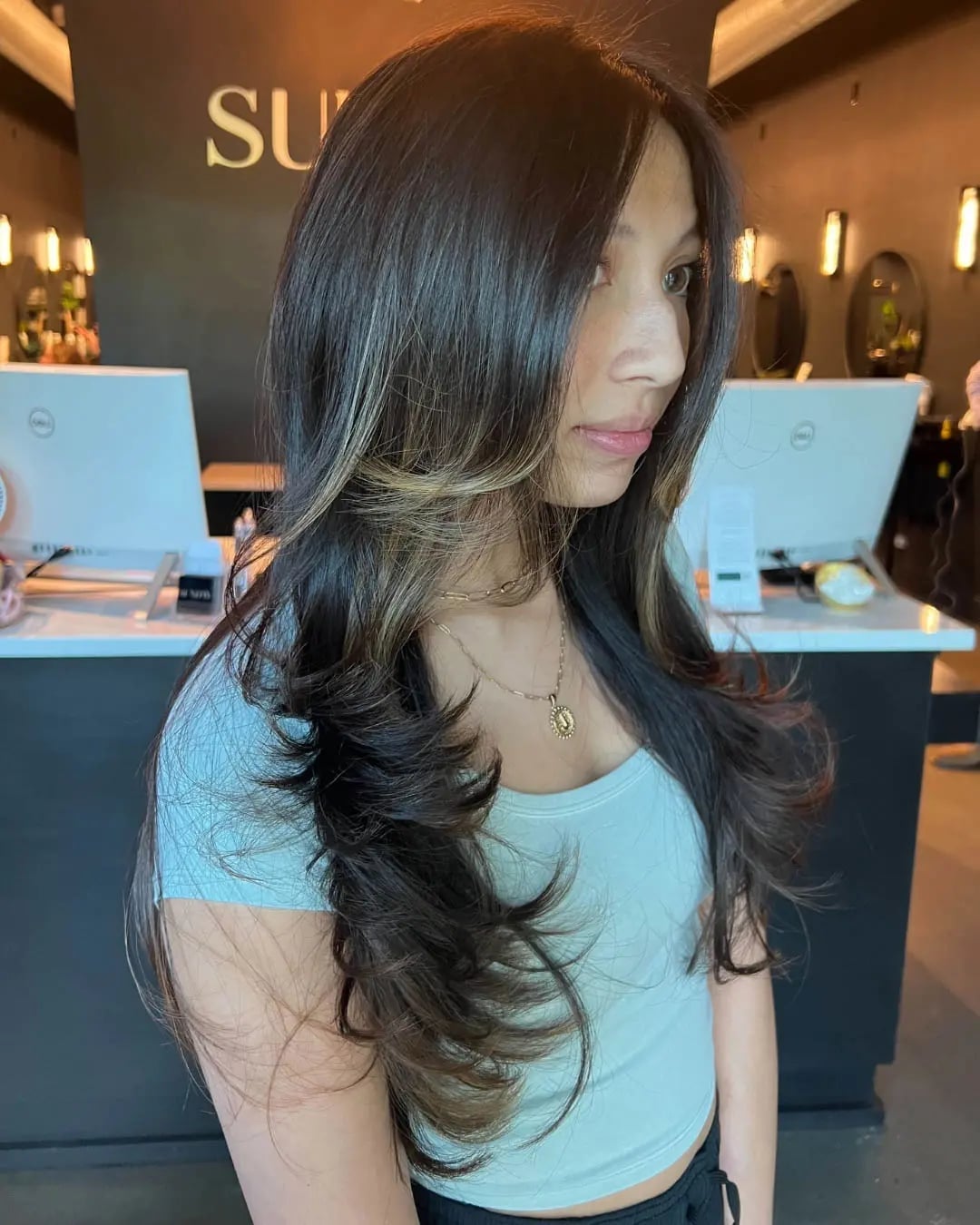
Two observations about fine, wavy hair and face-framing caramel highlights. First, the lighter pieces need to sit close enough to the face to register, because fine texture does not hold color visually the way thick hair does. Second, the waves help, they break up the highlight line so it shows dimension instead of a single stripe. On a dark brown base, the caramel pieces are concentrated at the front and through the mid-lengths, with a soft blowout smoothing the rest. The layered cut prevents the lighter strands from looking sparse. For very thick hair, the contrast tends to get lost rather than showcased.
Lighter caramel highlights on thick, wavy dark hair
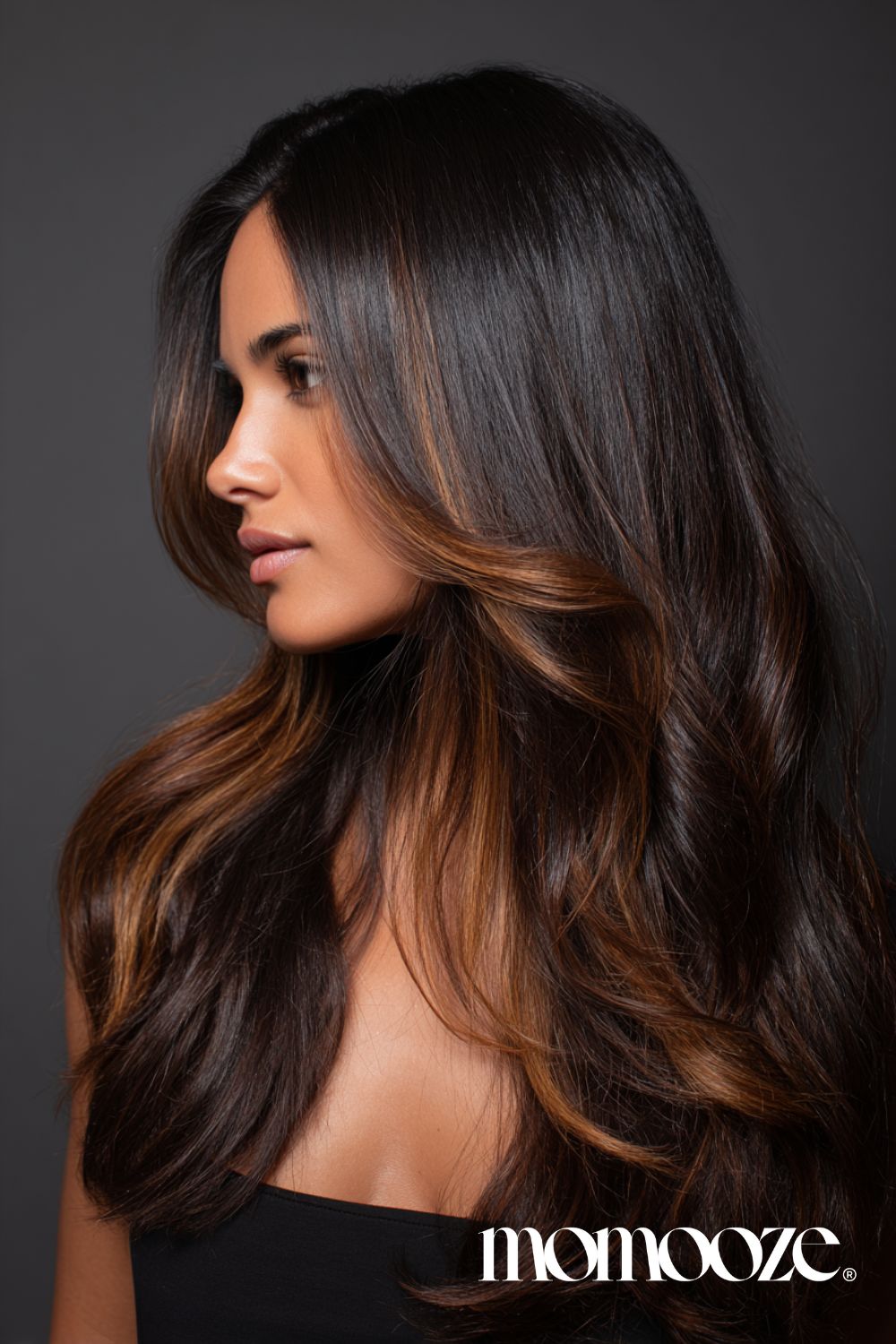
Versus foils, this keeps the dark brown base dominant. Thick, wavy hair catches the caramel highlights in a way straight hair cannot, the waves break up the color, so it looks natural. The layers do the work here. They let the lighter pieces sit where they belong: framing the face and moving with the hair. Middle part, side profile, blowout that respects the texture. This look needs the wave to make sense. It works best with a wavy texture and is not for a straight style.
Subtle caramel highlights with a side-swept fringe on dark hair
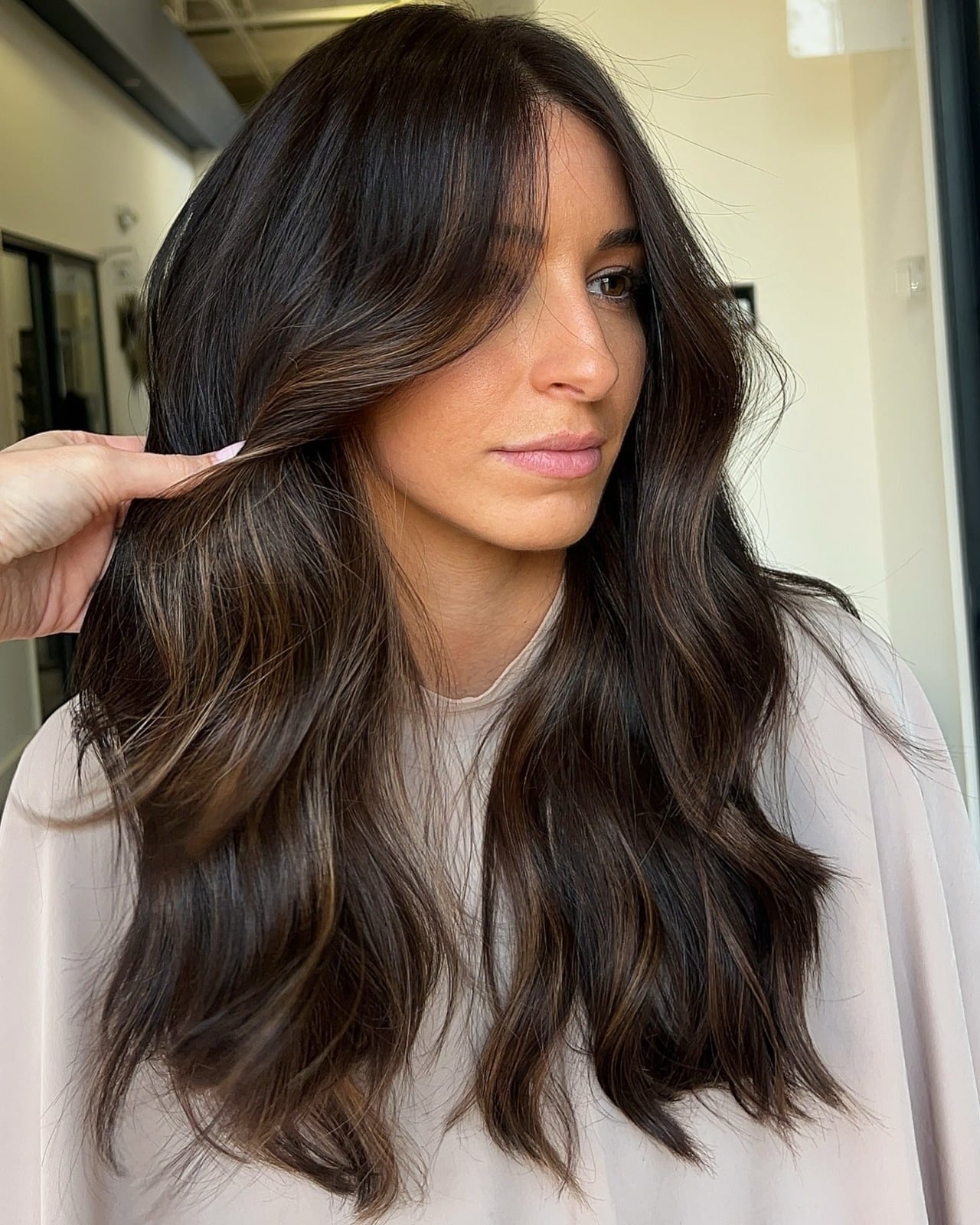
Can caramel highlights and a side-swept fringe coexist without looking busy? Yes, when the fringe stays soft and the highlights stay subtle. This is a dark brown base with caramel pieces woven through, not painted on. The side-swept bangs catch just enough of the lighter color to brighten the face without announcing themselves. Ask your colorist for: dark brown base, subtle caramel highlights, side-swept bangs. The layers keep the shape from getting heavy. Skip it if you prefer no bangs or a middle part.
Wavy blowout with caramel highlights on dark brown hair
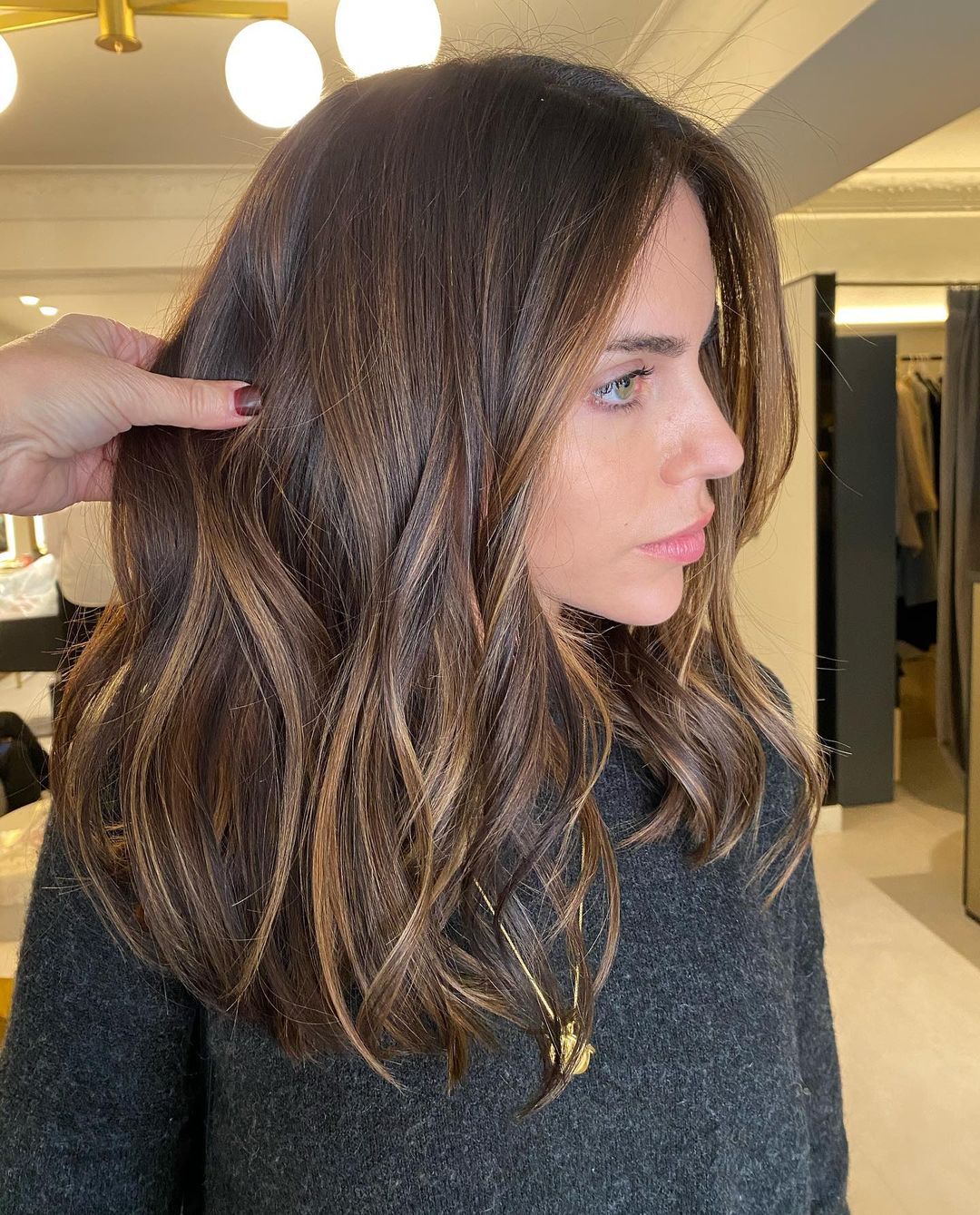
What you notice first: the caramel highlights sit evenly through the layers, not just at the ends. That is the difference between a grow-out you can live with and one you cannot. Dark brown base, medium density, wavy texture. The blowout adds polish without fighting the natural wave. Styling takes about twenty minutes with a large curling iron. A trim every eight to ten weeks keeps the layers from turning shapeless. The middle part and side profile show the placement clearly. No bangs to trim, no extra work.
Smooth blowout with face-framing highlights on dark brown hair
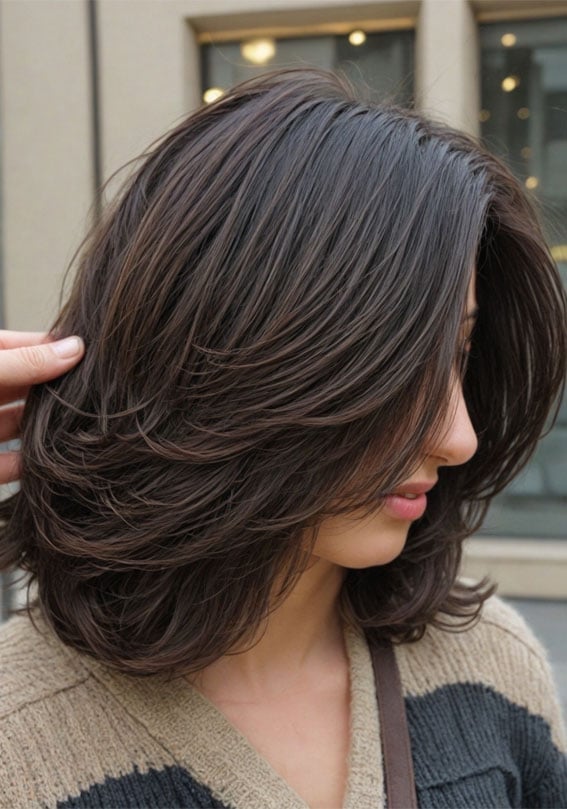
Compare this to the same highlights on a wavy blowout. The difference is the finish. A smooth blowout looks neat, not casual. The dark brown base stays serious; the subtle caramel highlights add softness only around the face. This is a side part, front-facing cut with face-framing layers. The color lives in those layers. It works best with a round brush and a few extra minutes, but the result holds all day.
Warm caramel highlights on a dark brown base, wavy
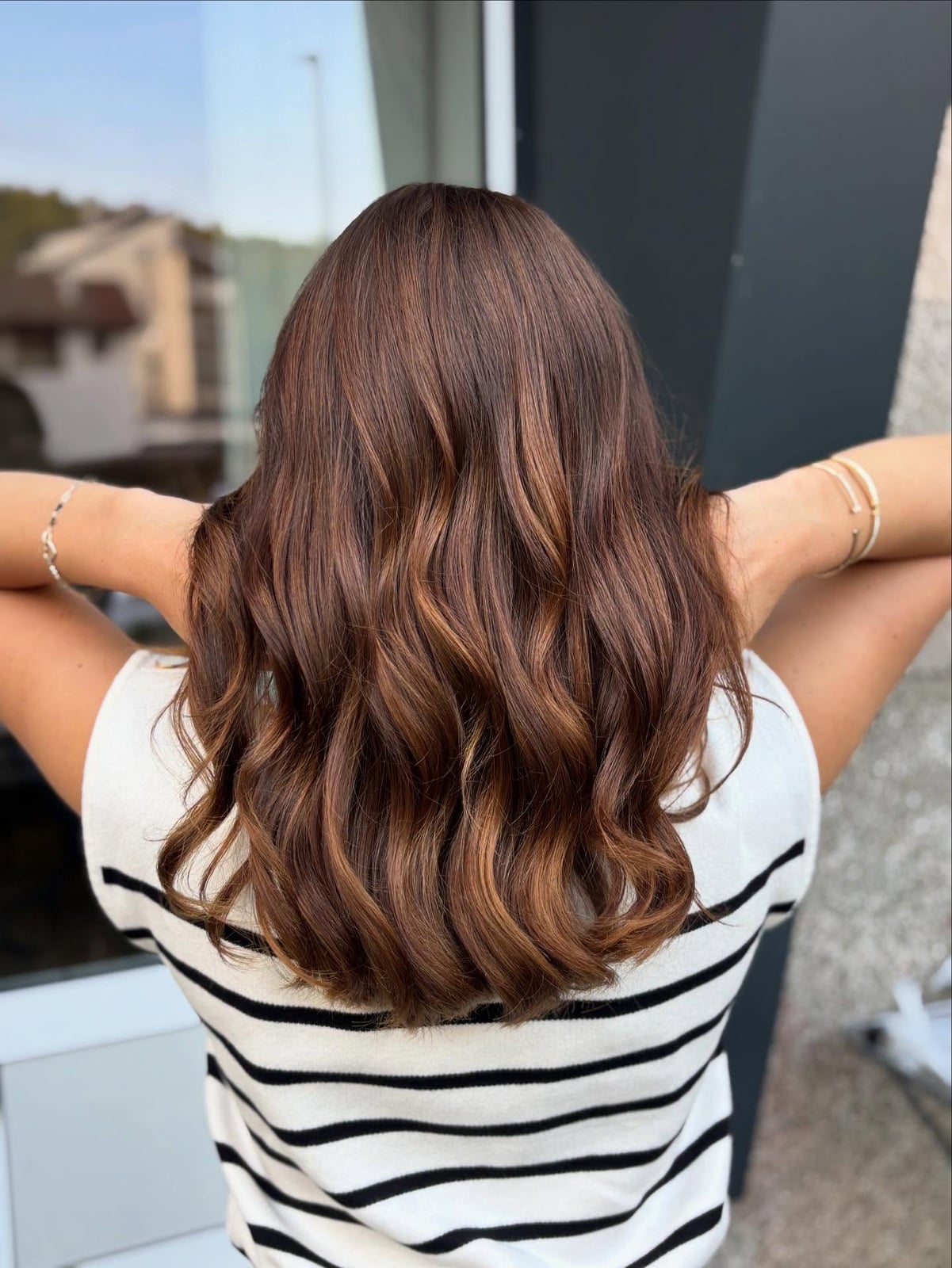
Warm caramel on a dark brown base is the least risky way to add brightness. The back view here shows the point: the highlights stay subtle enough that the base color still looks the main event. Thick, wavy hair with layers, styled soft, not tight. A middle part lets the warmer pieces fall symmetrically. No bangs, no face-framing pieces competing for attention. The warmth keeps the dark base from looking flat. A texturizing spray on damp hair, air-dry halfway, then a quick diffuser pass, fifteen minutes.
Copper tones on layered dark base
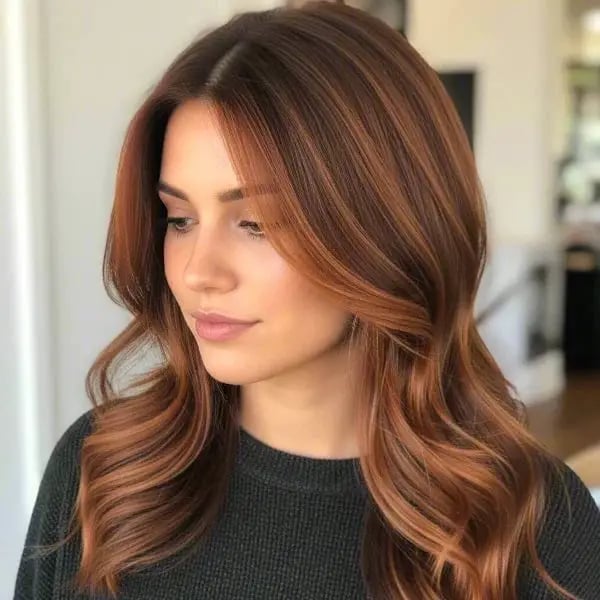
Copper against dark brown is not a subtle shift. The warm tones sit on top of the base, so the contrast reads clearly even in low light. On a layered cut with a middle part, the copper highlights are placed to catch the face first, then cascade through the ends. Thick wavy texture carries the color through each bend, keeping it from looking flat. The middle part lets the copper pieces fall symmetrically on both sides, which matters when the color is this deliberate. Tell your colorist: dark brown base, subtle copper highlights, layered cut. Skip it if you prefer cooler tones; copper will read warm even when applied sparingly.
Two tones: caramel and ash blonde highlights on dark hair
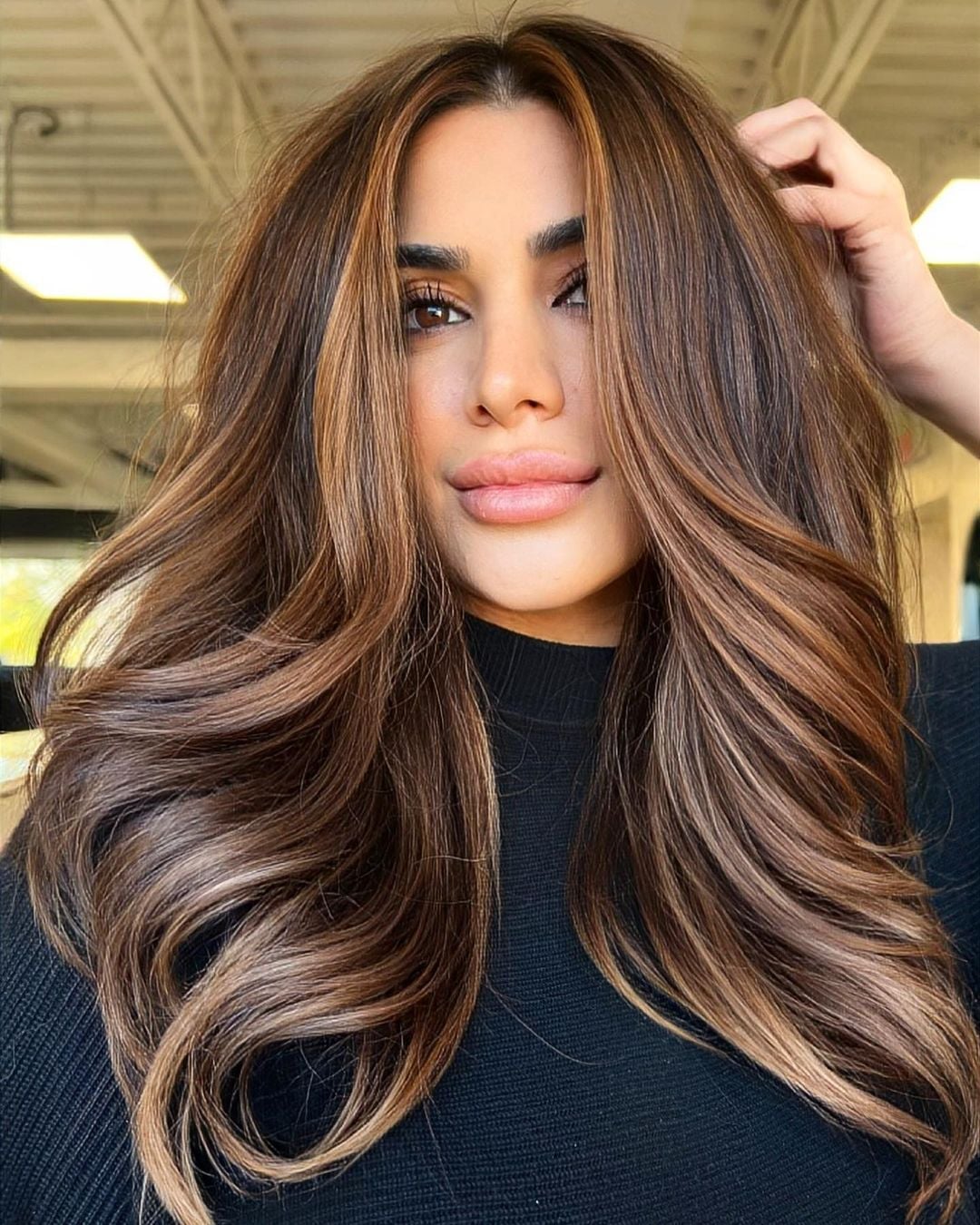
Contrast this with a single highlight tone, where the effect is uniform. Here the dark brown base carries both warm caramel and cooler ash blonde highlights, so the dimension shifts as the hair moves. The layered cut and thick, wavy texture let the two tones sit together without fighting. For a straight style, the two tones still show contrast. A trim every eight to ten weeks keeps the layers from losing their shape.
Honey blonde face-framing highlights with curtain bangs
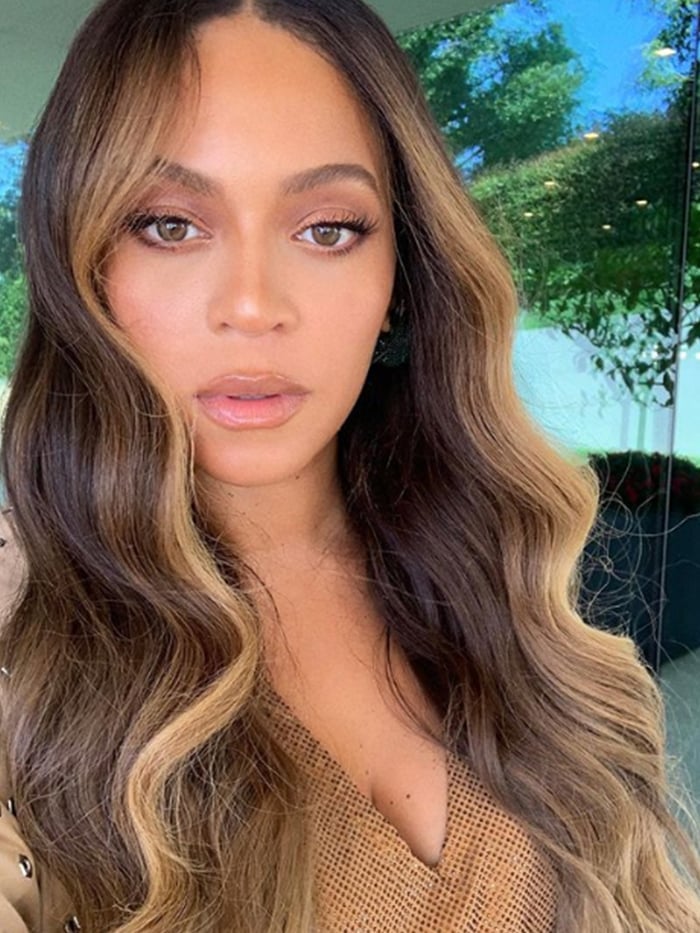
Curtain bangs change how face-framing highlights land. On a dark brown base, honey blonde highlights sit at the front layers and blend down through the rest, so the lighter color looks a soft gradient rather than a stripe. The middle part keeps the bangs symmetrical, and thick wavy texture carries the warmth through each bend. Tell your colorist: dark brown base, honey blonde face-framing highlights, curtain bangs.
Blended caramel and blonde highlights on fine, layered hair
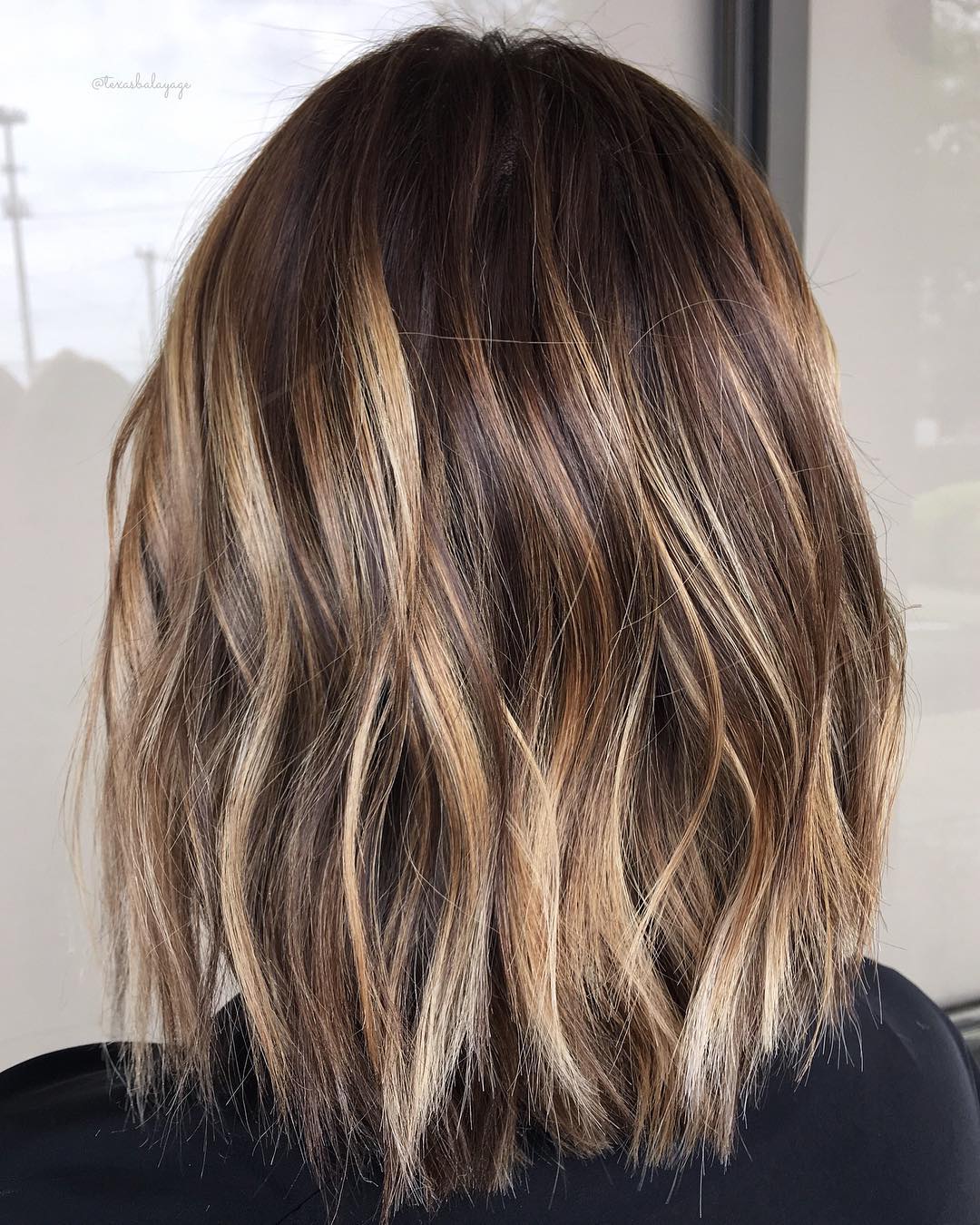
Fine, wavy hair shows every highlight line, which is why the blend here matters. Caramel and blonde highlights on a dark brown base are painted through soft layers, so the transition between tones stays subtle rather than abrupt. The back view reveals how the lighter pieces surface at different points through the cut, keeping the dimension even. A volumizing spray at the roots helps lift the fine texture.
Lighter blonde highlights via balayage on dark hair
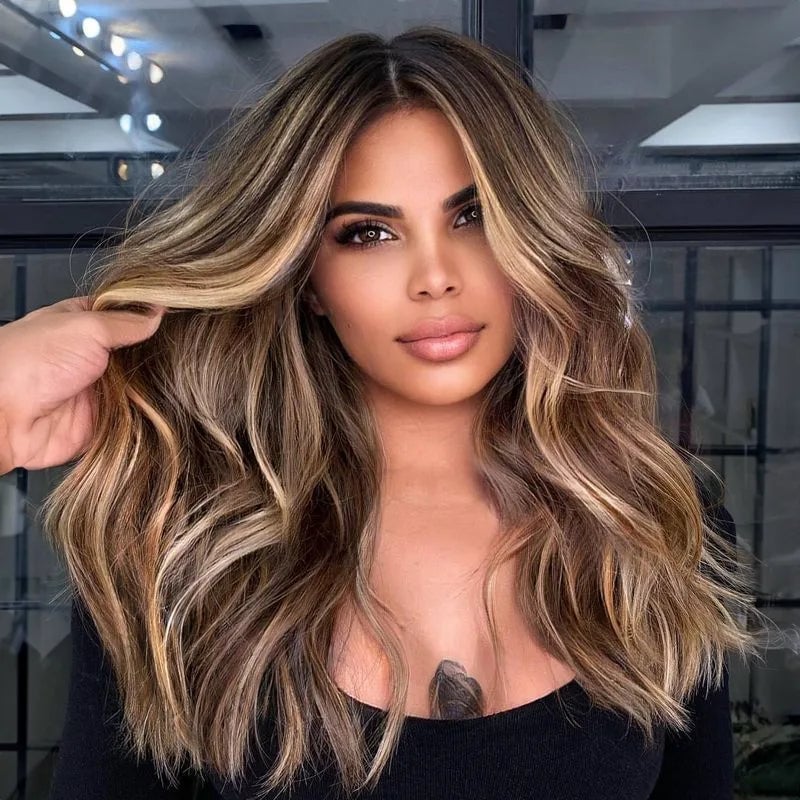
Full-foil highlights give even lift from root to tip; balayage does the opposite. Here the dark brown base stays dominant at the roots while blended blonde highlights concentrate around the face, so the color mimics a sun effect without a salon stripe. Thick, wavy texture with a middle part and layers lets the lighter pieces surface at different heights, never in a straight line. The face-framing placement means the contrast lives where it matters most, not scattered through the interior. A layered cut suits most face shapes. This look is best for those who want a subtle, natural lighter effect.
Vertical blonde highlights on a dark brown bob with air dried
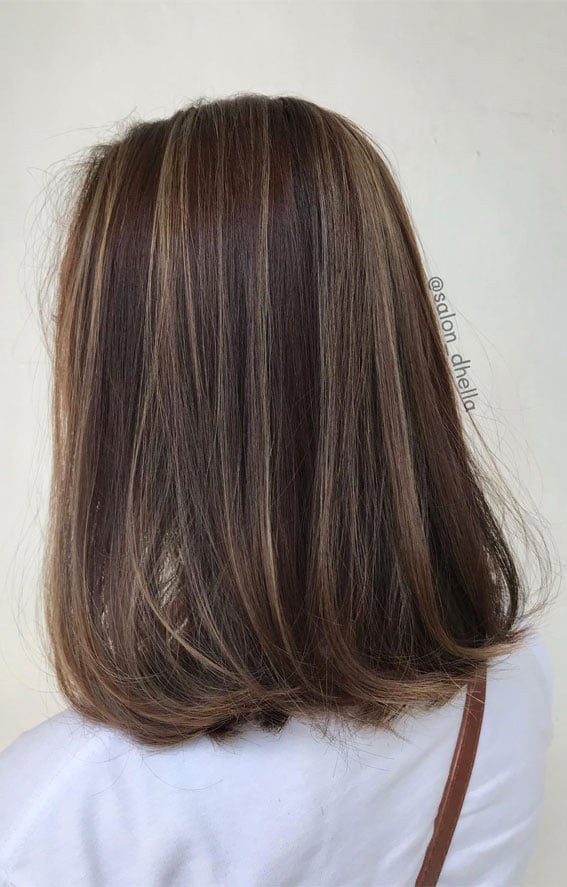
A bob is short enough that highlight placement matters. On a dark brown base with a middle part, finely woven blonde highlights run vertically through the cut, so the color follows the hairline instead of sitting on top. The subtle contrast creates texture, not streaks. Fine, wavy texture with an air dried finish keeps the look low maintenance, no blowout required. A classic bob suits most face shapes. Choose this if you want a subtle, low contrast highlight that blends naturally.
Blonde balayage highlights on wavy, fine dark hair
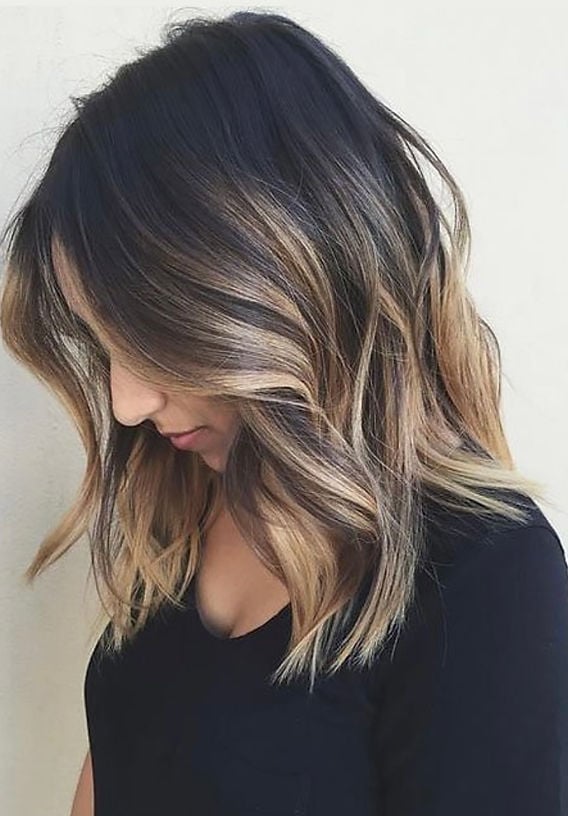
Standard foils deliver uniform lift from root to tip. Balayage does the opposite, and that is the point here. On a dark brown base with a side part, the blonde is painted heavier through the ends, so the contrast builds as the hair moves. Loose waves and fine texture keep it from looking heavy. It works best with wavy texture to soften the gradient. A texture spray on damp waves gives this its shape; a blowout would flatten the point.
Beige blonde balayage for lighter dimension on dark hair
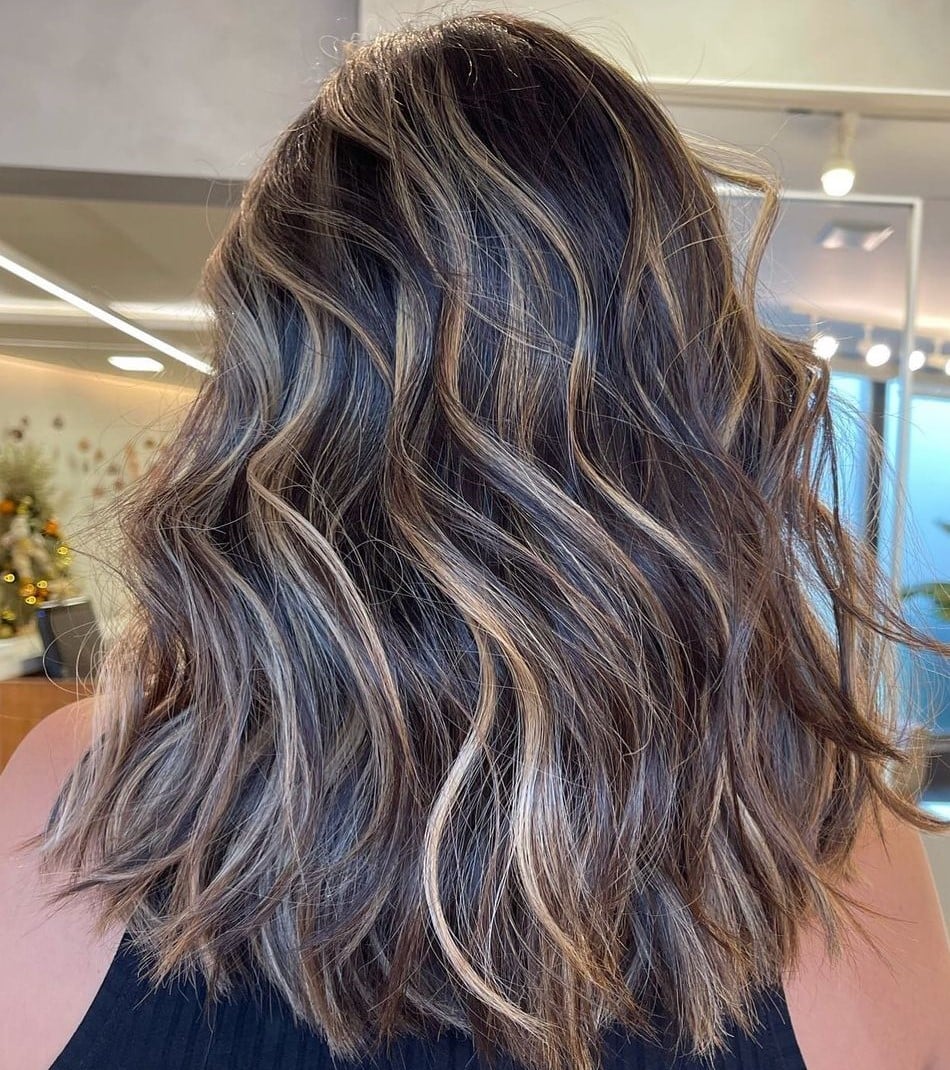
Beige occupies the narrow spot between warm and cool, which is why it works on a dark brown base. The balayage technique places beige blonde where light would naturally hit, so the contrast looks sun rather than salon. Thick, wavy texture carries the tone through each bend. Book it as: dark brown base, beige blonde balayage, natural lighter effect. Two things matter here. The beige needs a neutral toner at the bowl, and the waves need a sea salt spray to keep the texture from falling flat by midday.
Ash blonde balayage on layered dark brown hair
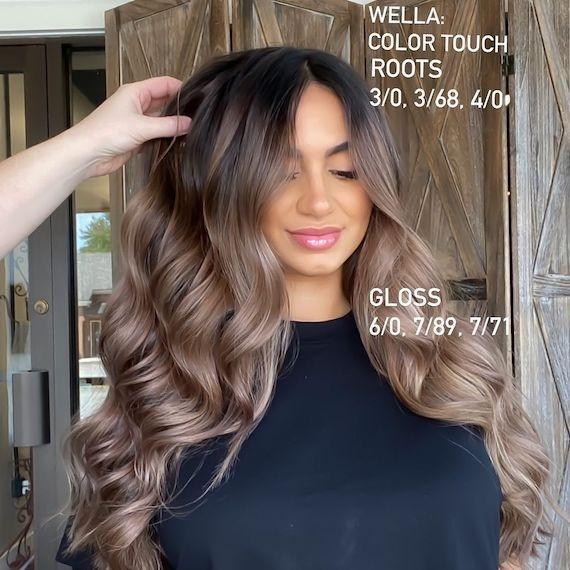
Ash blonde on dark brown is a balancing act. Too cool and the contrast turns muddy; too warm and the ash disappears. Here the balayage is painted through layers, with a middle part and face-framing pieces that catch the eye first. Thick, wavy texture softens the transition between base and highlight. Ask your colorist for: dark brown base, ash blonde balayage, face-framing. Upkeep is the part that surprises people.
When you want contrast without being overpowering
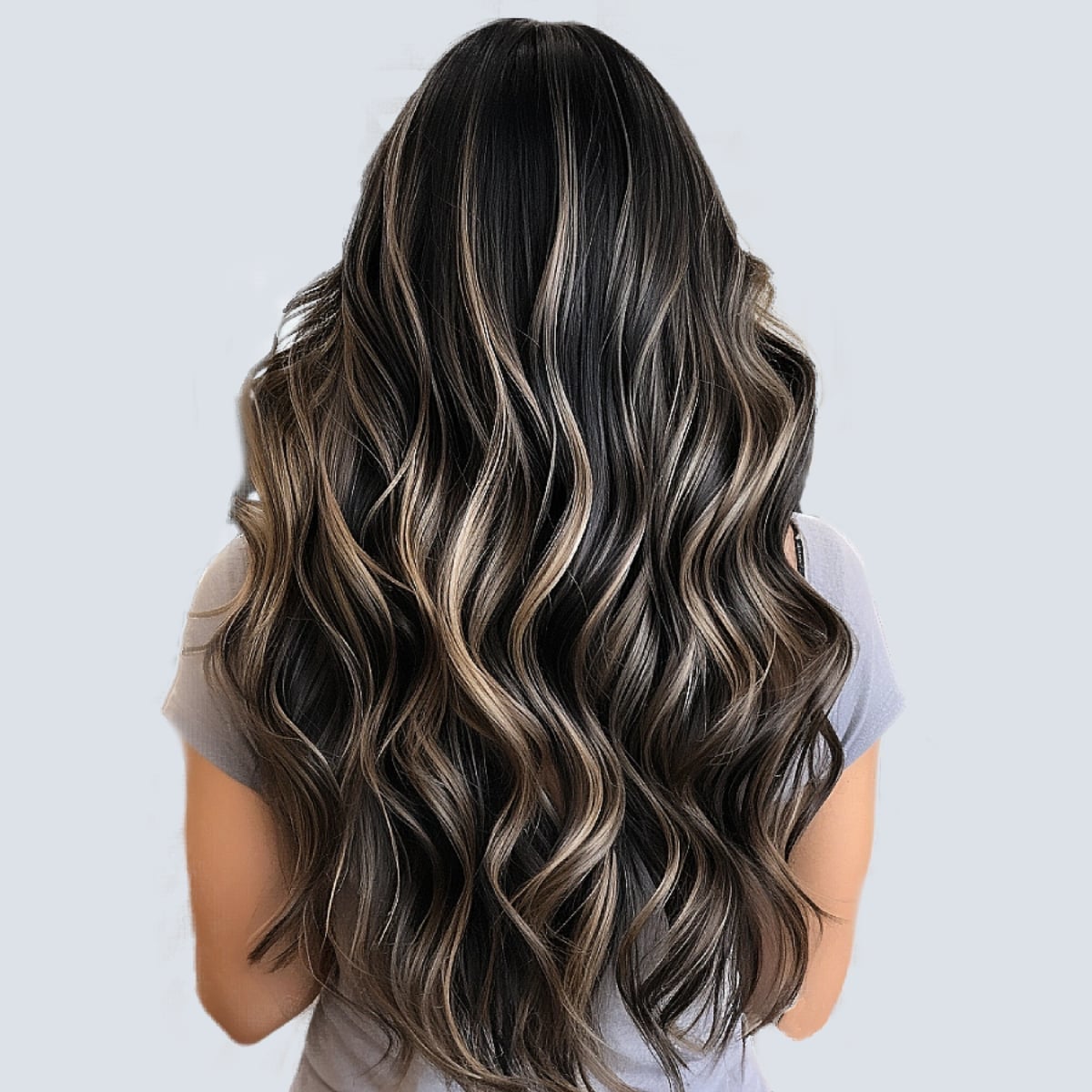
Contrast does not require a hard line. On a dark brown base, ash blonde highlights sit through the ends without crowding the root, so the lighter pieces appear as a natural progression. Loose waves on thick, wavy texture give the color room to shift with each bend.
The effect works because the placement is deliberate and the tone is neutral. Cool enough to look ash, warm enough to avoid the blue-green cast that happens when ash meets dark base without a buffer. A purple shampoo once a week maintains the tone; a gloss every six weeks resets the depth.
Ash blonde highlights framing the face on dark hair
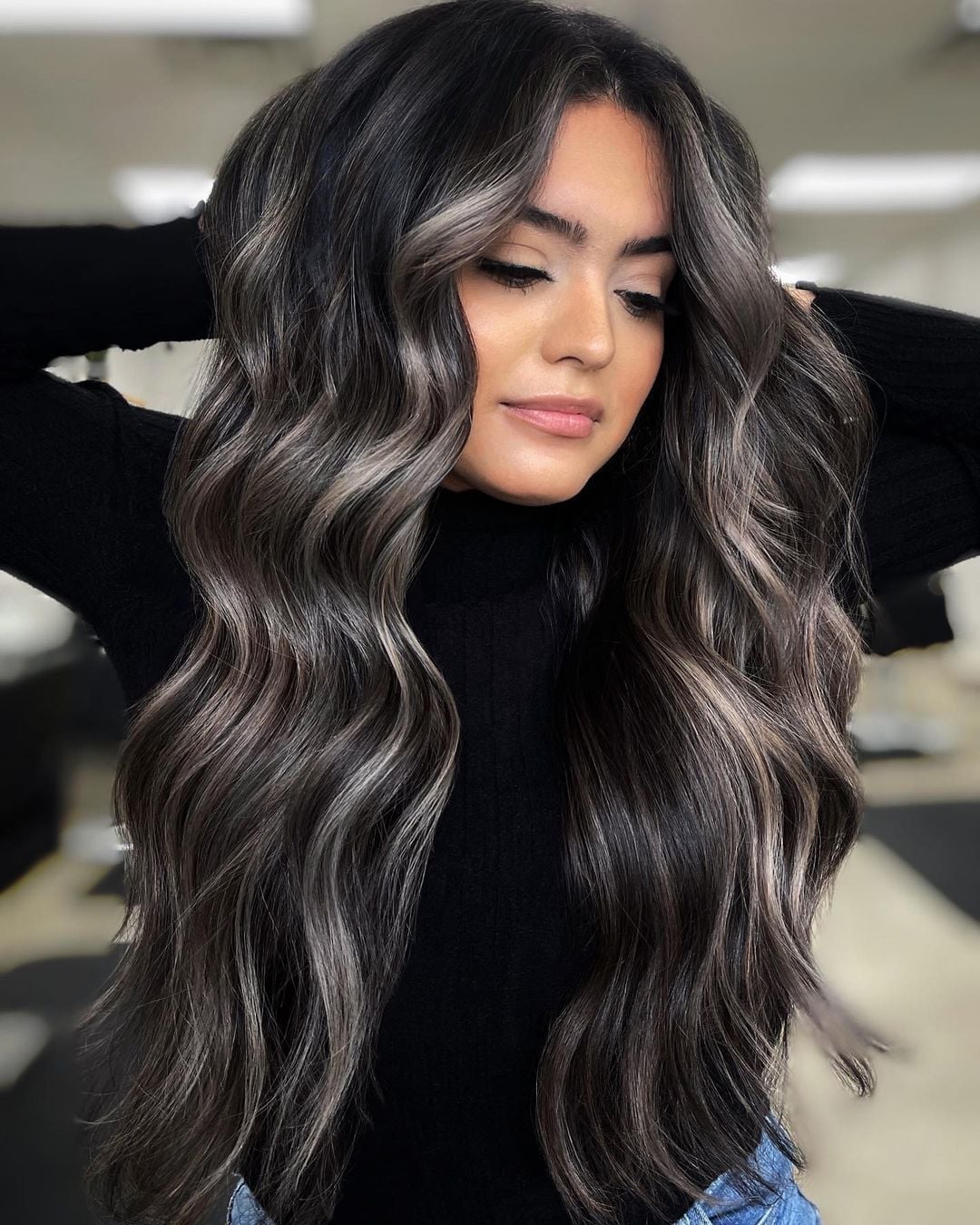
Face-framing highlights work best when they start a few inches from the root. On a dark brown base with ash blonde highlights, that soft root keeps the contrast wearable. The loose waves let the lighter pieces catch the eye naturally. Thick, wavy hair carries the blend well, and the layered cut balances most face shapes. It suits those who prefer warm tones or want highlights scattered through the entire head less. This is a front-focused strategy. Tell your colorist: dark brown base, ash blonde highlights, face framing.
Face-framing ash blonde highlights on long, layered dark hair
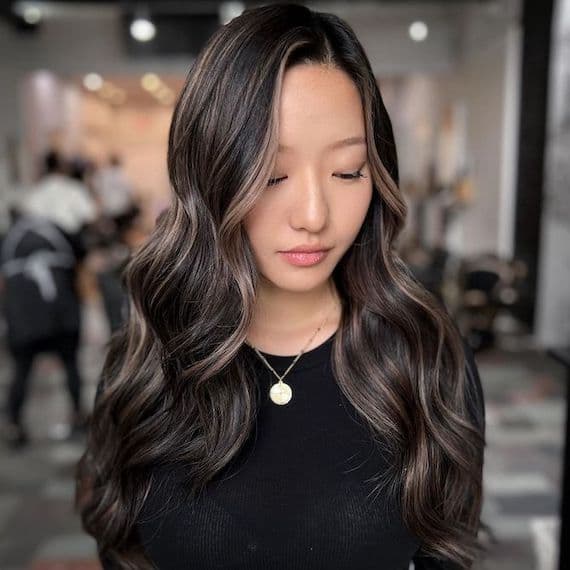
Subtle face-framing highlights read differently on long hair than on a shorter cut. On a dark brown base with ash blonde highlights, the effect is softer, more diffused, like the color just happens to land there. The long, wavy layers and middle part let the lighter pieces sit close to the jaw and cheekbone without a hard line. Thick, wavy texture helps the blend look natural, the waves break up any stripe effect. Skip it if you want a high-contrast look; this is a low-shout version. The opposite approach would be chunky streaks that start at the root, which suit a shorter, blunter shape. For long hair, you want the fade.
Full bangs with ash blonde highlights on straight dark hair
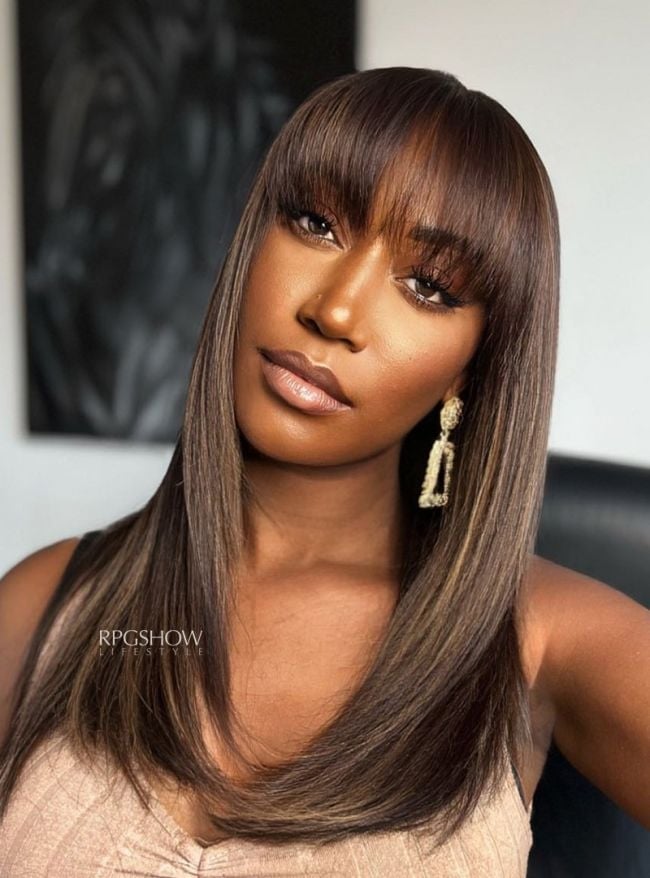
Full bangs change how highlights land. On a dark brown base with subtle ash blonde highlights, the lighter pieces need to weave through the fringe, not sit on top of it. A straight blowout keeps the line clean. Fine, straight texture takes the ash tone well. It grabs color evenly. Oval and long face shapes get the most out of full bangs; round faces may find them too heavy. Tell your colorist: dark brown base, subtle ash blonde highlights, full bangs.
Balayage dimension on thick, wavy dark brown hair
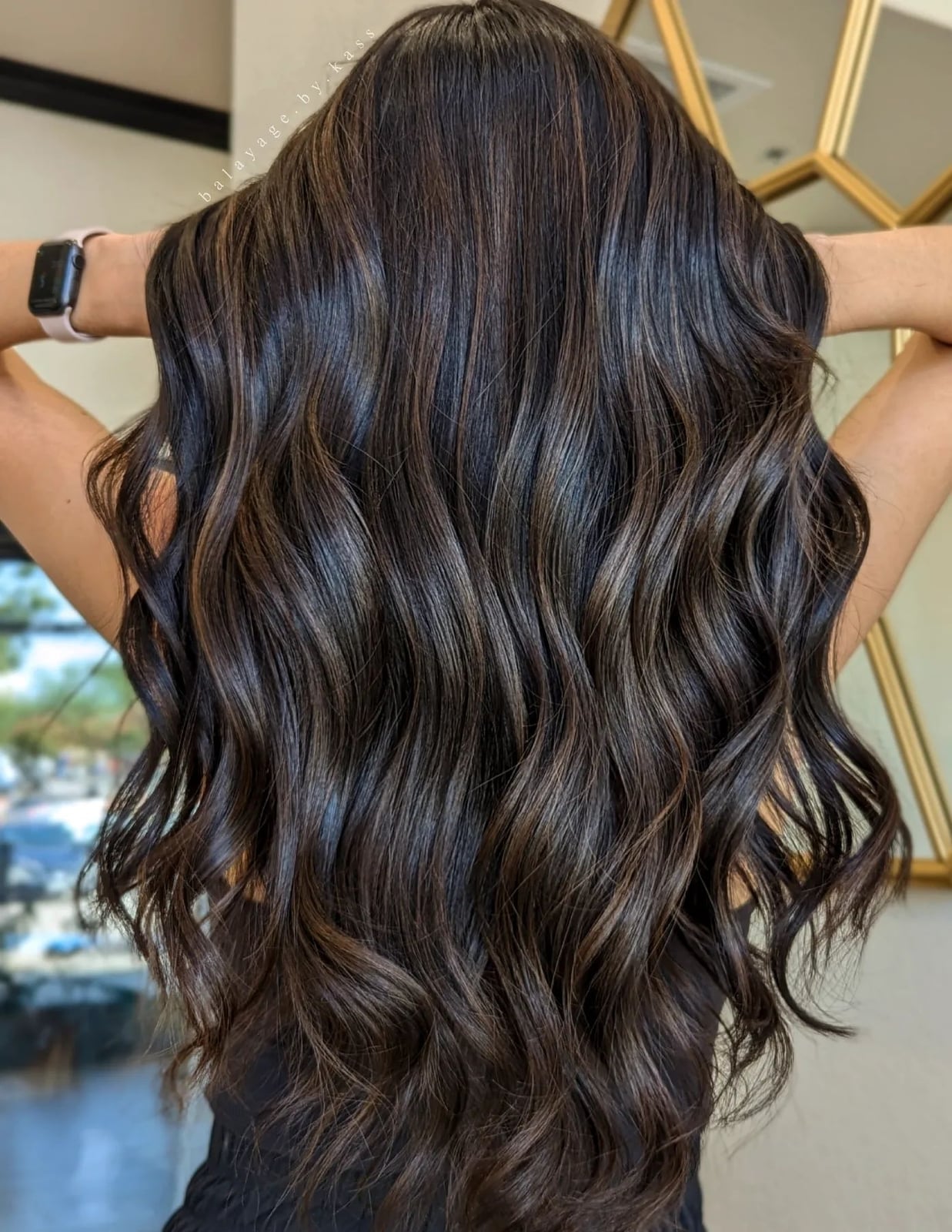
Balayage on thick hair is a patience game. The dark brown base with caramel balayage tones needs the colorist to paint each section by hand, which takes longer but pays off in a soft, grown-out blend. The wavy styling helps, the bends in the hair break up the color line, so you never get that foil stripe look. Thick texture holds the caramel tone well; it doesn’t fade as fast as fine hair does. A texturizing spray on damp waves, then air-dry, is the usual routine. No root touch-up panic here.
Edgy pixie with silver highlights on dark gray hair
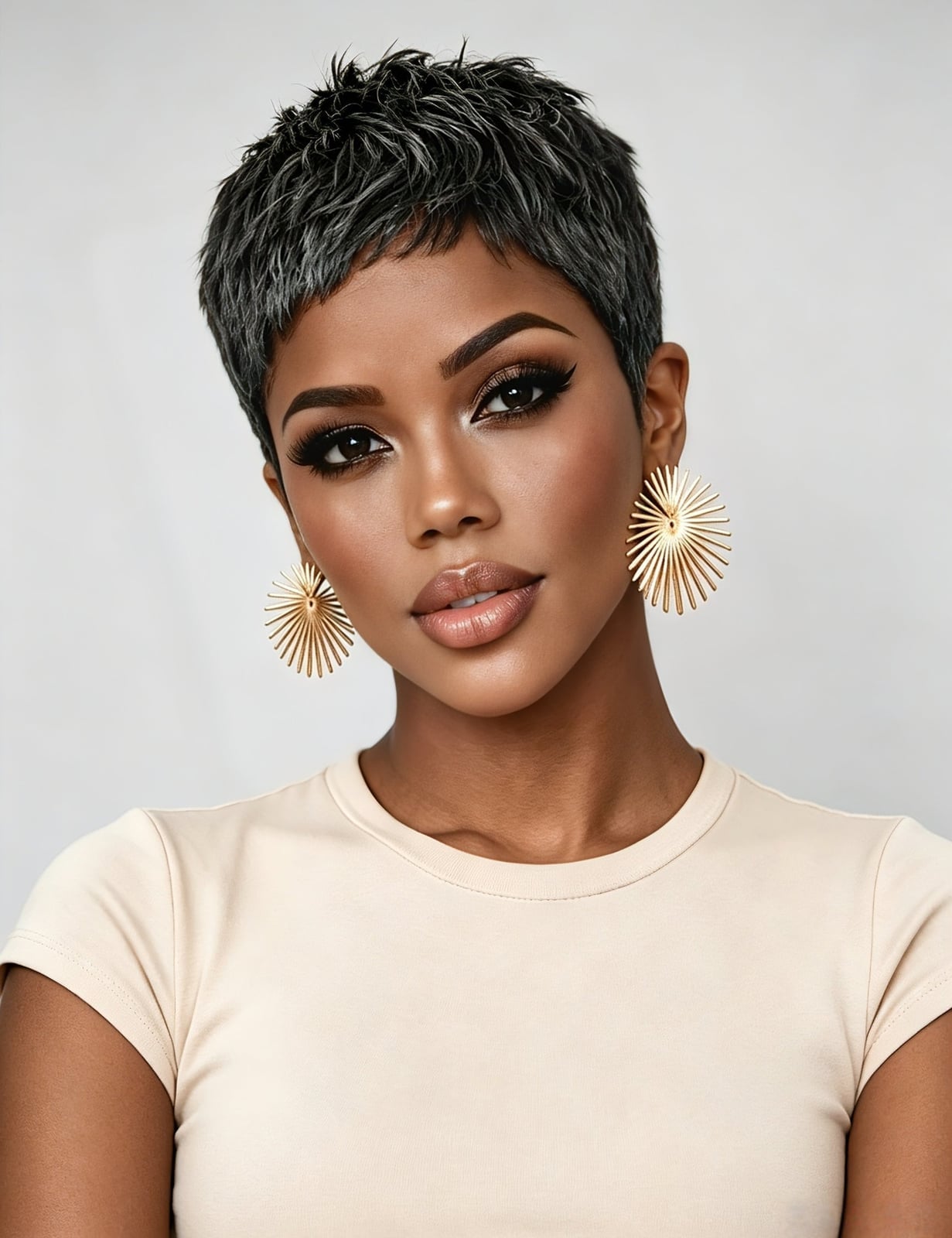
A pixie cut with silver highlights works because the short length keeps the contrast tight. On a dark gray base with striking silver highlights, the lighter pieces sit close enough to create deliberate texture, not random streaks. The textured styling adds volume and softens the overall shape. Fine, straight hair takes the silver tone cleanly, no warm undertones fighting the cool shade. Most face shapes can wear a pixie, but the silver highlights work best when the base is already cool. It suits a longer length or a warmer palette. Tell your colorist: dark gray base, striking silver highlights, edgy pixie cut.
Silver-gray face-framing highlights on layered dark hair
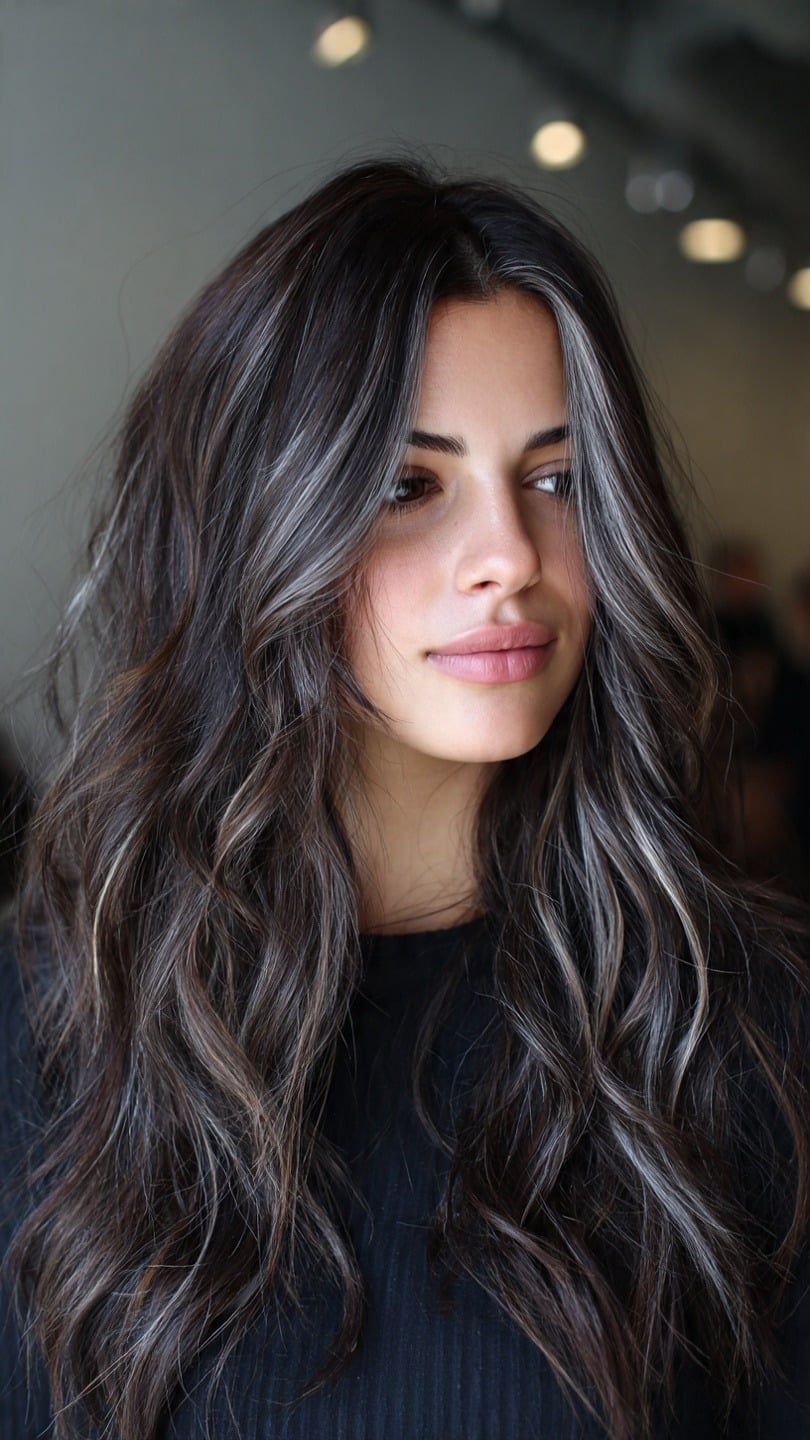
Striking silver-gray against a dark brown base looks deliberate, not accidental. The layered cut lets each face-framing strand land where it catches the eye, not just the light. Thick wavy texture carries the contrast without looking streaky. Skip it if cool tones make you look washed out rather than edgy.
Bold silver and white highlights for a modern look
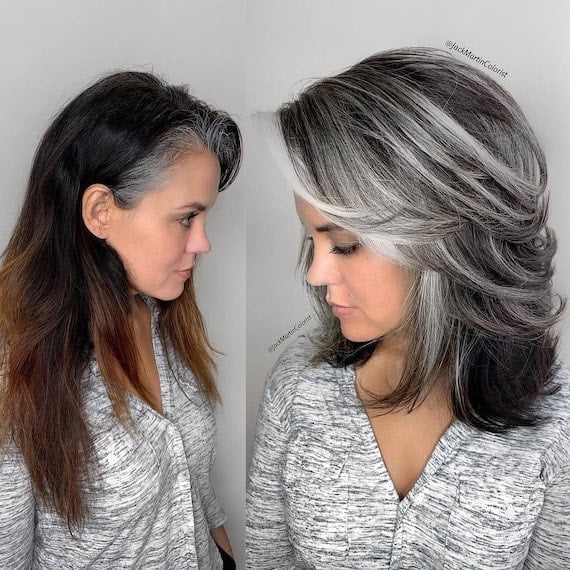
Warm caramel highlights read approachable; silver and white read intentional. This version uses a dark base with bold silver and white highlights placed around the face, creating a contrast that does not rely on sun or styling. The layered cut works with thick, wavy texture to keep the look soft rather than severe. Not for anyone who wants a grow-out that blends quietly. This one announces itself. Ask your colorist for: dark base, bold silver and white face-framing highlights.
Platinum blonde streaks on dark brown hair
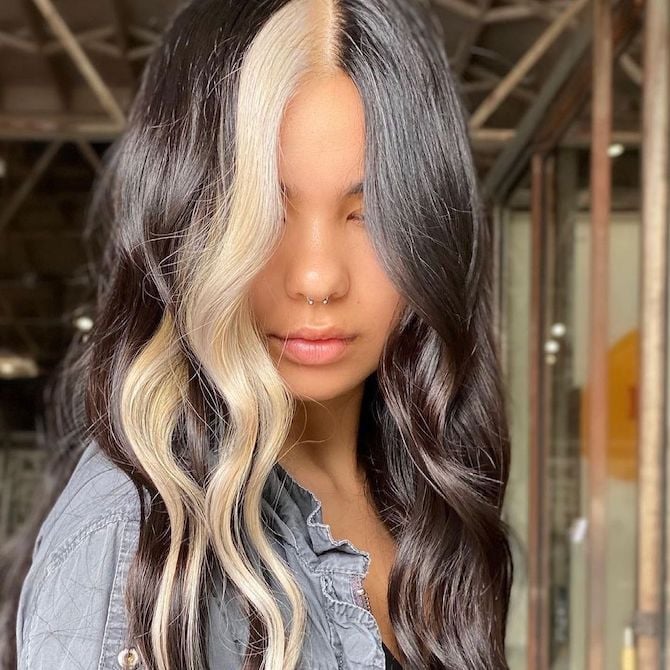
This is the chair conversation that starts with “how light can you go without breaking it.” Platinum blonde streaks on a dark brown base create a two-tone effect that reads graphic, not accidental. The face-framing placement works with wavy, thick texture to keep the contrast from looking flat. Skip it if you prefer a highlight that fades into the base rather than standing apart.
Bold platinum blonde streaks adding dimension to dark hair
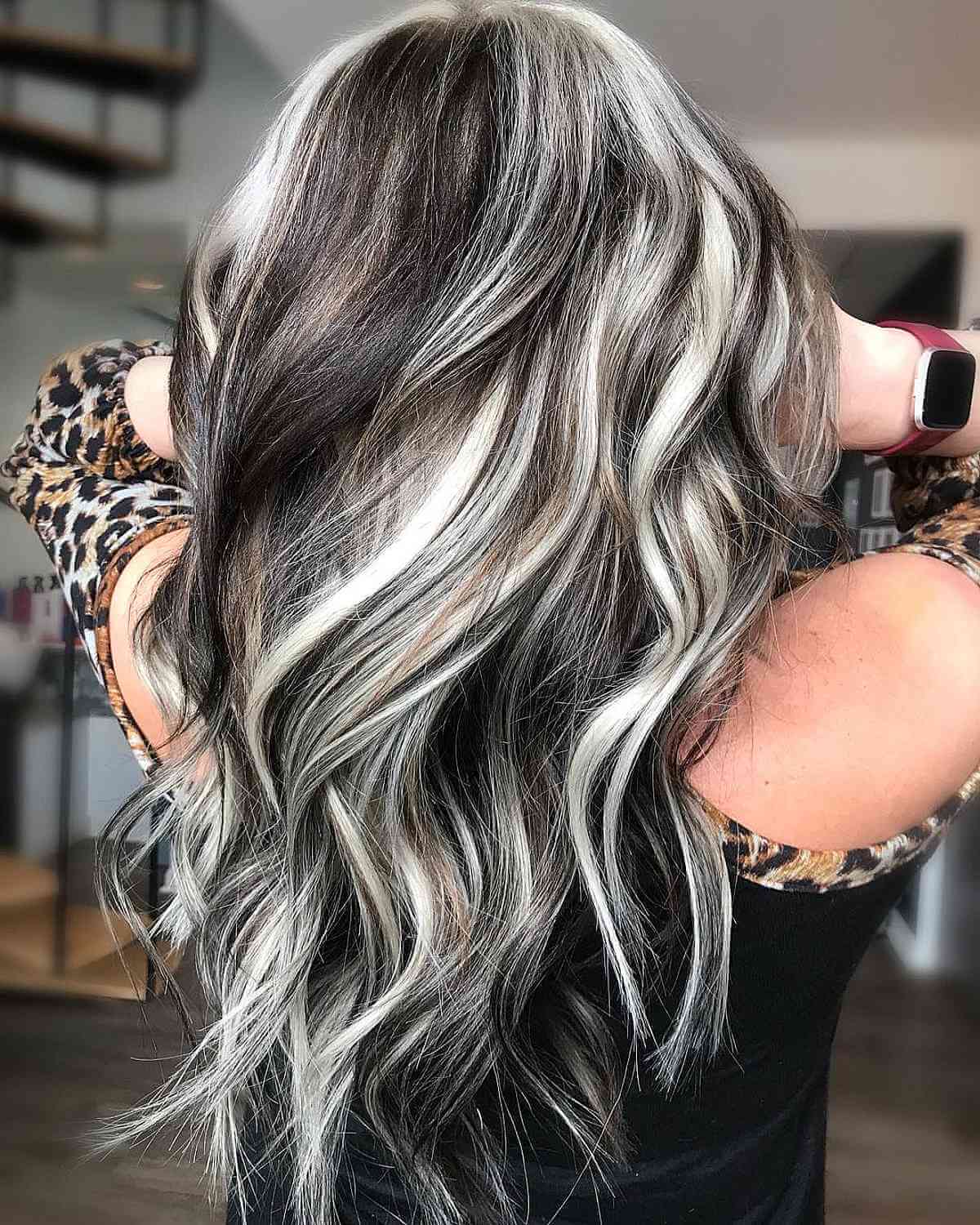
Bold platinum blonde streaks on a dark brown base require a maintenance rhythm, not a one-time appointment. The high contrast shows every bit of regrowth, so root touch-ups land around every six weeks. Wavy, thick texture helps the streaks look dimension rather than lines.
A trim at the same interval keeps the layered shape from looking undone. Color-safe shampoo is not optional here, brassiness shows fast on platinum against dark hair. The payoff is a look that stays graphic and intentional between salon visits.
Final Thoughts
Your highlight choice comes down to one question: how often are you willing to tone and trim? Fine hair that grabs brass needs a cool caramel or ash blonde and a six-week toning rhythm. Thick, wavy hair can carry a warmer, chunkier highlight without looking streaky.
- Fine hair: choose babylights or face-framing pieces.
- Ten minutes in the morning: balayage with a lived-in grow-out.
- Cool base that pulls brassy: ash or beige blonde with a purple shampoo.
- Bold statement: platinum streaks or silver-gray highlights.
Pick the tone that matches your upkeep budget and your dark base.