29 Beautiful Honey Blonde Hair Color Ideas 2027
Beautiful Honey Blonde 2027 hair color ideas featuring subtle highlights and rich balayage for a warm glow. See the looks and save your favorite.

You sit in the chair with a photo of honey blonde hair on your phone, the one that looks warm without leaning too gold. That shade, with a few lighter strands around the face, is what brings a grown out color back to life without starting from scratch.
29 versions here, from subtle highlight work to a darker root with balayage, cover the range between low upkeep and a full salon day. Fine hair or thick, wavy or straight, there is a honey blonde that fits your texture and your calendar. Which is why Beautiful Honey Blonde 2027 fill so many saved boards: they solve the problem of wanting warmth without the brass.
Honey blonde with subtle, blended highlights and soft waves
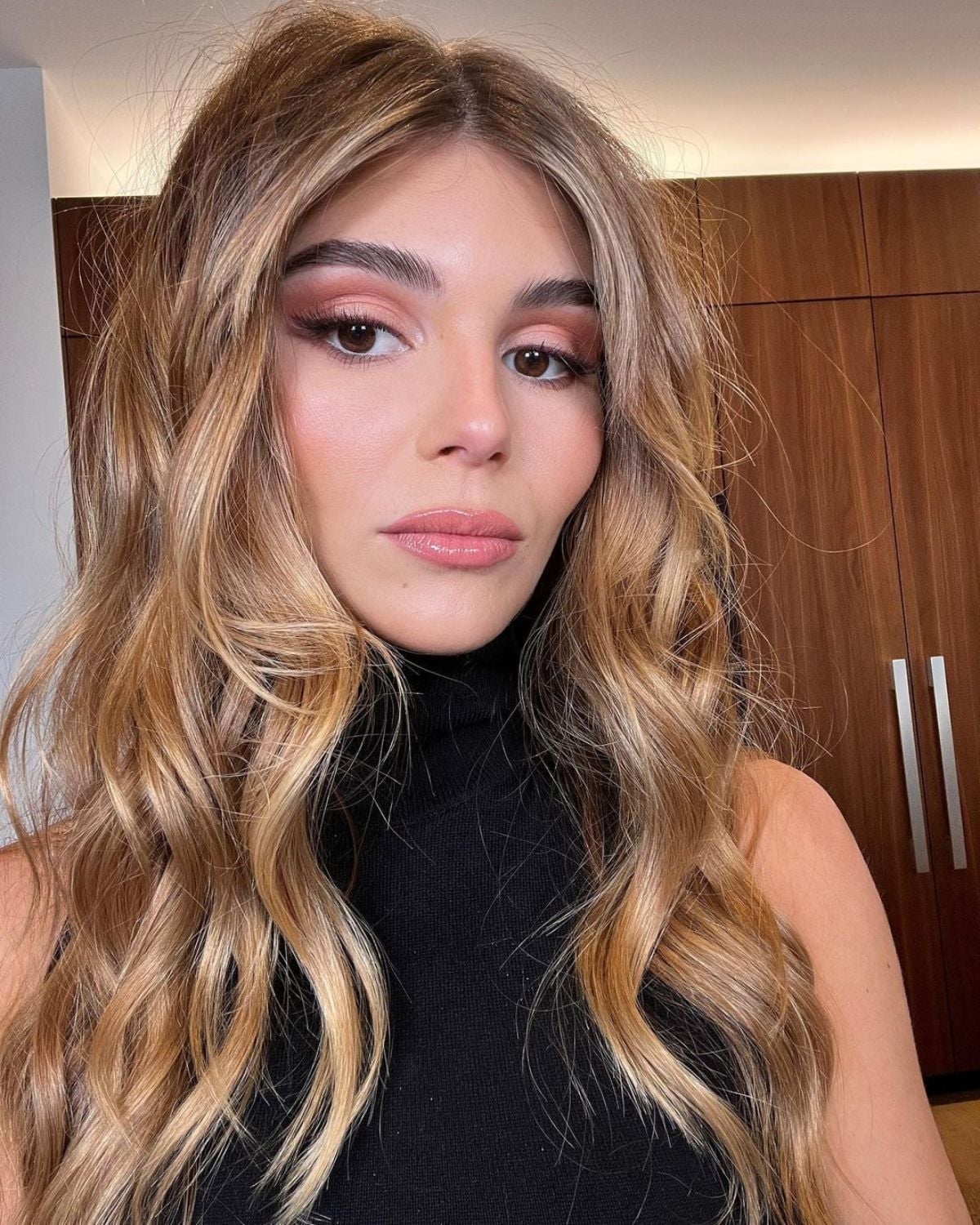
Honey blonde with blended highlights needs a base that looks warm, not brassy. The technique here uses fine ribbons of a lighter tone woven through thick, wavy hair, cut in layers that let the color shift as the hair moves. A soft blowout gives the pieces enough bend to catch light at different angles. No single strand is a straight line of color. The effect works because the highlights sit close to the base shade, so there is no hard line between dark and light. Layers at the ends keep the weight from pulling the waves flat. A trim every six weeks maintains the shape.
Updo with curtain bangs in honey blonde
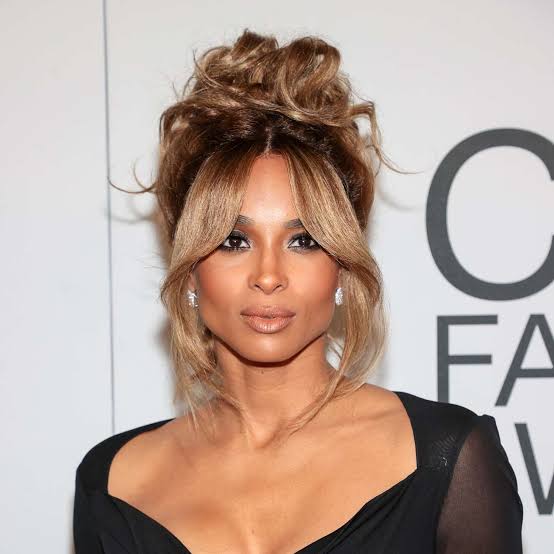
Curtain bangs in an updo solve a problem: how to keep the face framed when the rest of the hair is off the neck. The honey blonde base here carries subtle highlights that add depth behind the ear and at the nape, where an updo can look flat. Wavy, thick texture gives the messy sections enough grip to hold without pins slipping. The bangs are cut long enough to tuck behind the ear or sweep across the forehead depending on the angle of the updo.
Short hair or dislike of bangs against the forehead makes this style impractical. The updo requires at least collarbone-length hair to gather properly. Curtain bangs need a quick blow-dry every morning to curve away from the face, and a trim every four weeks keeps them from growing into a solid fringe.
Dark brown base with honey blonde balayage
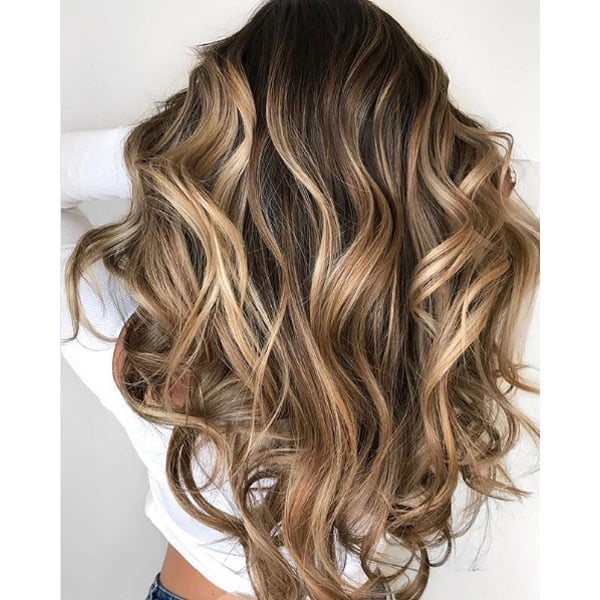
Balayage on a dark brown base is the opposite of a root-touch-up commitment. The honey blonde is painted freehand onto thick, wavy hair, starting an inch or two from the scalp and getting denser toward the ends. Loose waves over a middle part show the transition between the two tones, with the dark base providing a frame for the lighter pieces. No foils means no hard lines when the color grows out.
Tell your colorist: dark brown base with honey blonde balayage. The application takes about two hours, but the grow-out is soft enough to skip the salon for ten weeks. The catch: dark bases need a lift that can feel dry on the ends, so a deep conditioner every wash is not optional.
Rich honey blonde with dimensional highlights
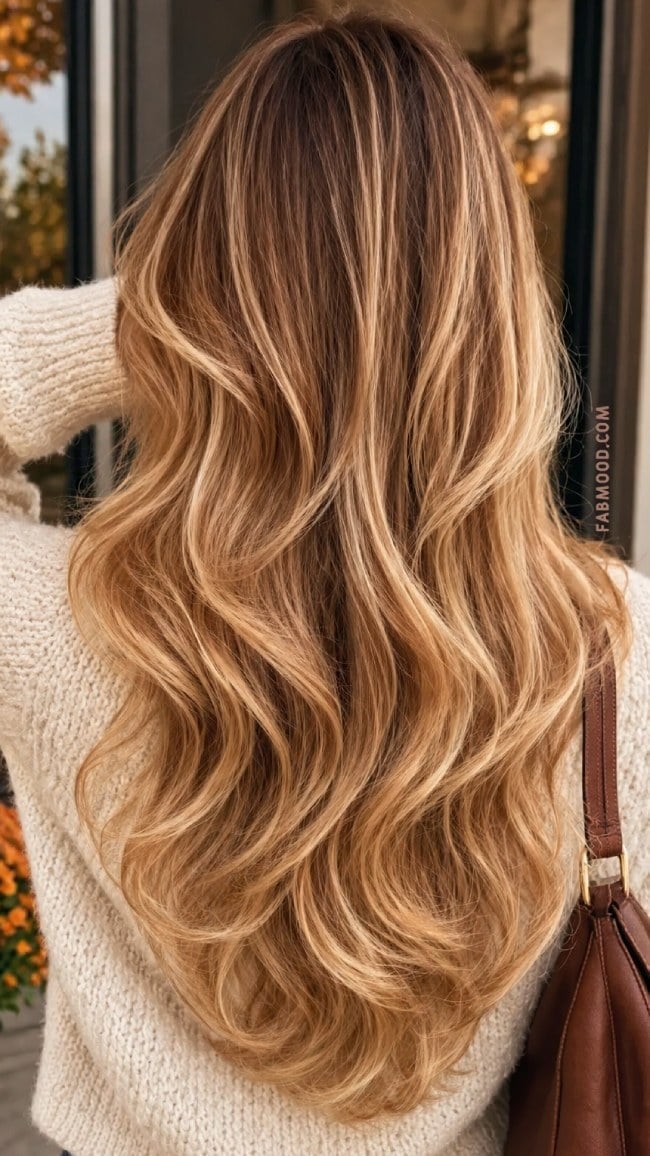
Dimensional highlights on a honey blonde base work because they are not all the same level. Some pieces lift a shade lighter, some stay close to the base, and the mix creates a warm tone that looks rich rather than flat. The layered cut here lets the highlights sit at different depths, so the color moves with the soft waves. A centered parting splits the light evenly across both sides.
This is a salon-only technique: the highlights are woven fine enough that the transition between shades is invisible. Skip it if you prefer a solid color or have very fine hair, because thin strands can look stringy with too many light pieces. A medium-barrel curling iron defines the waves in about fifteen minutes, and the layers hold the shape for most of the day without re-curl.
Thin lighter strands on honey blonde base
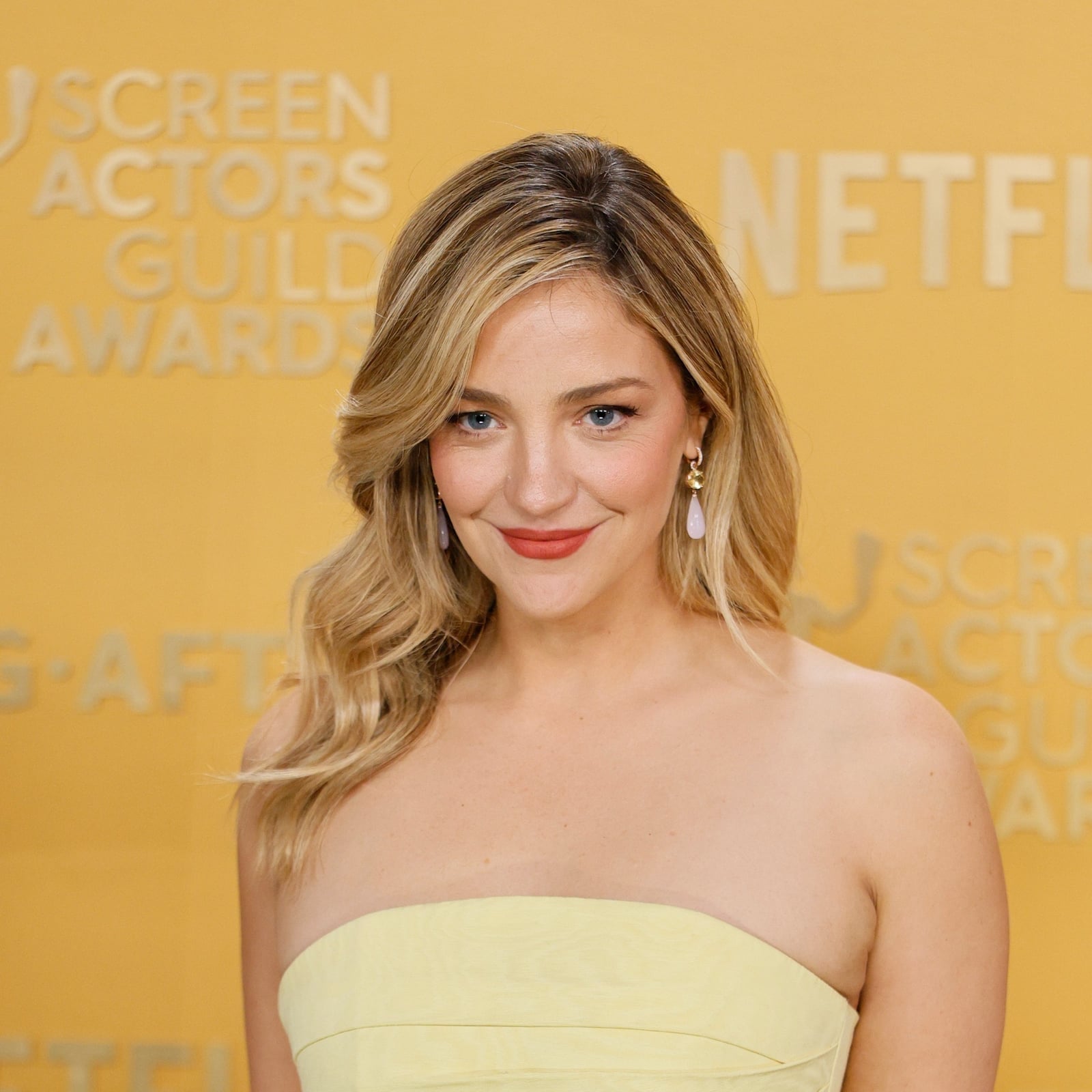
Thin lighter strands on a honey blonde base give a lighter effect without the full-commitment look of chunky highlights. The strands are spaced wide enough that the honey blonde remains the dominant shade, with the lighter pieces acting as accents. Wavy, thick texture styled in a side parting adds volume at the crown, where the side sweep creates a natural height. The side part also shifts the lighter pieces forward, so they catch the eye when the head turns.
One real drawback: the thin strands can fade faster than the base, especially on thick hair that needs more heat to style. A purple shampoo every two washes keeps the lighter pieces from pulling yellow.
Caramel highlights on honey blonde bob
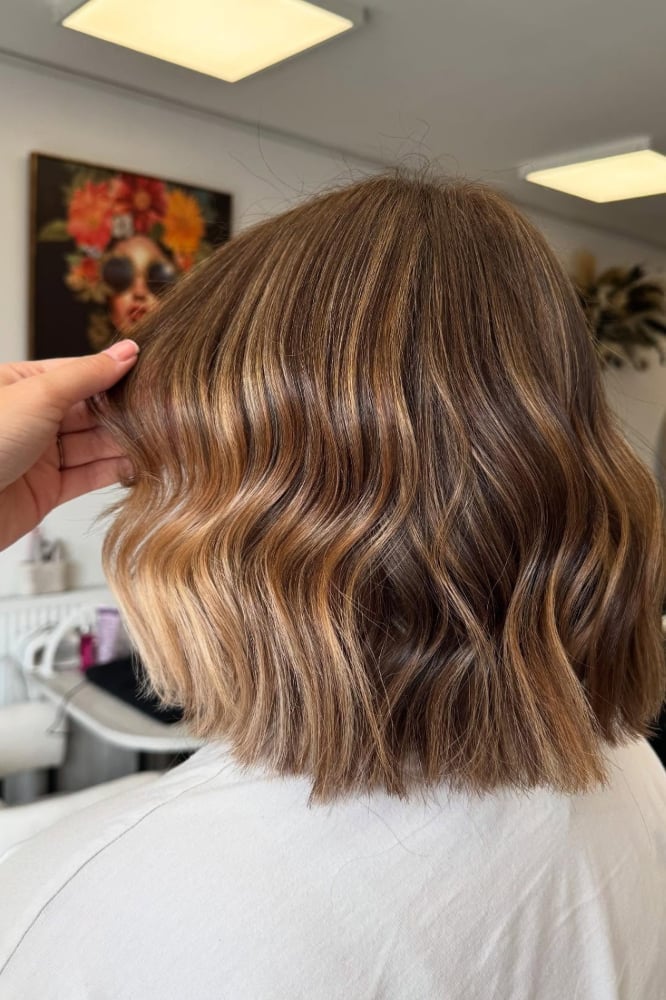
To get that warm, dimensional look, request a honey blonde bob with caramel highlights and a wavy blowout. The base is a warm honey blonde, with subtle caramel strands woven through for depth. The technique is a soft, blended highlight, not chunky. The tone stays warm and golden, never ashy. The bob hits just below the jaw, and the texture is thick and wavy. It suits most face shapes, but it is not ideal for those who prefer long hair or straight styles.
Dimensional highlights add warmth to honey blonde
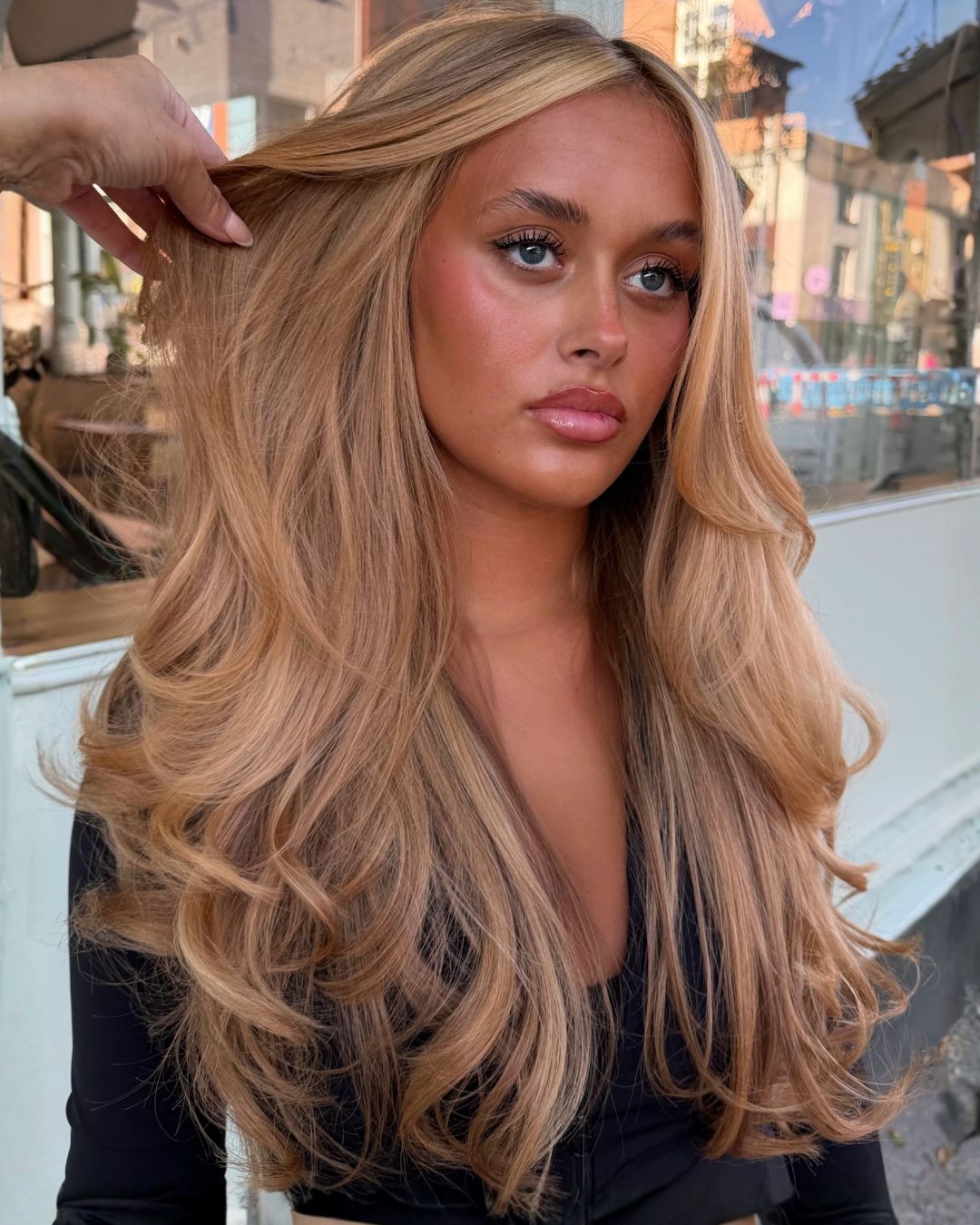
Against a full, single-process blonde, this version offers more depth. Subtle, blended highlights add warmth to honey blonde without going brassy. The base is a medium honey shade, with fine lighter pieces woven through for dimension. The technique is a hand-painted balayage for a soft, natural transition. The tone is warm and golden, with no cool or ash notes. The cut has layers, and the texture is thick and wavy. It works best on hair that is at least collarbone length. Skip it if you prefer straight hair or have very fine hair.
Darker roots create dimension on honey blonde bob
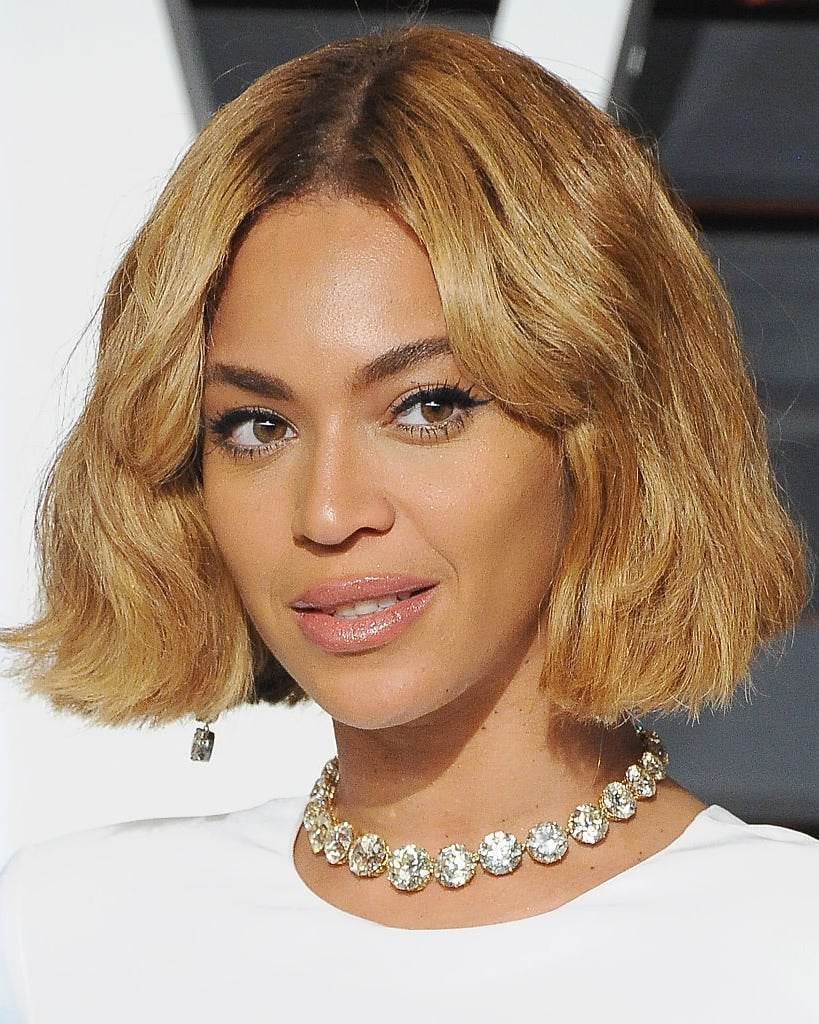
The darker root is what makes this bob work. A rich honey blonde shade on the ends with subtle darker roots creates a natural-looking dimension. A root shadow is applied to soften the grow-out line. The tone stays warm and golden. The bob is cut to just below the chin, and the texture is thick and wavy. The soft waves frame the face, but this is a salon-leaning design due to the precision of the root shadow. This is best for those who want a low-maintenance grow-out rather than a full blonde look.
Layered cut with curtain bangs in honey blonde
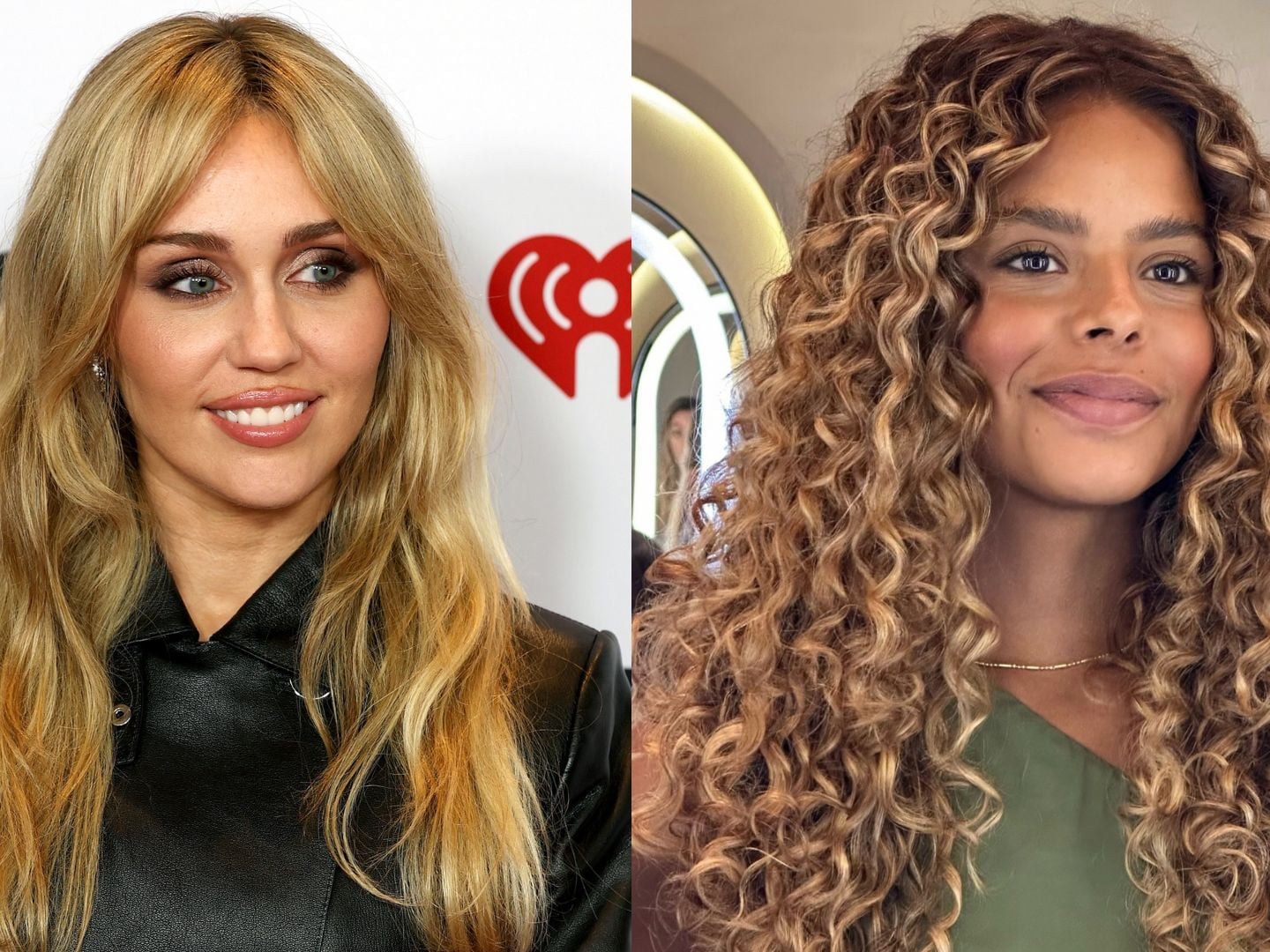
A layered cut with curtain bangs relies on the cut to do the work. The honey blonde base has fine highlights woven through, adding subtle dimension. The highlights are blended to avoid harsh lines. The tone is warm and golden. The layers start around the cheekbones, and the curtain bangs frame the face. The texture is wavy and thick, and it is styled with an air-dried look. It suits thick, wavy hair of at least collarbone length. Dislike bangs or have very fine hair? This may not be the best choice.
Tell your stylist: layered cut with curtain bangs, honey blonde with fine highlights, air-dried texture. The cut creates movement, while the highlights add just enough warmth. The curtain bangs soften the face. The air-dried finish keeps it low-maintenance.
Voluminous blowout on honey blonde hair
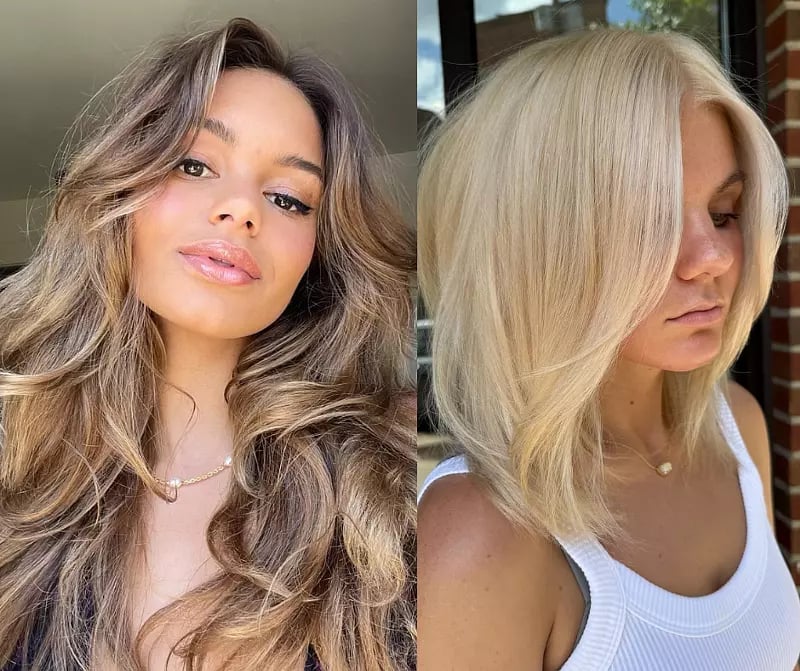
A voluminous blowout on honey blonde hair looks neat but has a wear reality. The cut has soft layers, and the blowout lifts the roots. The honey blonde base has subtle, blended highlights throughout, adding warmth. The technique is a soft, hand-painted highlight. The tone is warm and golden. The side part adds volume. The texture is thick and wavy. The blowout requires a round brush and a blow dryer. The catch: it will not hold its shape in humidity. A middle part does not work with this style, and very fine hair lacks the body to hold the volume.
The layers give the blowout lift, and the highlights keep the color from looking flat. The side part adds volume at the crown.
Sleek, blunt honey blonde bob
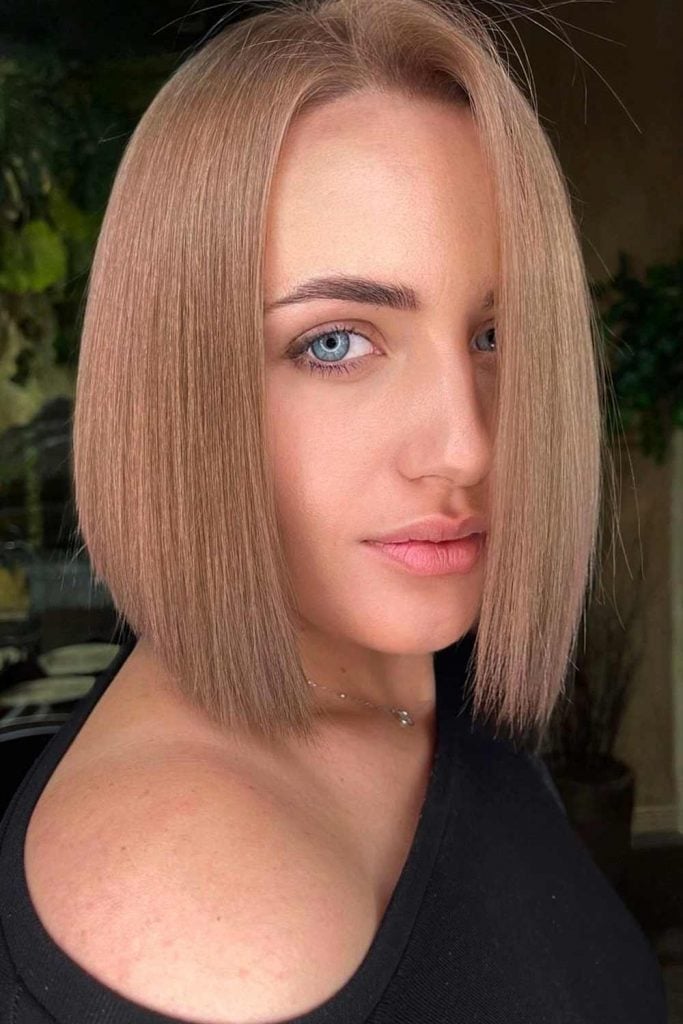
Not every bob needs waves. This one stays straight, blunt, and fine, leaning into the precision of the cut. The honey blonde shade looks one solid piece, which is the whole point. Suits a round face best, since the sharp line adds structure where softer shapes blur. Skip it if you prefer movement or have very thick hair that resists a flat finish.
Distinct highlights enhance honey blonde shade
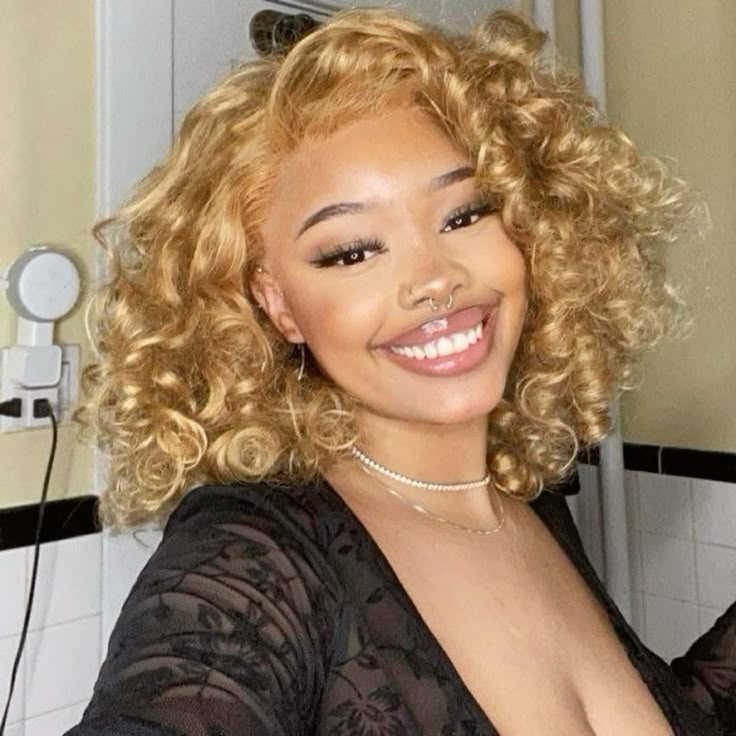
Thick, wavy hair handles distinct highlights better than fine hair does. The side parting lets the lighter pieces land where they catch the most light. The catch: visible contrast means visible roots. You see the regrowth at week three, not week six. Skip it if you want a low-maintenance grow-out or prefer a middle part that splits the highlights evenly. A blowout takes fifteen minutes with a round brush.
Subtle highlights add dimension to layered blonde
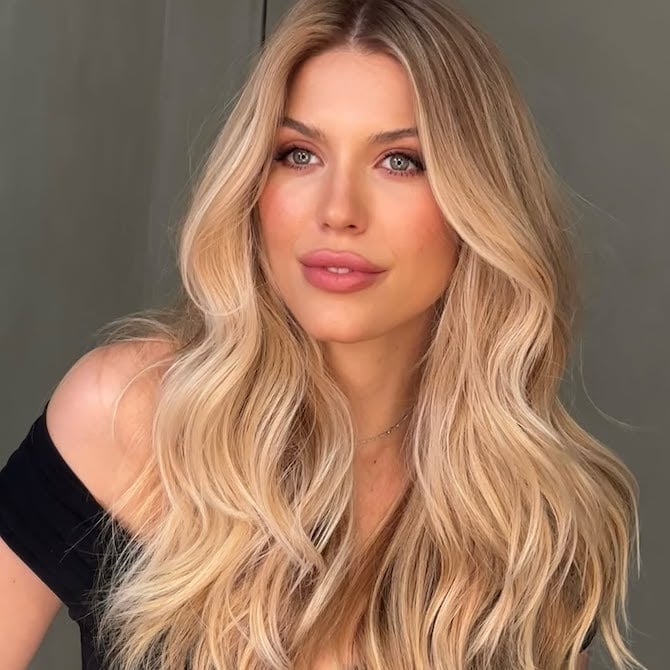
You can get subtle highlights at home with a box kit, but blended ones require a salon. The layered cut needs the color to land inside the layers, not just on top. Tell your colorist: honey blonde with subtle blended highlights. The waves do the rest, spreading the tone so it looks full rather than streaky. A texturizing spray on dry waves holds the shape without crunch.
Face-framing layers in honey blonde
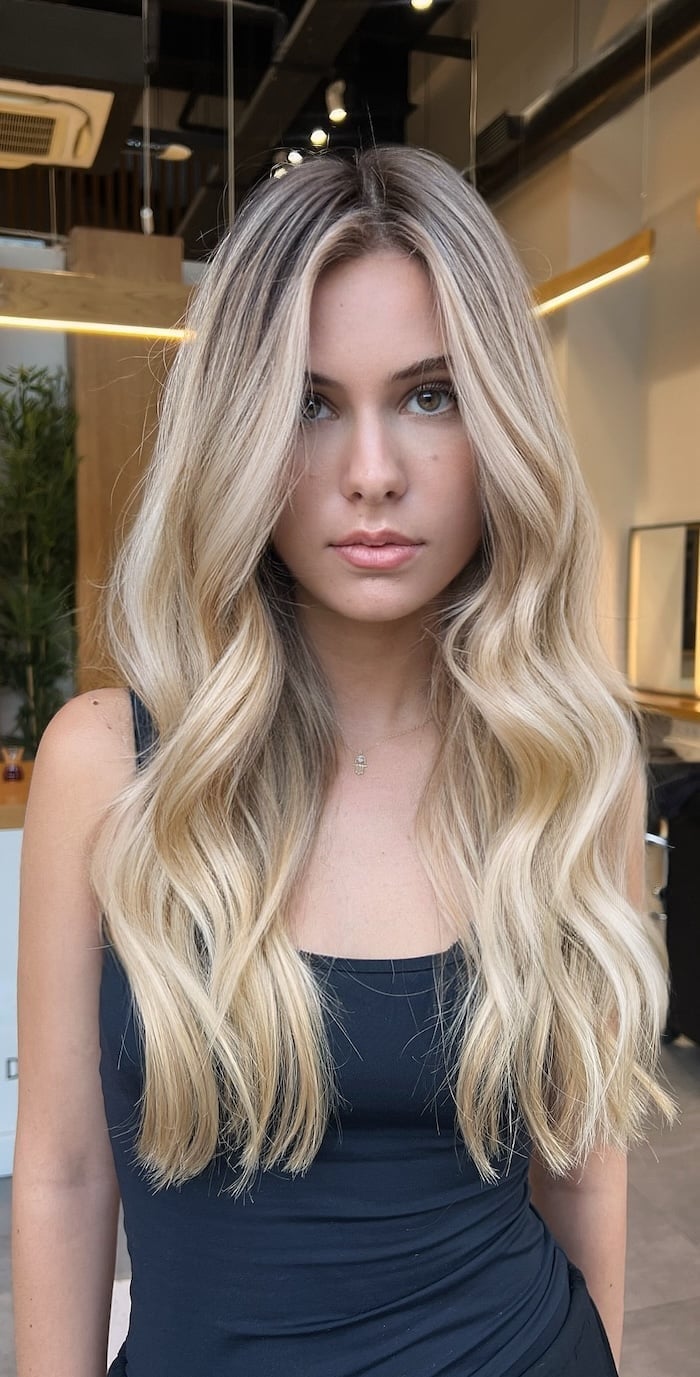
Face-framing layers work because they sit where the light hits first. The middle part drops the lighter strands on either side of the jaw, softening the line without bangs. Thick, wavy texture holds the shape; fine hair would let the layers collapse. A round brush and a blow dryer define the curve. The technique is subtle blending, which takes skill but gives a natural grow-out.
Loose waves enhance dimensional honey blonde
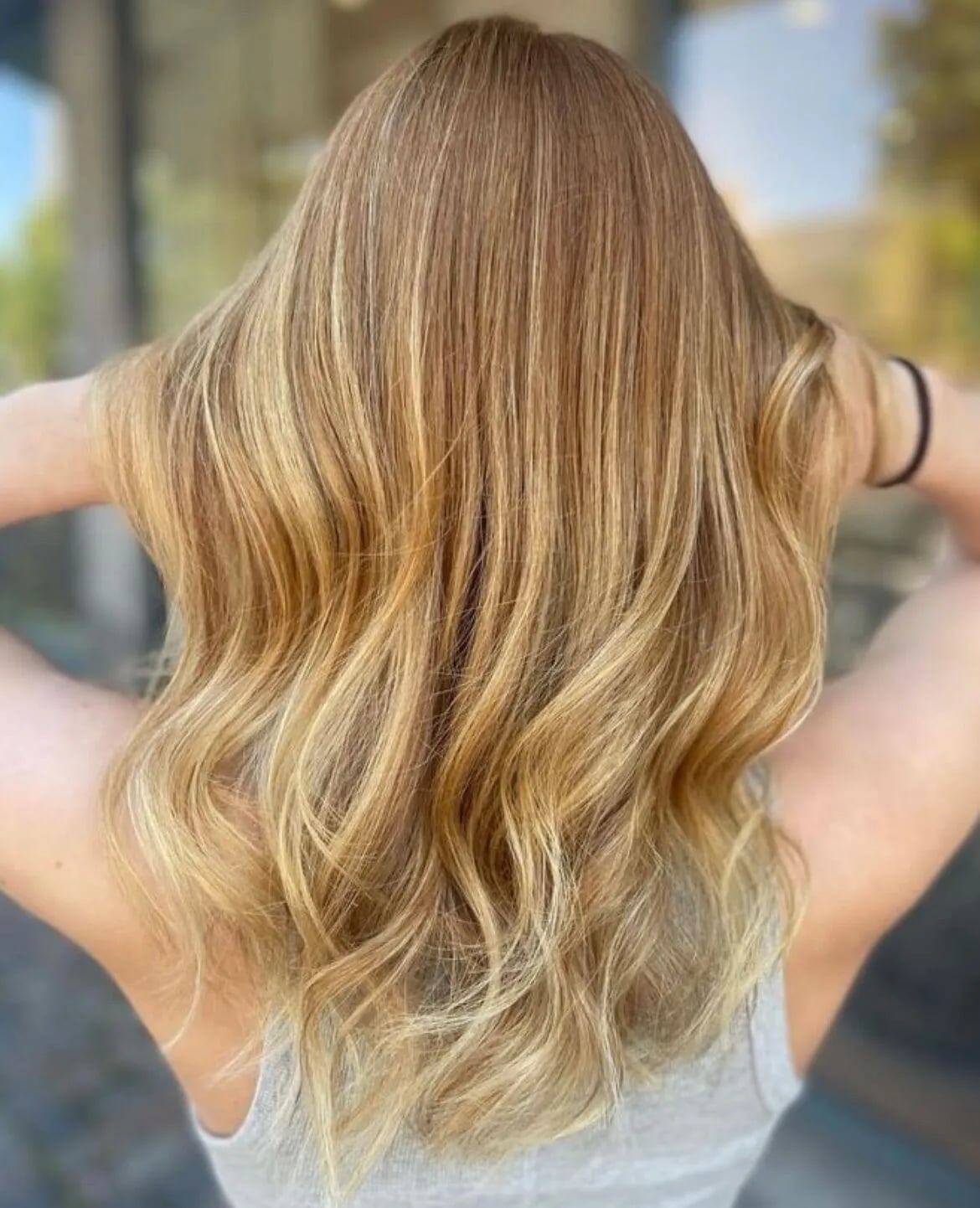
Loose waves on thick hair show the difference between a honey blonde base and subtle highlights. The darker base sits underneath; the lighter pieces catch the curl crests. A large barrel curling iron wraps each section away from the face. The tone stays warm because the highlights are blended, not painted in chunks.
Root shadow transitions on honey blonde hair
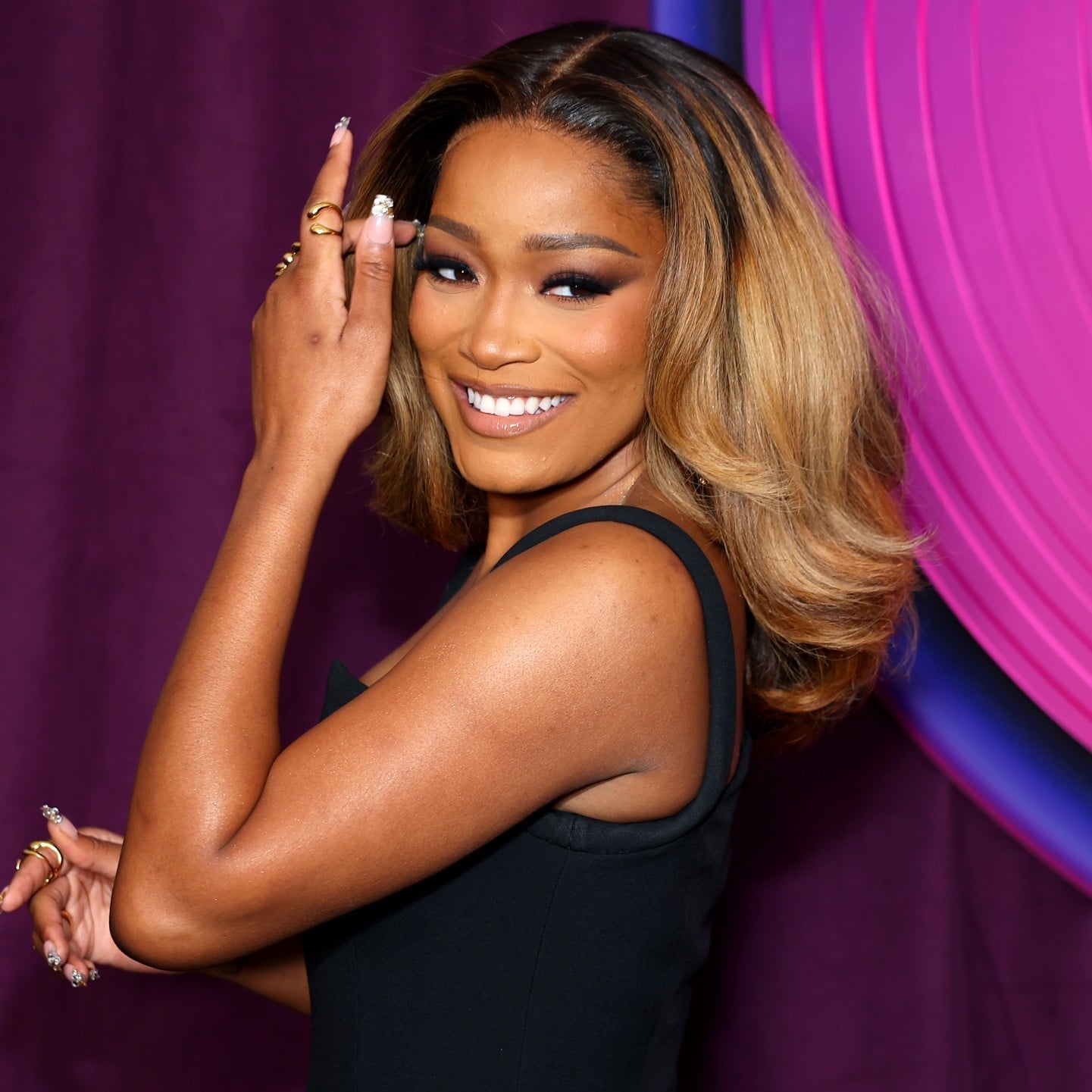
Dark roots meeting lighter ends makes every grow-out phase look planned, not neglected. The subtle root shadow here softens the contrast, so the honey blonde balayage shows depth without a hard line. Thick, wavy hair at collarbone length or longer carries this transition best. The weight of the texture keeps the darker base from overwhelming the lighter pieces. A solid blonde color from root to tip is a different look; the shadow is the focus. Tell your colorist: honey blonde with subtle root shadow.
Smooth blowout on honey blonde hair
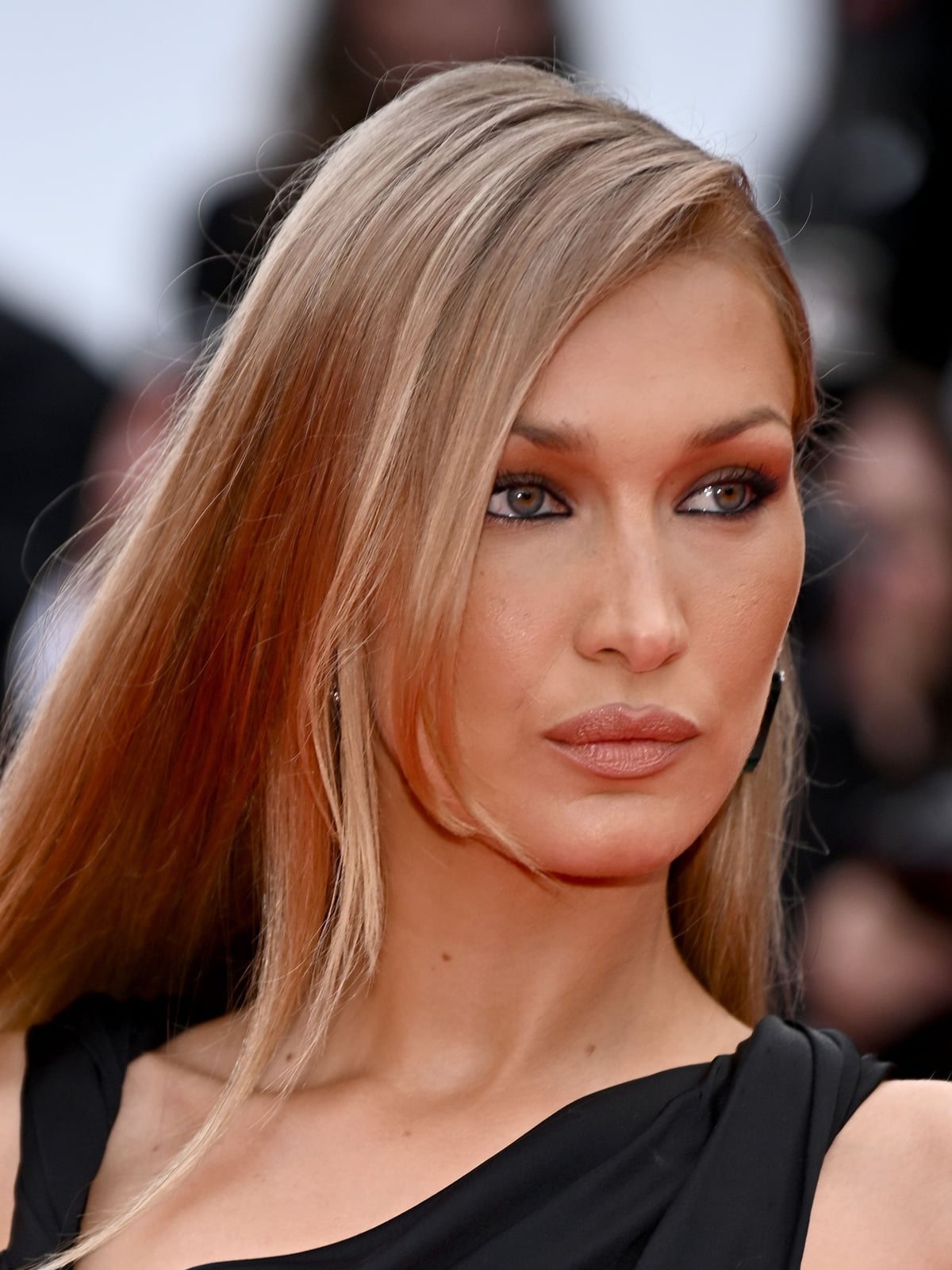
Not every honey blonde needs waves to feel finished. A smooth blowout on a layered cut with a side part lands closer to a neat office look than a weekend brunch one. The honey blonde shade with subtle, blended highlights looks one continuous color rather than a set of separate pieces. Fine, straight hair wears this best because the texture lets the blowout hold its shape without fight. Skip it if your hair runs thick or naturally wavy, since the layers will want to bend where the blowout wants to stay straight. The tone stays warm, bright and present, exactly how a grown-up honey blonde should behave.
A side part adds lift at the crown without a round-brush battle at the back. The subtle highlights sit close enough to the base that they never look stripes, just a general depth that keeps the blonde from looking flat. A flat iron on low heat seals the ends for that glassy finish.
Side-swept bang on honey blonde lob
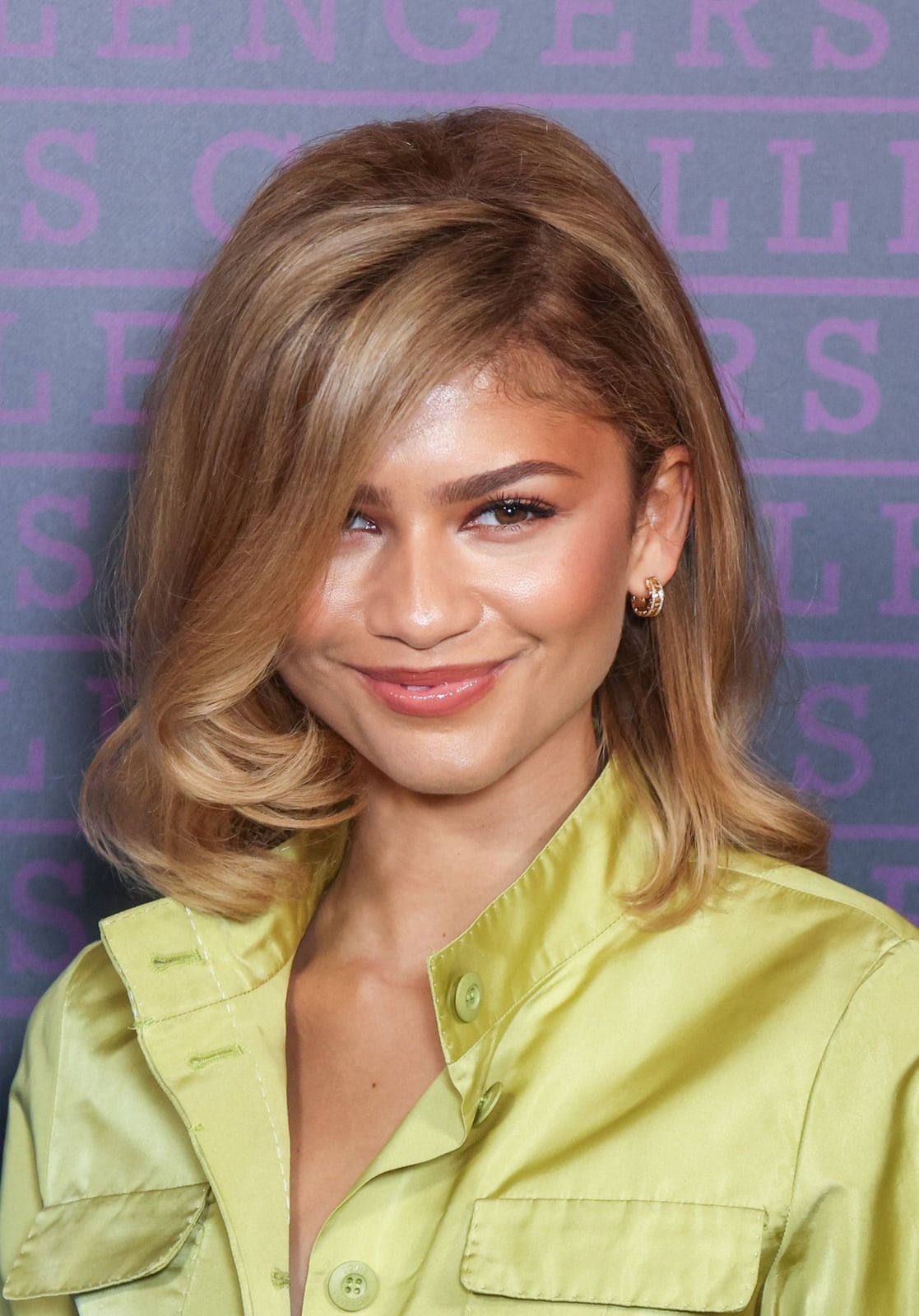
A side-swept bang on a honey blonde lob works because the bang does the framing and the lob does the weight. The honey blonde base with subtle highlights keeps the color dimensional without needing full highlights. The side part lets the bang sweep across the forehead, which suits round and square face shapes by softening the outer line. Tell your colorist: honey blonde lob with subtle highlights and a side-swept bang. Fine, wavy texture holds the shape; straight hair needs a quick blow-dry with a round brush to set the sweep. The tone stays warm, not brassy, as long as the highlights stay blended rather than chunky.
Full and voluminous honey blonde with highlights
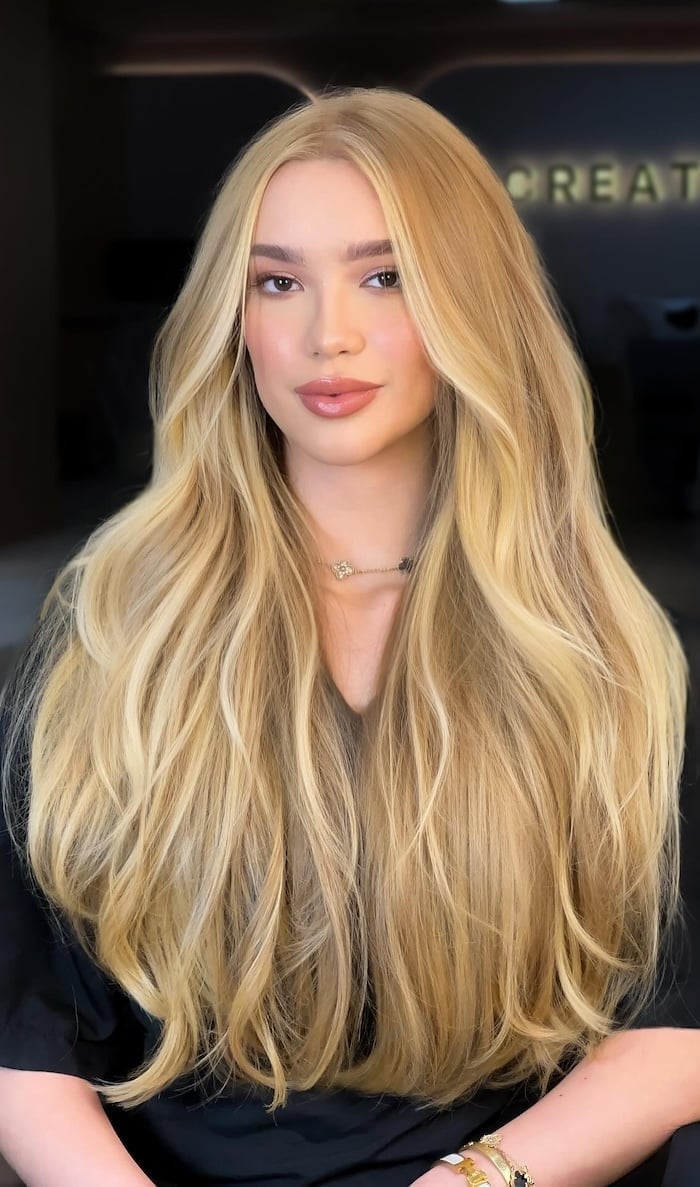
A middle part and layers give this honey blonde base its volume, but the trade-off is that thick, wavy hair needs more styling time to keep the waves defined and not frizzy. The honey blonde shade with blended blonde highlights creates a full, dimensional look that appears natural. The layered cut lets the waves stack, adding body without extra product. The catch: volume at the roots fades by midday if the hair is fine or lacks natural wave. A sleek, flat finish or very fine hair can make the layers look sparse.
The middle part drops the lighter pieces evenly on both sides, which suits most face shapes by balancing the visual weight. The tone stays warm and golden because the blended highlights sit close to the base level. Dry shampoo at the roots keeps the volume intact through the afternoon.
Layered honey blonde with subtle highlights
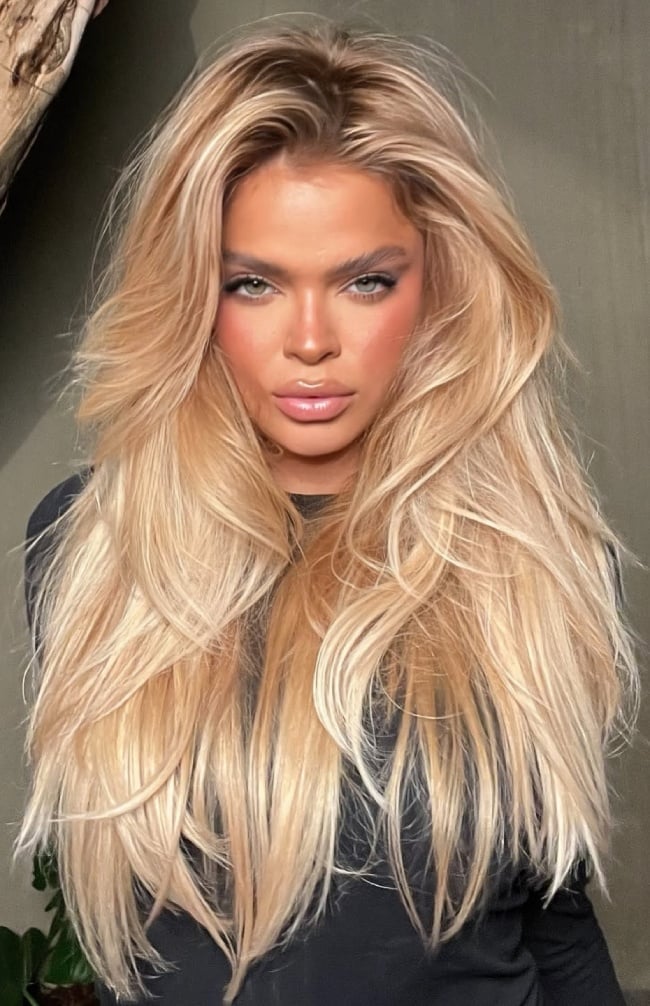
A layered cut with a middle part needs the right blowout to show its shape. The honey blonde shade with subtle blonde highlights adds warmth through the mid-lengths, while the layers keep the ends from feeling heavy. Thick, wavy texture holds the volume best; fine hair tends to let the layers collapse into a V-shape by noon. Suits most face shapes, since the middle part and soft layers balance width and length. Skip it if you prefer straight hair. The blow dryer and a round brush are the tools here, not a flat iron.
Lighter honey blonde with thin lighter strands
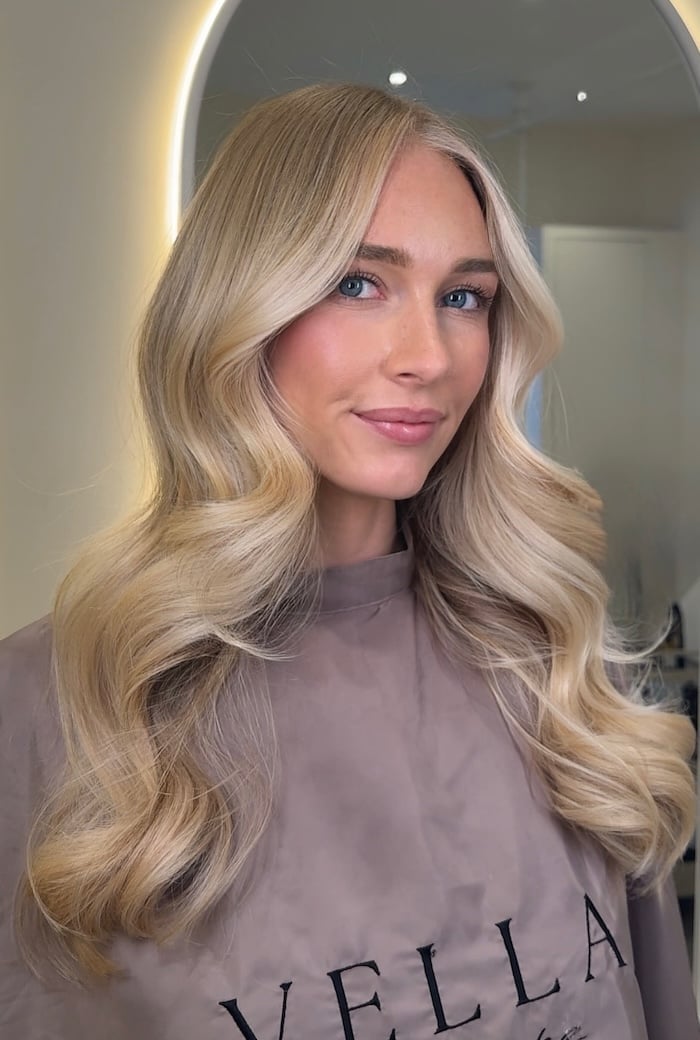
Thin lighter strands catch the light first, so the honey blonde base reads warmer by contrast. These face-framing layers stop at the jaw and cheekbone, which suits round and square face shapes by adding softness. The loose waves keep the color from looking flat. Thick, wavy hair at collarbone length or longer holds this shape best. Skip it if you prefer straight hair or have very fine strands that might hide the lighter pieces. Tell your colorist: honey blonde with thin lighter strands, soft face-framing layers.
Side parting on layered honey blonde hair
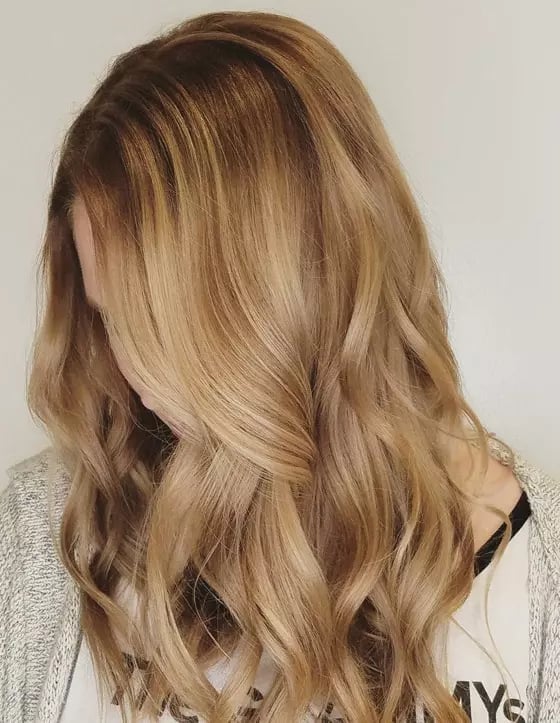
A center part can feel static; a side part on layered honey blonde hair creates instant volume at the crown. The subtle blended highlights run through the mid-lengths and ends, which makes the grow-out less obvious. Thick, wavy hair at collarbone length or longer gives the layers enough weight to move. Fine hair might not hold the wave pattern. The side parting shifts the eye across the cut, so the dimension reads differently from every angle. Not for those who prefer a sharp, one-length line.
Honey blonde with root shadow and balayage
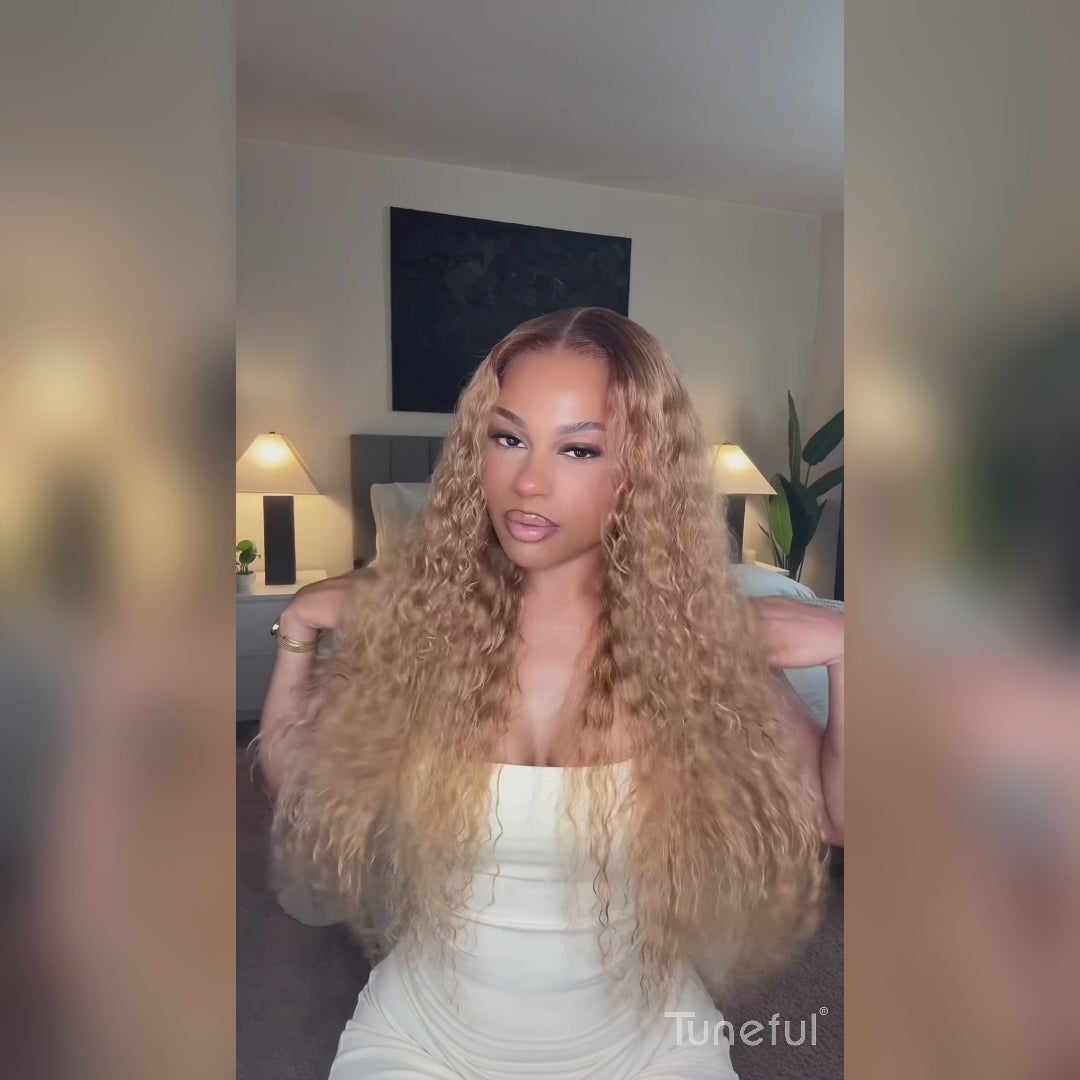
This is a two-step process that delivers a low-maintenance grow-out. The root shadow starts darker at the scalp and fades into lighter strands through the mid-lengths and ends. Balayage is painted freehand, so the transition looks soft and natural. Thick, wavy hair at collarbone length or longer shows the dimension best. This style works for those who want a soft, blended look. Tell your colorist: honey blonde with subtle root shadow and balayage, voluminous waves. The root shadow means you can stretch touch-ups to every twelve weeks. The balayage keeps the ends lighter without a harsh line when new growth appears.
Honey blonde with face-framing caramel highlights
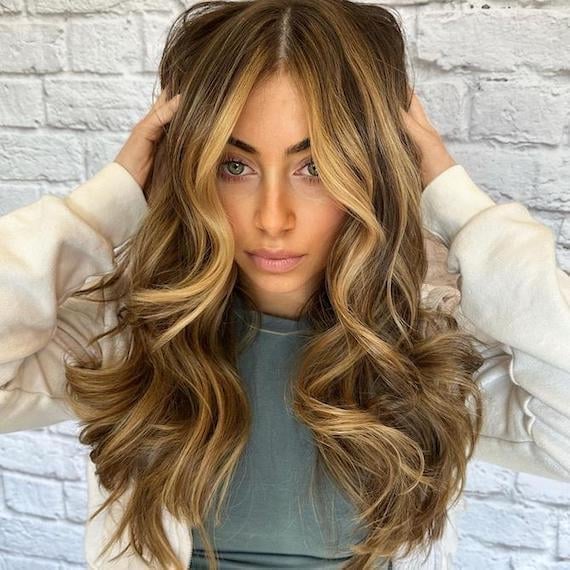
Caramel highlights placed around the face create a warmer frame than all-over blonde. The honey blonde base stays neutral, so the caramel is a separate tone. Thick, wavy hair at collarbone length or longer gives the layers enough weight to fall forward. It works best for those who want contrast between the base and highlights. The centered parting keeps the face-framing sections symmetrical, which suits oval and heart face shapes. The caramel tone needs a gloss every eight weeks to stay warm and avoid brassiness.
Lighter highlights add warmth to honey blonde, wavy
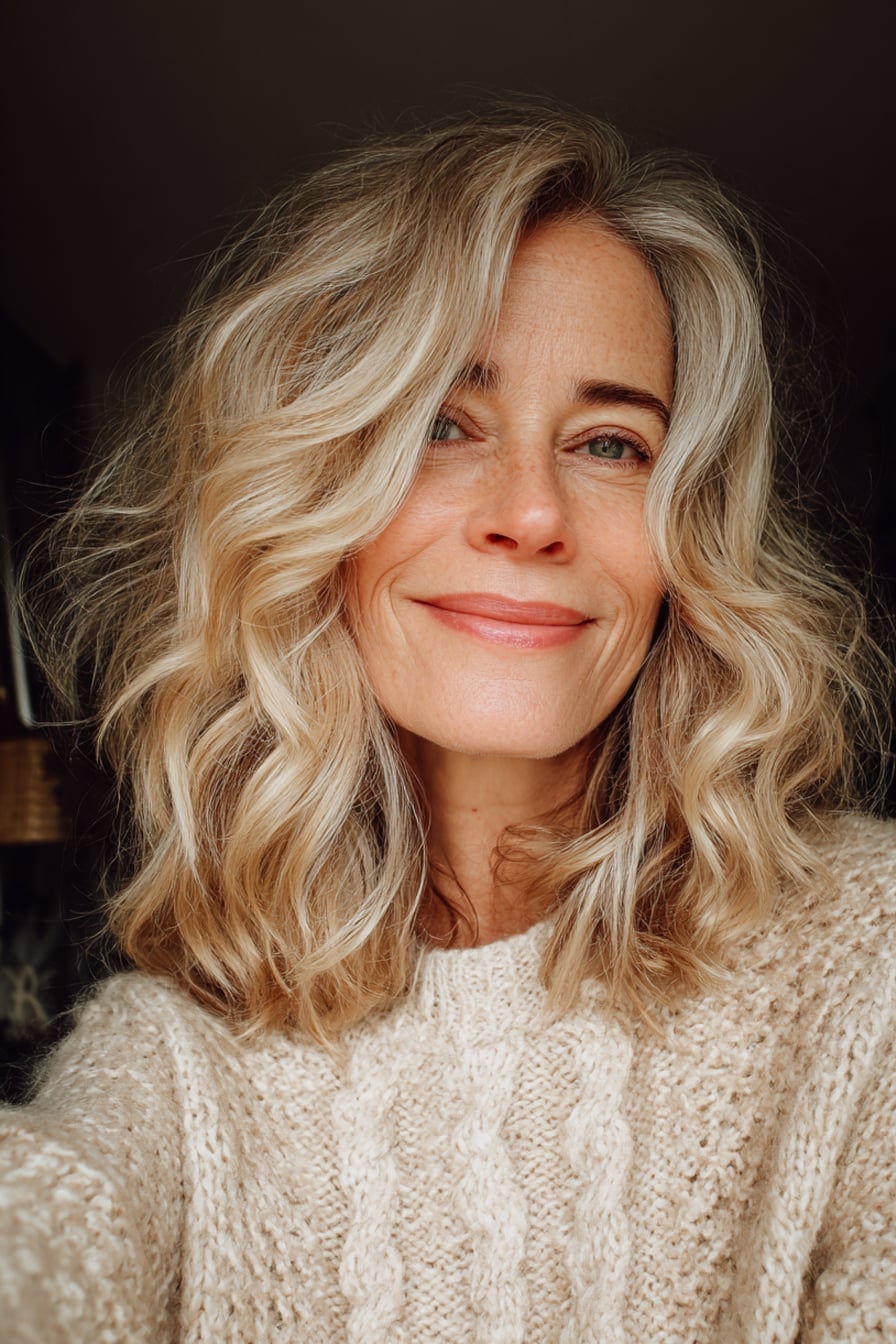
Lighter highlights woven through honey blonde add warmth without changing the base color. The soft layers break up the highlight placement, so the color looks natural rather than striped. Thick, wavy hair at collarbone length or longer holds the wave pattern without product. A uniform blonde tone is a different look. A side part shifts the lighter pieces to one side, which adds asymmetry. The tousled texture comes from a texturizing spray on damp hair, not from heat styling. The subtle tone means fewer salon visits for toning.
Middle part on honey blonde hair
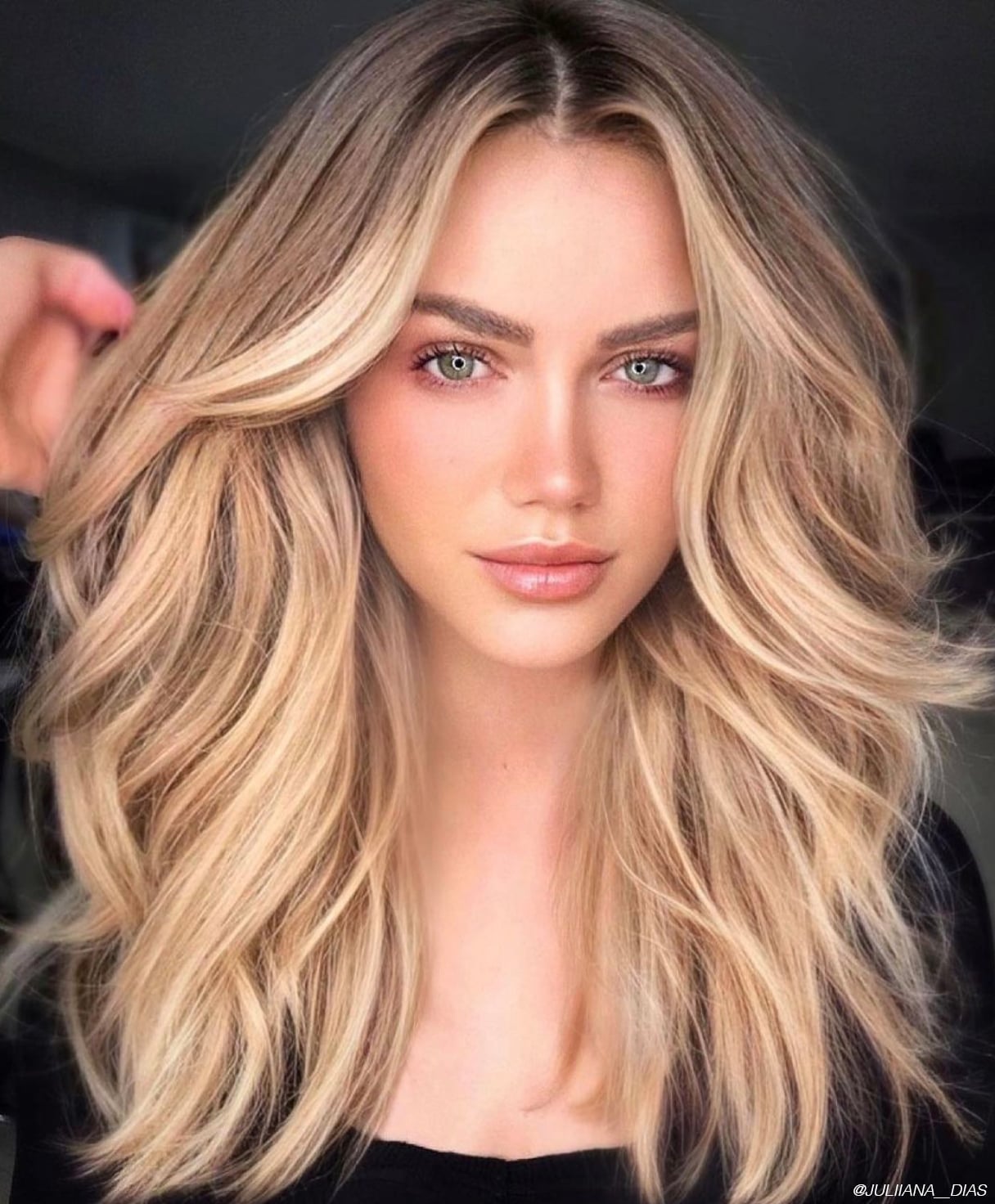
A middle part on honey blonde works best when the color and cut are well executed. The warm blonde base with subtle blended highlights creates a soft transition from root to tip, while loose waves add volume without requiring a full blowout. Thick, wavy texture at collarbone length or longer carries the shape; shorter lengths lose the drape effect.
Suits oval and heart face shapes best, since the vertical line elongates the face. Not for you if you have a round face that needs asymmetry. The face-framing layers are cut to hit around the jaw, so the middle part looks deliberate. Texturizing spray on damp hair amplifies the wave pattern.
Natural lighter honey blonde with waves
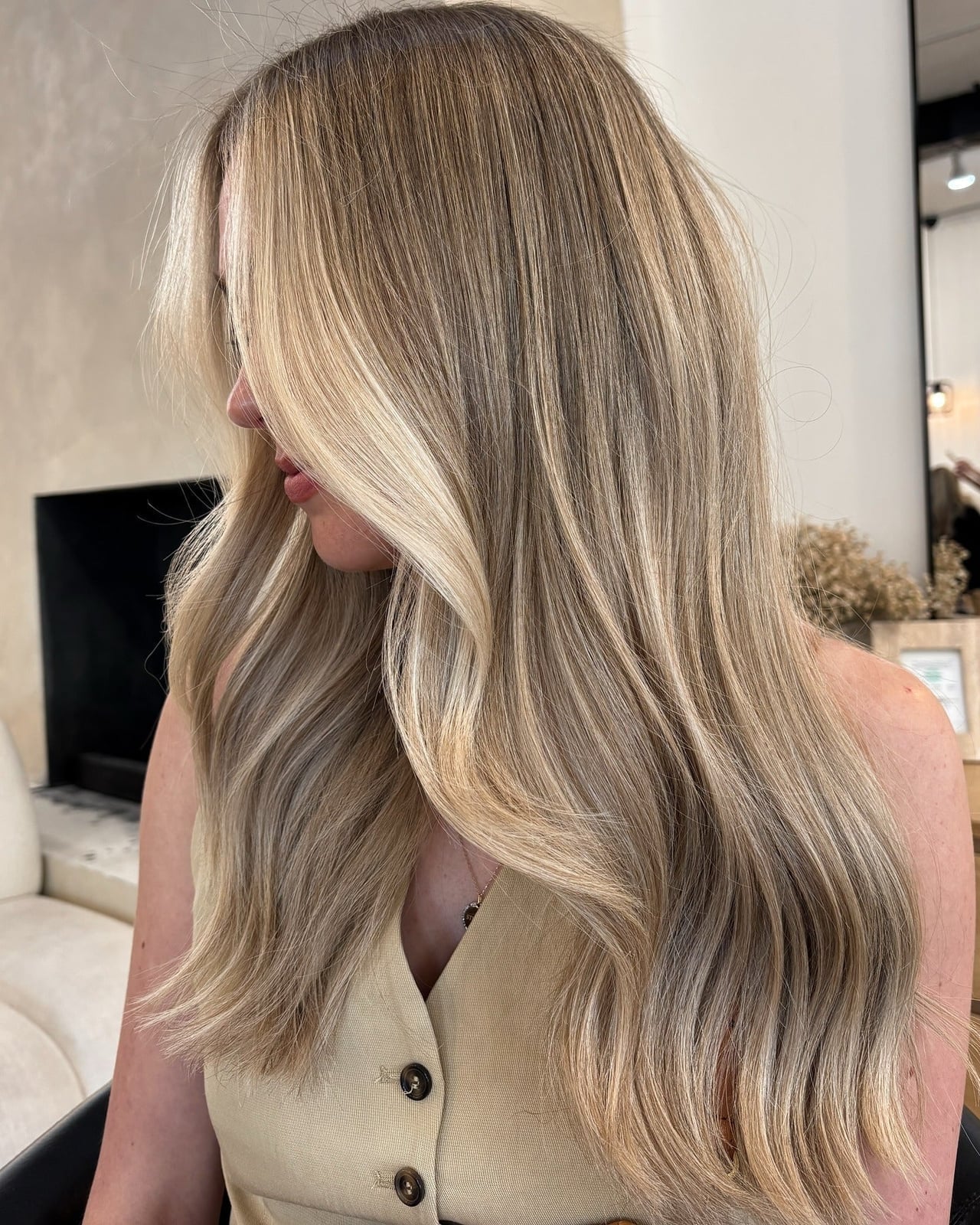
Natural lighter honey blonde is a good color. The catch is that it asks for real highlight work, not a single-process gloss. Subtle, blended highlights on a warm blonde base create the full, dimensional look. Soft waves in thick, wavy hair give the color room to shift between tones. The effect looks easy, but the chair time is the opposite: expect a full appointment for the foil or balayage application.
Pass when your hair is very fine or you need a one-day color service. Fine strands can look over-processed rather than sunlit, and the blending requires a steady hand. Ask your colorist for: honey blonde with blended highlights, soft waves. The shade works best on natural levels six through eight; anything darker needs a two-step lift first. The result holds for about six weeks before the root line starts to compete.
Curtain bangs on layered honey blonde with creating a warm
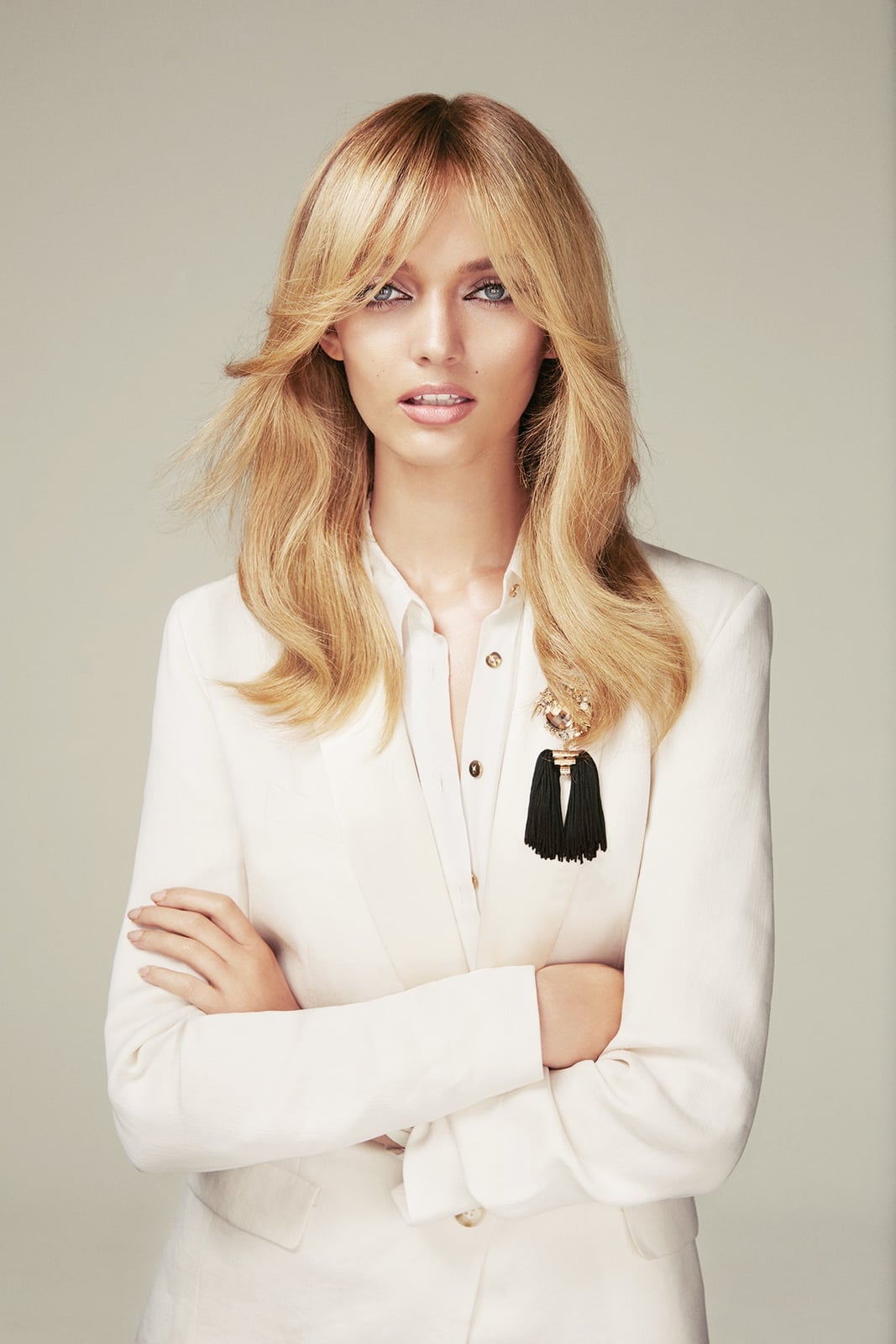
Curtain bangs on layered honey blonde need precise cutting and a good blowout. The cut starts with face-framing layers that graduate into curtain bangs, all on thick, wavy texture. Fine highlights in a honey blonde shade create the warm, dimensional effect without heavy contrast. A blowout at the crown gives the bangs their swoop and keeps the layers from sitting flat. Book it as: layers with curtain bangs, honey blonde with fine highlights, blowout.
Honey blonde with caramel highlights and waves
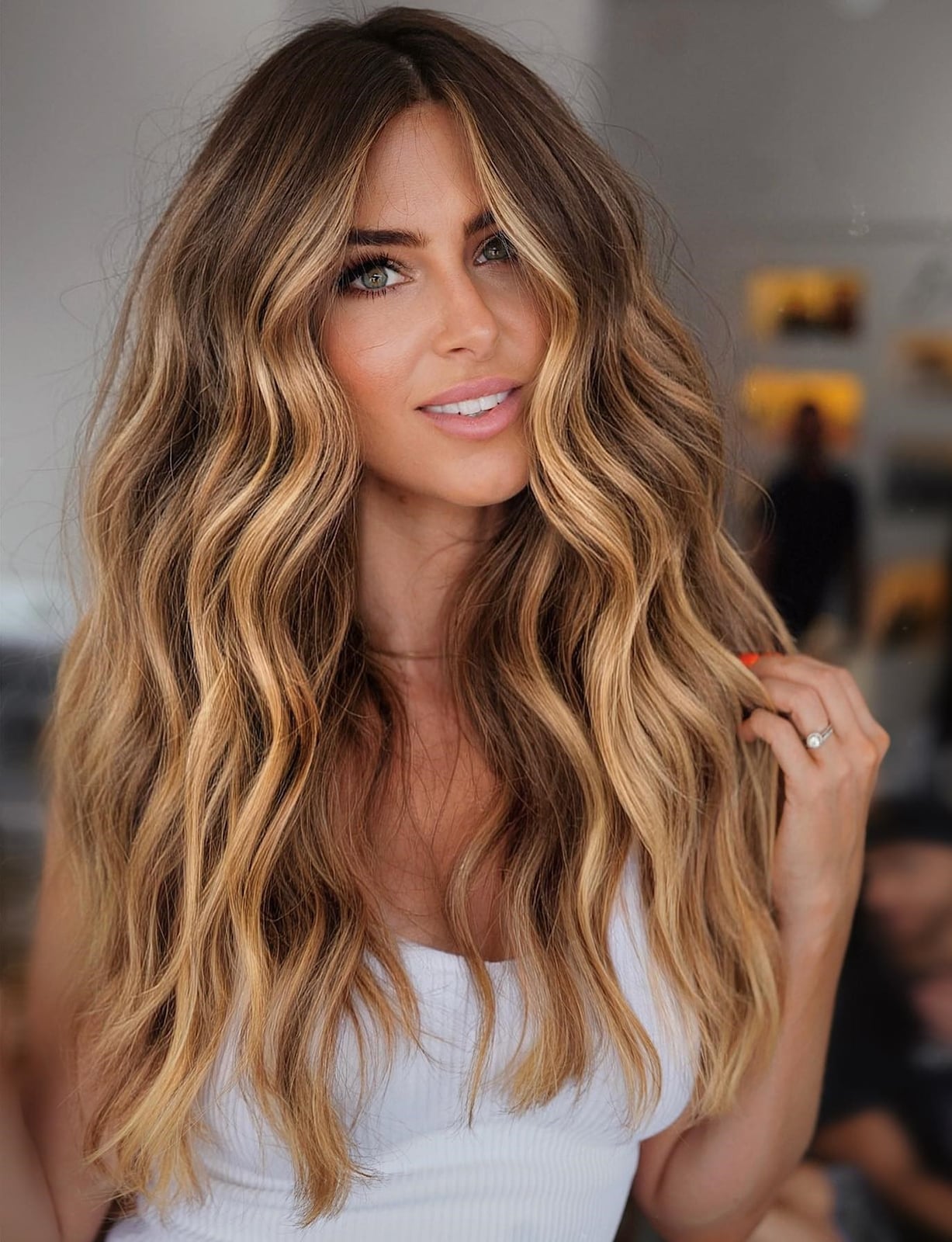
Honey blonde with caramel highlights brings a warmer register than the standard honey and blonde mix. The base is a warm blonde, and woven-through caramel strands add the depth. Layers in thick, wavy hair give the waves structure and keep the caramel pieces visible. A middle parting balances the dimension on both sides. This combination lands best on natural levels six or seven, where the contrast looks tonal rather than stark. Curtain bangs stick around from section 28, but this version skips the fringe entirely for a cleaner line around the forehead. Texturizing spray after the blowout keeps the wave pattern intact through the day.
Final Thoughts
Pick the version that matches your real morning.
- Fine hair: ask for fine woven highlights on a dark brown base.
- Ten minutes in the morning: go with a root shadow and balayage.
- Cool base that pulls brassy: tone with a purple shampoo every third wash.
- Low-maintenance grow-out: choose a honey blonde bob with a dark root.
Honey blonde is a flexible shade for a lighter, dimensional look.