Sitting in the chair, you already know the grow-out line at your nape needs a decision. The right curly cut does not just manage volume; it turns your texture into the asset you actually want to style, not fight.
That is why Gorgeous Curly Hair 2027 fill so many saved boards: 35 looks that move from a sharp pixie to air-dried length, from five-minute refresh to a full diffuser routine. Every shape here works with your curl pattern, not against it. No more wondering if the fringe will shrink three inches.
Ash blonde pixie with wispy bangs and darker roots
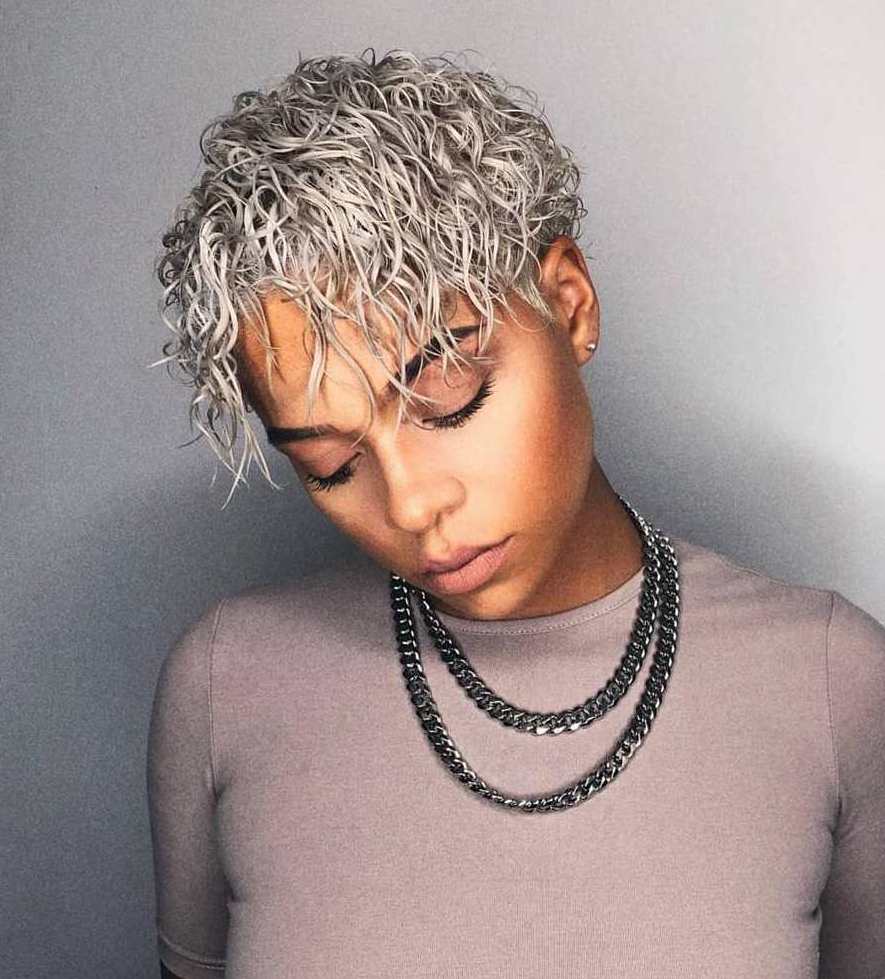
Darker roots keep an ash blonde pixie from looking flat. The wispy bangs hit the forehead, not the eyebrows, so they move with the curl instead of fighting it. Thick, curly texture holds the shape without product buildup. It works best for those who prefer shorter hair and have medium to thick hair that holds volume. Air-dried styling saves time, but a trim every four to six weeks is needed to keep the pixie shape defined.
Dark brown curly shag with wispy bangs
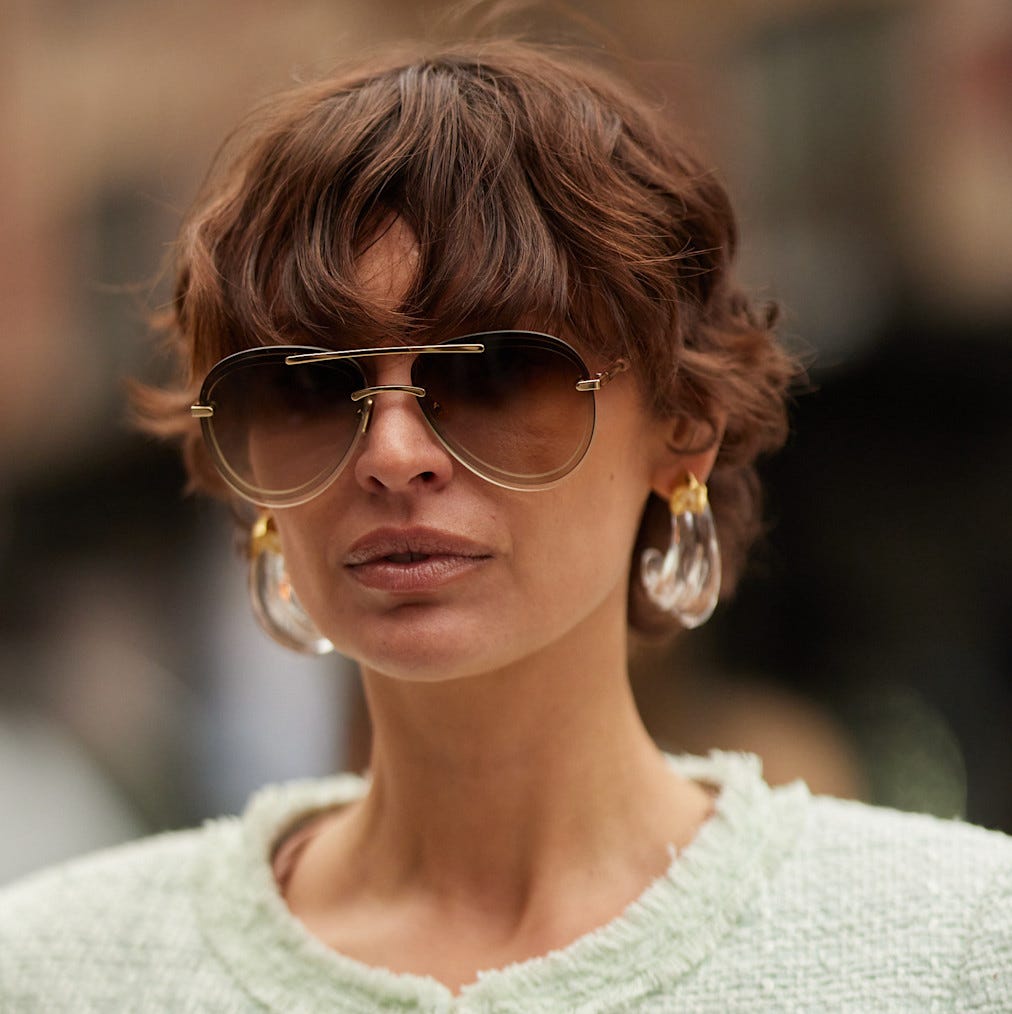
How do you get a shag that looks intentional rather than messy? Tell your stylist: curly shag, wispy bangs, choppy layers. The middle part and air-dried finish let the thick, wavy texture do the talking. Choppy layers remove weight from the bottom, so the curl springs up instead of drooping. Not for those who want a sleek, uniform shape. The precision cutting takes a practiced hand, but once it grows out, the layers fade gracefully.
Textured layers shape curls ending above ear
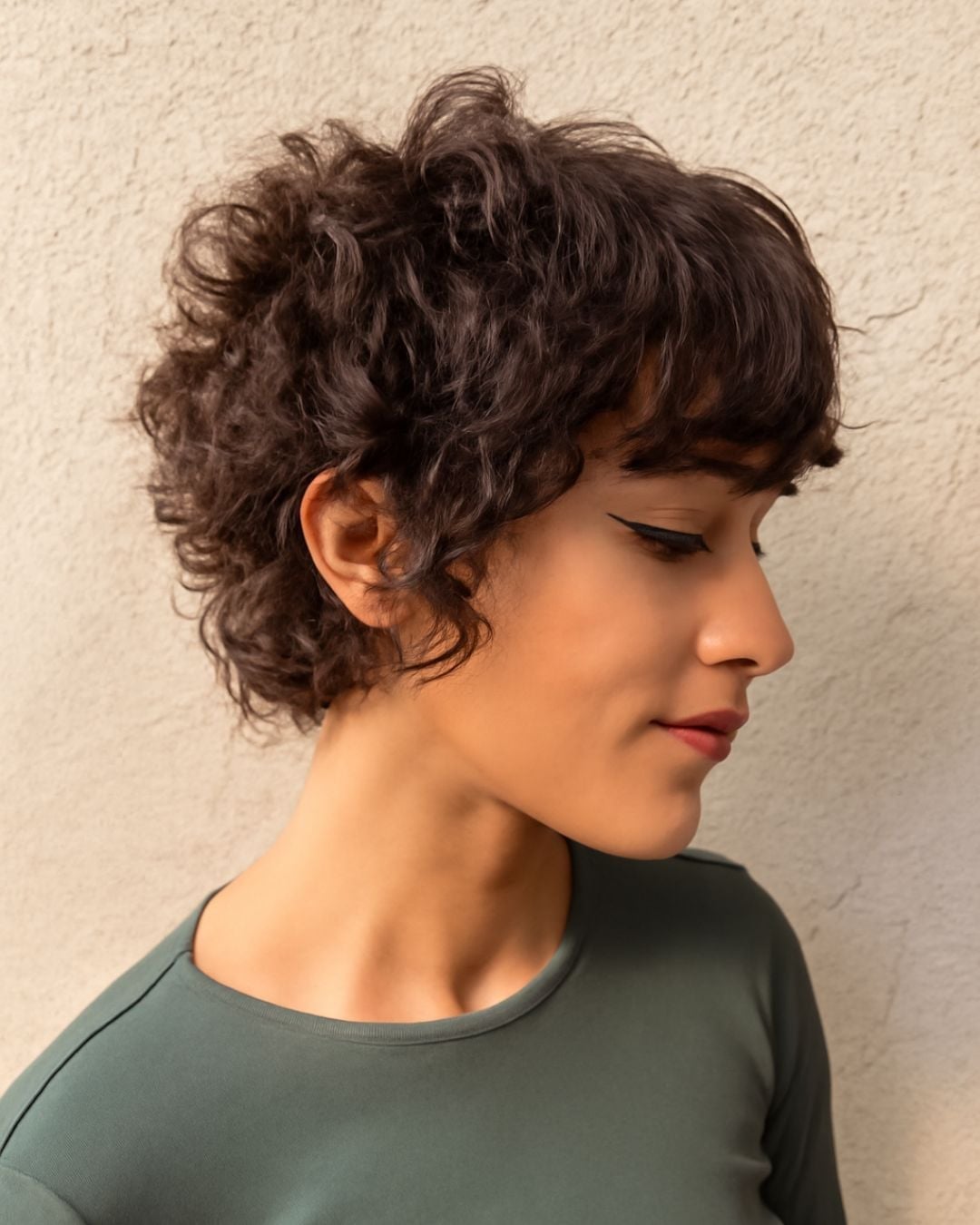
This is the shag for people who think a shag needs more length. Textured layers stop above the ear, so the curl stacks instead of spreading out. The side part and wispy bangs soften the short perimeter, and dark brown color keeps the focus on the cut. Thick curly hair holds the shape. Pass when you want a longer silhouette or have fine hair that won’t hold the layered shape. A texturizing spray helps the layers separate.
Side-swept bang adds sophistication to bob
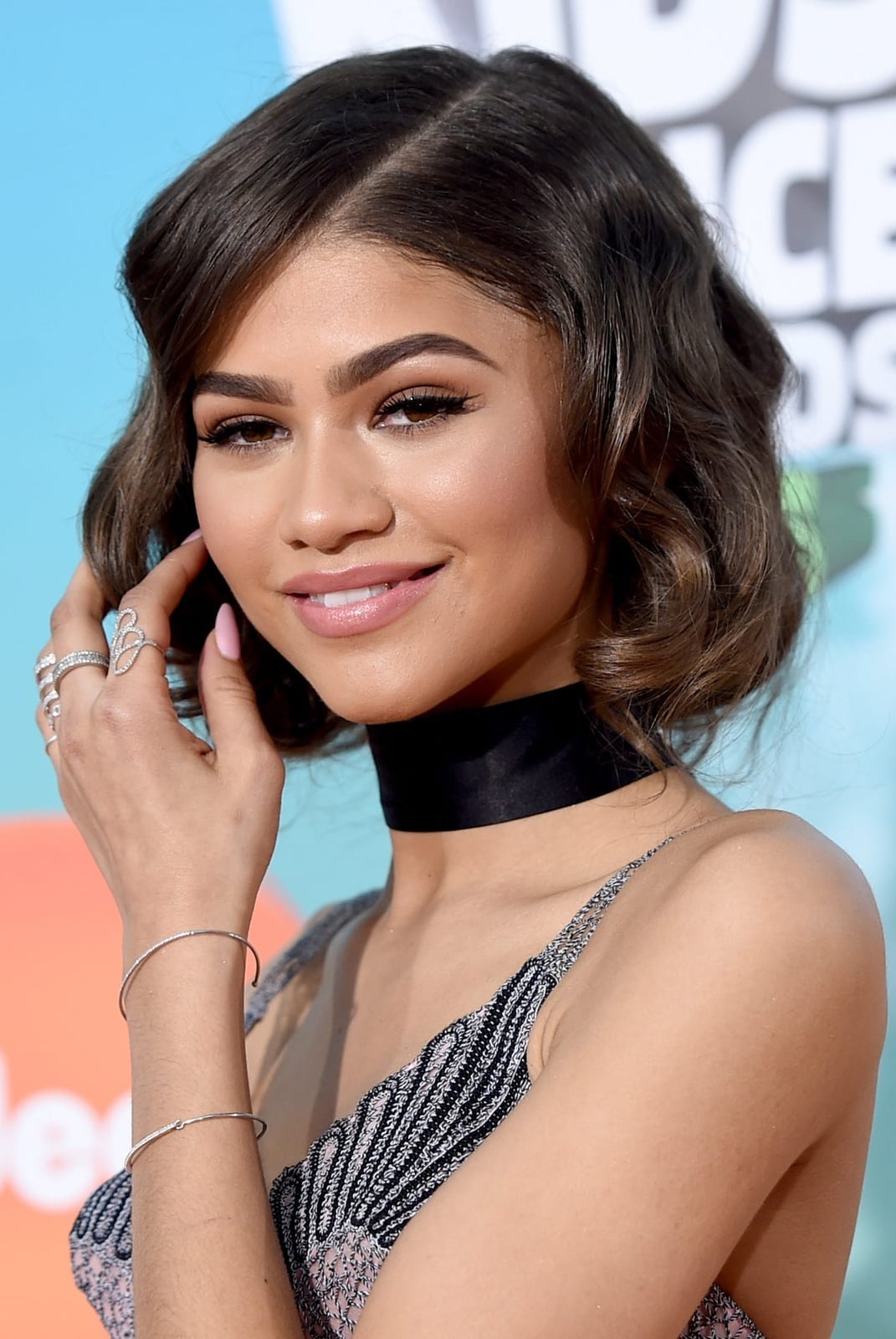
Deep side part plus side-swept bang equals a bob that looks neat, not severe. The gentle waves in thick, dark brown hair keep the shape soft. A sea salt spray gives the texture grip without crunch. Trim every six to eight weeks to maintain the blunt edge. Not for you if you have very tight curls or prefer a style you can sleep on and walk out the door.
Blonde layered cut ending above the ear
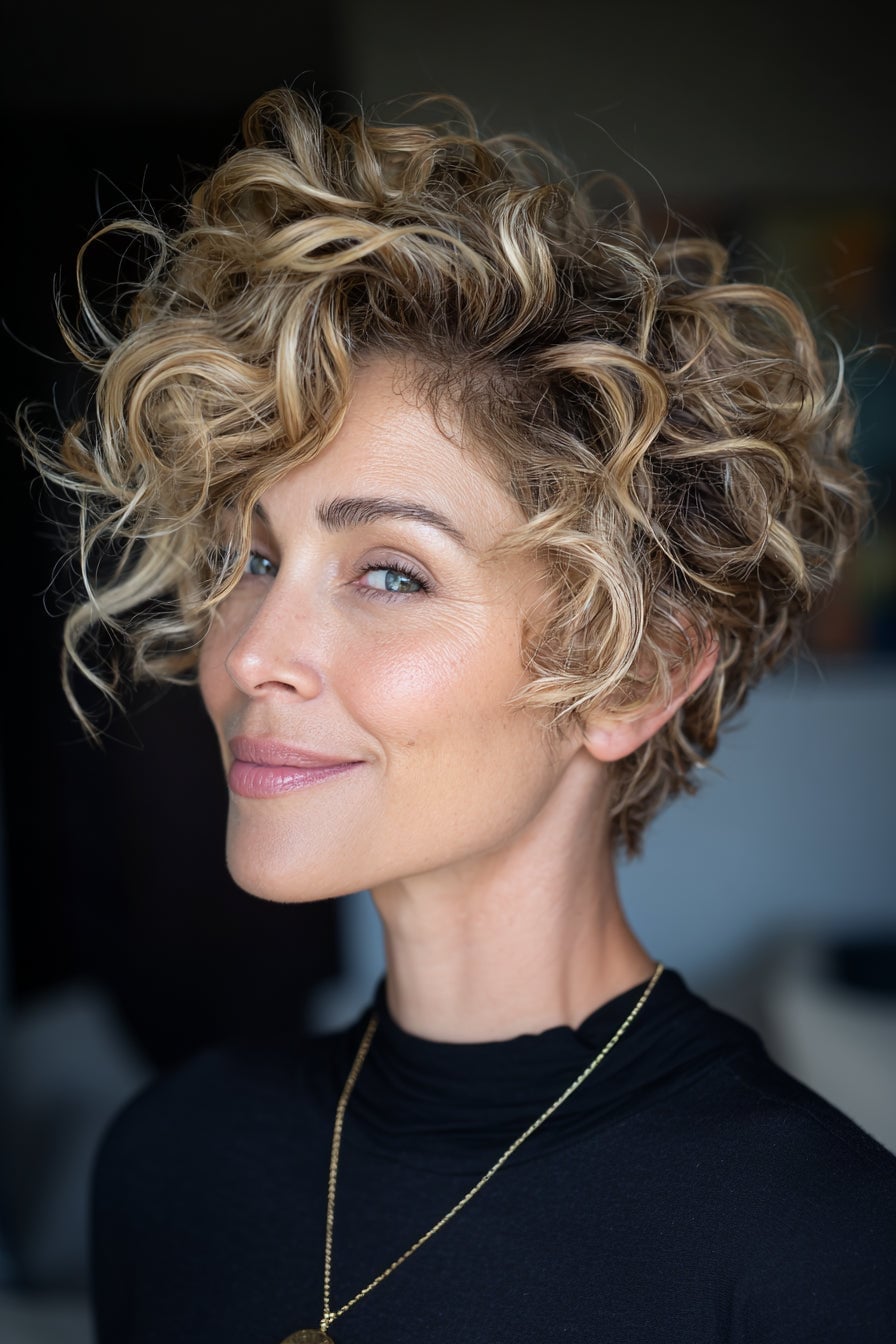
A layered cut ending above the ear works best for thick, curly hair that wants volume without weight. Side-swept bangs break the short line, and blonde highlights add depth to the natural curl. The air-dried finish keeps the look casual, not salon-stiff. Not for you if you prefer longer hair or have fine hair that struggles to hold volume. A curl-enhancing mousse helps the layers separate and stay defined between trims.
Short layered cut with voluminous dark brown curls
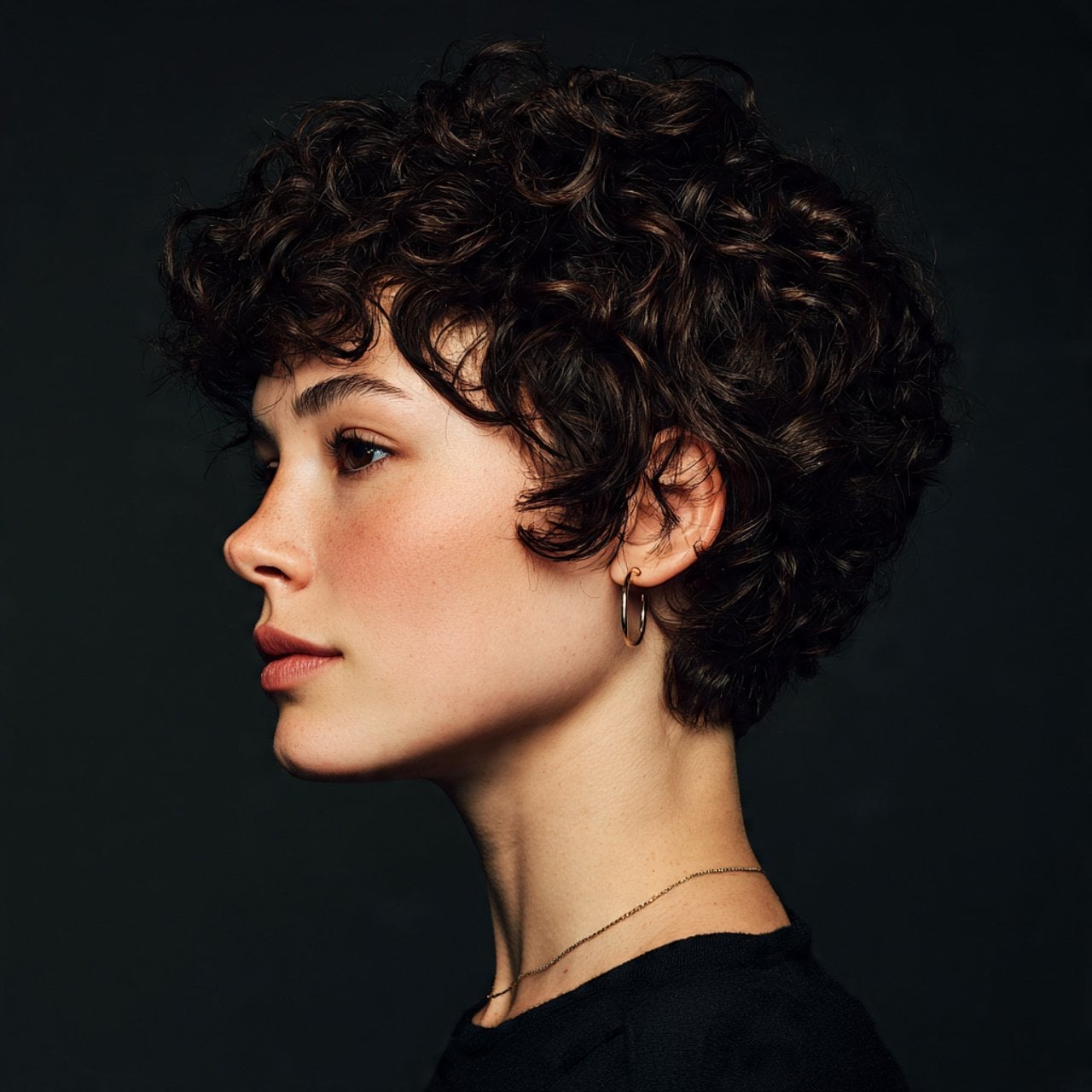
Dark brown curls stack up in a short layered cut that banks on volume. Thick hair gets its shape from the layers, not from product. The catch arrives at week three when the top starts to poof and the sides lose their line. Not for you if you have fine hair. The volume will deflate fast.
Gray layered cut with tight curls ending around the ear
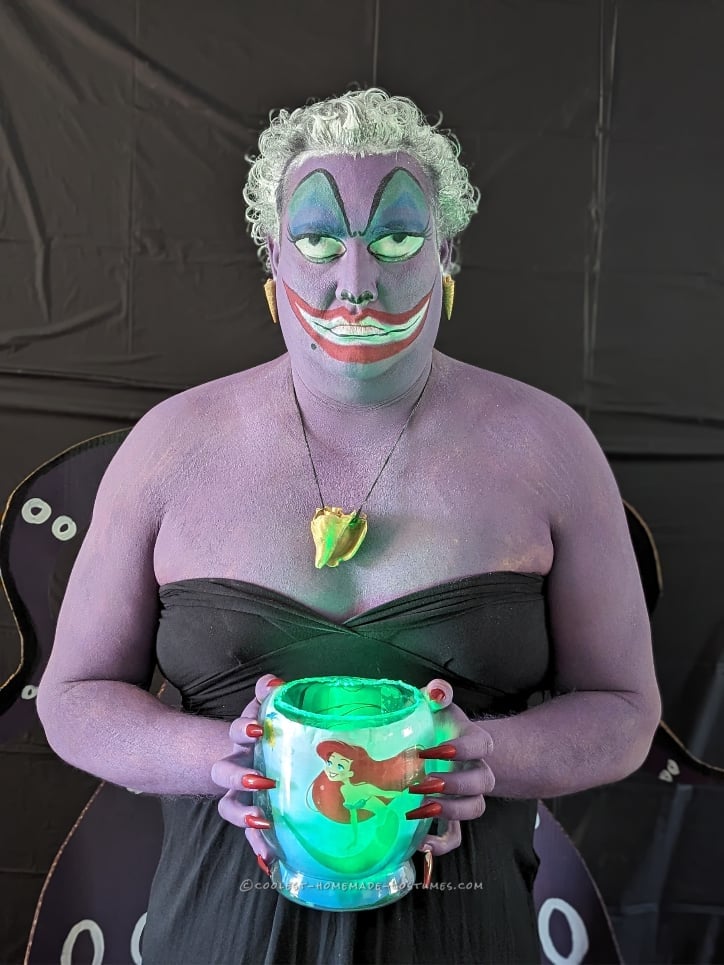
Gray curls sit in a dense, tight formation that ends clean around the ear. The middle part splits the weight evenly, so the shape stays balanced without effort. This one lands best in cooler months when wool collars and scarves won’t crush the line. A layered cut like this asks for a stylist who understands how gray hair compresses differently than pigmented strands.
Defined spiral curls in a black layered cut
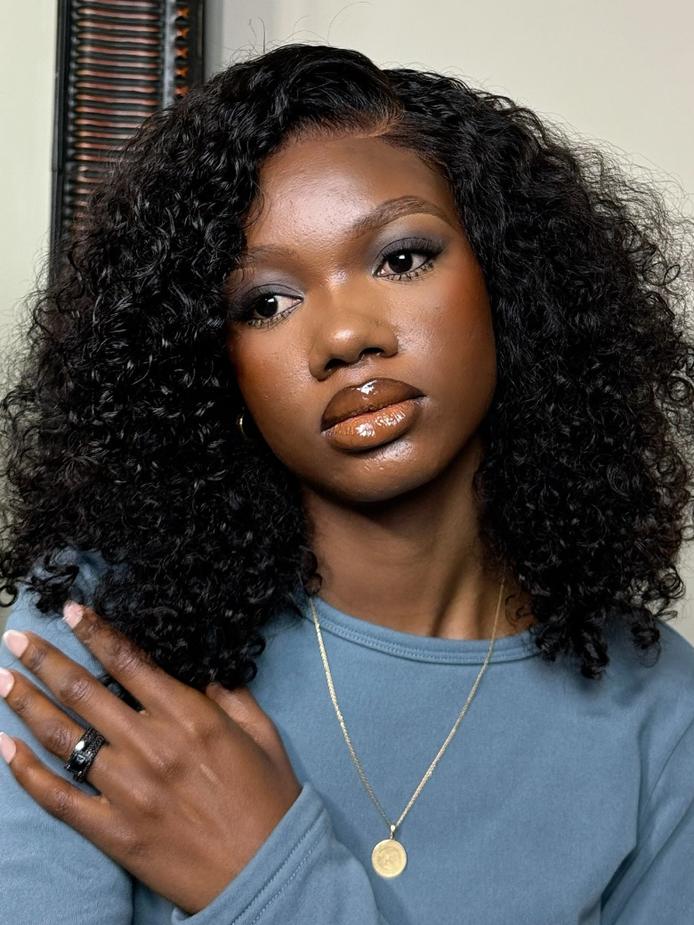
Black spiral curls coil in tight, even rings from root to end. The side part breaks the mass into two distinct volumes, and the layers keep each curl from tangling into its neighbor. Deep black against defined spirals makes the texture read clearly, no highlights needed. Achieving this coil precision requires a stylist who cuts curl by curl, not by section.
Voluminous dark brown curls with a side parting
Long, thick, dark brown curls fall in a heavy curtain with a deep side part. The layers cut through the weight so the hair moves instead of sitting flat. Ask your stylist for a long layered cut with volume through the crown. Apply a leave-in conditioner after washing and let it air dry. That is the entire routine.
Layers enhance natural volume of thick curls
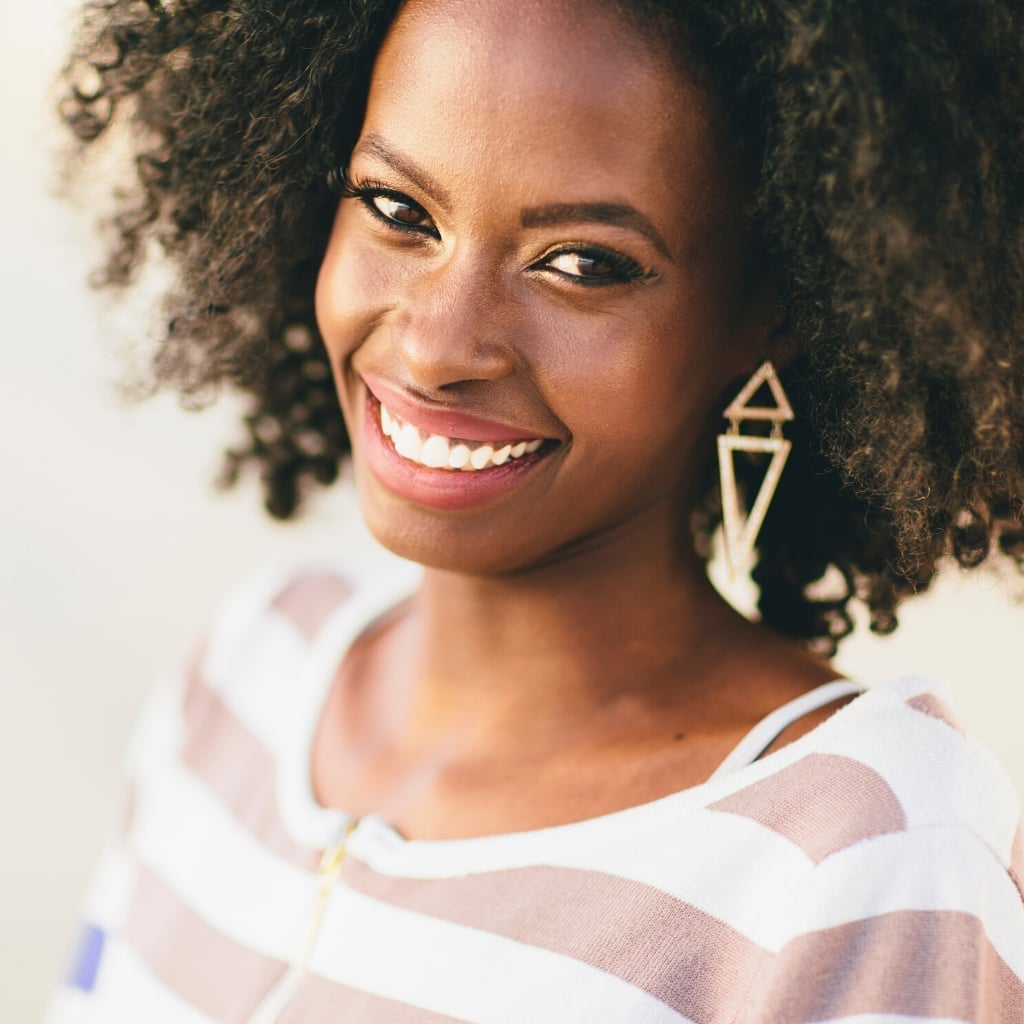
Voluminous curly hair relies on layers cut into the interior, not just the perimeter. The black curls lift at the root and hold their bounce because the internal weight has been removed. A diffuser attachment on low heat will set the shape without frizz. This cut wears best when you let it do what it wants, fighting the volume is a losing game.
Face-framing layers enhance natural volume
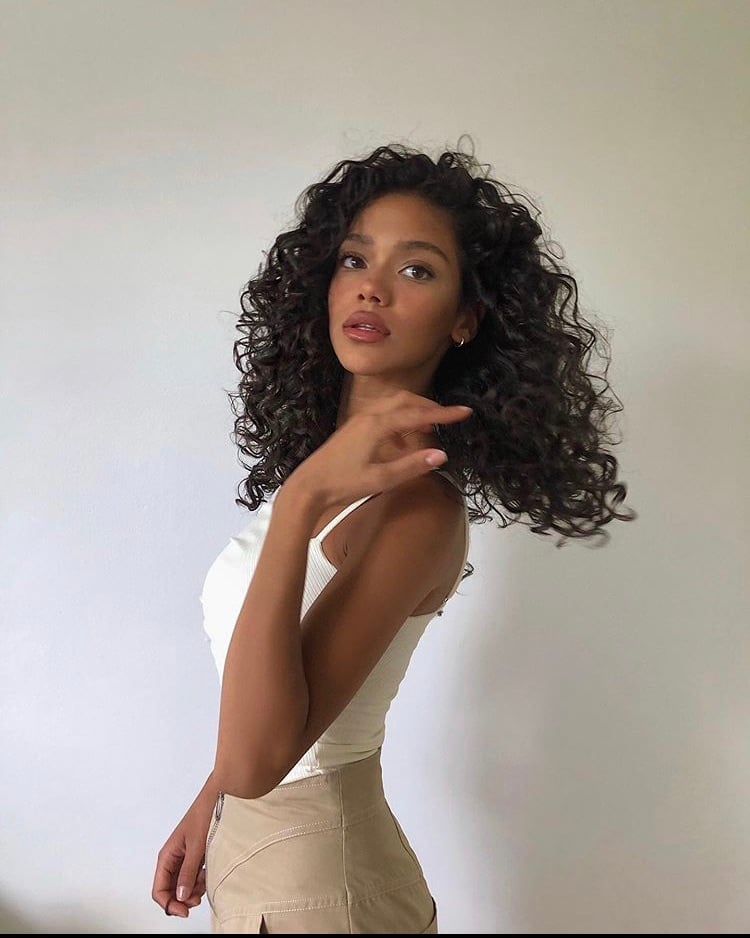
Thick curly hair already brings the volume. The right cut decides whether that volume is simply unruly at the temples. Face-framing layers, cut while the hair is dry and coiled, release the curl pattern so each section springs upward instead of sitting flat against the head. The dark brown color stays rich and deep without any artificial lift. You need at least collarbone length to let the weight of the curls pull the layers into a soft cascade rather than a mushroom shape. The middle part keeps the distribution even, which matters when your hair has this much density.
Curly hair this thick demands a stylist who understands dry cutting. A diffuser attachment on your dryer sets the shape without frizz.
Voluminous dark brown afro with layers
An afro is not a single shape. It is a silhouette that shifts based on how the layers fall, how the hair is cut when dry, and how the curl pattern naturally stacks. This version uses internal layering to carve the roundness without losing the height at the crown. The dark brown color stays uniform, so the eye travels over the texture rather than stopping at a highlight or a root line. Styled air-dried, the shape holds its architecture without product buildup. A wide-tooth comb used only when the hair is damp preserves the curl integrity.
Compare that to a shorter, more contained shape like a tapered afro, which removes bulk at the nape and sides for a cleaner line. That version suits anyone who wants less daily shaping. This full, rounded cut works best if you want the maximum radius from root to tip. Not for you if you prefer a more contained style or have fine hair that cannot support the internal structure. Layers this deep require a stylist who understands natural curl patterns, not just a generic round cut.
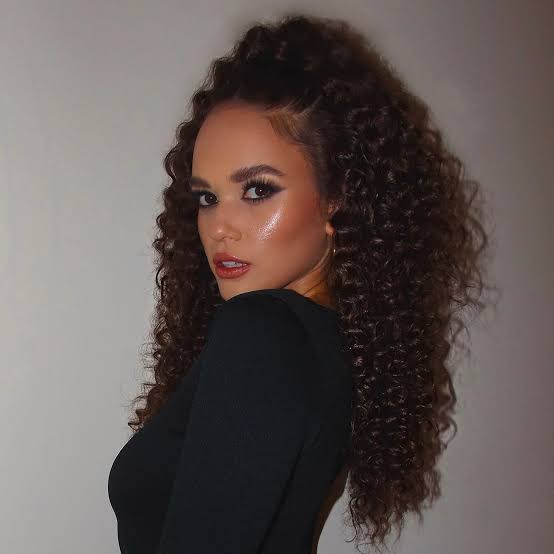
High dark brown ponytail with decorative rings
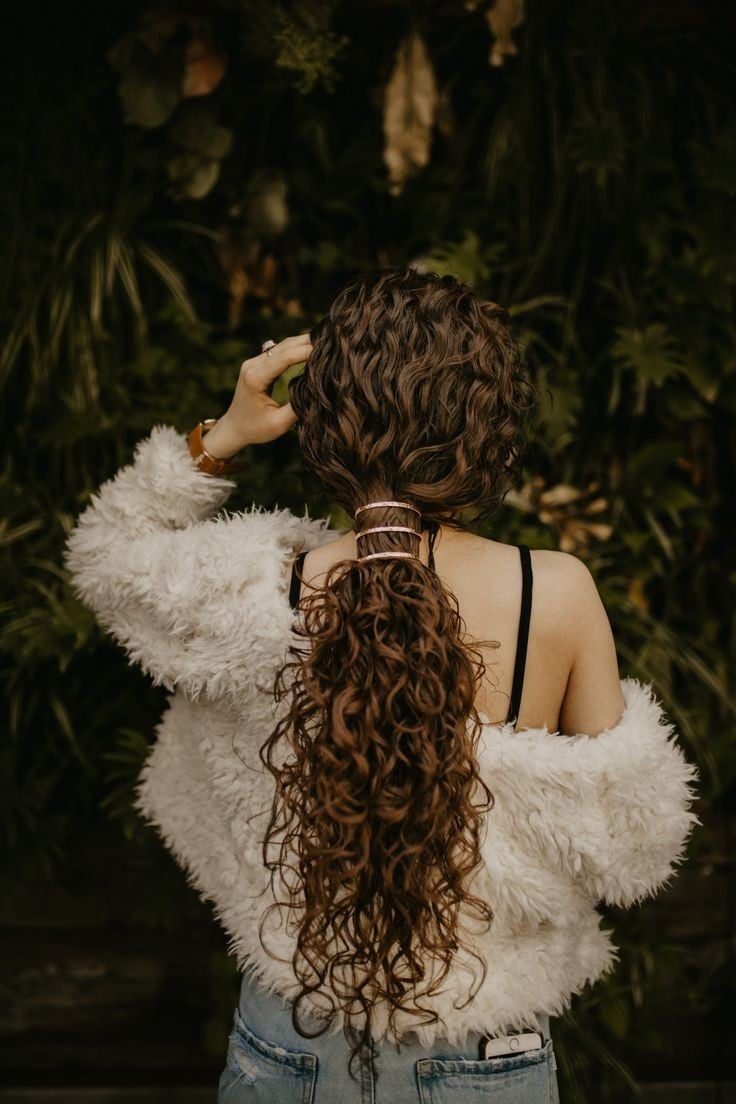
A ponytail on curly hair is rarely just a ponytail. It is a test of length, density, and whether the hair will hold its shape past the first hour. This version starts with thick dark brown curls that hit at least shoulder length when stretched, then pulls everything high on the crown. Decorative rings slide over the gathered hair to break up the mass and add visual weight at intervals. The layers stay visible because the ponytail does not brush out the curl pattern; each section retains its individual coil. A strong elastic and a few bobby pins at the base keep the lift from sagging. Release the ponytail at the end of the day to avoid tension at the hairline. This is a party-night or special-event shape, not an everyday throw-it-up option. Not for you if you have very fine hair that will not hold a high ponytail without slipping.
Caramel highlights weave through dark brown hair
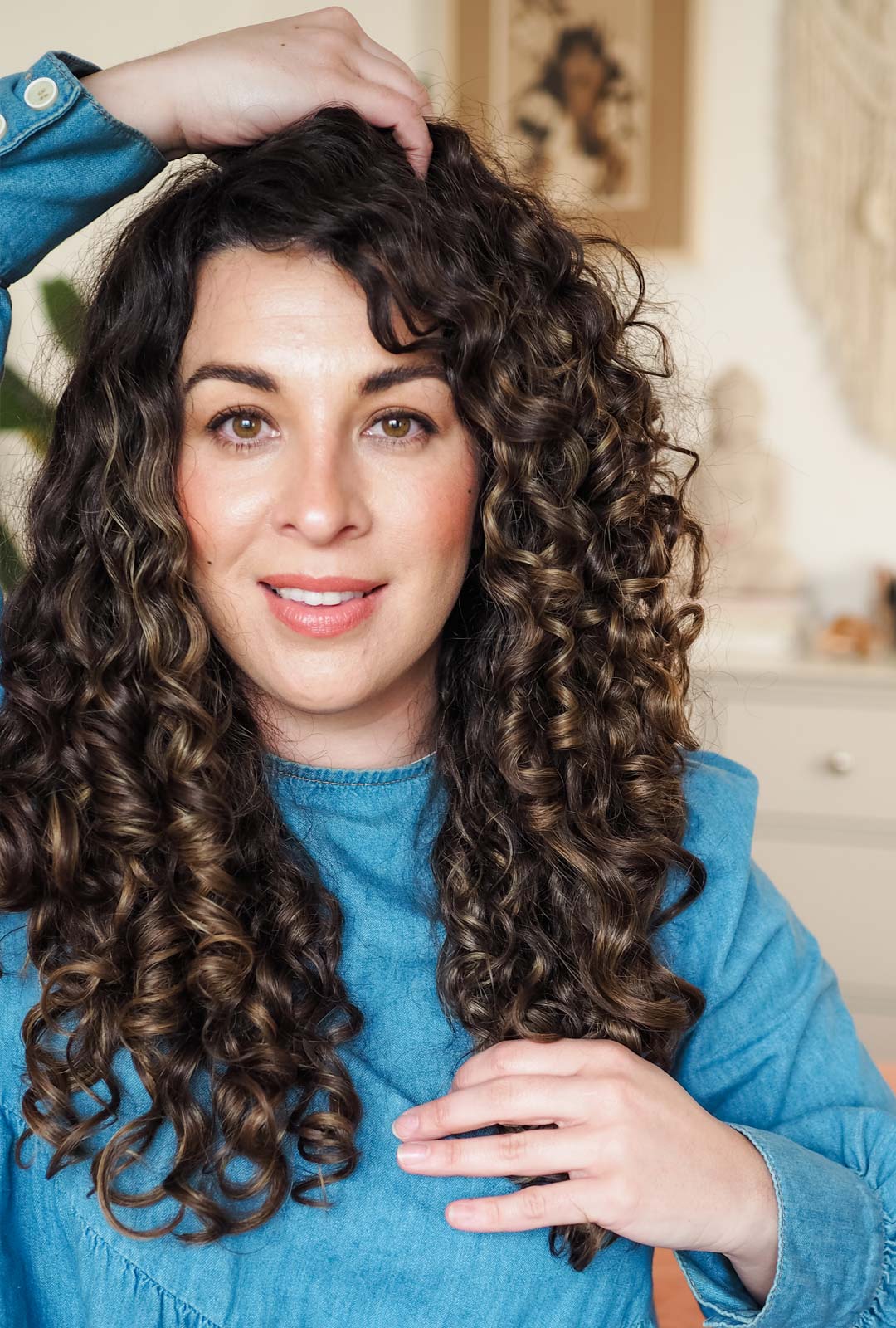
Two tones work on curly hair only when the placement follows the curl pattern rather than fighting it. Subtle caramel highlights weave through a dark brown base, landing mostly on the mid-lengths and ends so the roots stay deep. The middle parting lets the highlights fall symmetrically on both sides, which matters when the curls spiral in opposite directions. Layers add the movement that keeps the color from looking like a solid block at the ends. Air-dried texture holds the definition longer than a blowout, which tends to separate the highlights into unnatural streaks.
The upkeep: a sulfate-free shampoo preserves both the caramel tone and the moisture balance. Not for you if you prefer solid color or have very fine hair that cannot support the internal layering without collapsing. The curl definition here comes from the cut, not from additional styling. That is the difference between a shape that works for a week and one that works until the next trim.
Rich dark brown transitions to rose gold Ombre
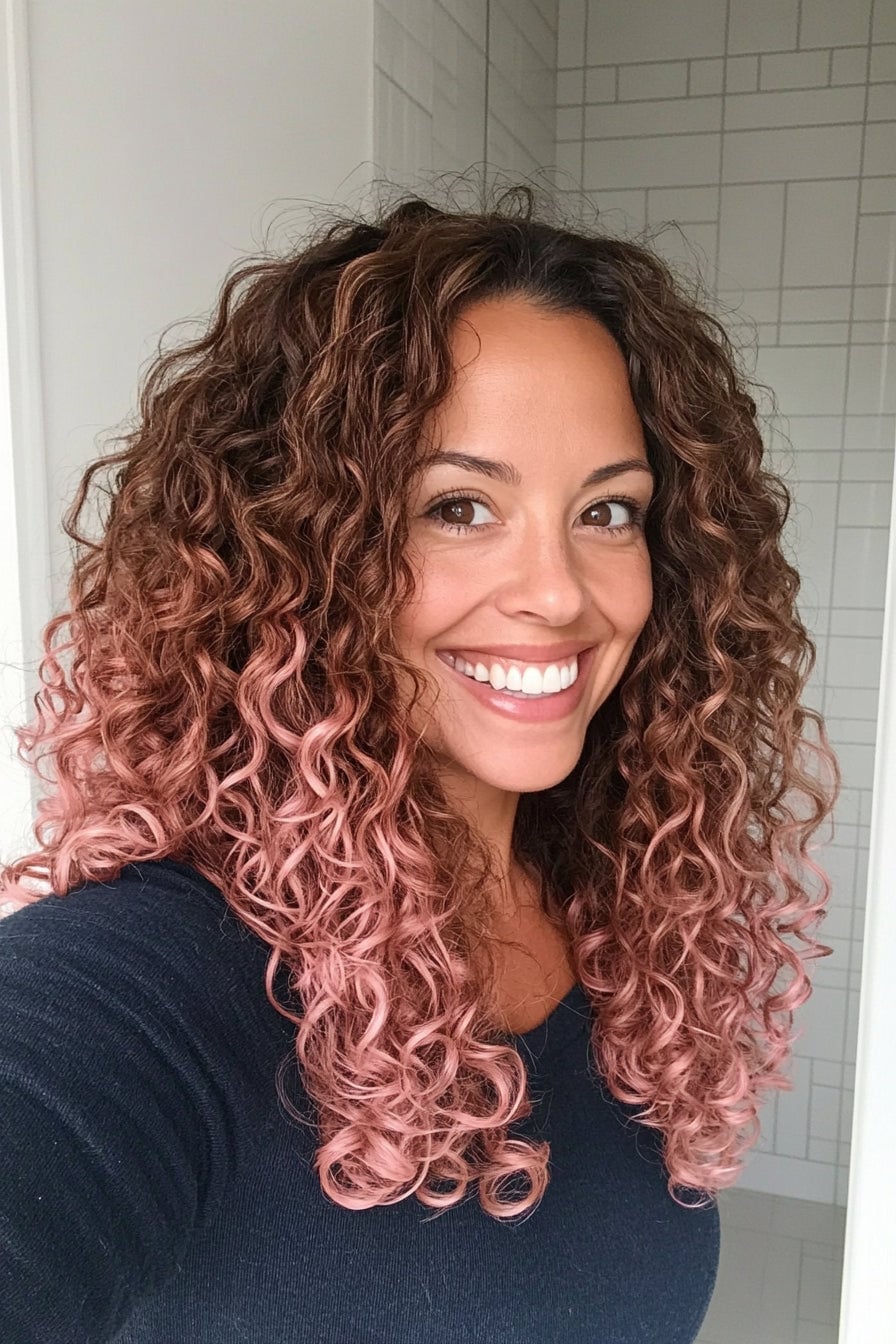
Rose gold on curly hair reads differently than on straight hair. The light hits each coil at a different angle, so the ombre effect shifts as you move. This version keeps the root area a rich dark brown, then transitions into rose gold at the ends over about four inches. The subtle layers enhance the natural curl pattern without removing too much weight from the darker section. A middle parting keeps the fade symmetrical. Air-dried styling lets the coils define themselves, which is the only way an ombre looks soft rather than painted on.
Ask your colorist for: a rose gold ombre starting four inches from the root, with a dark brown base and subtle layers to blend the transition. The color application demands a stylist who understands how porous curly ends absorb tone differently than the mid-lengths. Not for you if you prefer natural hair colors or have very fine hair that cannot hold the internal layering. The ombre works best on thick curly hair at least collarbone length, so the fade has room to travel.
Dark brown shag with blonde highlights and textured layers
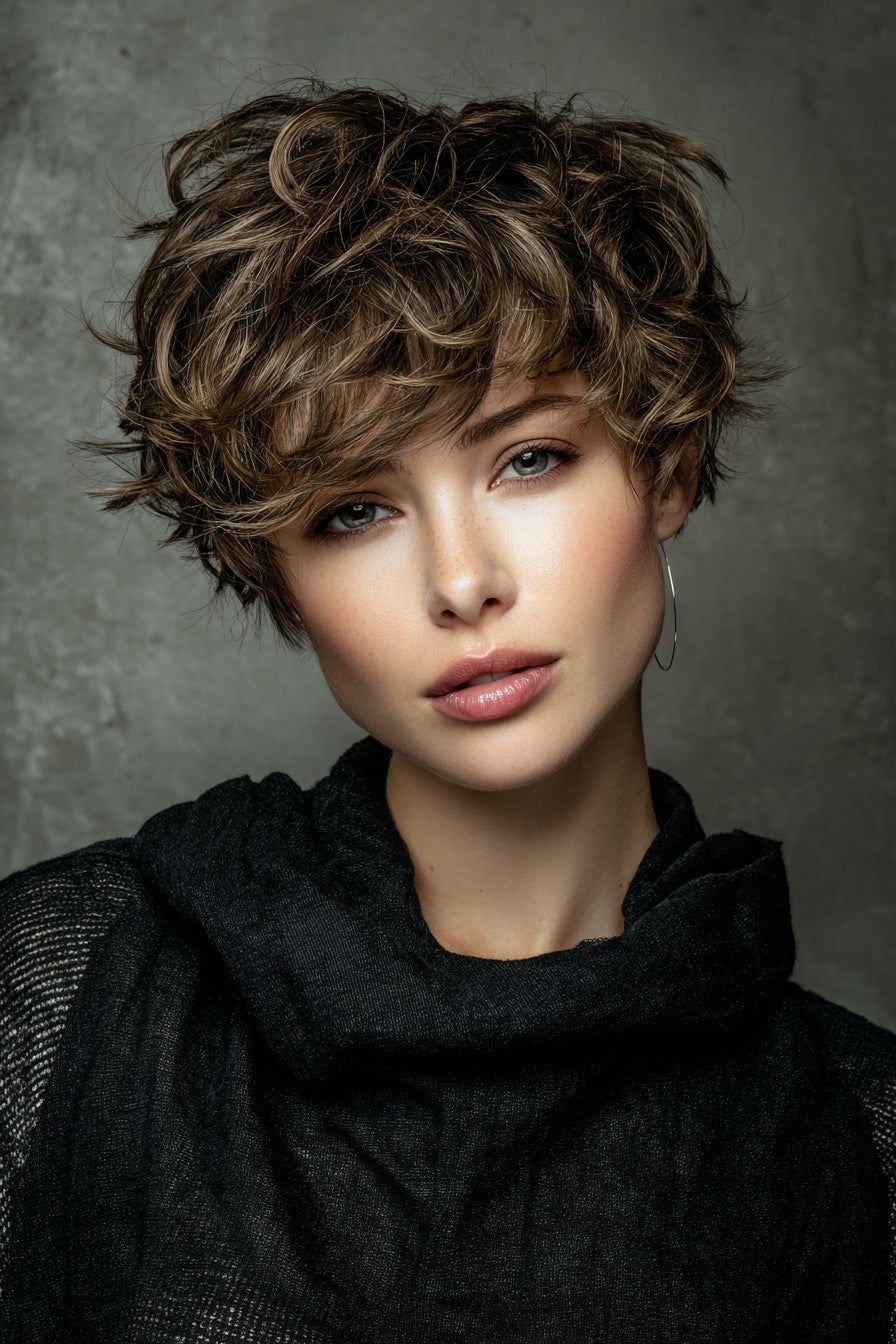
Textured layers that look like they happened on their own actually take a stylist who understands curl release. Dark brown base gets blonde highlights placed to catch the light, not to scream for attention. No bangs here, so the shape depends entirely on how those layers stack from the side part forward. The catch: thick hair that does not hold a cut will turn this shag into a triangle by week three.
Warm brown with blonde highlights and sculpted curls
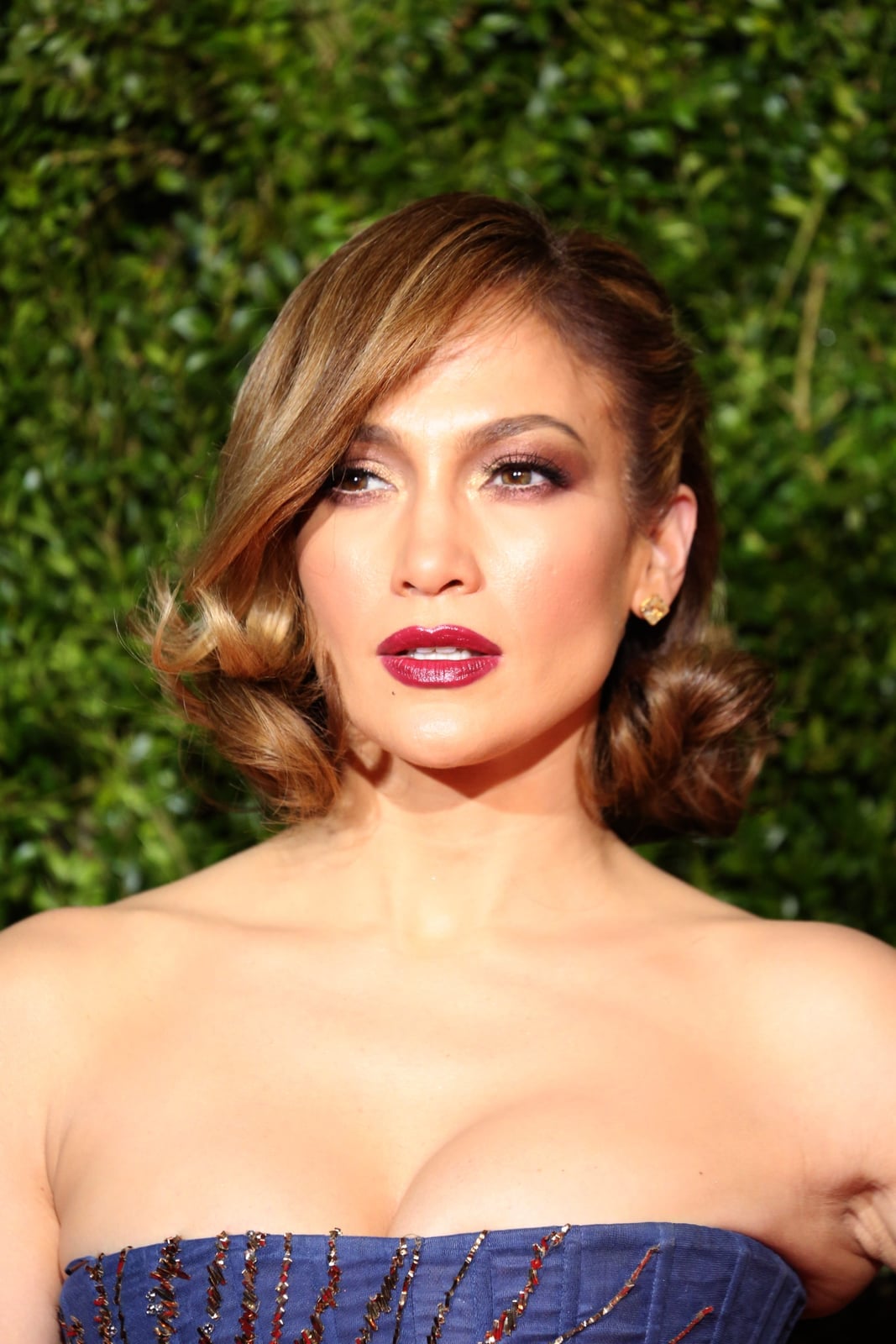
This is the blowout version of curly hair. Sculpted curls hold their shape because a curling iron or wand did the work, not air drying. A deep side part and side-swept bangs frame the face in a way that looks deliberate even on day two. Thick, wavy hair of at least collarbone length gives the best result.
A wash and go routine does not produce this look. The warm brown base with blonde highlights needs a toning session every eight to ten weeks to stay bright. A trim at the same interval keeps the shape from looking ragged.
Dark brown with blonde highlights and voluminous curls
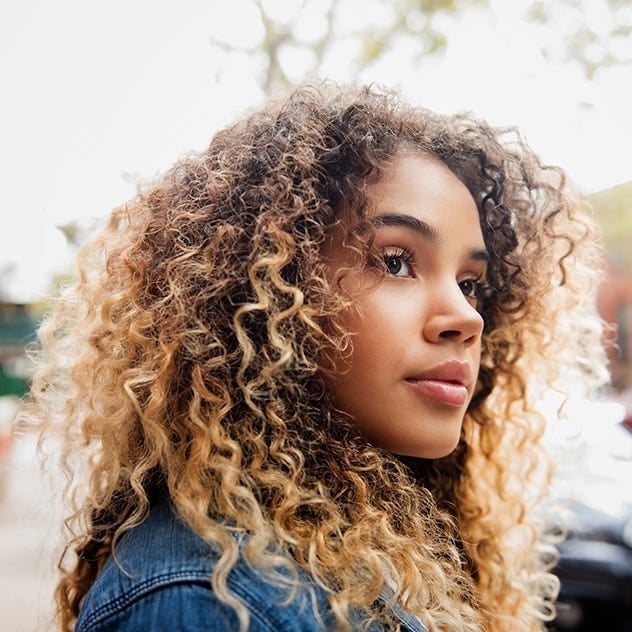
Volume this big does not happen by accident. Thick curly hair cut with layers that start higher than expected releases the root lift. Side part, air-dried finish, dark brown base with blonde highlights that run through the curl pattern. The contrast makes each spiral visible instead of blending into a dark mass.
A diffuser attachment on your dryer will be your new best friend. Fine hair will struggle here. The shape needs density to hold its silhouette.
Curtain bangs enhance face-framing layers
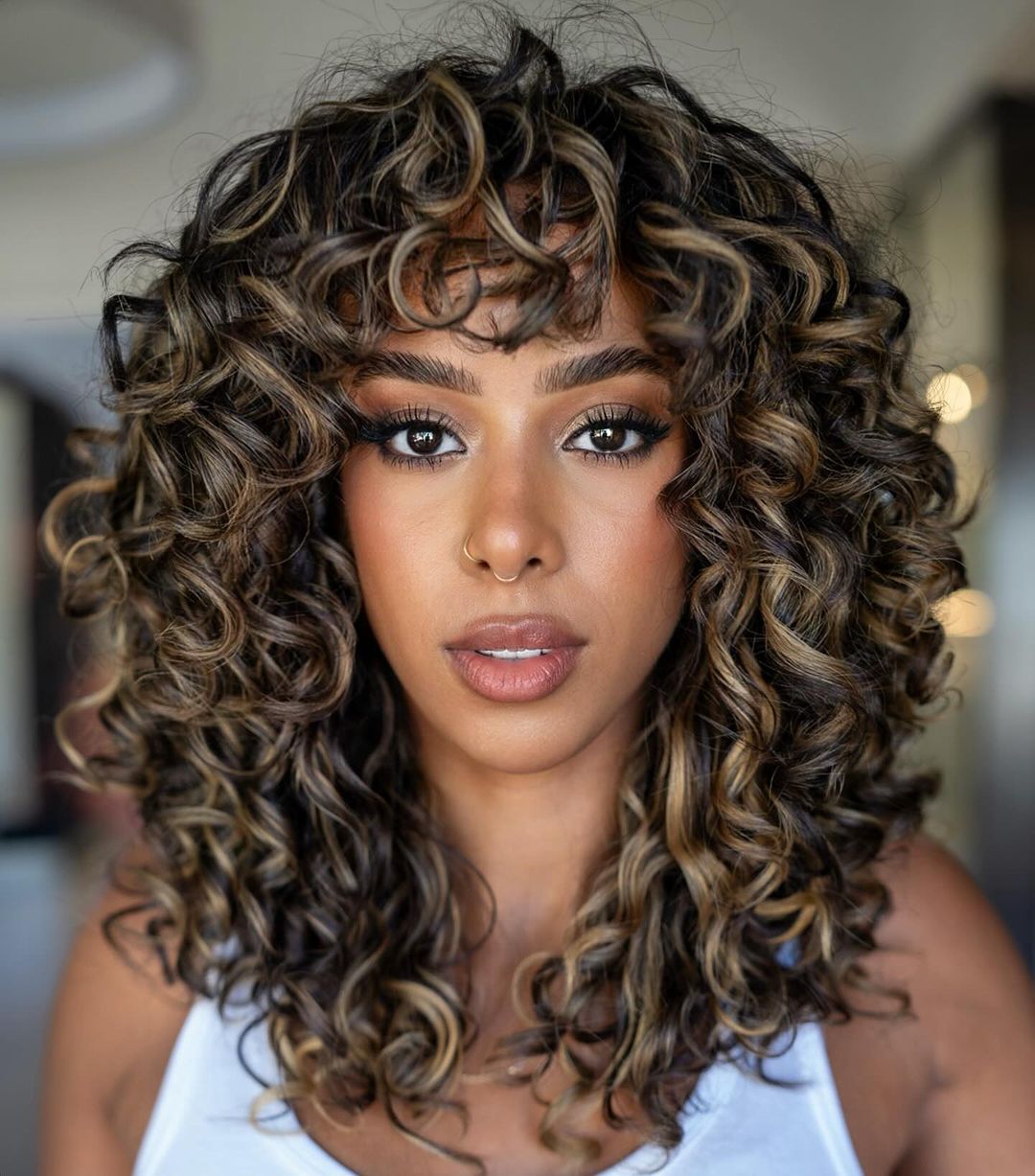
Curtain bangs on curly hair walk a fine line between charming and messy. These land on charming because the defined spiral curls in the layers and the middle parting give the bangs a clear place to fall. Dark brown with blonde highlights keeps the look from looking one solid block. Thick, curly hair of at least collarbone length works best. A curl cream applied to wet hair and left to air dry is the entire routine.
Honey highlights add dimension to dark brown
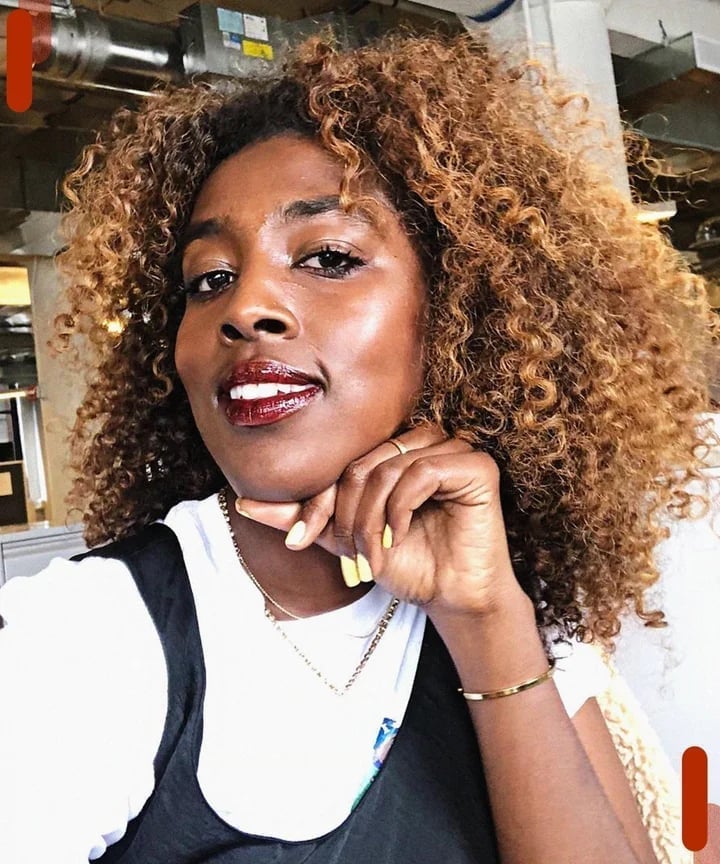
Honey highlights against a dark brown base create depth without the high contrast of blonde. Thick, curly texture holds the shape from a centered parting, with face-framing layers cut to land at the jaw. Air-dried styling keeps the curl pattern visible and the finish natural.
Not for you if you prefer solid color. The honey pieces need a base to sit against. A sulfate-free shampoo extends the time between toning appointments.
Brown with blonde highlights and defined spiral curls
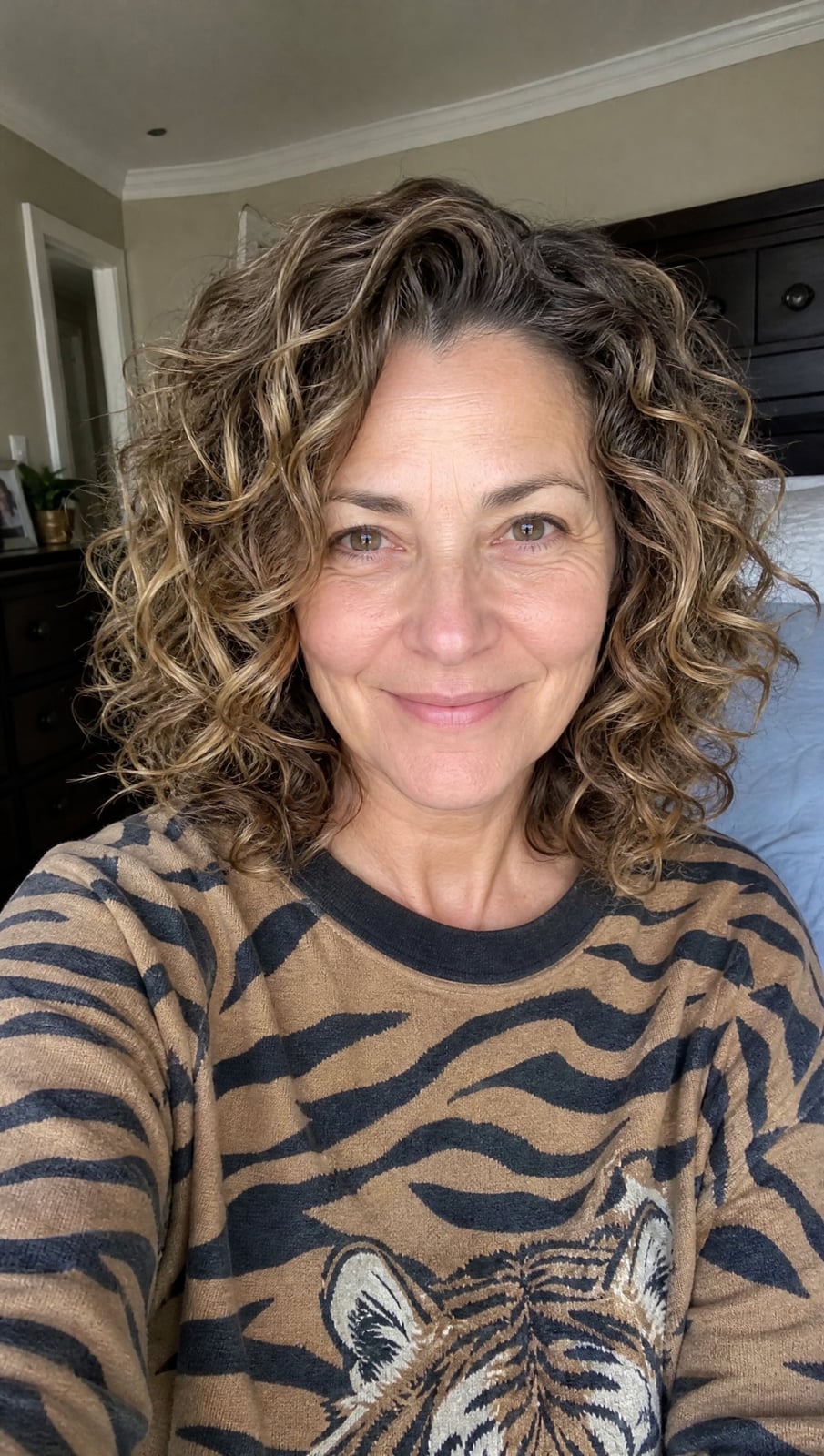
Layers are the backbone here. Without them, thick curly hair just sits. Tell your stylist: layers, brown with blonde highlights. A middle parting lets the definition show evenly on both sides. The blonde needs enough density to create dimension, not thin spots. Use a curl-defining cream and air dry.
Warm brown with auburn highlights and defined spiral curls, layers
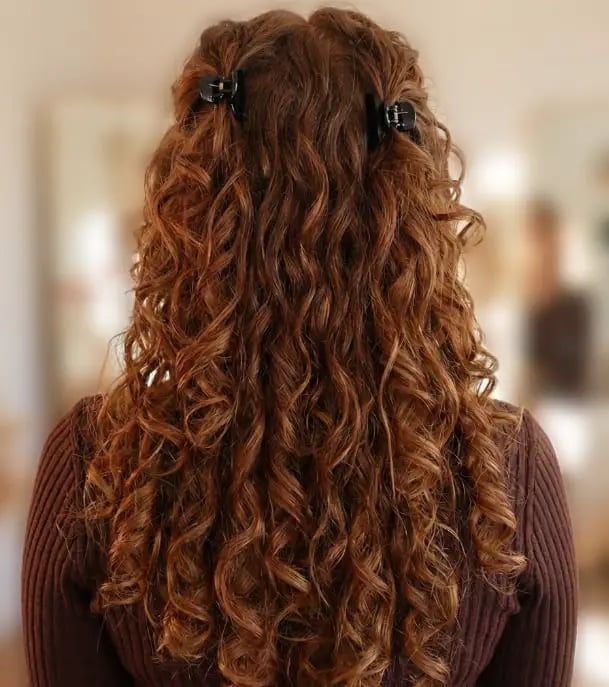
Defined spiral curls require skill to achieve and maintain. The warm brown base and subtle auburn highlights work because the tone shift is low contrast. The curls do the separating, not the color. Cooler tones or very fine hair may not suit this look because the auburn can appear brassy on the wrong base. A color-safe shampoo keeps the warmth from fading into orange. This is the trade-off for a shade that looks natural.
Long wavy hair with caramel highlights and layers
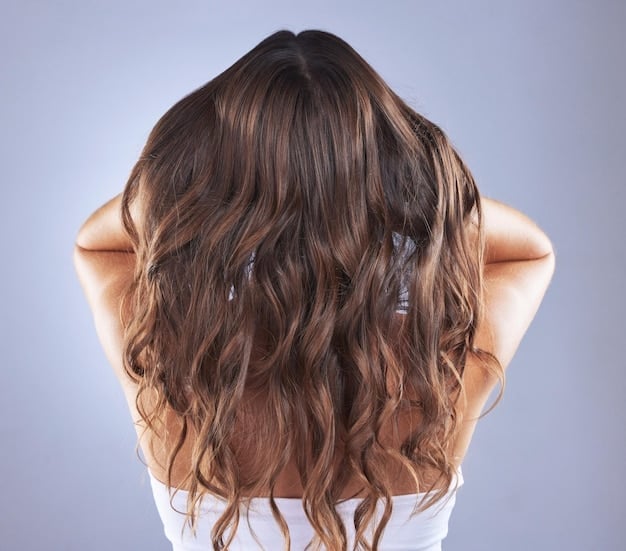
Length plus layers is a specific request. Long wavy hair can get heavy without them. The weight pulls the wave flat by mid-day. Caramel highlights add contrast without requiring full color commitment. Not for you if you prefer shorter styles or have fine hair; long layers remove density, and fine hair needs every strand. A leave-in conditioner on damp hair, then air dry. This is the whole routine.
The middle part is low maintenance, no training required.
Dark brown with caramel highlights and defined spiral curls, middle
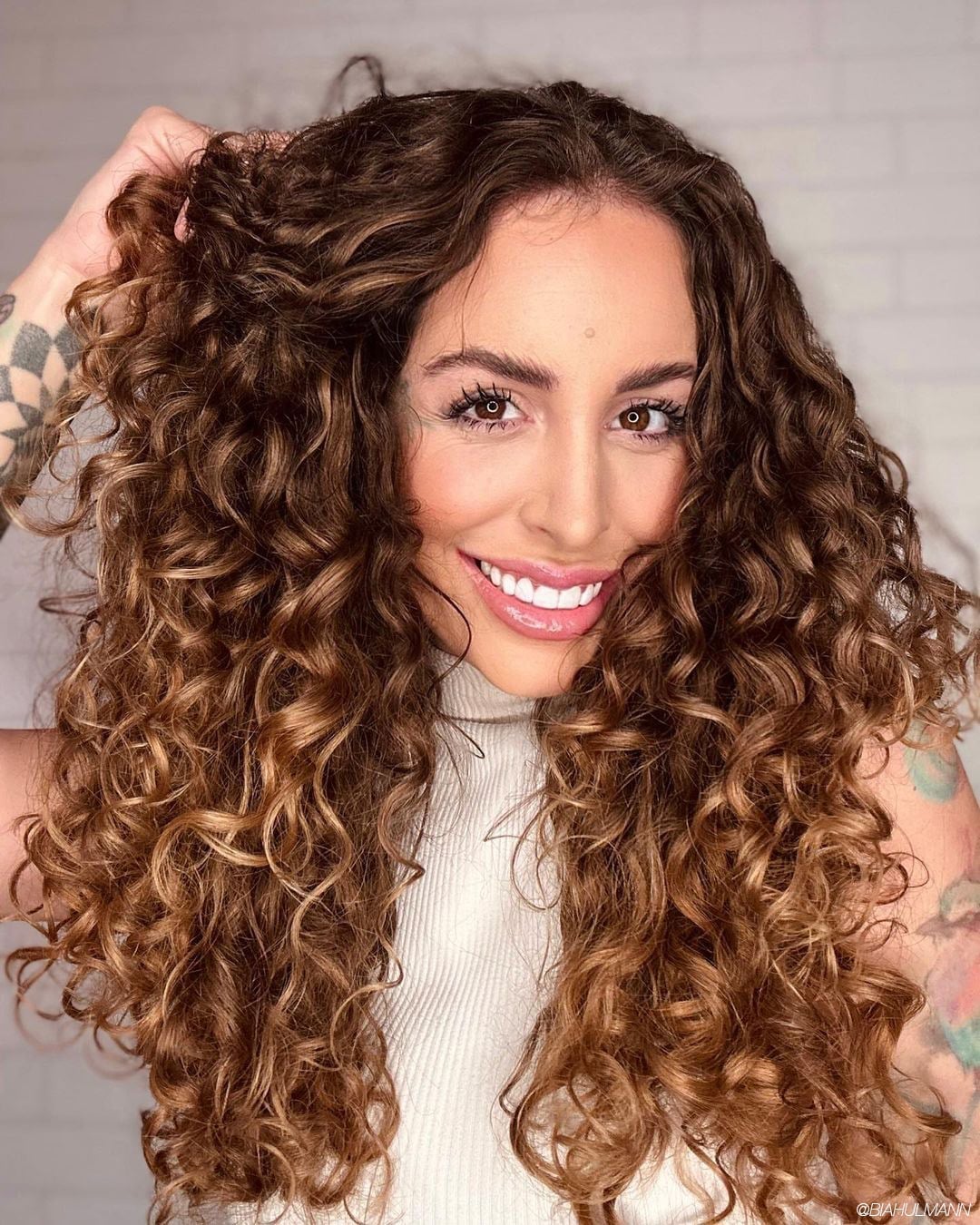
This is the version you book when you want definition without a diffuser. Dark brown with caramel highlights gives contrast without the upkeep of full blonde. The middle part keeps the face framing symmetrical, which matters when curls have their own ideas. Not for you if you prefer shorter styles or have fine hair. The length and density needed for this shape are not optional. A curl-defining cream, applied wet, then left alone. This is the whole technique.
Dark brown with caramel highlights and full bangs
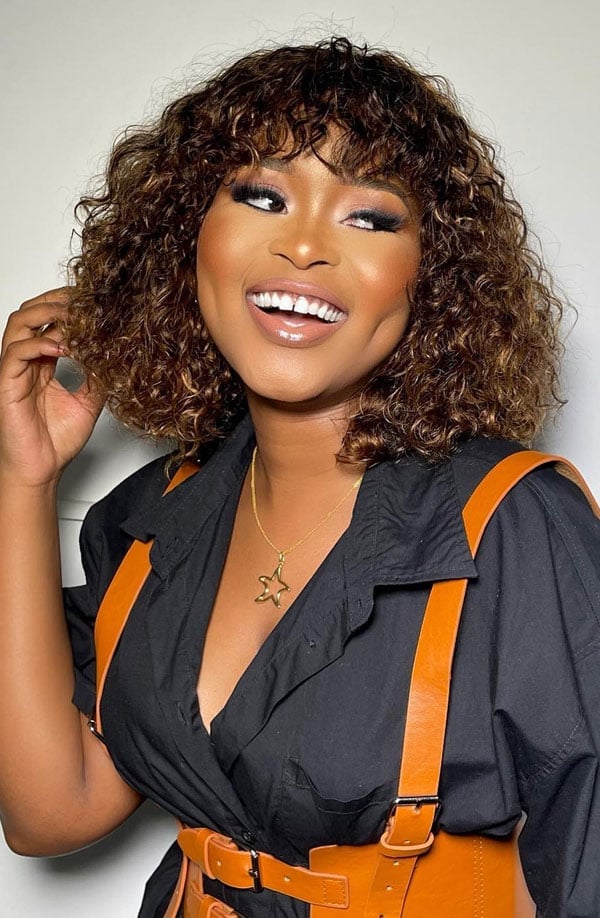
Full bangs on thick curly hair is a commitment. The dark brown base with caramel highlights keeps the contrast subtle so the bangs do not look disconnected from the rest. Curly bangs need weight, so this style suits medium to thick hair. A curl cream and air drying is the simplest routine. This is the reality of having something in your face all day.
Full fringe adds playful touch to curls
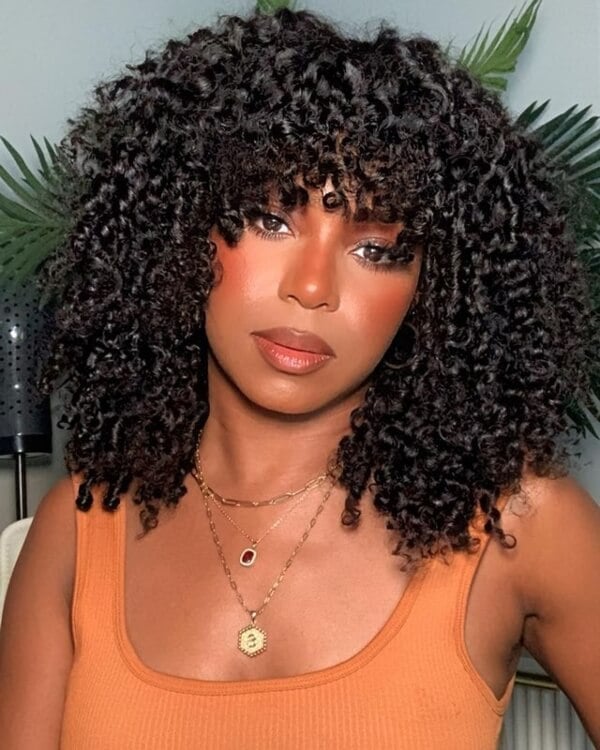
Layers and a full fringe need a specific ratio. The bang length lands somewhere between the brow and the lashes when dry, so the curls don’t eat it entirely. Thick dark brown hair at collarbone length or longer gives the weight needed to hold that shape. A middle part keeps the fringe centered, not swept. Ask your stylist for: layers, full fringe, dark brown curls. The air-dried texture is the point, not an afterthought. Not for you if you prefer no bangs or your hair is fine enough that a fringe turns into a wispy curtain by noon.
Black hair with defined curly bangs and a side parting
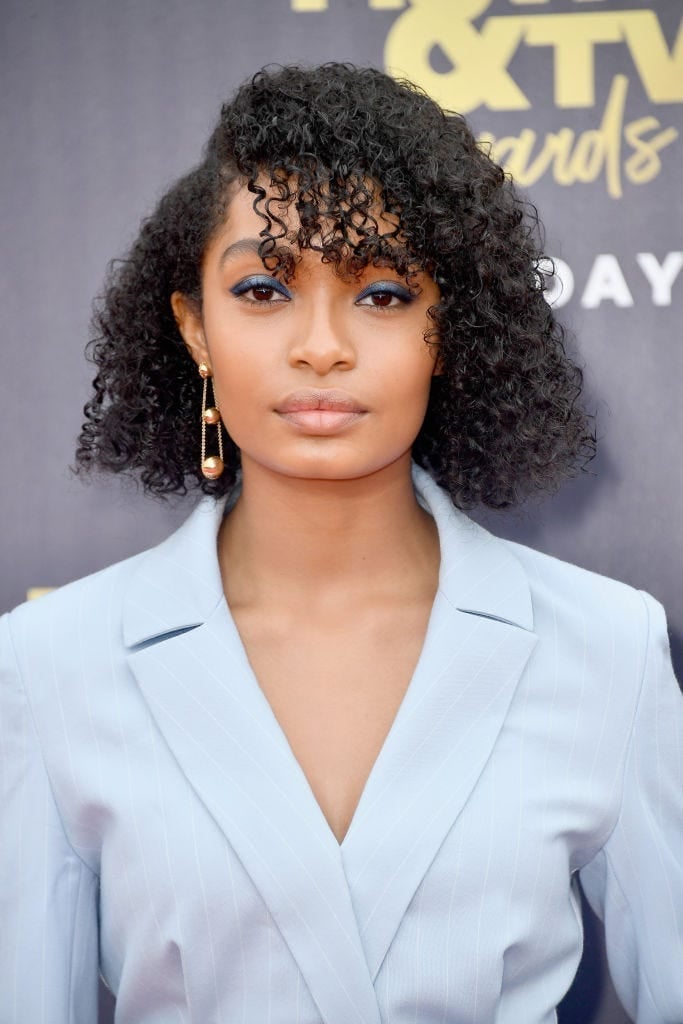
Curly bangs land differently than a straight fringe. Here the side part lets the curls fall forward without blocking the whole forehead. The cut uses layers through the body, so the volume doesn’t pile up at the ends. Black hair at this thickness holds the shape with a curl-defining cream and air drying.
Curly bangs add playful element to look
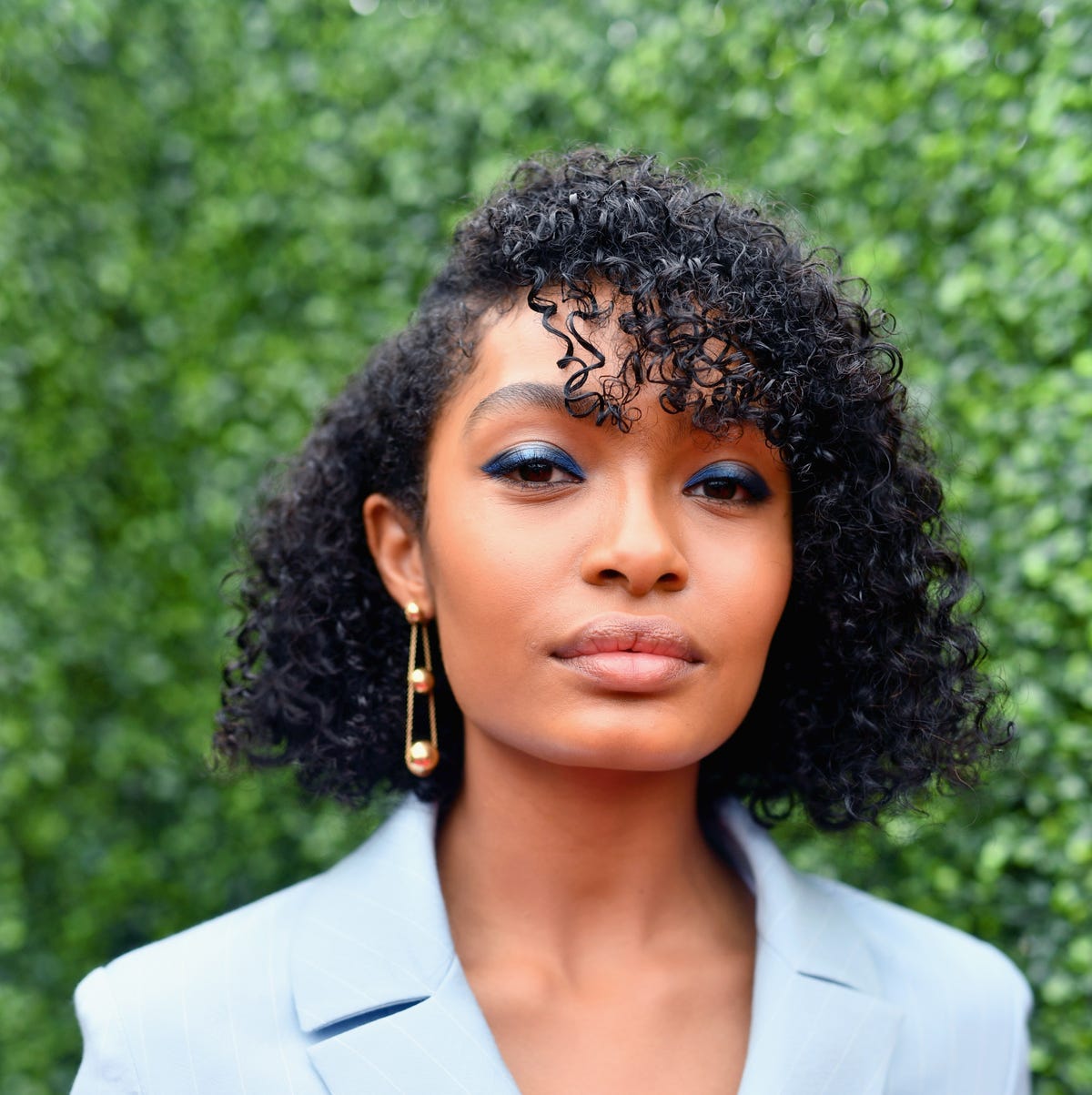
Curly bangs add a playful element to your look. Face-framing layers and a side part keep the shape balanced. Thick black hair with defined curls needs a stylist who understands shrinkage. This style requires salon visits to shape the curls.
Dark brown hair with curtain bangs and face-framing curls
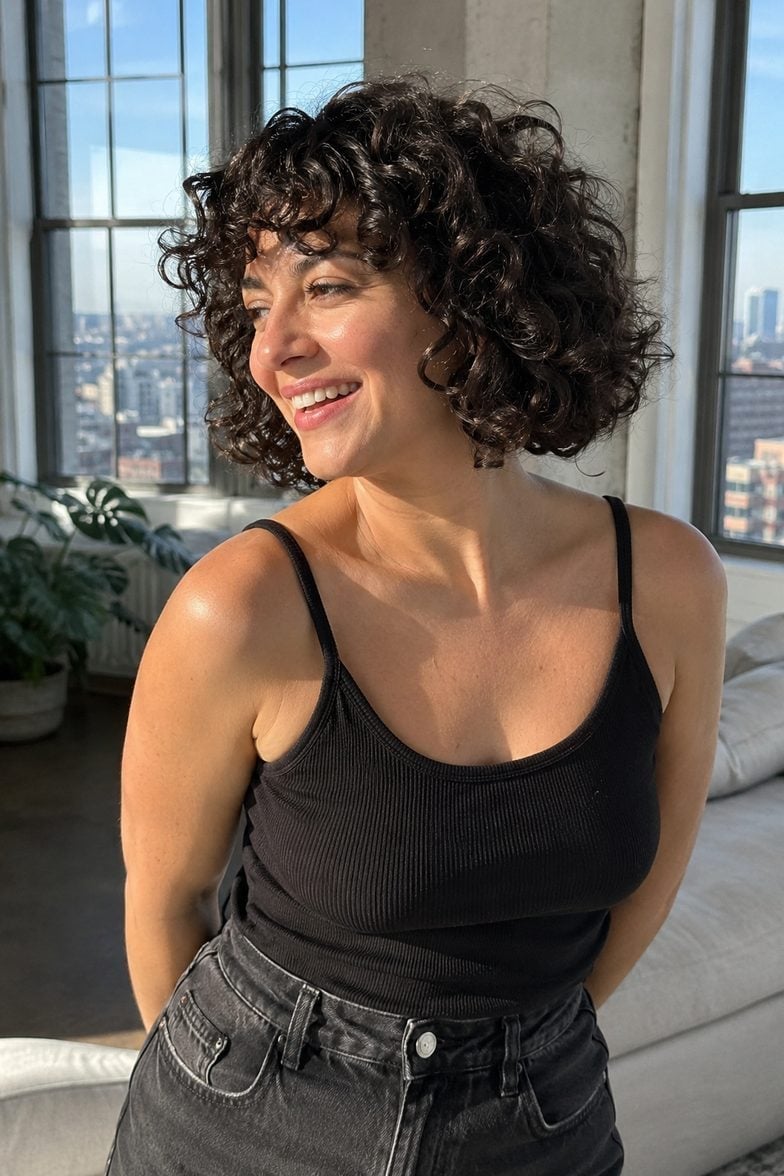
Curtain bangs on curly hair work best when they hit the cheekbone dry, not wet. The layers through the front frame the face without losing the side part’s volume. Dark brown thick hair at collarbone length gives enough weight to hold the curtain shape. Ask your stylist for: layers, curtain bangs, dark brown hair. A curl cream and air drying are all it takes to finish. It suits round and oval faces best.
Dark brown hair with curtain bangs and face-framing, close-up take
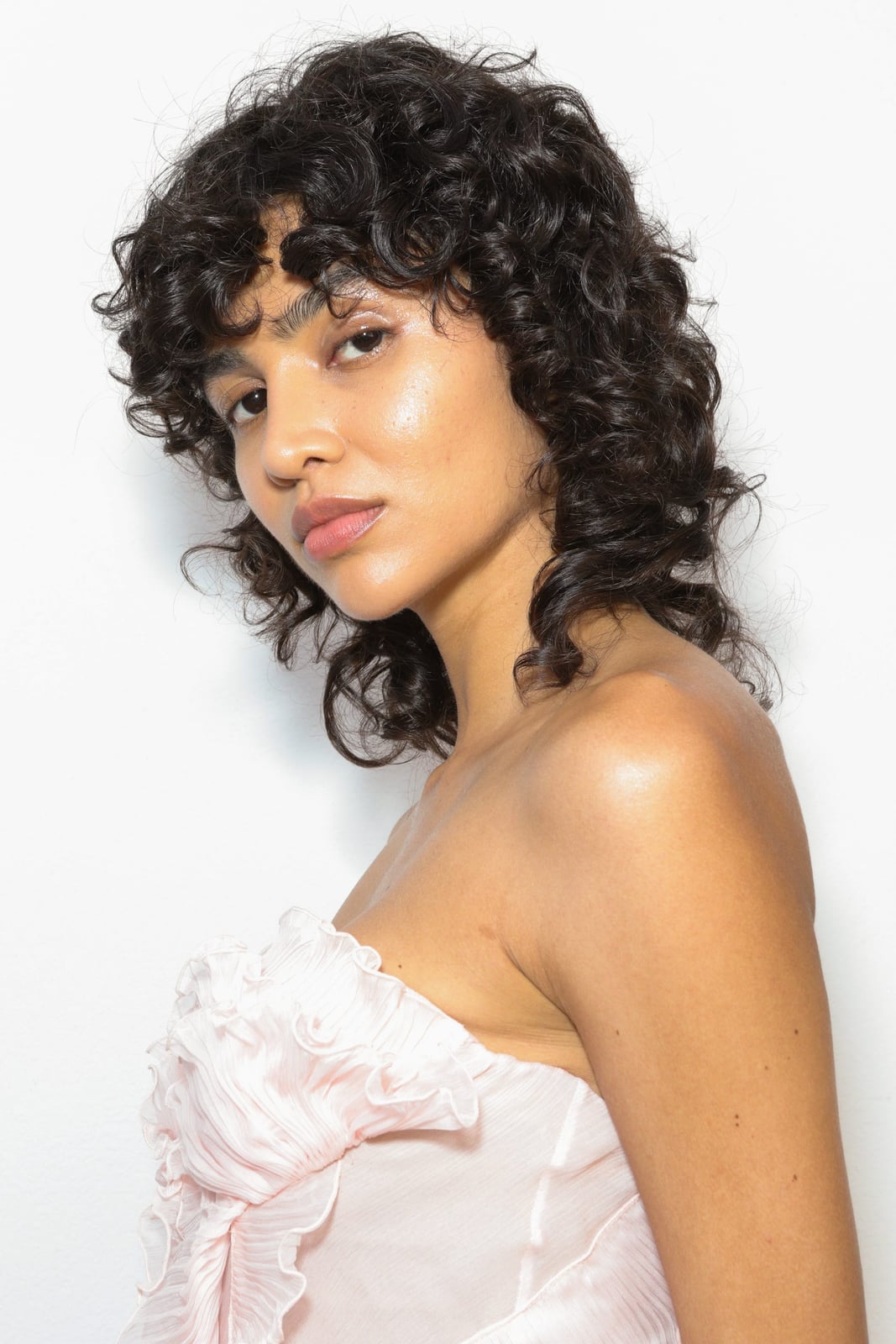
Curtain bangs and layers require precision. The difference between a soft frame and a triangle head is where the shortest layer hits your brow. Dark brown thick hair with a middle part lets the curls fall symmetrically. Not for you if you want a cut you can shape with a brush and a prayer.
Dark brown with caramel highlights and curtain, office-safe version
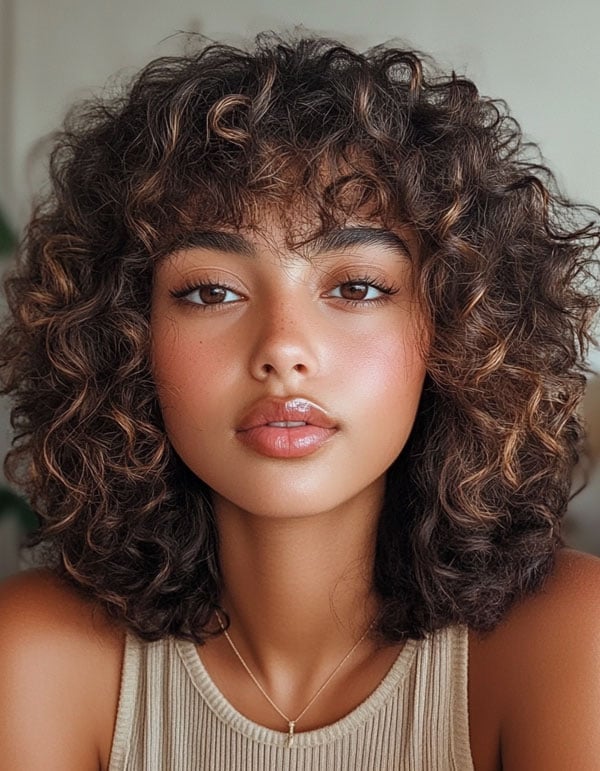
Face-framing curtain bangs rely on the middle parting to fall correctly. The layers are cut short enough near the crown to lift the thick, curly texture, then graduated toward the collarbone so the caramel highlights look like sunlit streaks instead of solid bands. Dark brown base keeps the root area deep. The air-dried finish means the curls define themselves, but achieving this level of definition at home requires a stylist who cuts dry and a diffuser that fits your hair density. It works best with bangs and medium to thick hair. Ask your stylist for: layers, curtain bangs, dark brown with caramel highlights.
Dark brown with caramel highlights and face-framing bangs, thick curly
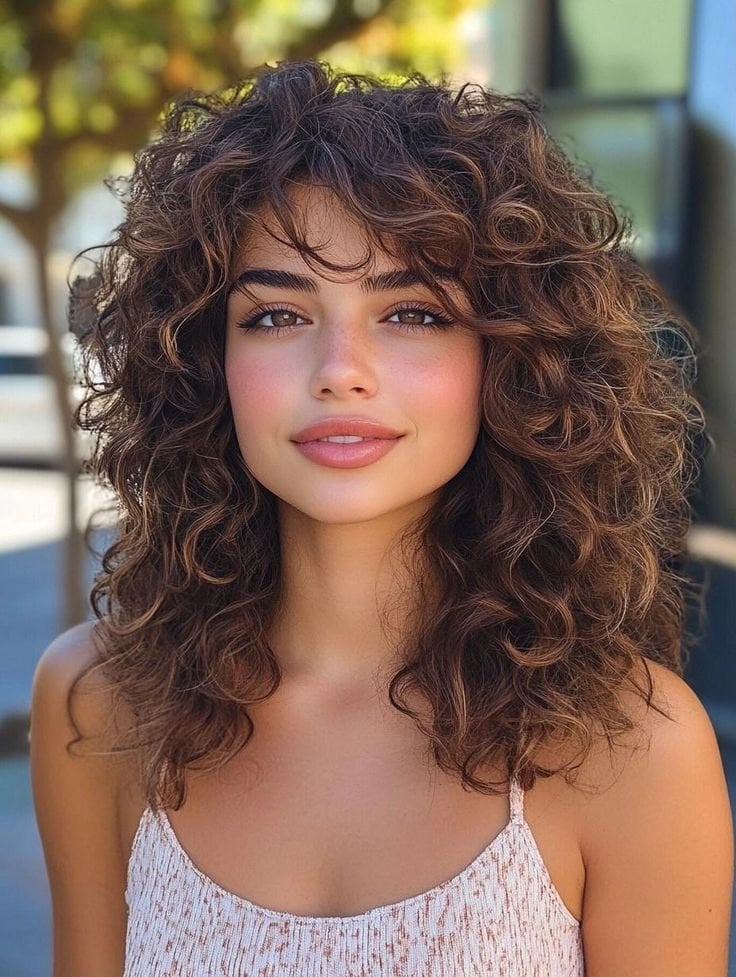
Build volume from the inside out. The layers are cut shorter underneath the crown, so the thick, curly texture lifts rather than flattens. Soft curtain bangs break the weight at the front. The dark brown base gets subtle caramel highlights placed around the face and ends. Middle part keeps the fall even. It works best with medium to thick curly hair.
Voluminous dark brown layered cut with curtain bangs, thick curly
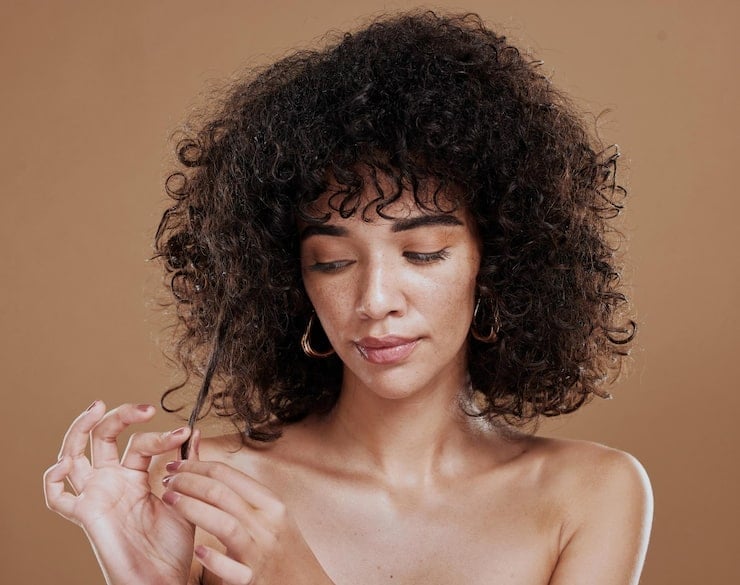
This one needs shaping. The layers are carved to release weight at the nape and stack toward the crown, so the thick, curly texture expands outward. Curtain bangs frame the face without cutting across the forehead. The dark brown color stays solid. Air dry. It works best with thick, curly hair. Ask your stylist for: layered cut, curtain bangs, dark brown color.
Bouncy defined curls frame the face
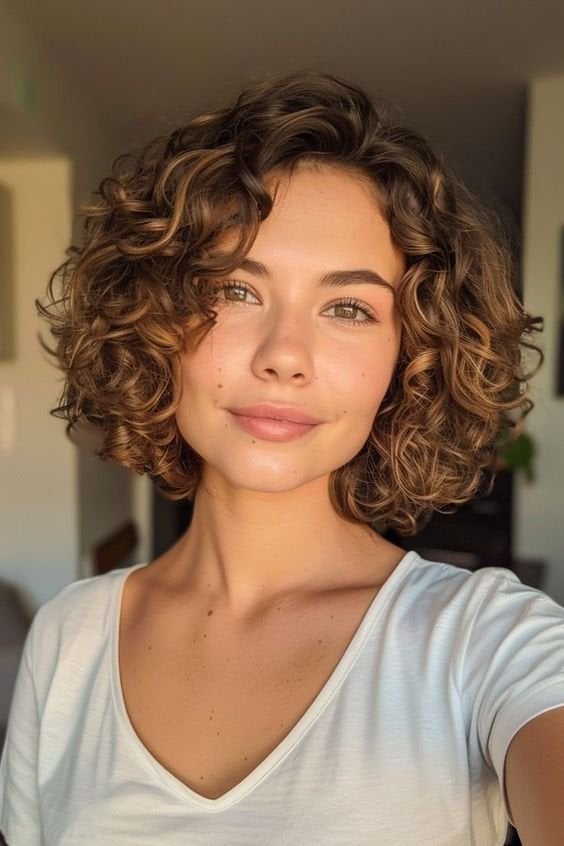
Side part changes the fall. The layers are cut with more length on one side, so the thick, curly texture swings forward instead of sitting evenly. The dark brown base gets caramel highlights through the mid-lengths and ends. No bangs here. Use a curl-defining cream. It works best with layered cuts and curly texture.
Voluminous dark brown curls with a centered parting and air dried
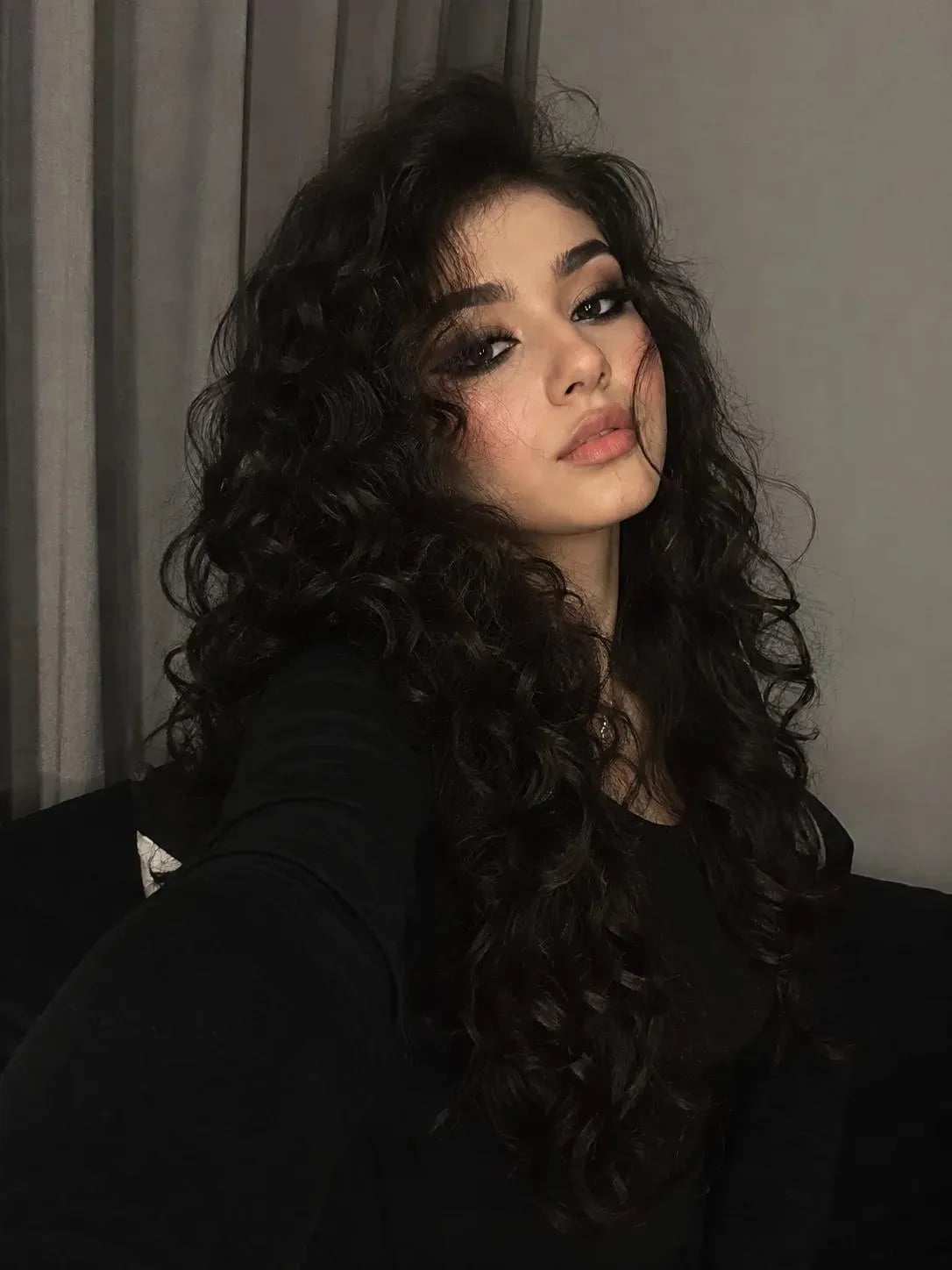
This is a density play. The layers are cut to remove bulk from the interior while keeping the perimeter heavy, so the thick, curly texture fans out instead of stacking into a triangle. Centered parting pulls the eye straight down. The dark brown color stays single-tone. Achieving this finish at home takes a diffuser attachment and some patience. The drawback: without product, the top can flatten by midday. Not for you if you prefer minimal volume or have fine hair. Ask your stylist for: layers, centered parting, dark brown color.
Final Thoughts
Pick your next cut by the one thing you will not compromise on.
- Schedule trims every 6-10 weeks to maintain shape and prevent split ends.
- Use curl-defining products like creams or mousses on damp hair.
- Air-dry or use a diffuser on a low setting to enhance curl pattern.
- Deep condition weekly to keep curls hydrated and prevent frizz.
Find the curly cut that celebrates your natural texture.