You’re scrolling in the chair, the grow-out line at your nape a week past polite. The consultation is fifteen minutes away, and the fringe you keep side-eyeing still hasn’t made up its mind. This is the moment a reference photo stops being a fantasy and starts being a plan. Which is why Dreamy Hair Color Ideas 2027 fill so many saved boards.
Thirty-two looks stretch from low-upkeep glosses to high-commitment vivids, from short bobs to long layers, from salon-only techniques to color that survives a home schedule. The struggle this collection solves: finding the one shade that makes the grow-out period feel like part of the look, not a countdown to the next appointment.
Golden blonde base with blended highlights
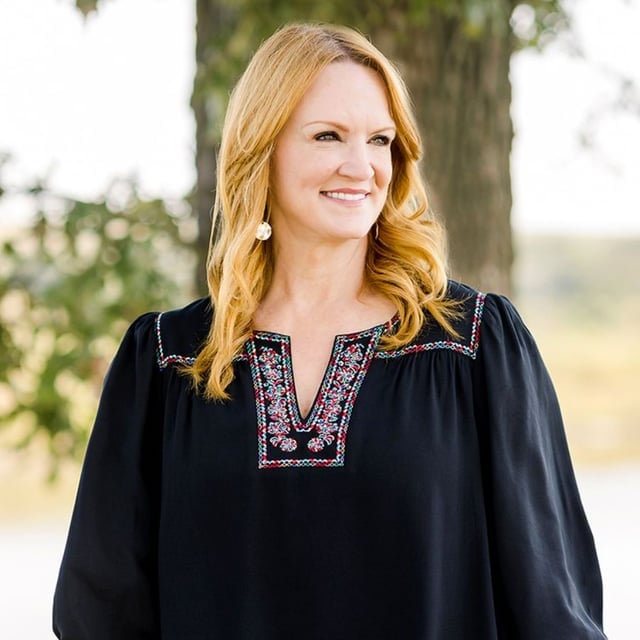
Sunlight finds every piece of this warm golden blonde base. Subtle blended highlights run through the soft layers, catching light without obvious stripes. The side parting lets the color fall asymmetrically, which keeps the wavy, thick texture from looking one solid block. Suits hair that is at least shoulder length with natural wave or bend. This color announces every missed appointment. Ask your colorist for: warm golden blonde base, subtle blended highlights, soft layers. Air drying preserves the smooth finish the chair created.
Dark brown base with ash blonde highlights
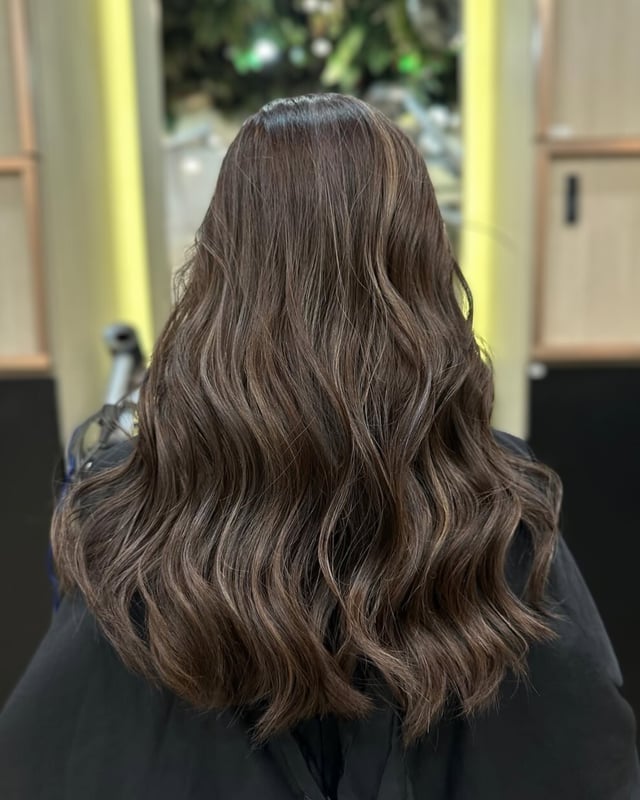
Where a straight caramel highlight reads warm, this pairing goes the other way. The dark brown base stays rich and cool, while the ash blonde highlights slice through with a silvered contrast. Loose waves scatter the lighter pieces so they do not land in predictable rows. Suits thick hair that can hold the separation between base and highlight. Not for very fine strands. The contrast can look sparse rather than dimensional. Toning every eight weeks keeps the ash from warming into brass.
Voluminous honey blonde with caramel highlights
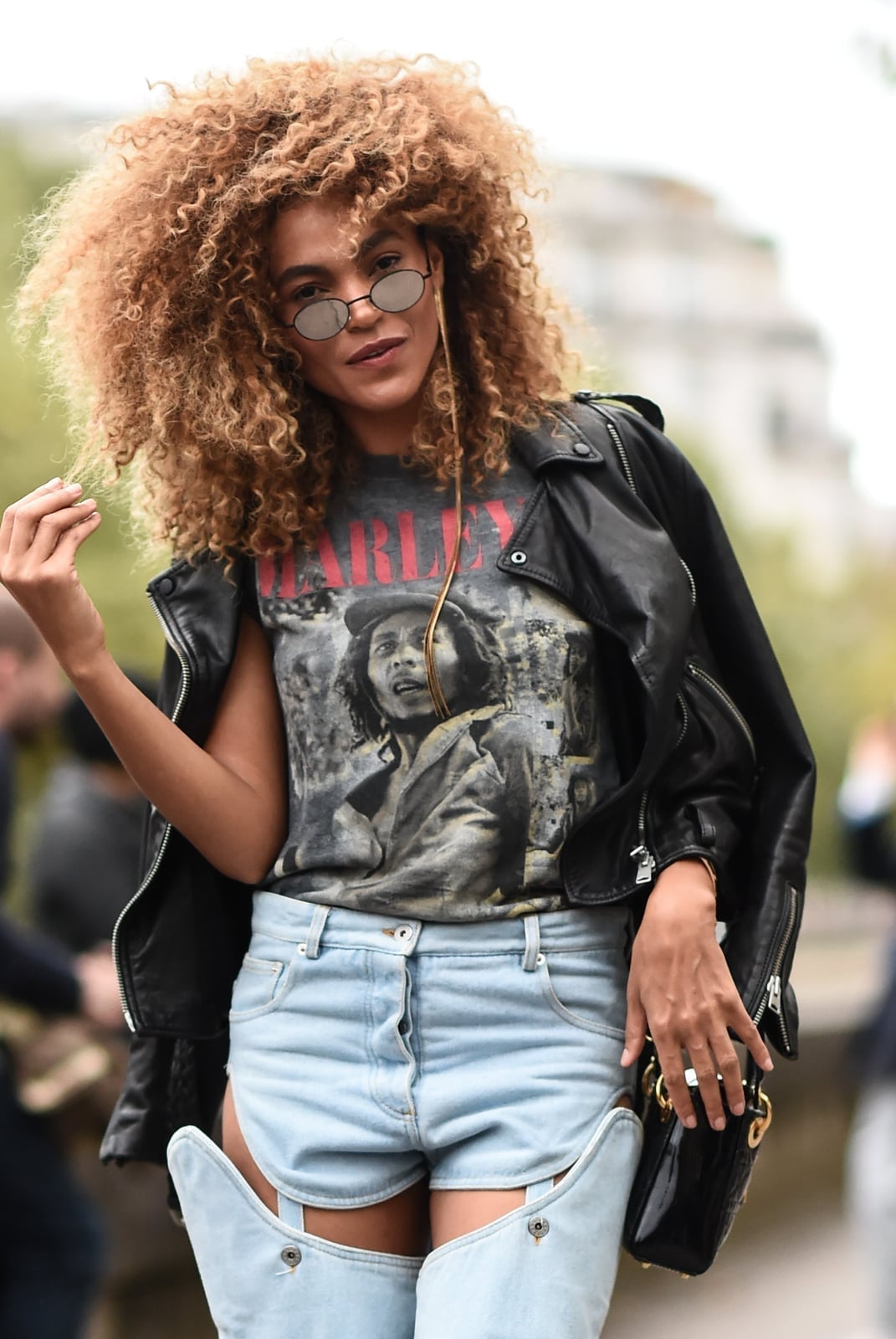
Can a color make hair look thicker? In this case, yes. The honey blonde base sits warm, and the caramel highlights sit slightly deeper, so each curl casts its own shadow. The layered cut lets the wave pattern spring upward rather than hang. Suits thick, naturally wavy or curly hair past the collarbone. Pass when you have very fine strands. The volume is the color’s partner, not its substitute. Ask your colorist for: honey blonde base, caramel highlights, layered cut. A trim every eight weeks keeps the layers from collapsing the shape.
Ash brown base with subtle highlights
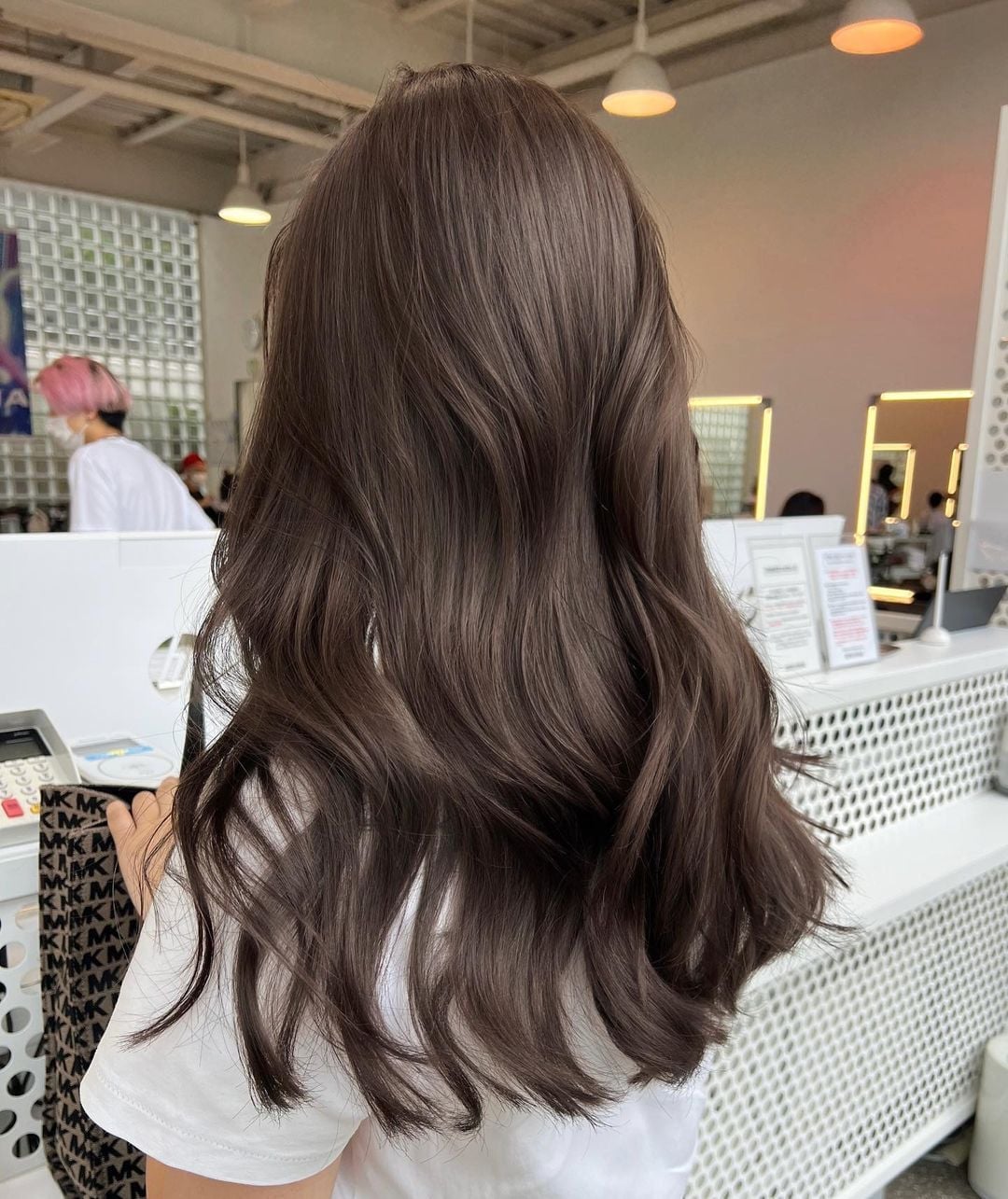
Getting ash brown right means keeping the green out. This version uses a rich ash brown base with subtle blended highlights that lift just enough to look dimension, not mud. The middle parting and wavy texture let the eye travel from root to ends without a hard line. Suits thick, wavy hair at any length; the ash registers as grown-up rather than flat. Skip it if your natural base is very light, ash can grab too cool and look dusty. Expect toning every six weeks to maintain the neutral finish.
Warm copper with auburn undertones
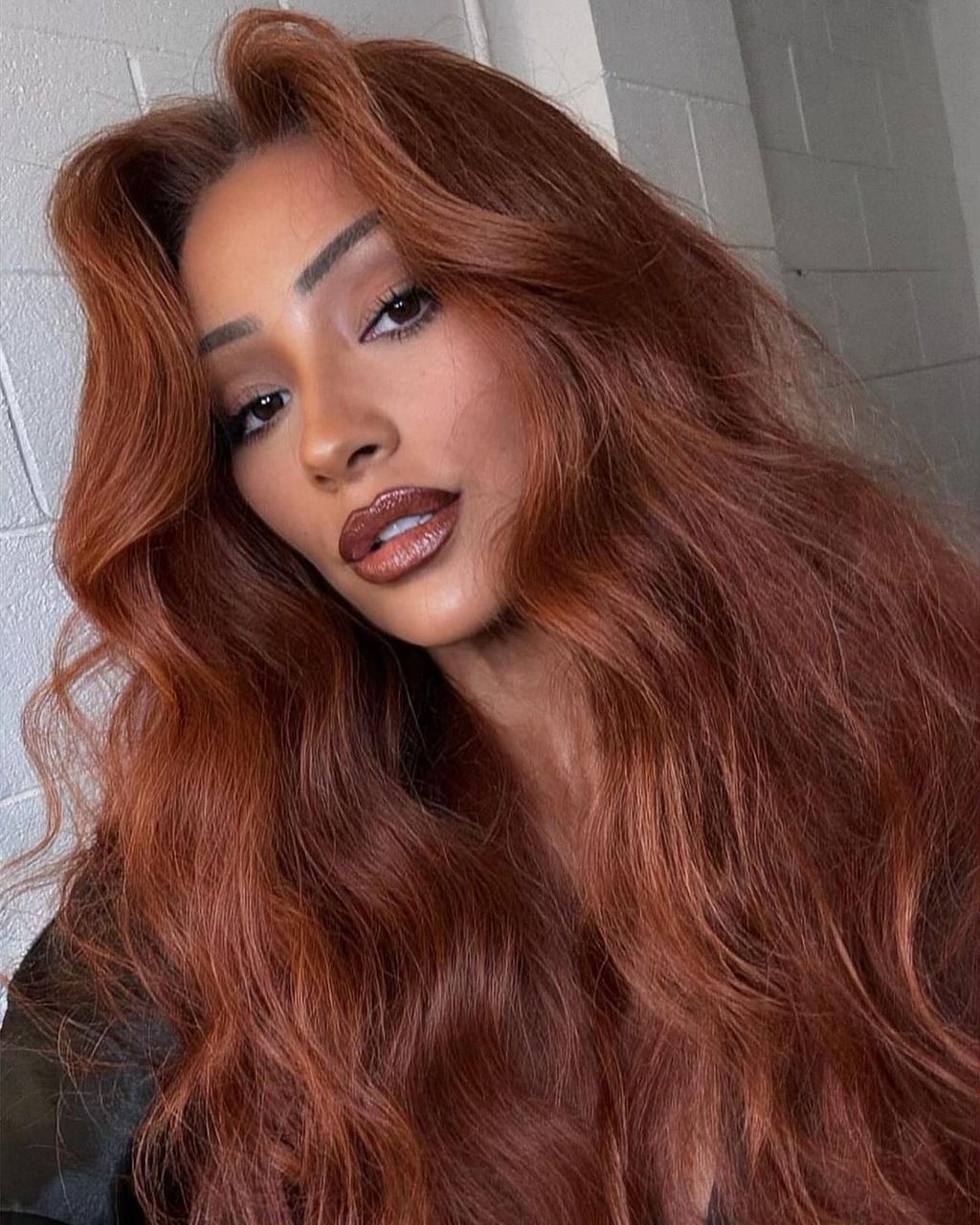
Copper this deep does not shout, it simmers. The warm copper base carries auburn undertones that surface in the loose waves, especially where the thick texture breaks the light. The side parting lets the color shift from root to end without a harsh line. Suits thick, wavy hair that can absorb the depth without looking flat. Not for those who prefer cool tones. The warmth is the whole identity here. Ask your colorist for: warm copper base, subtle auburn undertones. A color-safe shampoo at home protects the vibrancy the chair delivered.
Deep burgundy with red undertones
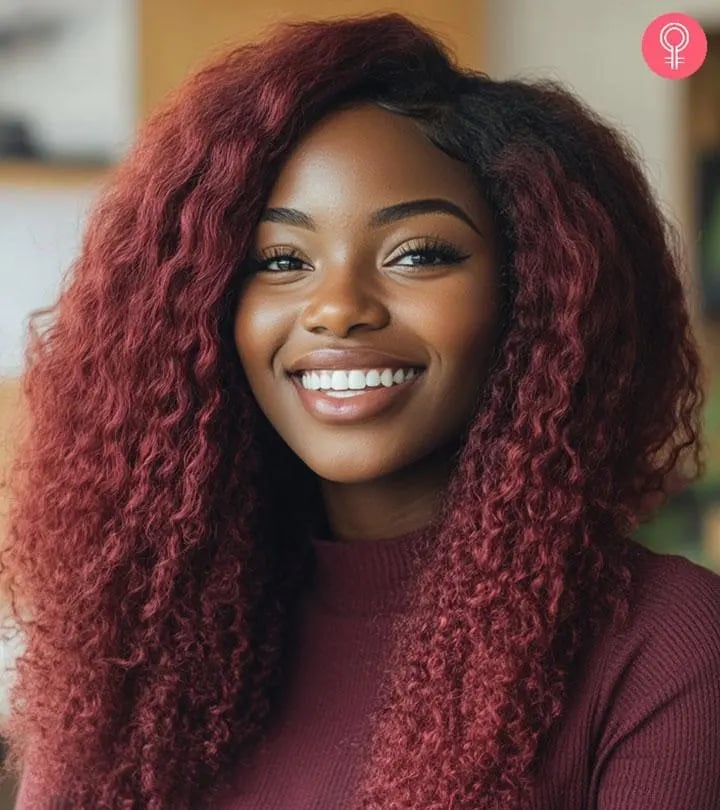
You have thick, curly hair and want a color that earns its keep. A deep burgundy base with subtle red undertones lands somewhere between gemstone and wine. The side part lets the natural air-dried texture show, which matters because this shade lives on depth, not highlights. Skip it if your texture runs fine and you worry about weight. Deep conditioning keeps the curl pattern happy.
Striking red hue with root shadow
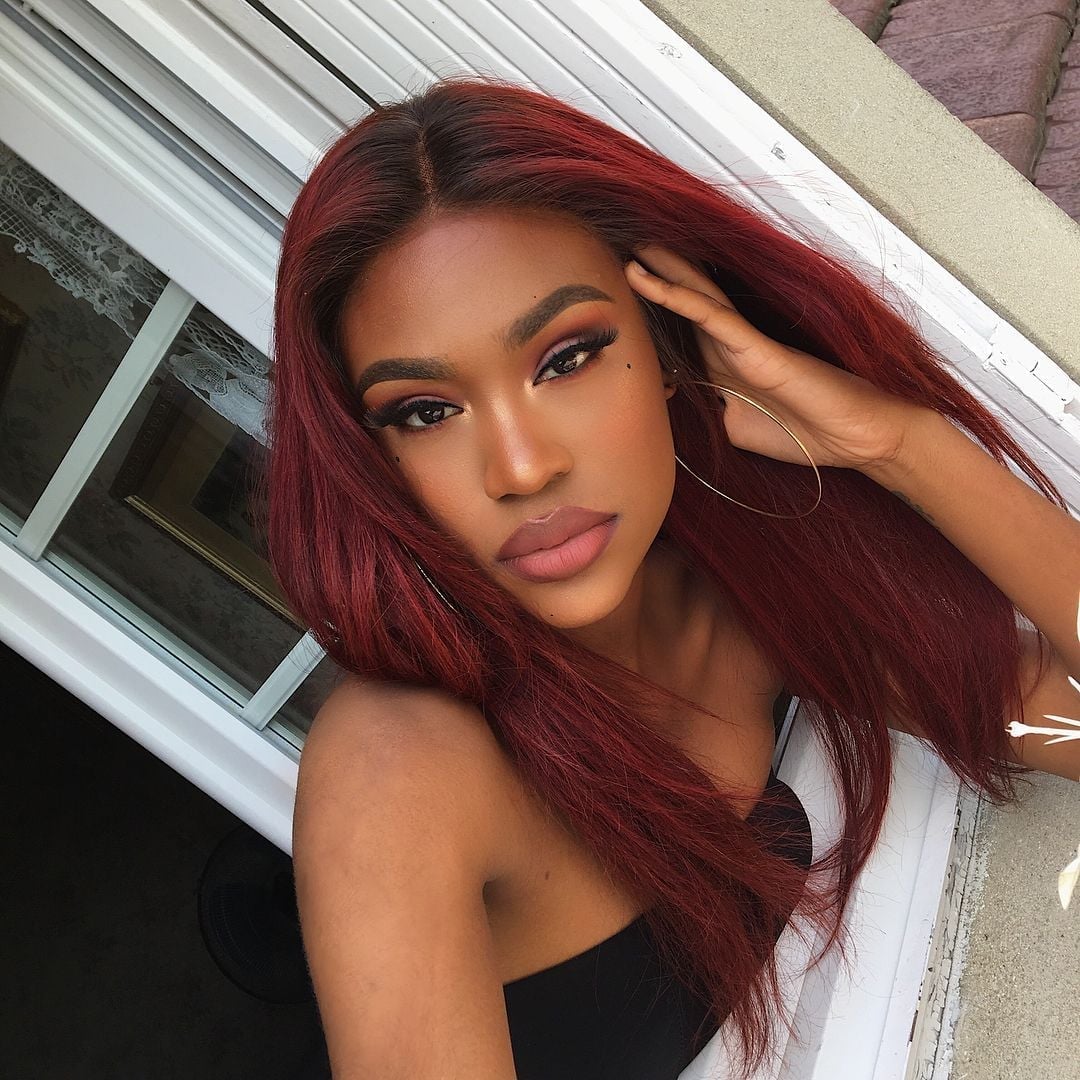
A full-on red can feel like a commitment. This one builds in a grace period. A deep red base with a subtle dark root shadow means the grow-out line stays soft, not stark. The straight, fine texture here lets the color read clearly without competing texture.
You are not fighting regrowth every three weeks. The root shadow buys you closer to eight. Use a heat protectant when you style it straight. Pass when you want a uniform, all-over red with no fade zone.
Copper red with golden highlights
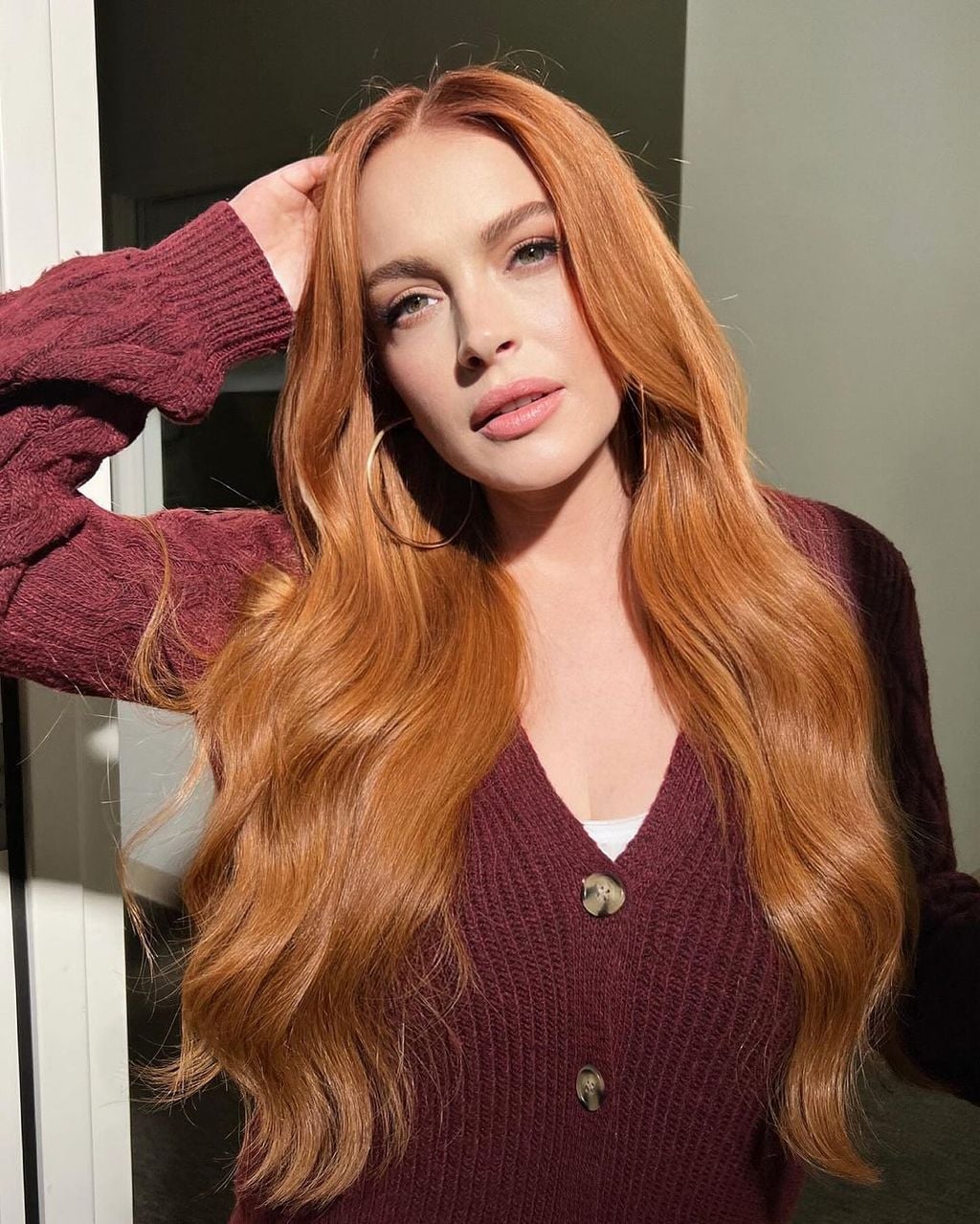
Copper this deep needs a second note to keep it from going flat. The golden highlights sit subtle, not stripey, and they catch the light without shouting. The air-dried waves and middle part let the color do its own work. Notice the highlights are not chunky; they look a warm shift, not a separate layer. Thick, wavy hair holds this kind of tone best. Ask your colorist for: copper red base, subtle golden highlights, air-dried waves. No length requirement.
Dark brown to teal Ombre
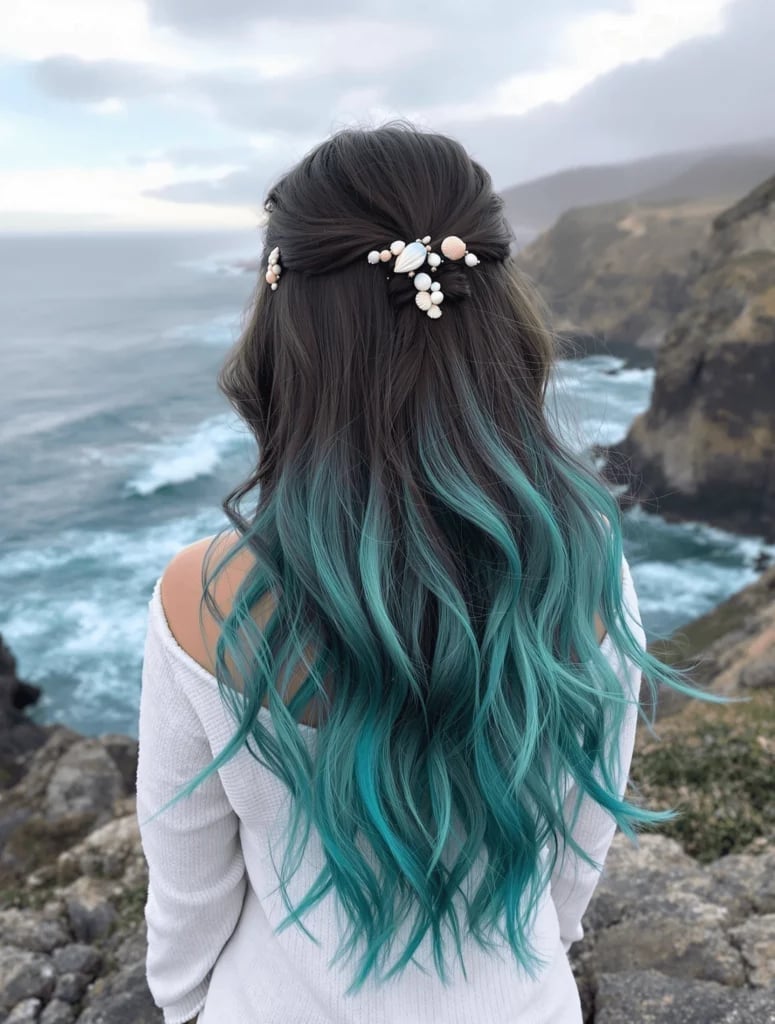
Two tones that do not fight each other. The dark brown base holds the top, and the teal at the ends is the payoff. The transition sits low, so the color feels deliberate, not accidental. A middle part and loose waves keep the look wearable, not costume. Thick, wavy texture carries the pigment well. Not for anyone who wants a subtle shift at the ends.
Black roots fading to deep blue
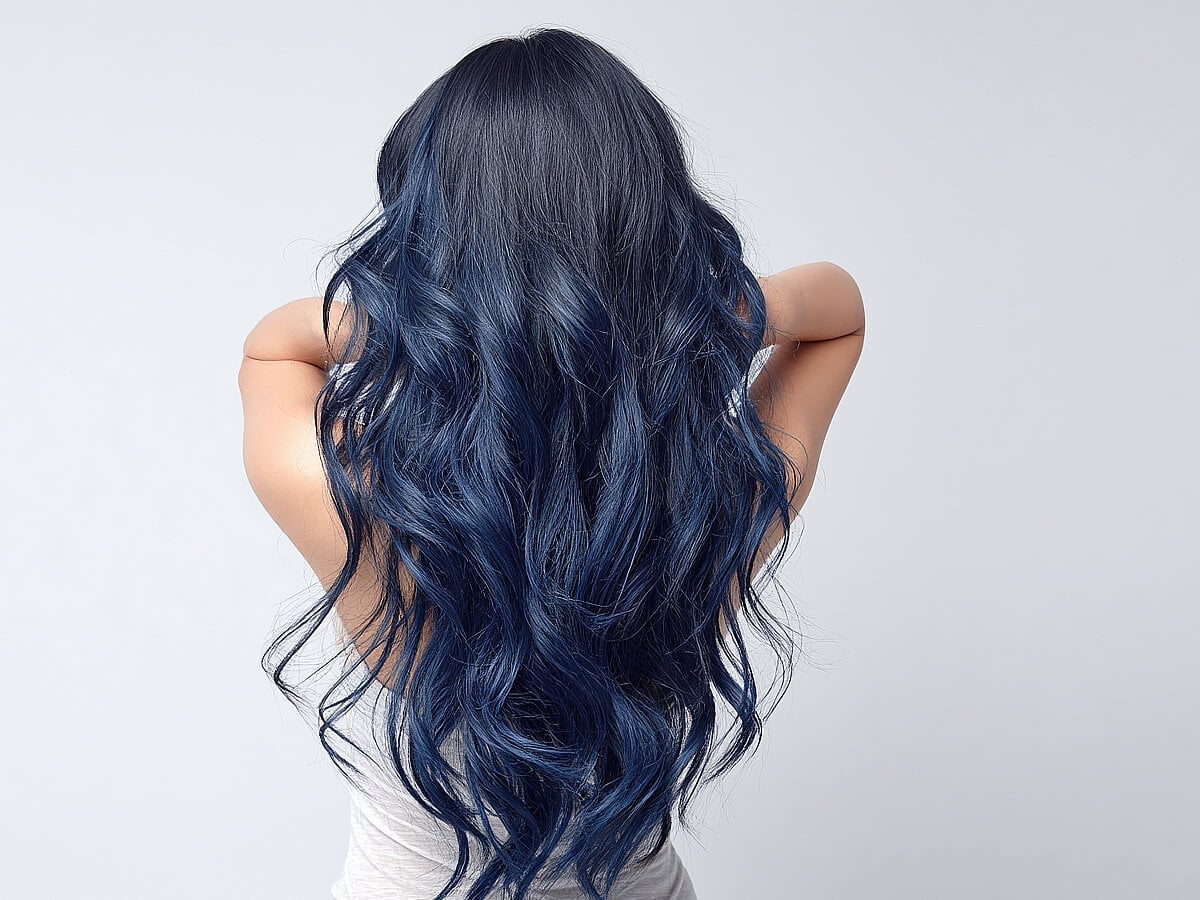
Black roots with a deep blue ombre look dramatic, but the trade-off is honest. The dark root means less frequent touch-ups, but the blue ends require real bleaching and toning work. That is a salon day, not a quick fix. Thick, wavy hair helps the color look depth, not flatness. Skip it if you are not ready for a color that fades differently than it went in. Ask your colorist for: black to deep blue ombre, wavy styling.
Pink and magenta Ombré
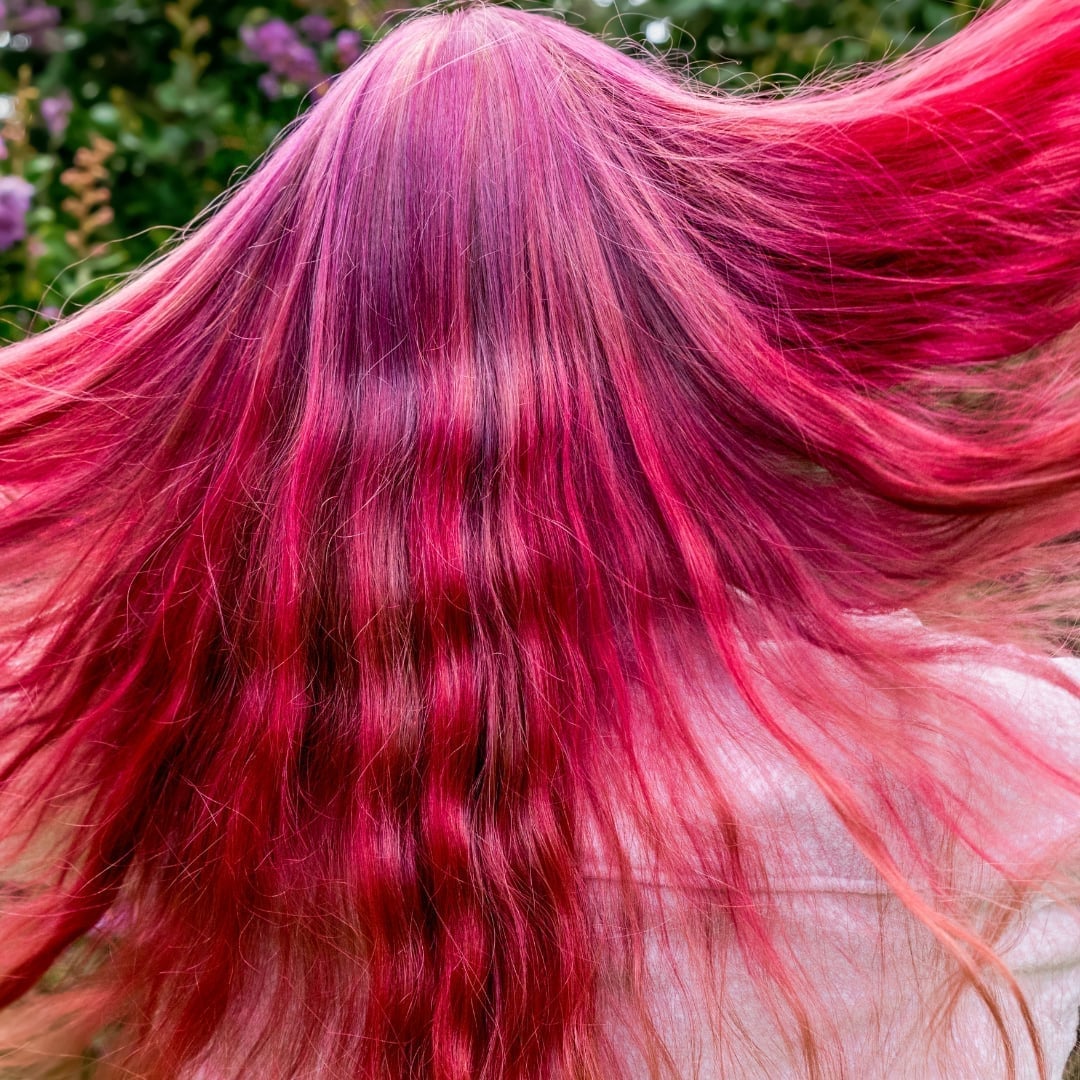
Deep magenta roots that darken the crown before melting into bright pink ends. The ombré transition hits the sweet spot between moody and playful. Wavy fine texture lets the two tones breathe separately, straight hair would blend them into a single pink blur. Skip it if you prefer one solid color or have thick hair that might swallow the pastel fade.
Warm tones with pink, purple, and orange highlights
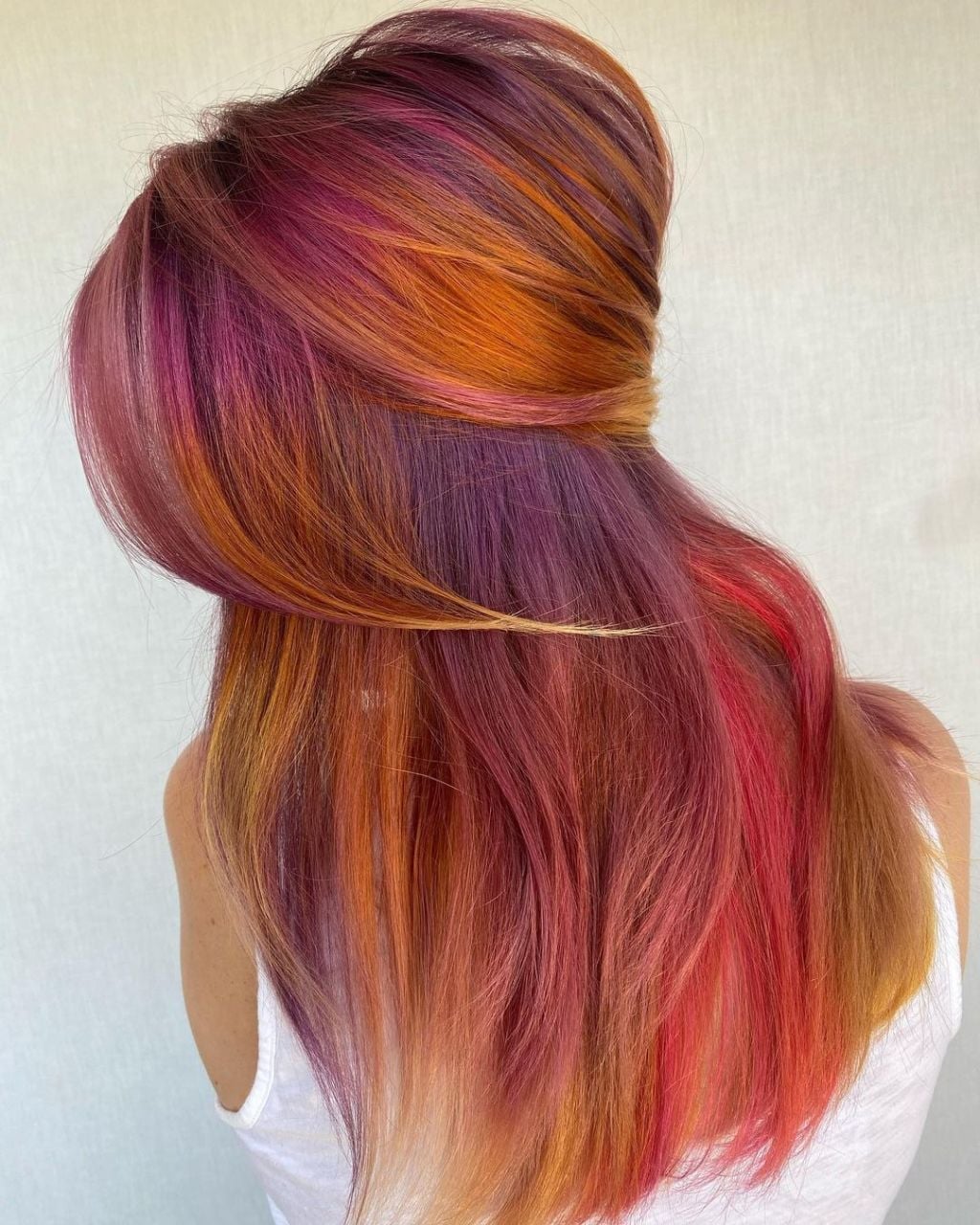
An ombré keeps the color story simple. This takes three separate tones, pink, purple, orange, and weaves them into a single head of thick, wavy hair. The twisted updo stacks the strands so each shade gets its own moment. Ask your colorist for: multi-color highlights in pink, purple, orange. Skip it if you want a single tonal family or have fine hair that struggles with dense color placement.
Vibrant mint green pastel shade
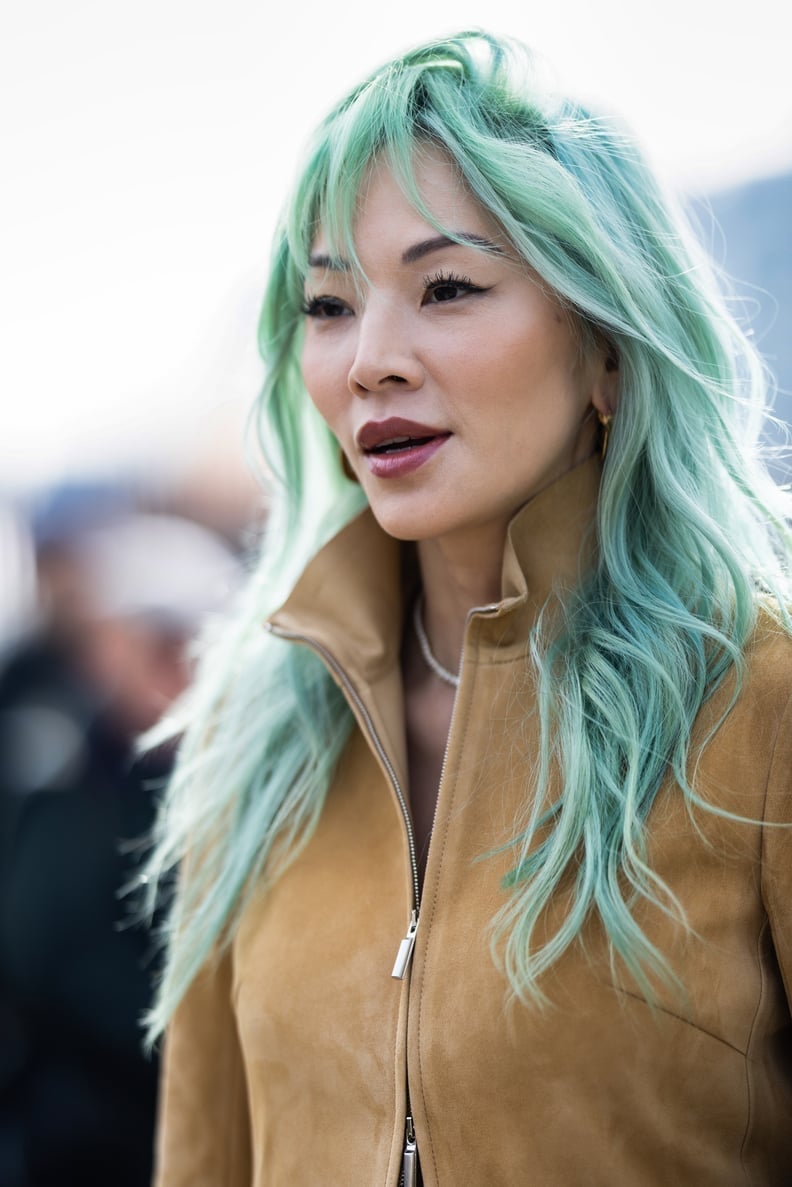
Mint green that looks a solid block of color rather than a fade or a highlight. The wavy fine texture and wispy bangs keep the shade from looking heavy. Getting this pastel requires lifting the hair to nearly white first, plan for two sessions. Not for anyone who wants a tone that fades gracefully into neutral.
Ash blonde with curtain bangs and face-framing layers
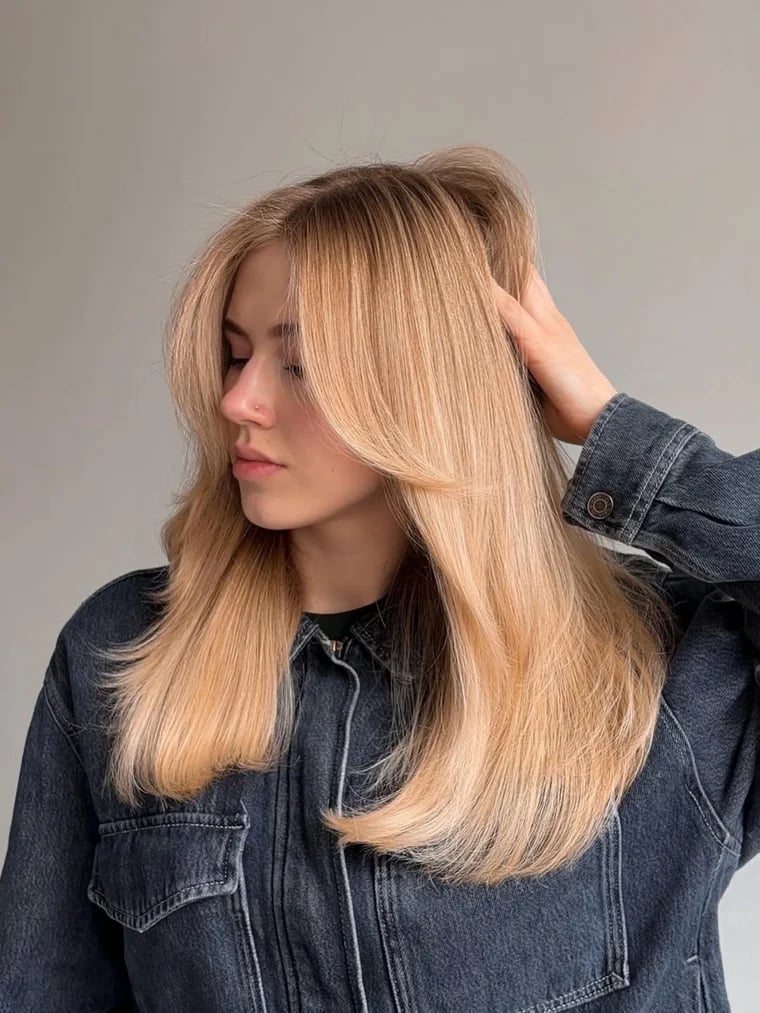
Ash blonde that leans cool without tipping into silver. The face-framing layers and curtain bangs soften the color, so the tone looks natural rather than processed. Fine wavy texture holds the shape without product. Ask your colorist for: ash blonde base, subtle blended highlights, curtain bangs. If curtain bangs and daily blow-drying sound like a chore, this may not be for you.
Ash blonde with lavender highlights
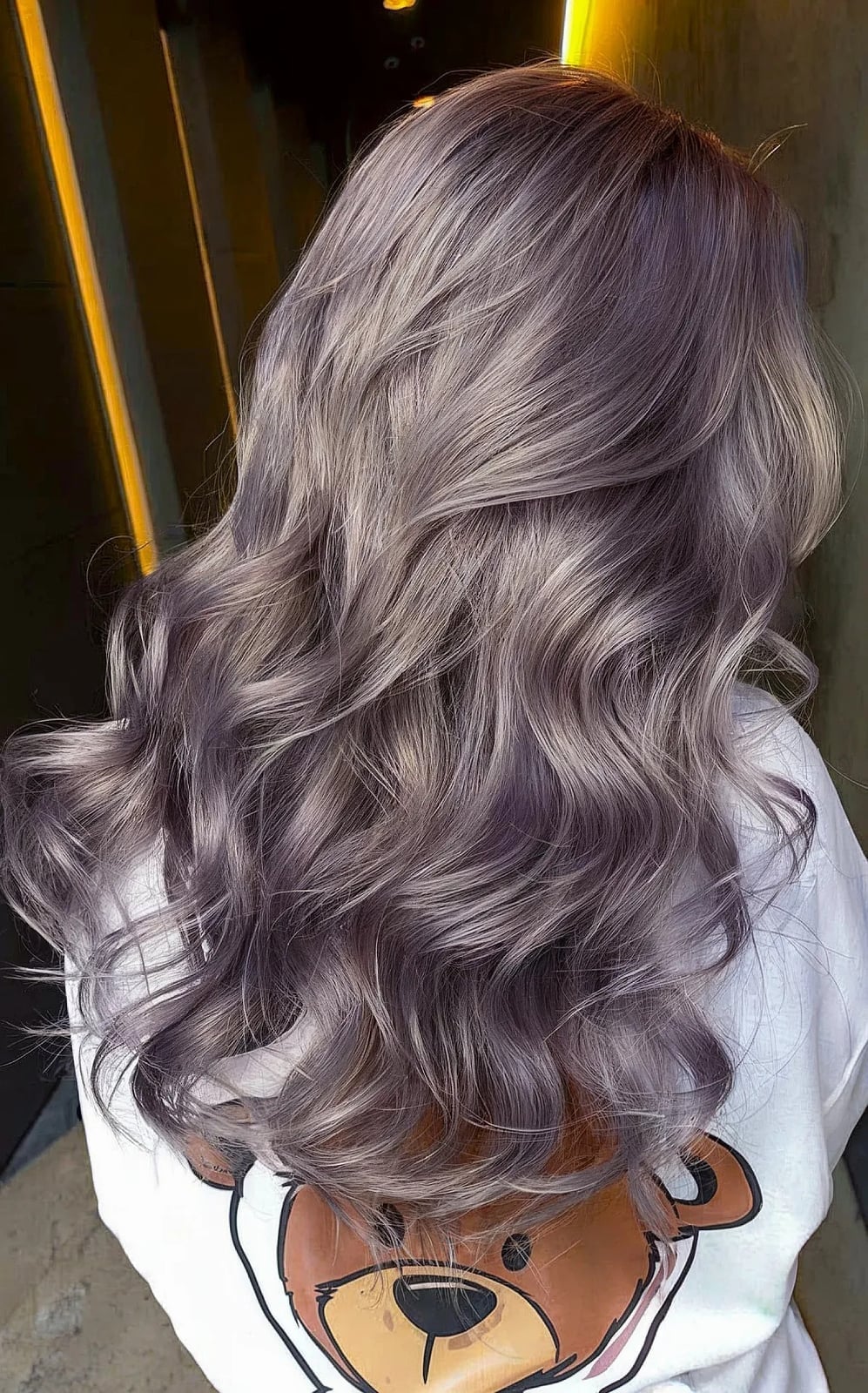
An ash blonde base keeps the look grounded while subtle lavender highlights add a pastel edge. The wavy blowout and thick layered cut create enough surface area for both tones to read clearly. Choose a single tone if you have fine hair that might not hold the highlight placement.
Dark blonde with ash highlights and curtain bangs
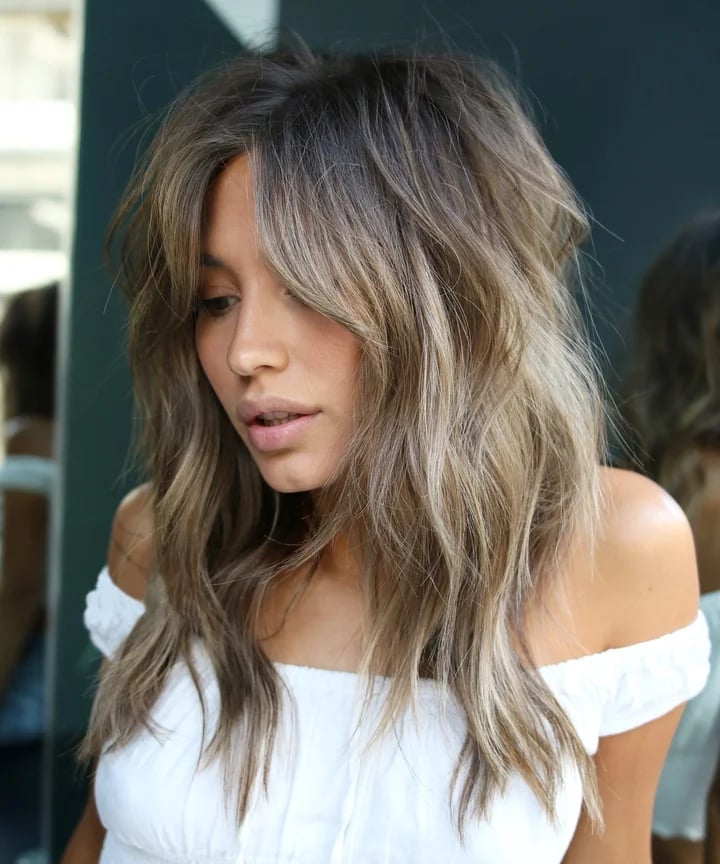
Dark blonde with ash highlights reads cooler than its warm counterpart, but the effect is softer than you expect. This one suits thick, wavy hair with curtain bangs that need a tone to match their lived-in feel. Choose a warm-toned shade or have fine hair that may not hold the volume of the waves. Tell your colorist: dark blonde base, subtle ash highlights, curtain bangs. Allow hair to air dry for a natural effect; curtain bangs may need daily styling.
Brown base with lighter blonde strands
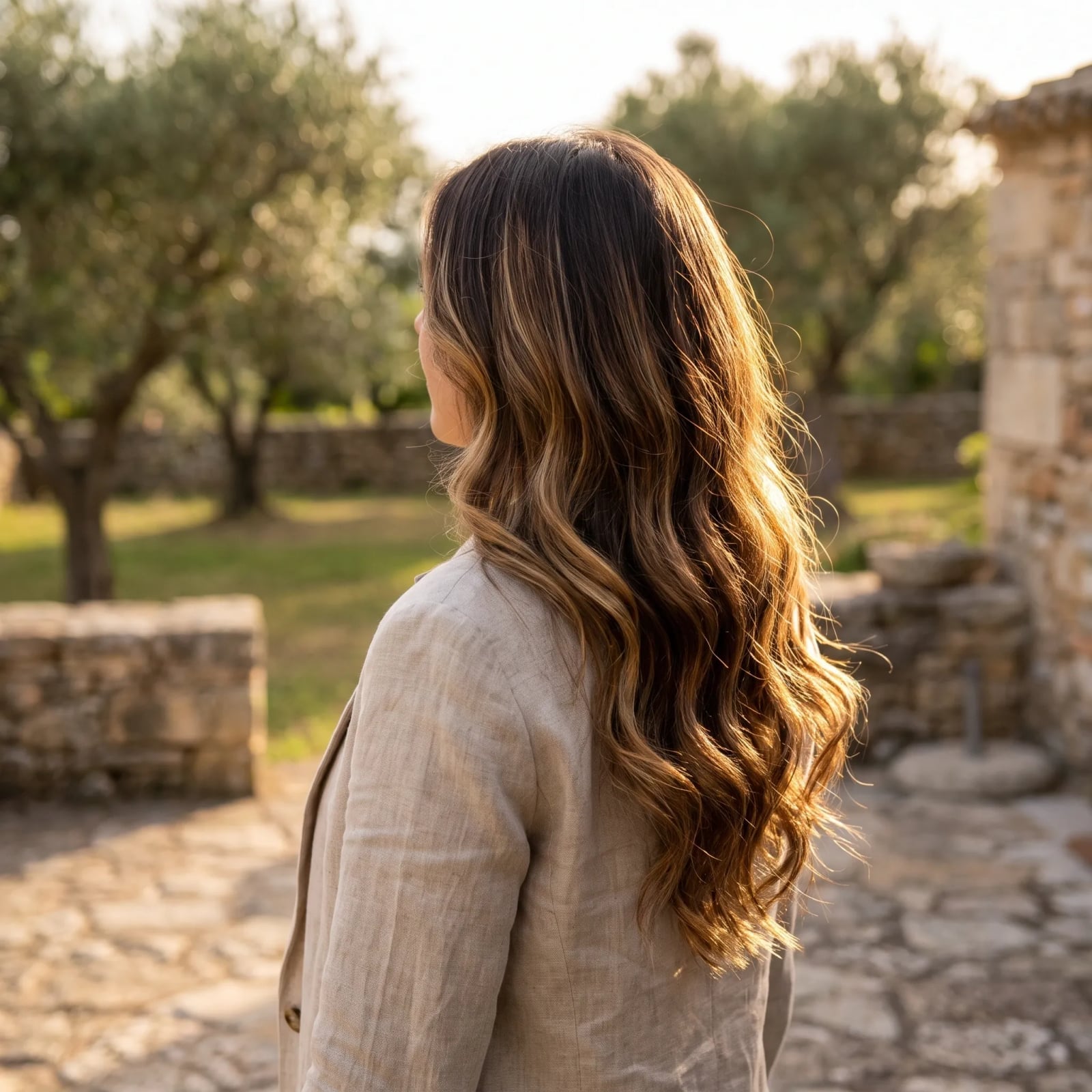
Middle part, layers, loose waves. The dark brown base stays grounded while subtle blonde highlights lift the surface without shouting. That lighter effect works because the blending is precise. Every strand lands in the right place. Professional skill makes this smooth; a DIY version tends to land uneven. Trims every six to eight weeks keep the layers sharp.
Dark brown with caramel highlights
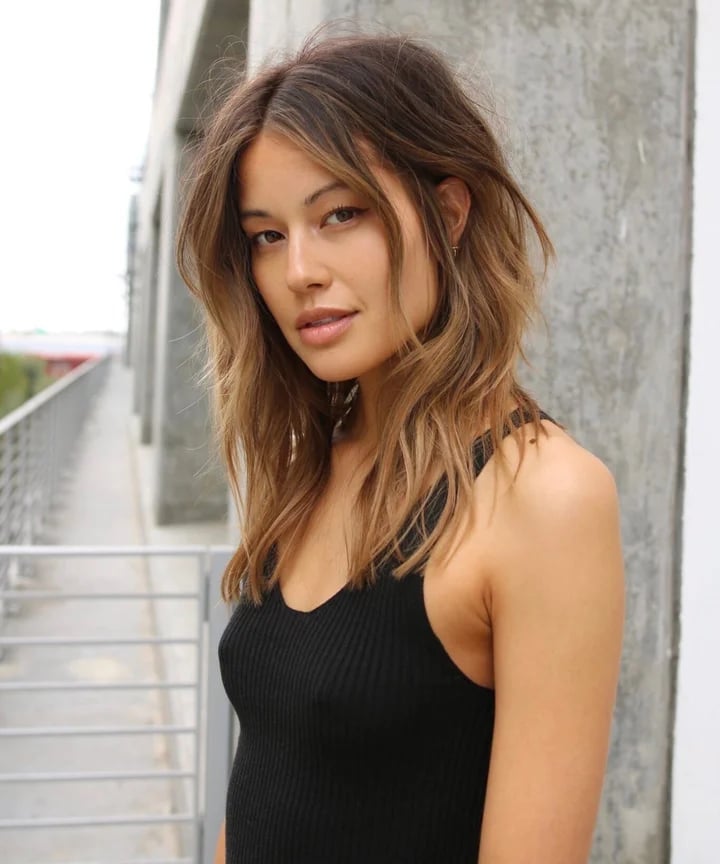
Dark brown with caramel highlights sits a shade warmer than the blonde version, but the decision comes down to your base. Fine, wavy hair shows the caramel clearly against the dark brown. A cooler tone or thick hair might swallow the subtlety. Ask your colorist for: dark brown base, caramel highlights, air-dried wavy styling. Balayage technique requires professional skill for smooth blending.
Dark brown with caramel highlights balayage, wavy
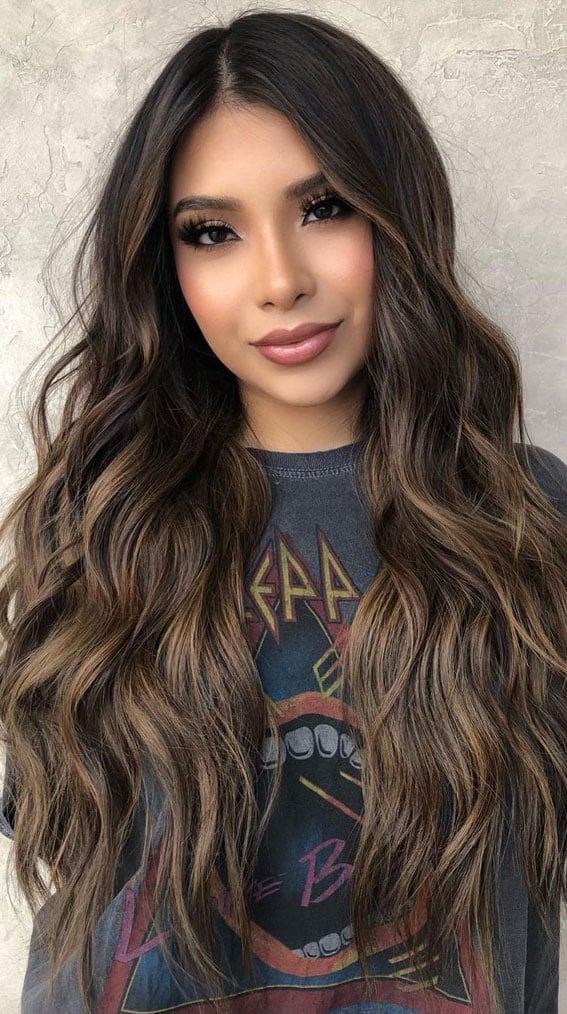
Balayage places caramel highlights by hand, so the dark brown base stays dark at the roots and softens toward the ends. Thick, wavy hair holds that gradient well. If you want a uniform color or have fine hair that might not show the dimension, this is not the right choice.
Dark brown with caramel highlights balayage, close-up take
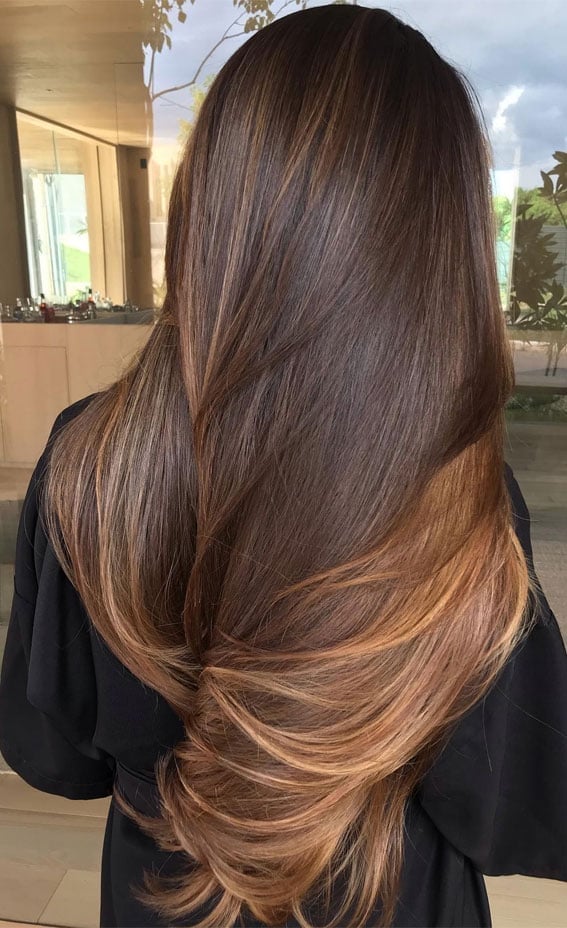
Close up, the caramel highlights look subtle threads against the dark brown base. The balayage technique means the blend is soft, not striped, salon-leaning because hand-painting takes skill. Thick, wavy hair lets the caramel peek through without losing the depth. If high contrast is what you want, this may not satisfy. Ask your colorist for: dark brown base, subtle caramel highlights, balayage.
Dark brown with caramel highlights balayage, office-safe version
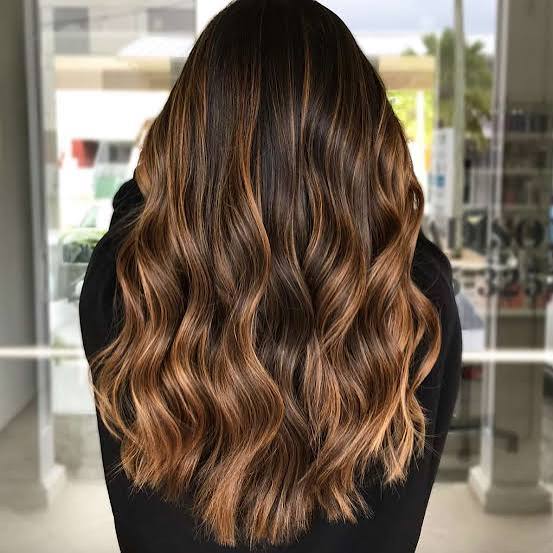
Caramel highlights on a dark brown base, applied with balayage, keep the lighter concentration toward the ends. The middle part and air-dried waves give it a thick, natural finish that works for the office. Solid color or fine hair may not suit this style.
Dark brown with auburn highlights, wavy
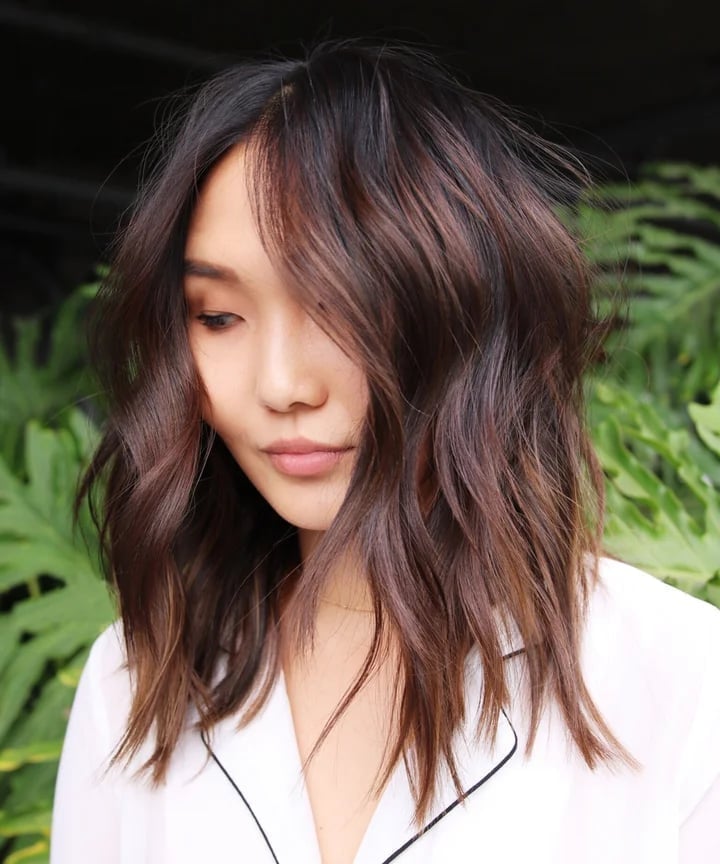
Subtle auburn highlights on dark brown read warmer than caramel without going full copper. The air-dried waves and layers keep it grounded. If you prefer cool tones or have fine hair that might not show the subtlety of the highlights, this is not for you. The middle part and thick texture let the auburn sit as a whisper rather than a shout. Tell your colorist: dark brown base, subtle auburn highlights, air-dried wavy styling. Auburn fades faster than brown, so a color-depositing conditioner helps stretch the time between toning.
Burgundy base with violet undertones
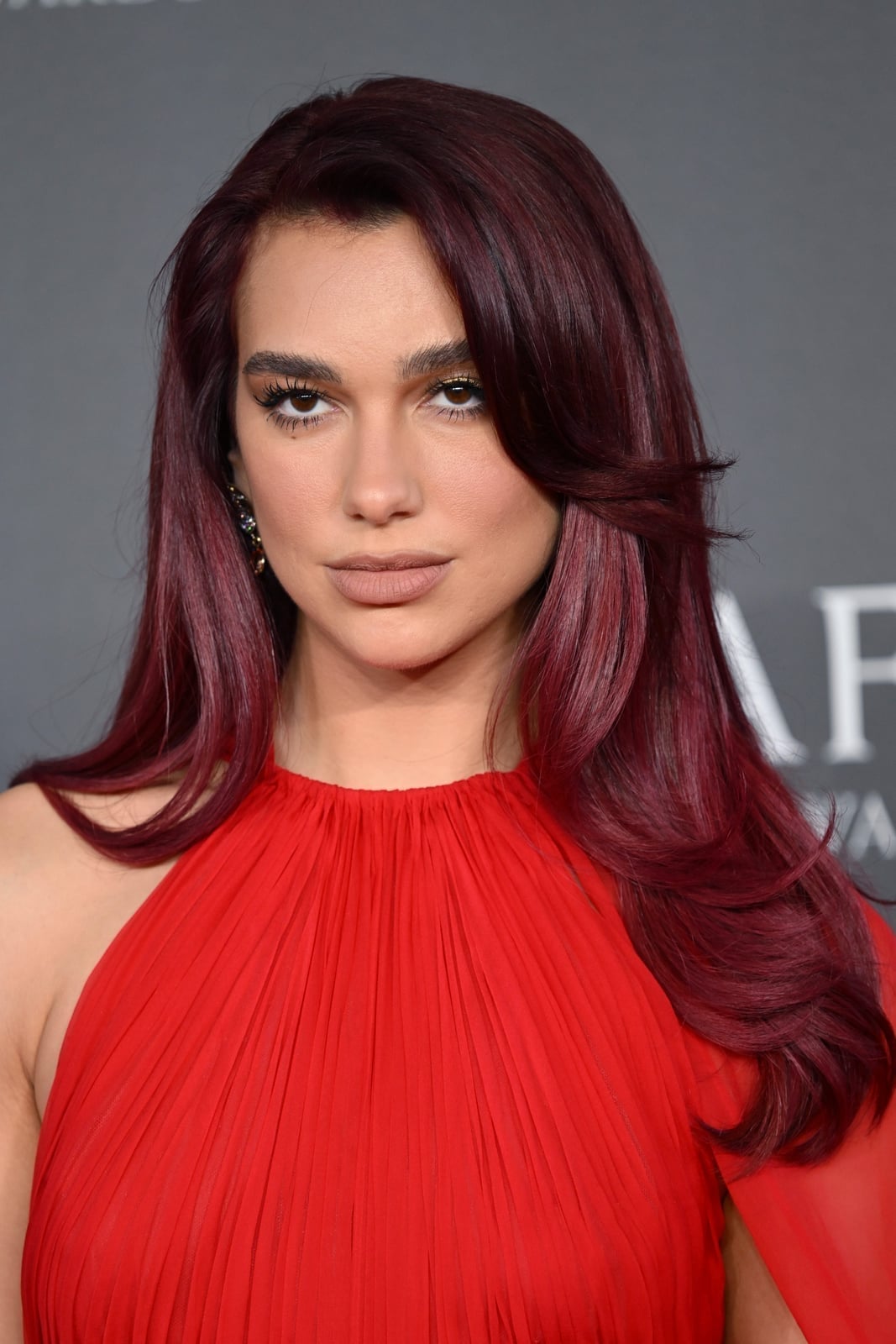
Deep burgundy with subtle violet undertones looks rich without tipping into purple. The face-framing layers and smooth blowout texture keep the color front and center. Thick, wavy hair holds the depth best. The words for the chair: deep burgundy base, subtle violet undertones, face-framing layers, blowout. A professional application ensures the violet stays as an undertone, not a streak.
Deep burgundy with red undertones, close-up take
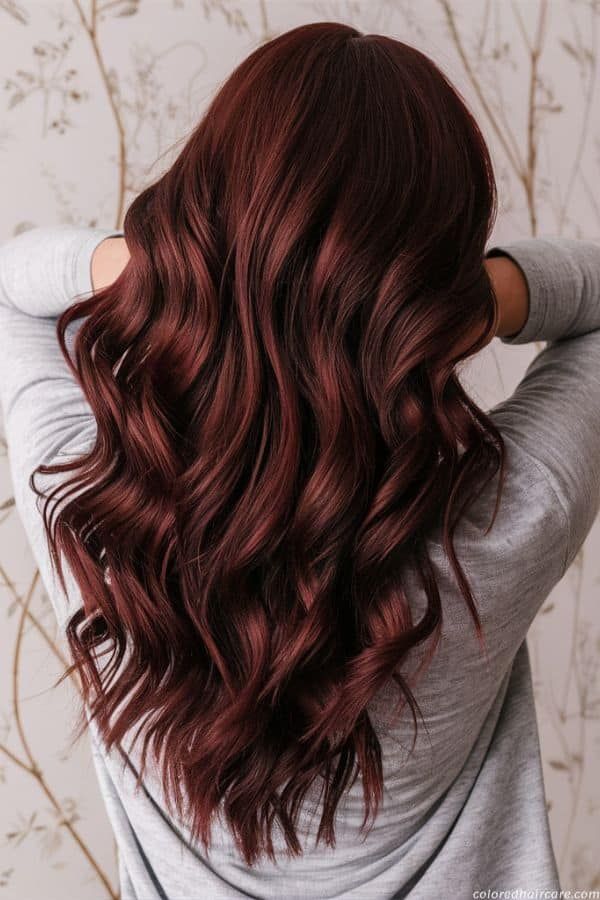
The mistake with deep burgundy is letting it look brown. This version keeps red undertones front and center, with a centered part and soft waves. Thick, wavy hair lets the color sit deep rather than flat. Tell your colorist: deep burgundy base, subtle red undertones, soft waves. Fine hair can lose the red quickly, so a gloss mid-cycle helps maintain the tone. Deep conditioning keeps the richness from looking dull.
Red base with violet undertones, wavy
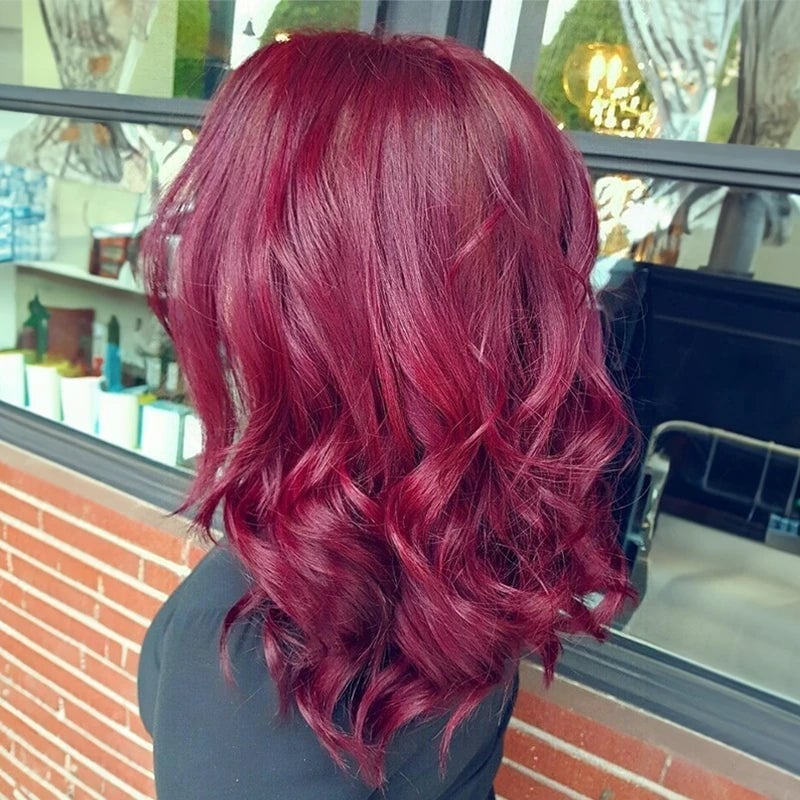
Deep red with subtle violet undertones avoids the orange trap that straight red can fall into. Loose waves and a middle part let the color catch the light in shifts. Thick, wavy hair holds the depth without needing constant refreshing. The words for the chair: deep red base, subtle violet undertones, loose waves. Color-safe products are essential here, as red-violet fades visibly.
Lob haircut in vibrant copper red
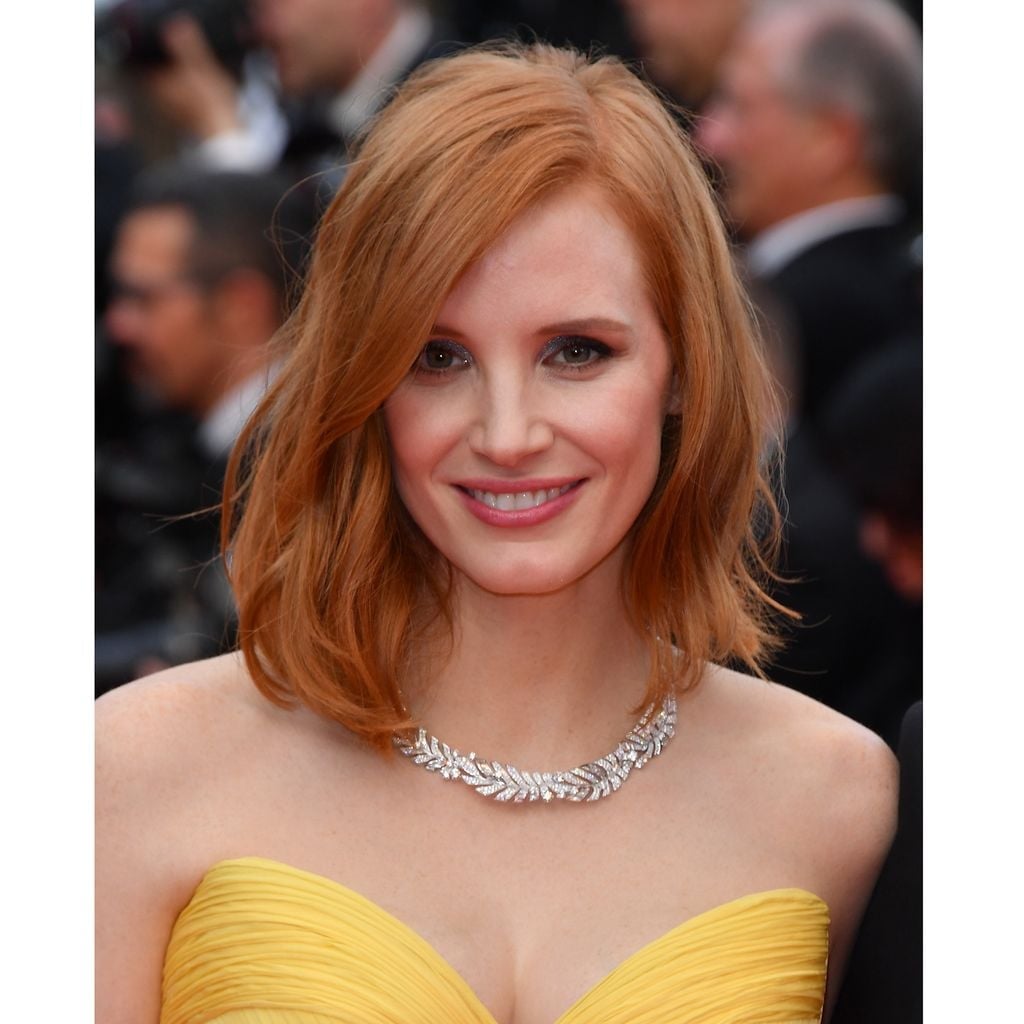
Copper red fades faster than any other shade in the visible spectrum. On a fine, wavy lob with a side part, that vibrant hue with its subtle tone variations looks like a deliberate choice. Ask your colorist for: vibrant copper red lob, subtle tone variations, air-dried styling. The natural, air-dried texture keeps it from looking artificial; the lob cut gives the copper enough surface area to register without overwhelming. It suits those who prefer warm tones and can commit to maintenance. Toning every four to six weeks keeps the copper from veering rusty.
Dark blonde with golden highlights
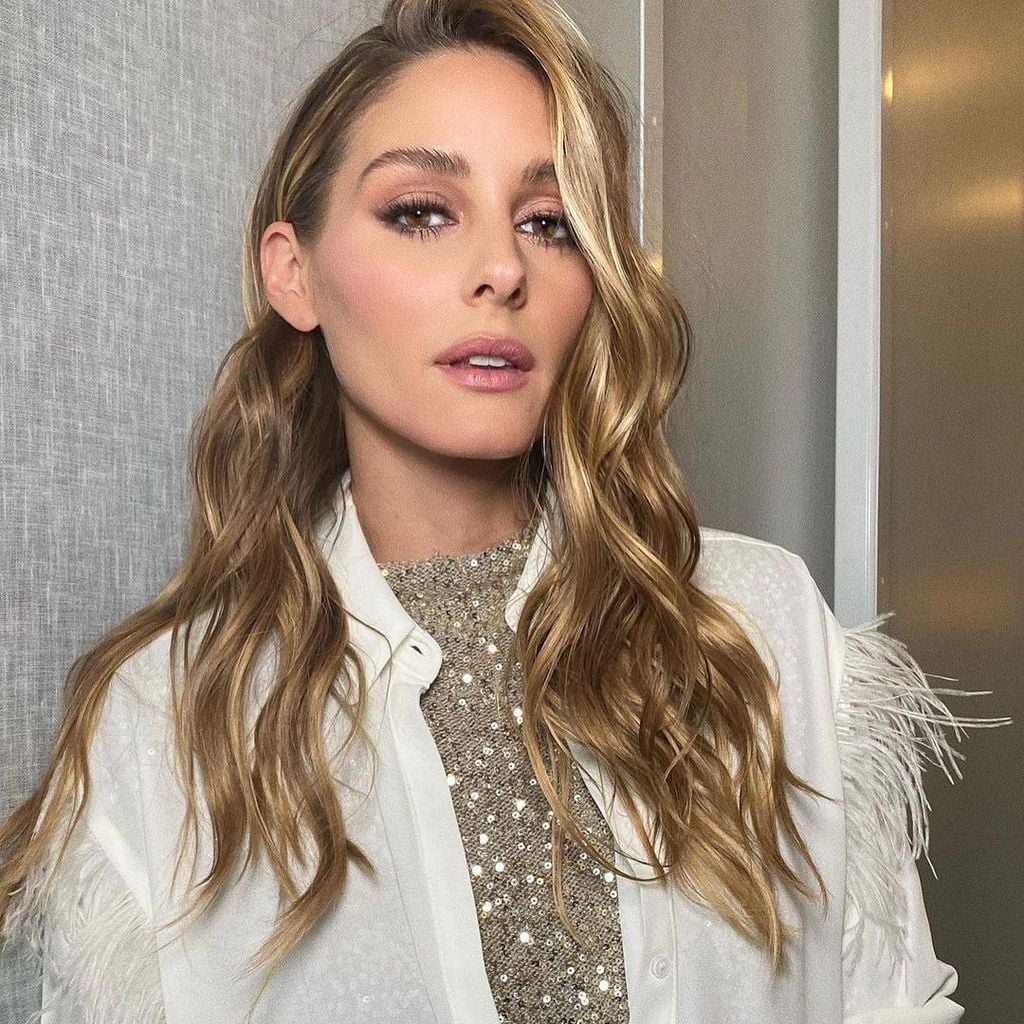
Golden highlights on a dark blonde base add definition without announcing themselves. The subtle, lighter effect works because the highlights stay fine and the wavy blowout scatters them evenly. Cool blonde tones clash with golden warmth.
Dark blonde with ash blonde highlights, wavy
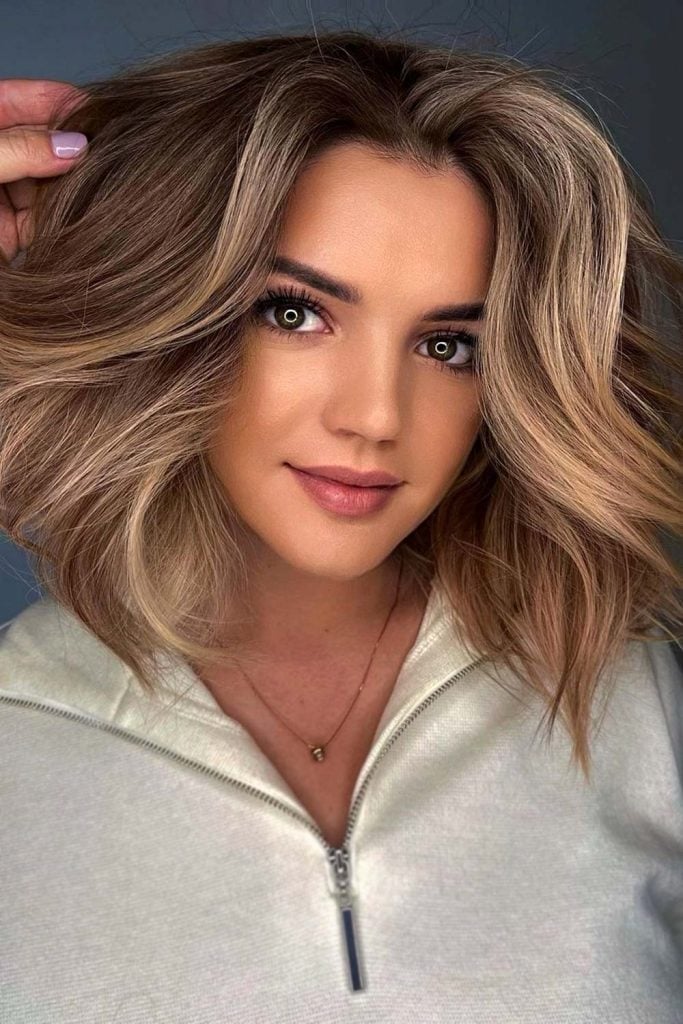
Dark blonde with ash blonde highlights sits in the narrow lane between warm and cool, which is exactly where many hair colors live. The face-framing highlights on a dark blonde base with a middle part and soft layers create a dimensional effect that a single all-over shade cannot. Ask your colorist for: dark blonde base, subtle ash blonde highlights, face-framing. This combination is best for those who prefer cool tones. The ash can look dull, not dimensional, on warm bases. The relaxed blowout with wavy texture is a flexible styling choice that works for work and for dinner.
Ash blonde balayage with darker roots
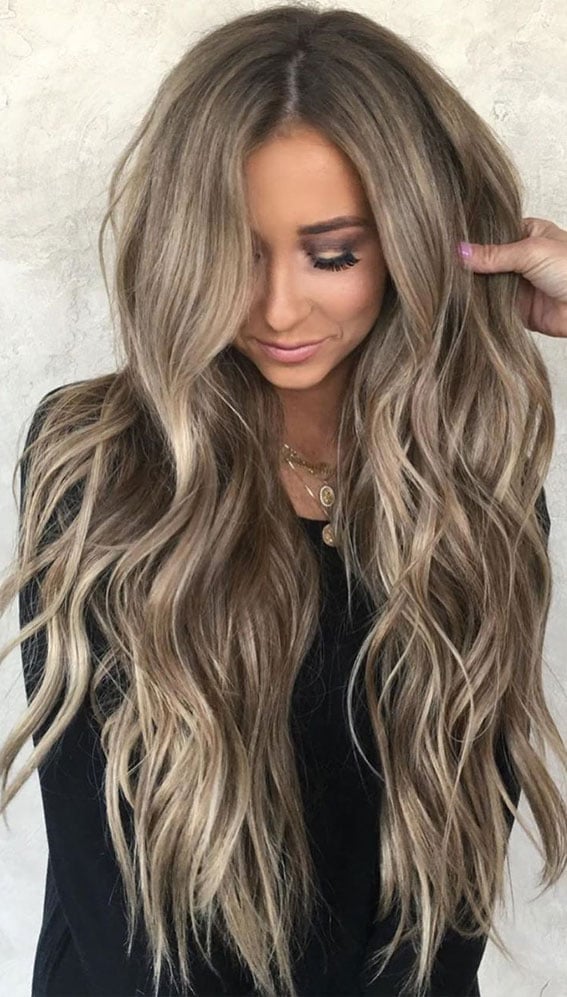
Ash blonde balayage with darker roots is the color equivalent of a well-engineered grow-out. The darker roots meet the ash blonde mid-lengths in a contrast that looks deliberate, not accidental. Side-swept bangs soften the transition and give the thick, wavy texture something to break against. This style is for those who prefer a visible root. The whole point is the visible shift. The air-dried finish keeps the balayage from looking overworked.
Ash blonde with root shadow
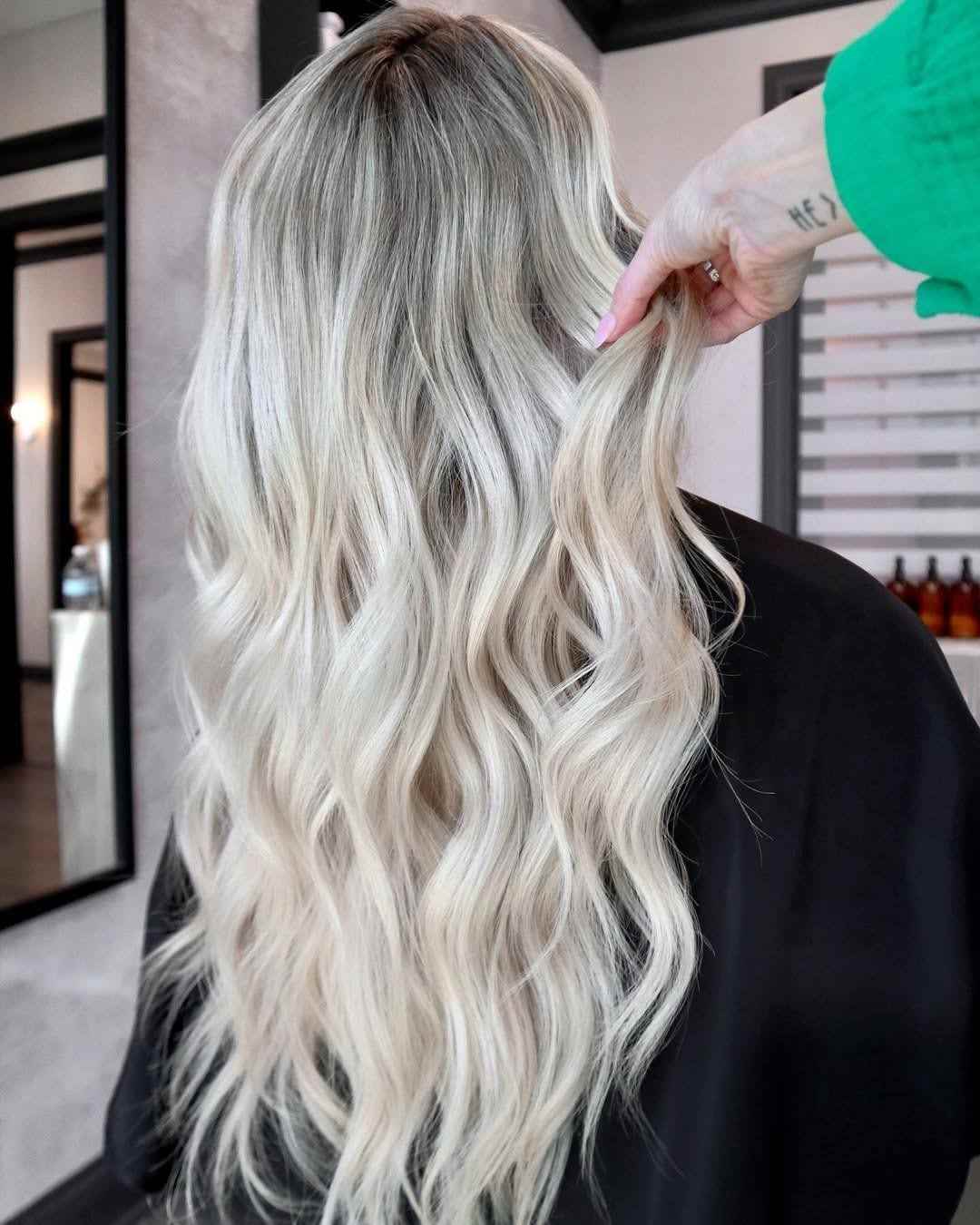
Ash blonde with a root shadow provides a base that lets the color read correctly. The cool ash blonde base with a subtle root shadow on long, wavy layers creates a dimensional blonde that holds its own against the grow-out. Ask your colorist for: cool ash blonde base, subtle root shadow, long layers. This shade is for those who want a rooted look rather than a bright, uniform blonde. A salon is required for the bleaching and toning process that produces this effect.
Dark brown with caramel highlights and air dried
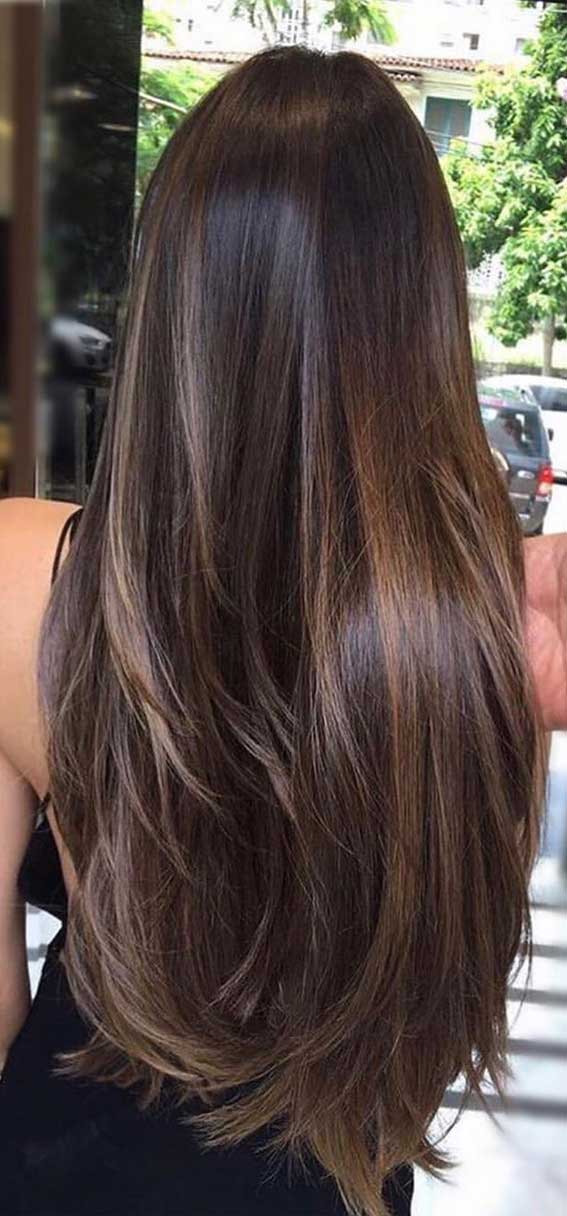
Back view tells you everything about how a centered parting and layers build natural dimension on thick, wavy hair. Dark brown base keeps it grounded while caramel highlights add subtle warmth. Air-dried texture means zero heat styling on wash days. A texture spray at the roots and you are done. The layers let each wave fall where it wants. Fine hair may not hold the cut’s movement. Bold colors are an alternative if you prefer a more dramatic look.
Deep burgundy with curtain bangs and layers
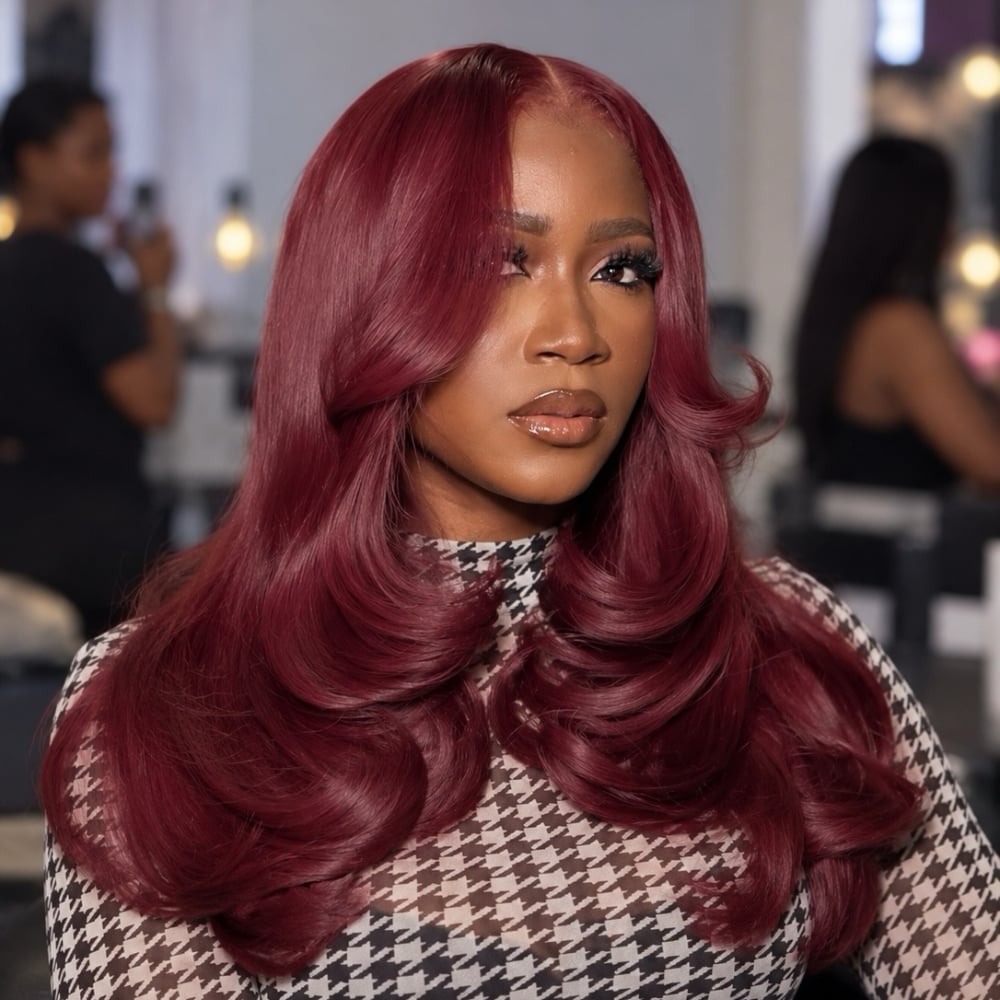
A voluminous blowout and deep burgundy with subtle red undertones make a strong pair, but only if you are ready for the trade-off. Curtain bangs and long layers frame the face beautifully, that is the upside. The catch: that rich color fades fast, and the blowout requires heat tools every time you want the volume. If you prefer lighter shades or have fine hair that might not hold the lift, this may not be for you. Tell your colorist: deep burgundy, subtle red undertones.
Final Thoughts
Pick by how your hair lives between appointments.
- Fine hair: lighter highlights add volume but need toner every four to six weeks.
- Ten minutes in the morning: a dark base with face-framing strands hides grow-out.
- Cool base that pulls brassy: a purple shampoo and a gloss every six weeks.
- Warm reds and coppers: color-safe shampoo and a trim every eight weeks.
Find the shade that makes the salon visit worth the chair time.