You are scrolling past another saved board of butterfly locs, wondering if the style holds up past the first weekend. It does, when the color and finish are chosen for how you actually live. Which is why Sharp Butterfly Locs 2027 fill so many saved boards this year.
29 styles cover the range from five-minute morning routines to full salon sessions, each built around a specific texture, color, and hold level. The collection solves the one real question: does this style hold its shape through a work week, a flight, or a humid afternoon? It does, if you pick the right one.
Platinum blonde butterfly locs in a half-up, half-down style
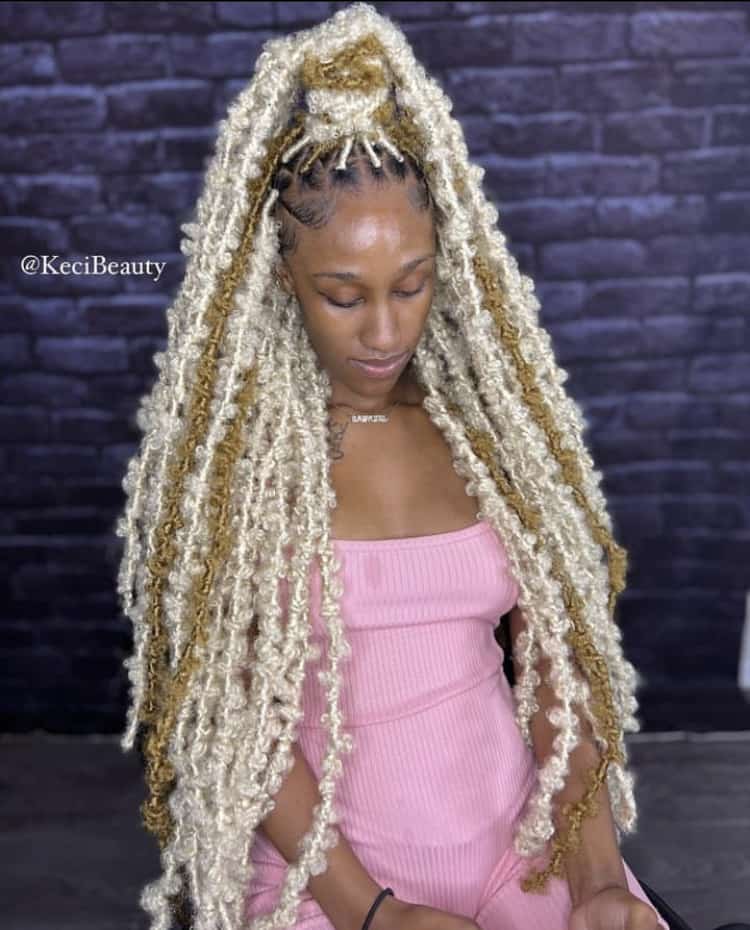
Platinum blonde at the root shifts into honey blonde highlights as the locs travel down, a color gradient that looks intentional. The wavy and coily texture gives each loc enough body to hold the high ponytail without slipping. Medium density hair handles the weight best, too fine and the half-up section pulls at the scalp. A middle part keeps the front balanced, which matters when the ponytail draws the eye upward.
Tell your stylist: platinum blonde butterfly locs with honey highlights, half up half down. The installation takes time because each loc is wrapped and braided individually, but the hold lasts for weeks. Secure the ponytail with a firm elastic at the base, then wrap a few locs around the band to hide it. That is the whole trick.
Dark brown butterfly locs styled loose
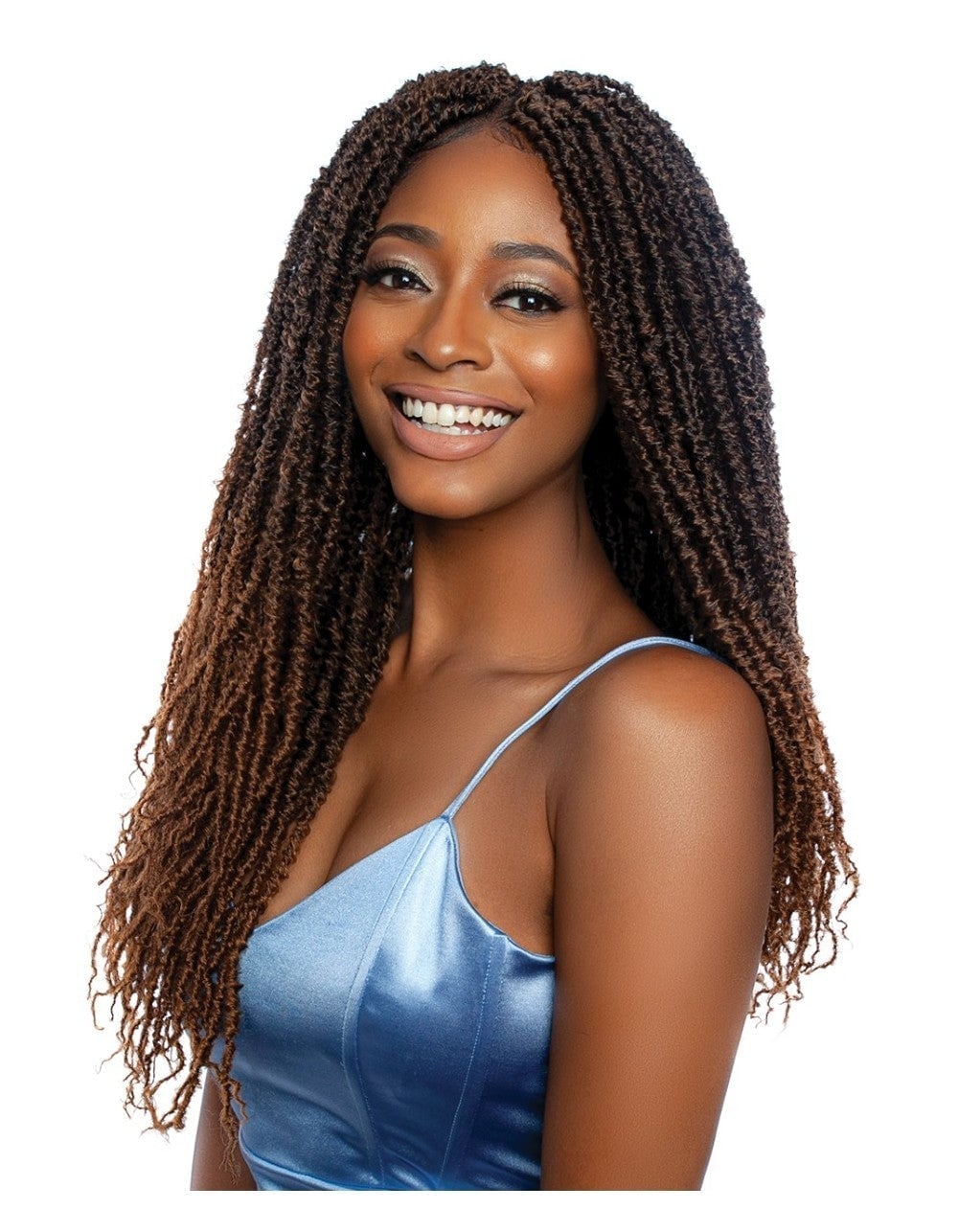
Set this against the platinum half-up from the previous look, and the difference is temperament. Dark brown with subtle lighter brown highlights reads quieter, more office-hour than night-out. The wavy texture and medium density mean the locs fall with a natural rhythm, no coaxing required. Middle part, loose styling, no accessories. The color does the work. Skip it if you want contrast or metallic accents.
The wavy texture holds its shape when air dried after washing. A trim is never part of the conversation with locs; you maintain the scalp, not the ends.
Black butterfly locs with gold cuffs
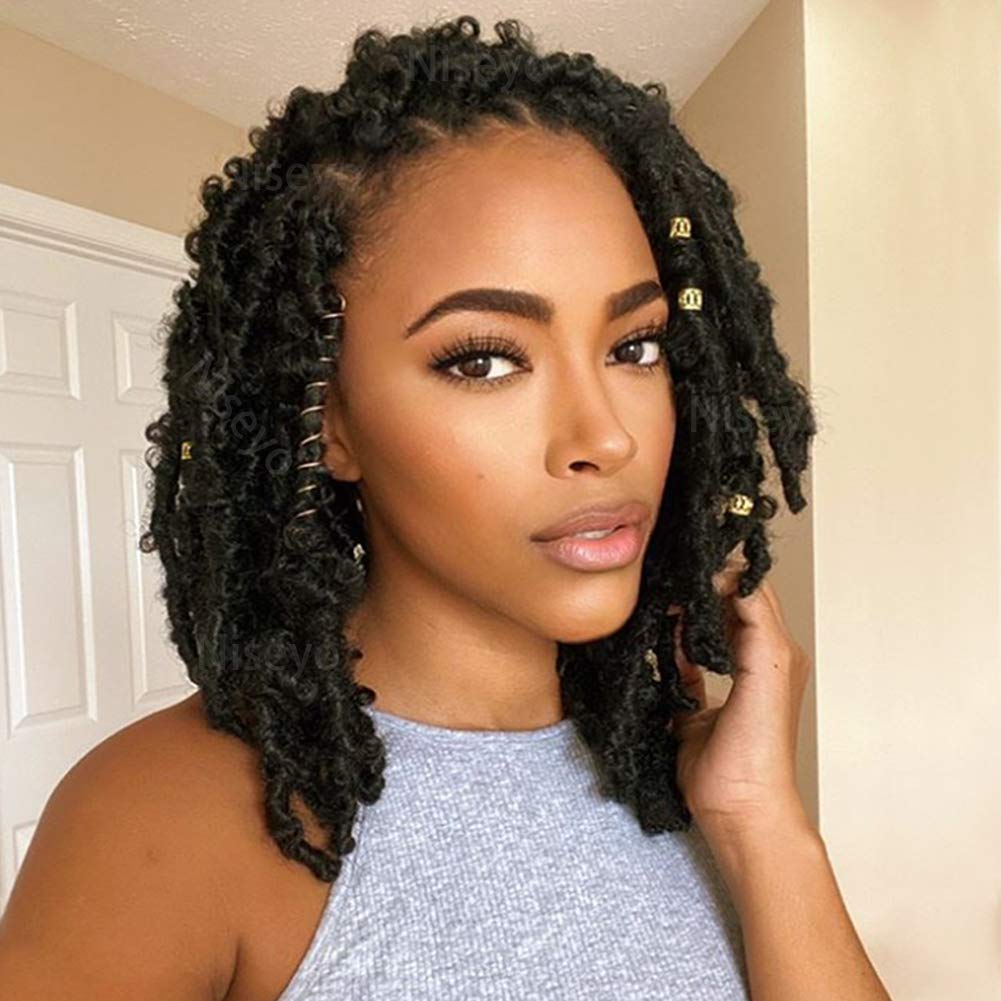
You like the idea of accessories but not the fuss of beads clicking all day. Gold cuffs sit flat against the loc, so they do not shift or catch. Deep black base keeps the metal visible without competing. Wavy thick texture fills the space between cuffs nicely, thin locs would let the metal slide. Middle part, air dried finish. Not for you if you sleep on your back; cuffs press into the scalp overnight.
Playful half-up, half-down butterfly locs
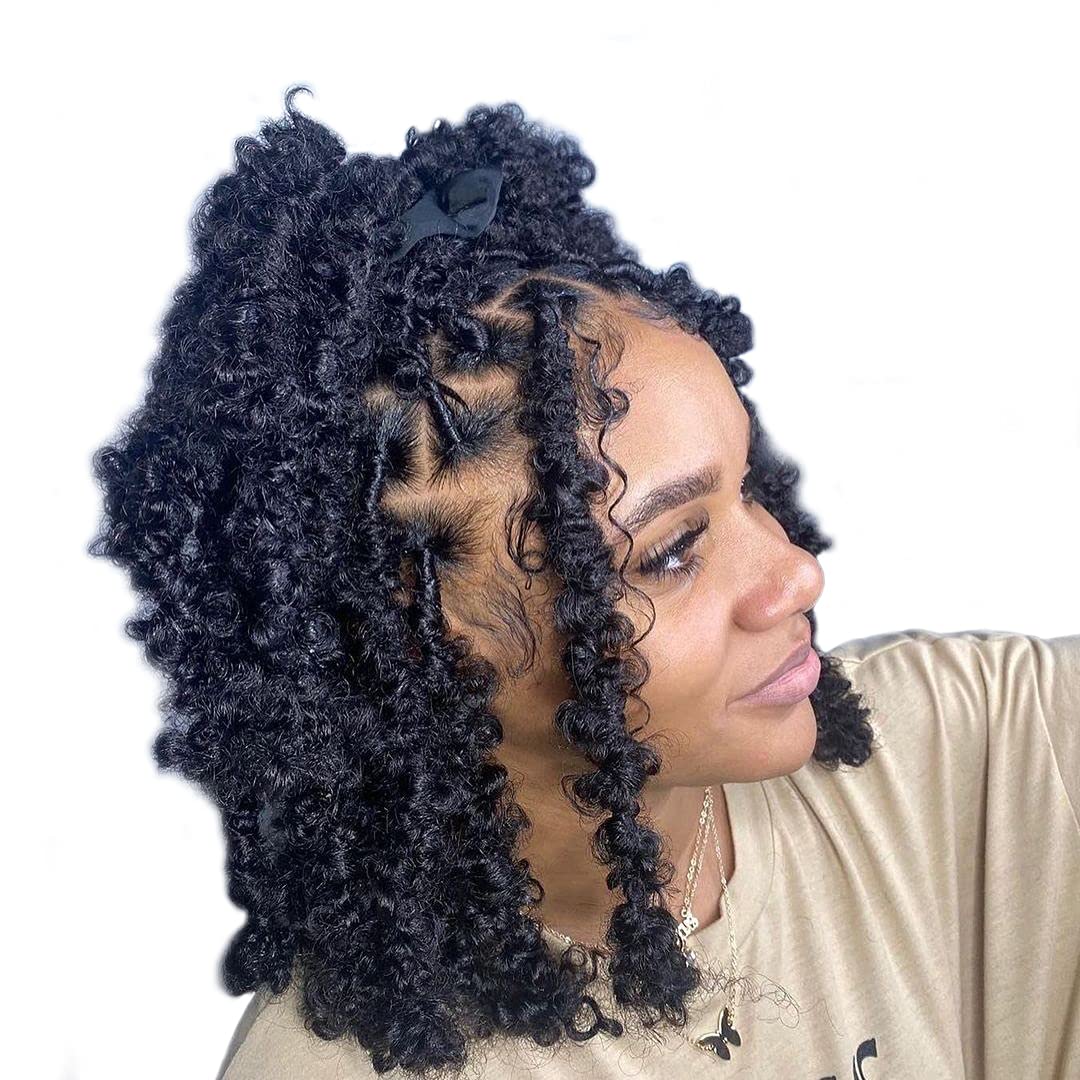
A small black bow secures the pulled-back section, which is exactly the kind of detail that separates a styled look from a thrown-together one. Wavy and coily texture gives the half-up portion enough grip to stay put without pins. Thick density helps here. The bow has something to anchor into. Middle part, side profile visible. Pass when you wear your locs completely down every day; the bow adds a step you will skip.
Black butterfly locs with gold bead accents
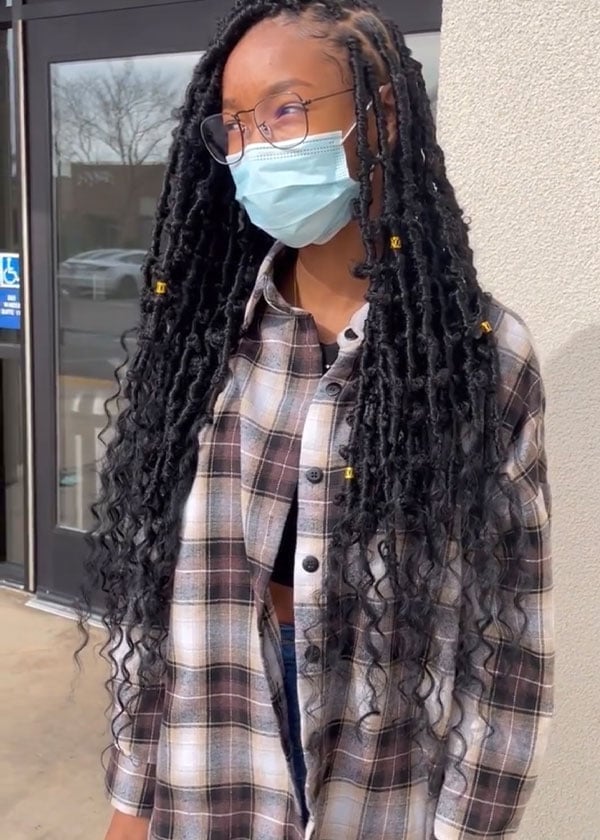
Gold beads spaced along deep black locs add metallic points of light without overwhelming the texture. Wavy, thick locs with subtle curls at the ends keep the style from reading too stiff. The beads are interspersed, not clustered, so the movement stays natural. Middle part, loose styling, side view. Tell your stylist: black butterfly locs with gold beads.
The beads are threaded onto the loc during installation, which means you cannot swap them out later. Decide on placement before the wrap begins. A light spritz of hairspray on a soft brush smooths any flyaways around the beads without dulling the shine.
Voluminous butterfly locs with loose, textured strands
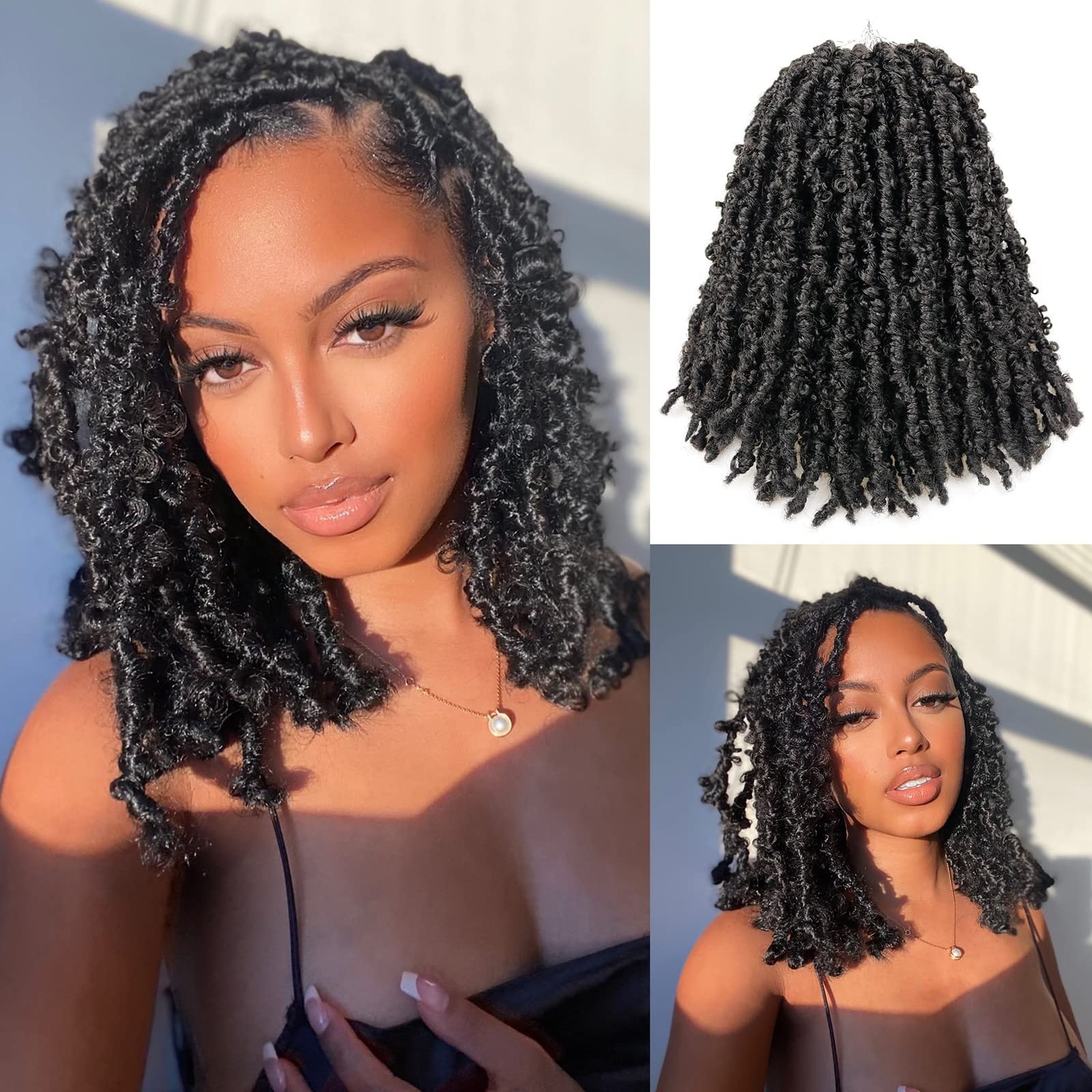
Straight butterfly locs are a neat package. This is not that. The thick, wavy, curly, coily texture creates a full, natural look that looks air-dried rather than molded. You get the volume of a blowout without the heat. The catch: this much texture means more frizz at the root by week three. Loose strands are part of the design, but they do need a gentle fingertip fluff each morning to keep the shape readable. Pass if you prefer a sleeker, more uniform texture. This one lives in its own chaos.
Loose, textured black butterfly locs
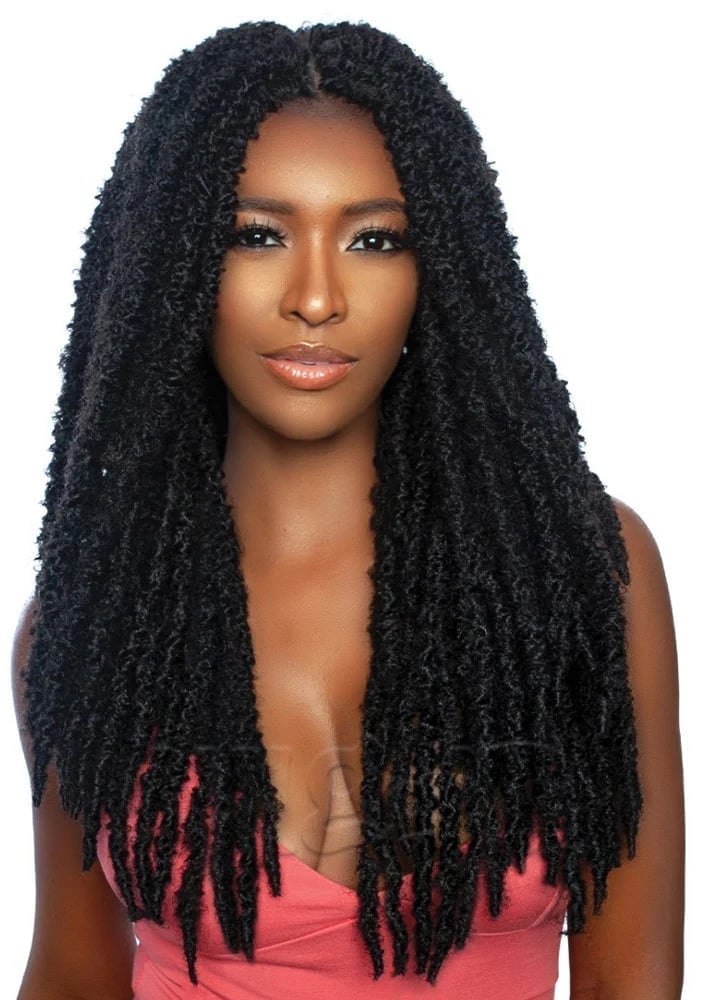
Deep black appears solid from a distance. Up close, the loose, wavy, coily texture separates into strands that catch light differently. The center part balances the weight, which matters when the volume runs this high. Fall and winter suit a full black style; less humidity keeps the hold crisp longer. Book it as: loose, wavy, coily black butterfly locs. It suits those who want texture as the focus, not a single-tone finish.
Salon-leaning braids create a voluminous look
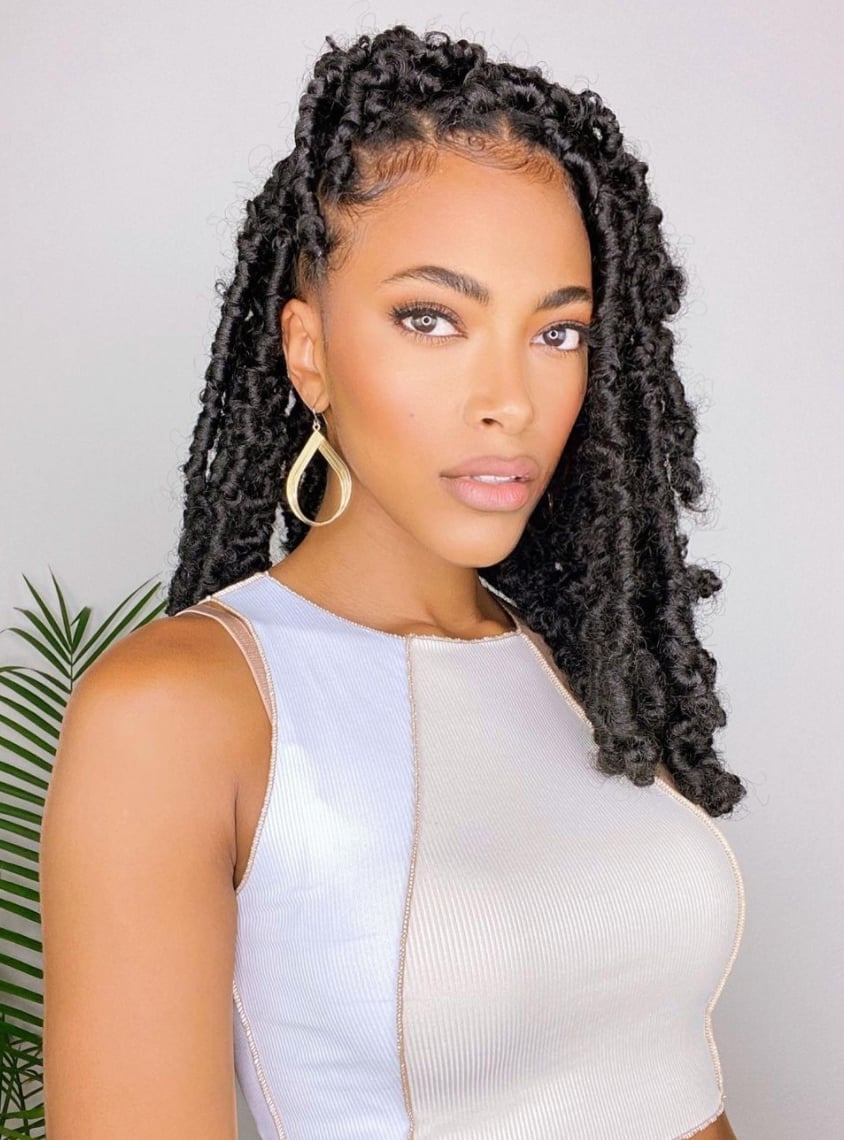
A middle part and a thick, wavy, coily texture give this style its structure. The braiding technique is what lifts the locs off the scalp, creating the volume without bulk. Each section is wrapped tightly at the base, then released into the natural texture. That transition is what keeps the silhouette from looking flat. Request from your stylist: thick, wavy, coily butterfly locs with intricate braiding. The chair time runs longer than a standard install, but the hold at the root lasts closer to eight weeks before retightening. Pass when you want a quicker setup; this one is a project.
Dark brown butterfly locs with honey highlights and beads
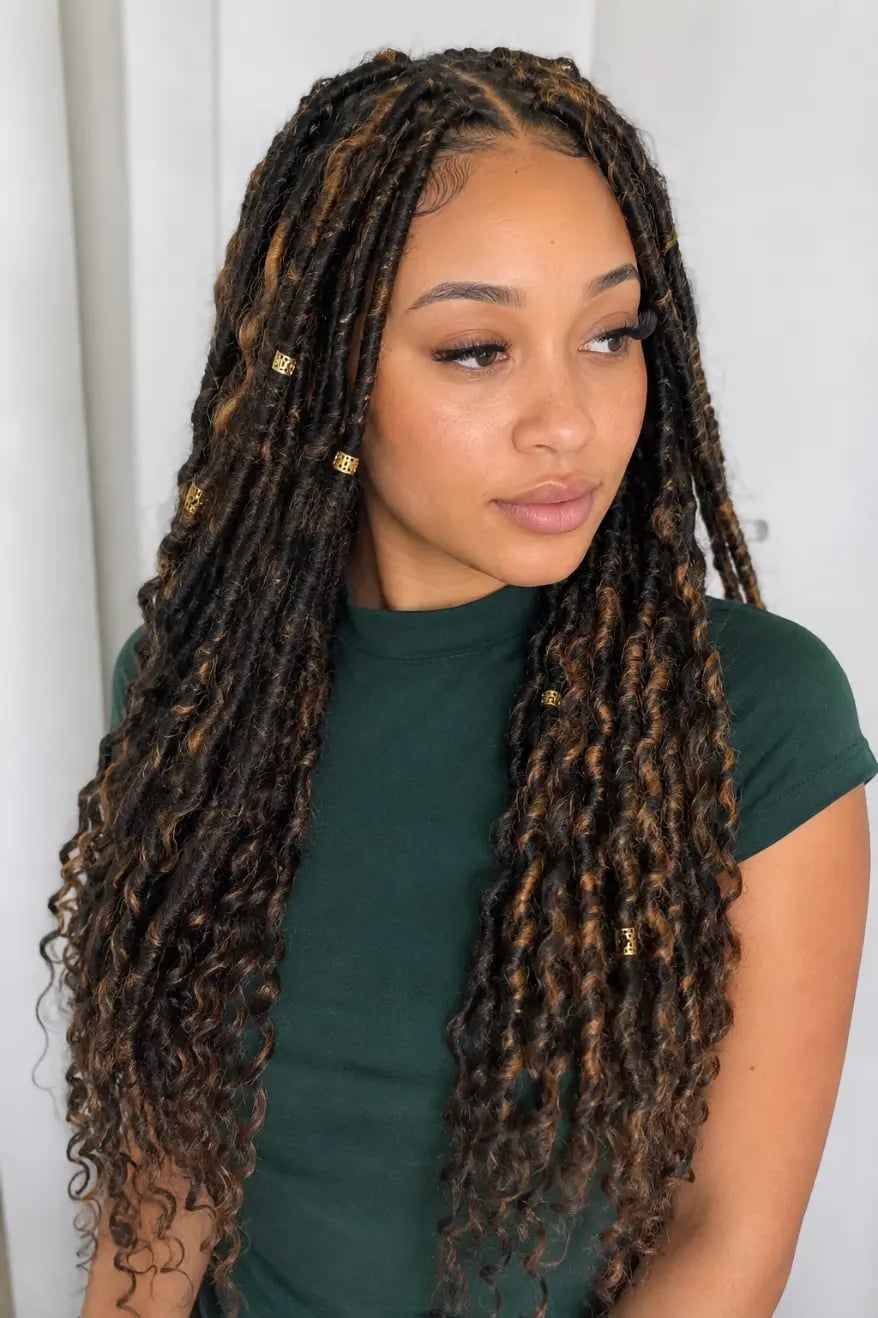
Dark brown alone is a solid base. Add honey highlights and the locs pick up warm light every time they shift. The gold bead accents sit at the midpoint of each strand, not at the ends, which pulls the eye up and keeps the length from reading too heavy. Curled ends finish the look, loose enough to swing, tight enough to hold the shape overnight. The beads are a one-time add, but the curled ends need a twist reset every three or four days.
Space buns with loose dark brown locs
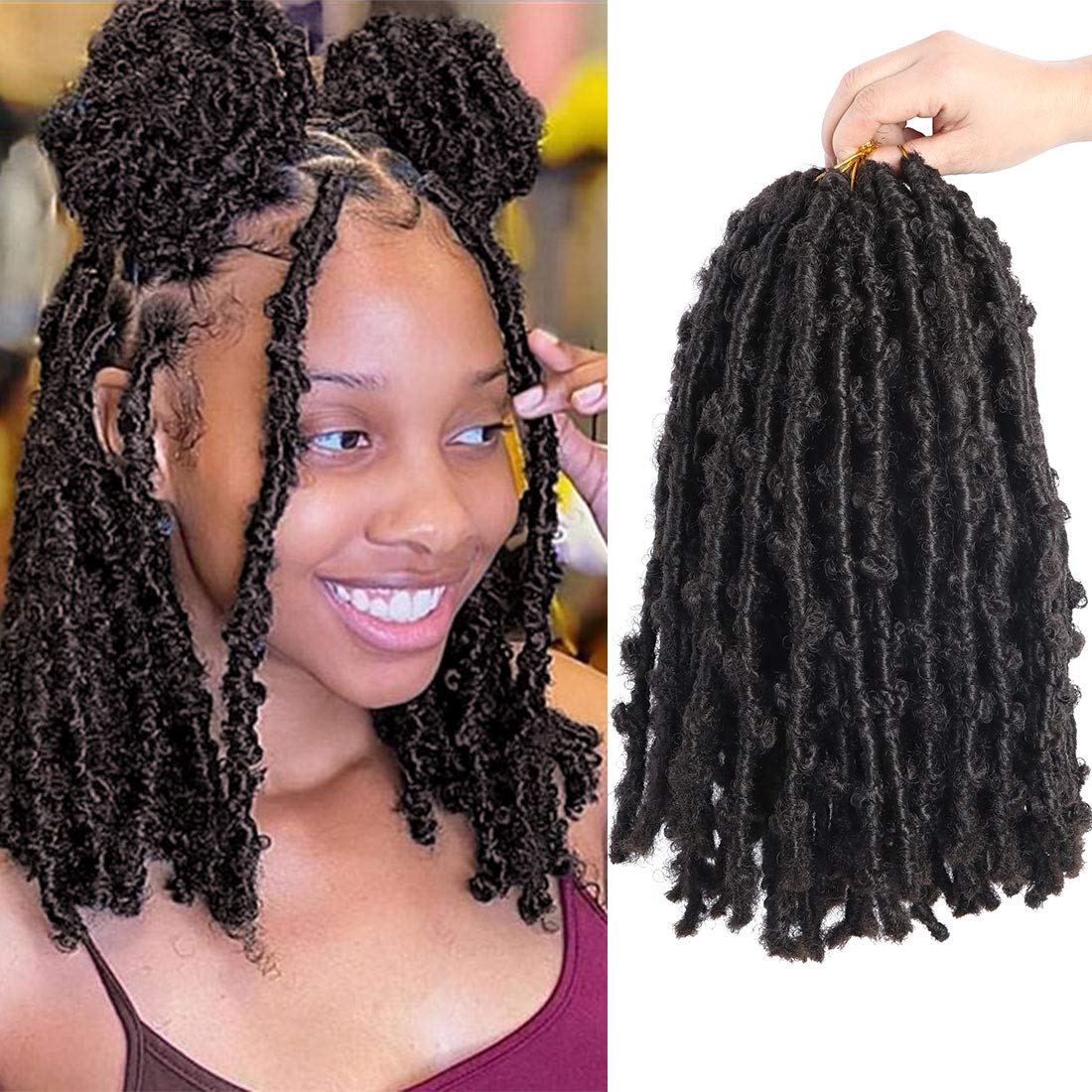
How do you wear a protective style and still show off the texture? Two space buns. The dark brown locs are pulled into voluminous sections on top, with the rest falling loose in a wavy, textured finish. The center part keeps the front clean while the buns do the heavy visual work. You can build this at home if your install is secure: gather the top half, twist each section into a bun, pin the ends underneath. Book it as: dark brown butterfly locs, space bun style. Avoid it if you prefer to wear your locs down or in a single bun. This one needs the double lift.
Wavy black butterfly locs with a side part
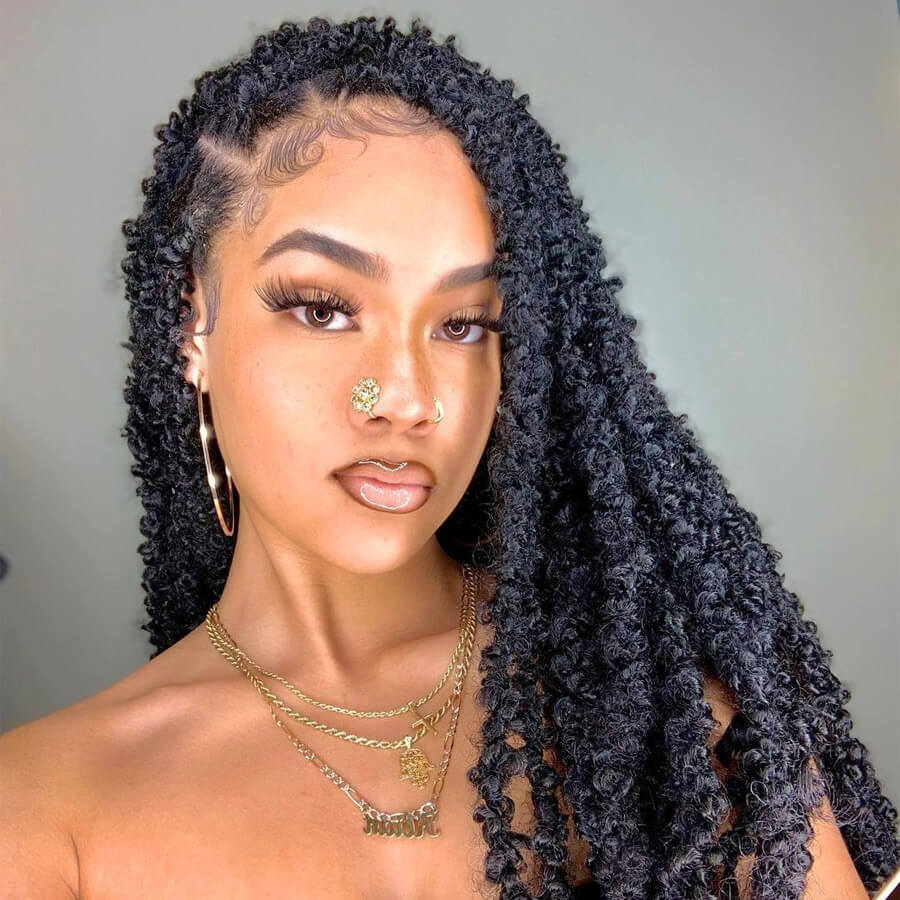
A side part changes everything about how a deep black set of butterfly locs reads. The asymmetry breaks up what could be a solid wall of dark texture, and the wavy, thick strands land with more rhythm than a center-parted version would carry. You need enough density for the parting to hold its line, and the locs themselves should be long enough to show the wave pattern from root to tip.
The catch: a side part this defined needs a sharp edge at the scalp, not a soft one. Request from your stylist: black butterfly locs with a side part. The hold is solid for the first week, then the part softens slightly. A light oil along the part line every few days keeps the shine even and the texture from going dusty.
Salon style dark brown and blonde locs
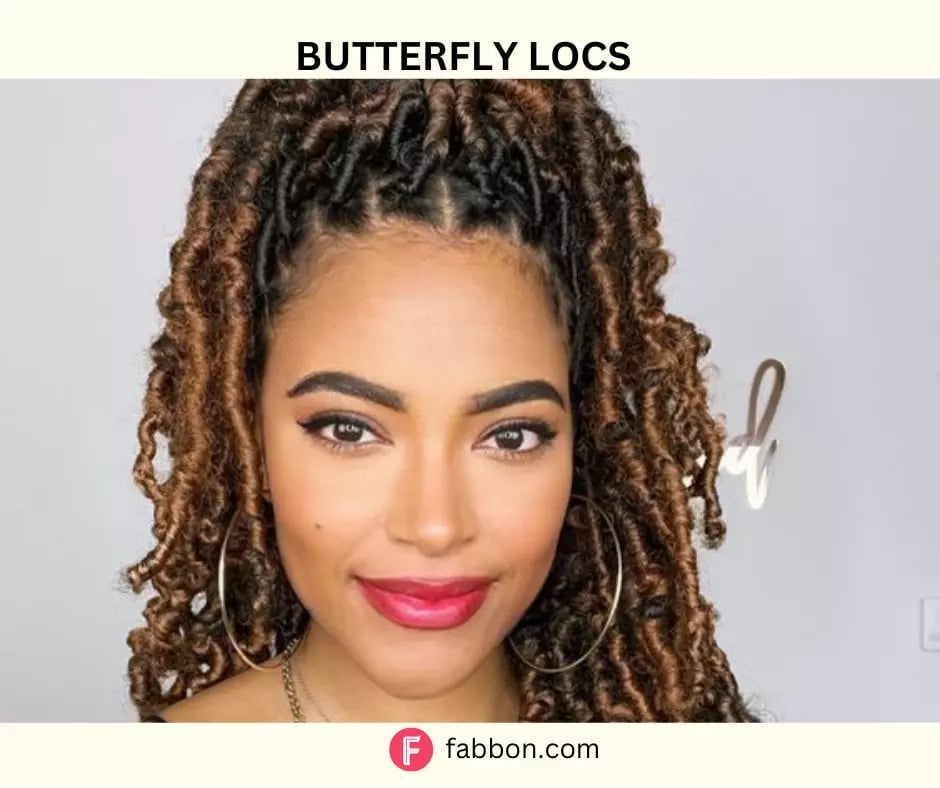
A dark brown base with honey blonde highlights looks rich and dimensional, but the mistake people make is treating the blonde as an accent. It is not. The honey tone needs to run through enough locs to look intentional, not as a few strands that caught the color. This version uses a middle part and loose, wavy, coily locs that pile into real volume.
The drawback: the blonde will pull warmer over time. Six weeks in, the honey shifts toward brass if the base is dark brown. The hold on the curl pattern is strong, but the color refresh is the real timeline to watch.
Dark brown butterfly locs with lighter highlights
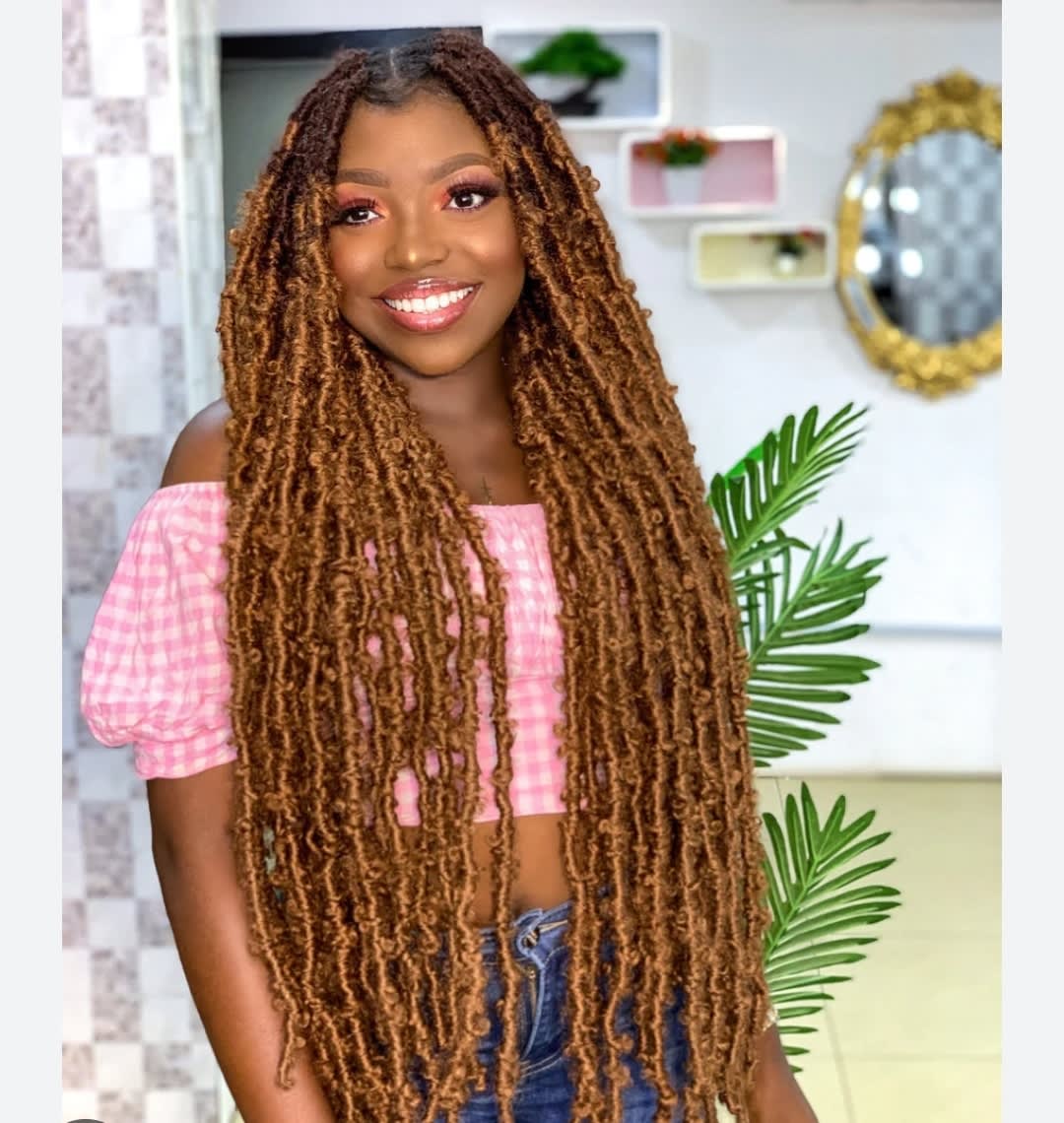
Lighter brown highlights on a dark brown base create a quiet contrast that shows depth rather than a statement. The loose, wavy, coily strands with thick texture catch the lighter pieces at different angles, so the color shifts as you move. A centered part keeps the symmetry clean, which matters because the highlights are subtle enough that a crooked part would muddy the effect. The hold depends on how well the locs are separated at installation. Tightly packed locs blur the highlights; spaced ones let each lighter strand show. This look is for a solid dark shade with variation.
Medium brown butterfly locs with defined curls
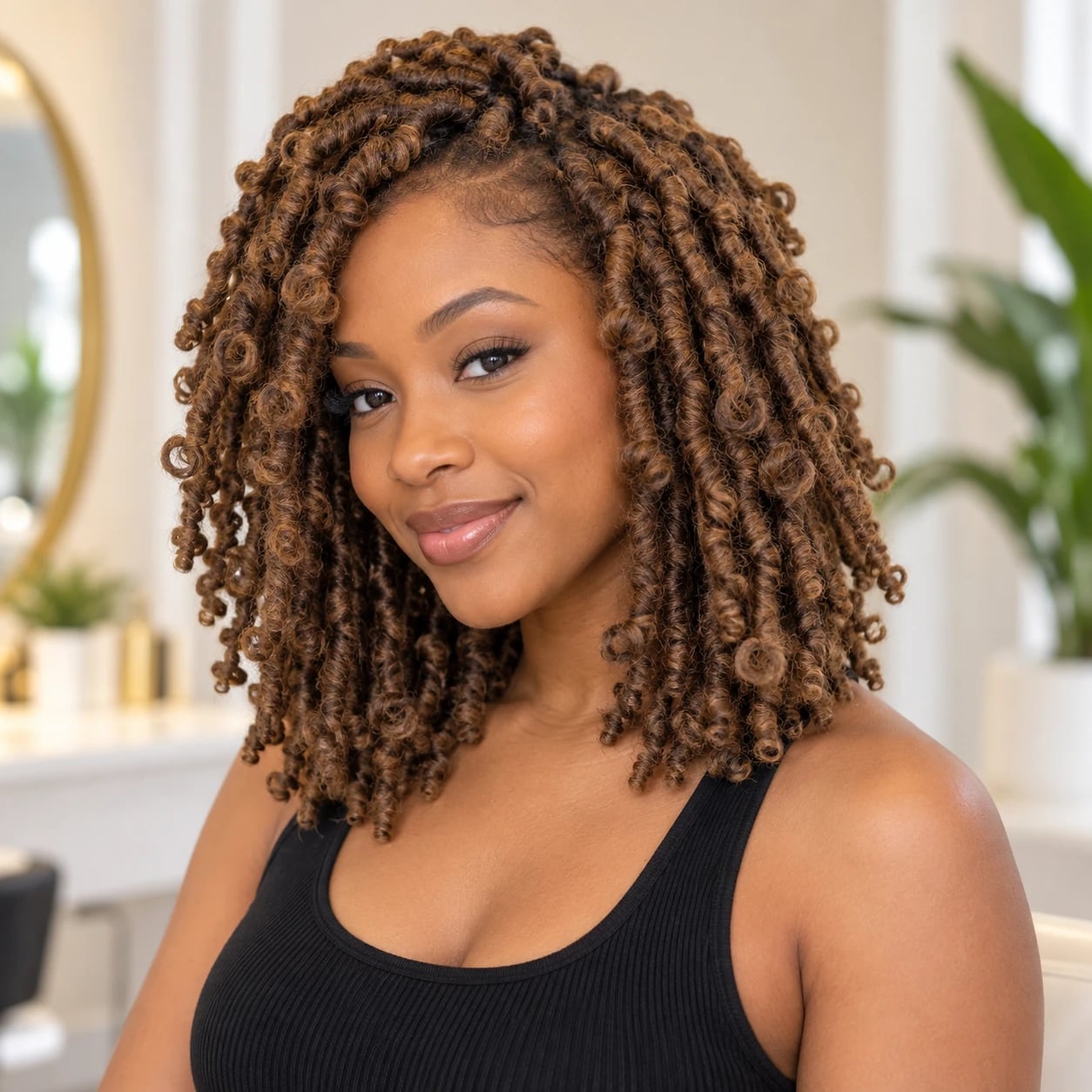
Defined spiral curls on a medium brown base with subtle highlights give butterfly locs a texture that stays coiled from installation onward. The side part pulls the eye across the curl pattern, and the thick, wavy strands hold the shape because the spiral is set into the loc during installation, not added after. That is not a style that loosens into a wave by day three. The subtle highlights keep the medium brown from flattening into a single tone. It works best for those who want tight, lasting definition. The definition is the point, and the point holds.
Defined locs offer a salon-leaning approach
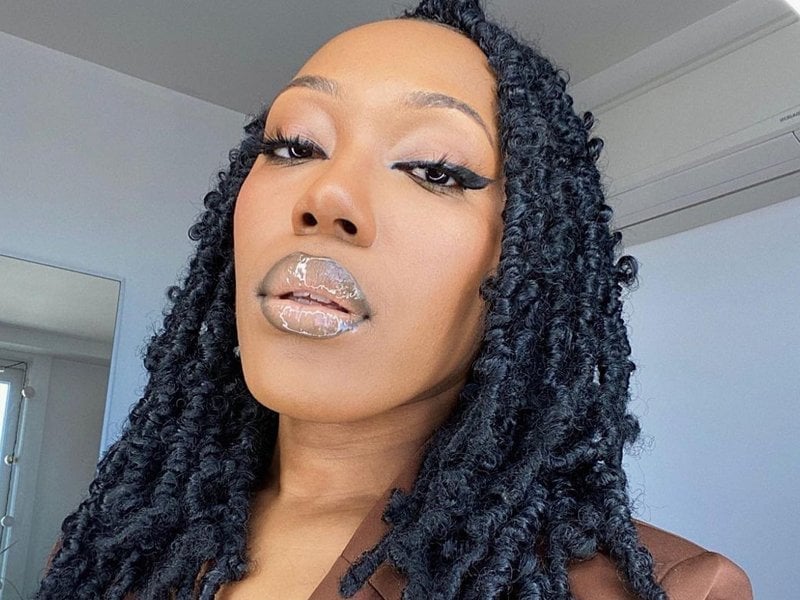
Defined butterfly locs in deep black with a middle parting rely on clean formation. Each loc is separated and shaped so the wavy, coily, thick texture looks uniform, not chaotic. The result is a loose style that still looks intentional, which is harder to pull off than it sounds. A center part this precise requires the locs to fall evenly on both sides, and the definition at the ends keeps the silhouette from turning into a single mass. The hold is good, but the definition softens around week three. A quick separate-and-fluff at that point restores the line without a full reset.
Black butterfly locs with copper highlights
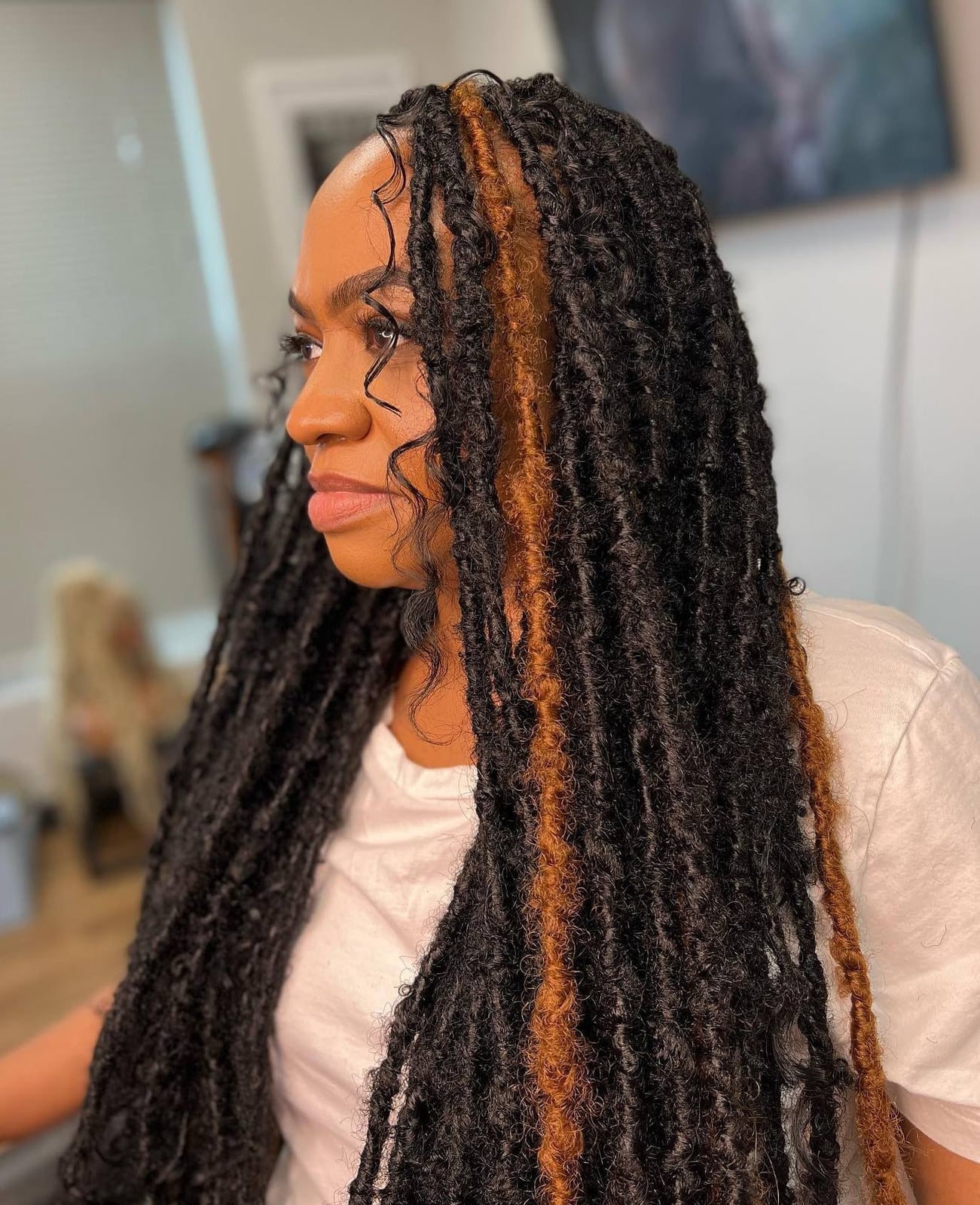
Copper against black creates a strong contrast. The center part keeps the face-framing tendrils balanced on both sides, so the color lands where light hits first. Thick, wavy locs carry the copper highlights woven through, making each twist visible rather than swallowed by the density. You need enough hair to hold the contrast; fine strands risk the copper disappearing into the black. It works best for those who want a two tone look with visible dimension.
Request from your stylist: black butterfly locs with copper highlights. The shade stays vivid about six weeks before the copper starts to soften. A color-safe shampoo keeps the red tones from drifting too warm. The tendrils tuck behind the ear or fall forward depending on the hour, no pin needed either way.
Thick wavy black butterfly locs with a side part and air dried
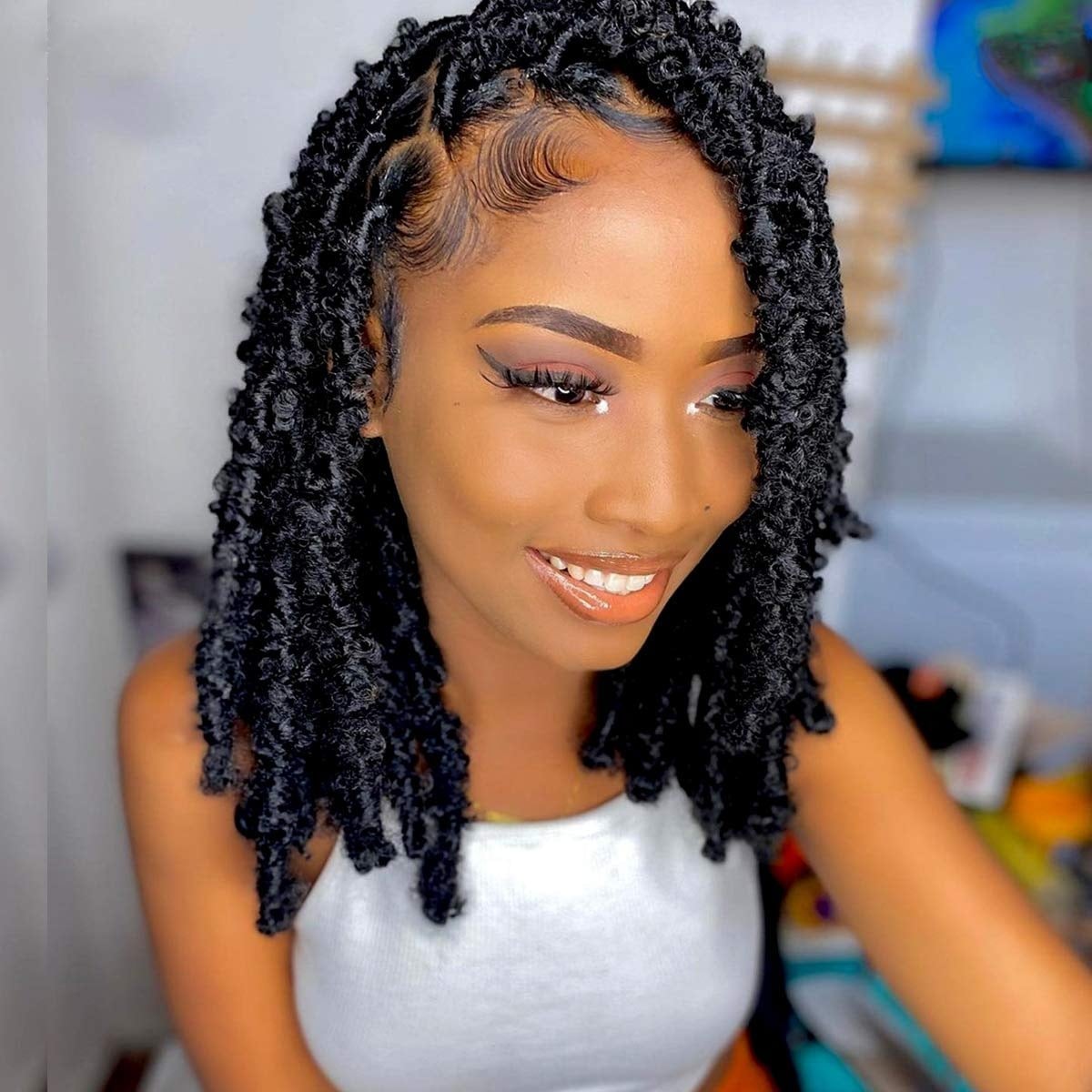
A side part changes the whole weight distribution. The thicker side lands forward, the thinner side lets the scalp breathe. These locs are air dried, which means the wave pattern sets naturally, no heat, no extra volume that falls flat by noon. The thick, wavy texture holds its shape because it was never forced into one. Not for you if you prefer a middle part or a sleeker finish that requires daily smoothing.
Volume like this comes from the install, not the styling. A light mousse on the roots after washing encourages the wave to stay visible without crunch. The hold lasts through a workday and into the evening. Re-curl a few face-framing locs with your finger every morning. Takes under a minute.
Dark brown butterfly locs with loose, wavy ends
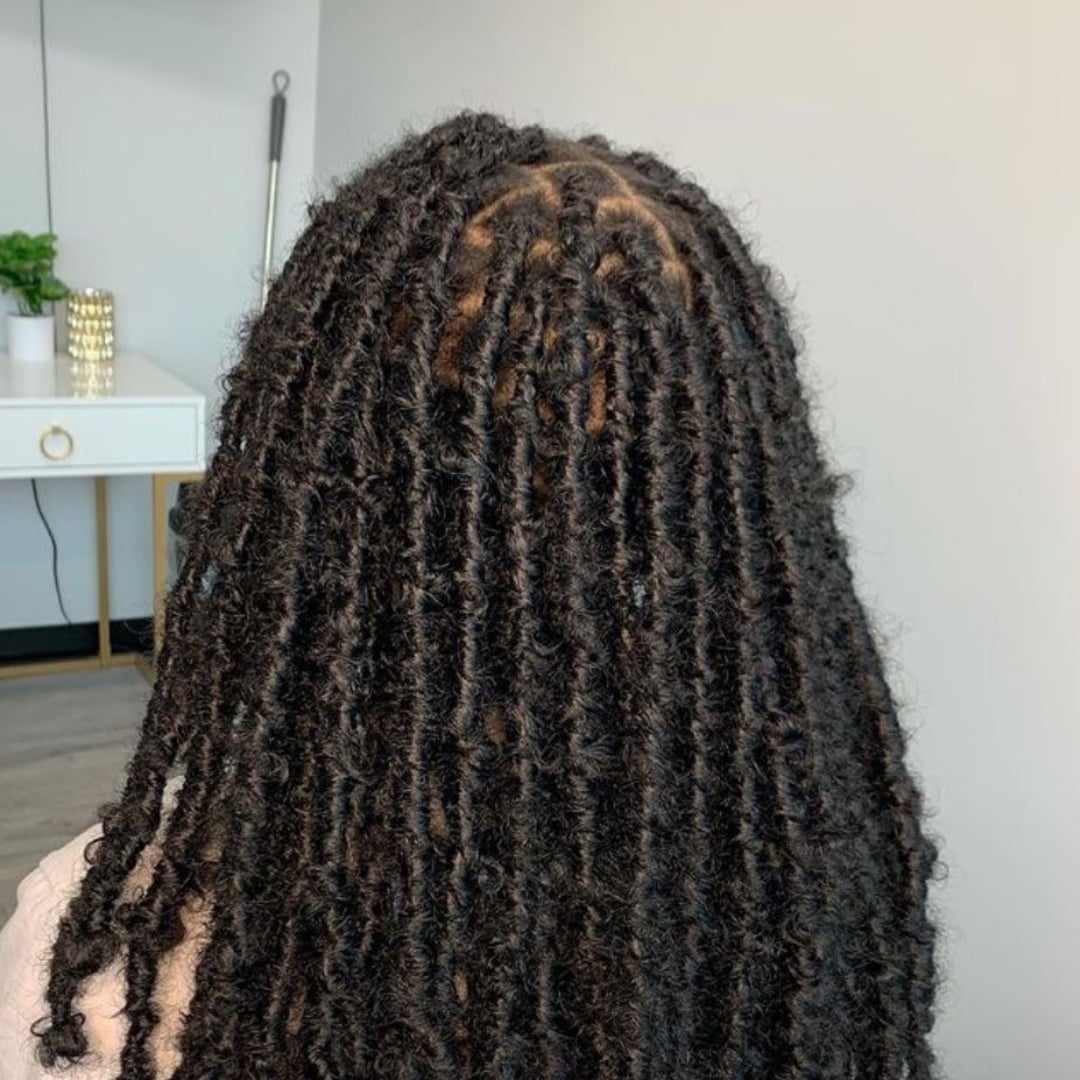
The centered parting runs straight, but the ends refuse to cooperate. That is the point. Dark brown locs that start thick at the root and loosen into wavy ends at the bottom create a silhouette that moves differently than a uniform twist. The texture looks undone, not unfinished. Pass when you want a consistent look from root to tip or a color that pops against dark brown.
Gently scrunch the loose ends after washing to keep the wave pattern alive. Heavy creams flatten the movement; a light leave-in spray is enough. The ends hold their shape for about four weeks before they need a refresh. A quick finger-comb in the morning resets them without water.
Ombre locs offer a salon finish
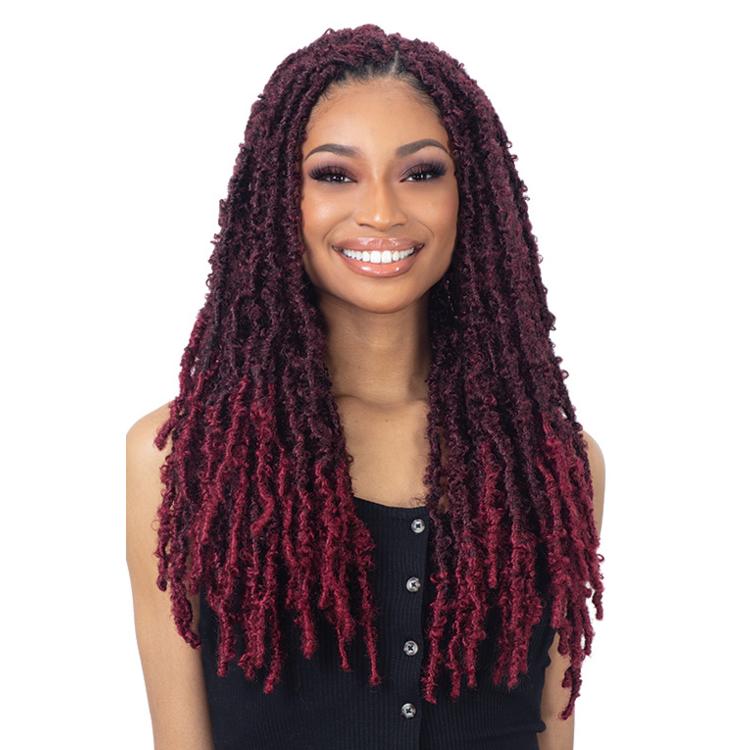
Two tones require a transition that looks planned, not accidental. Dark red at the root shifting to burgundy at the ends gives the locs a gradient that deepens as the hair falls. The center part lets the color change read from both sides equally. Wavy and coily textures catch the burgundy differently than straight hair would, the lighter shade settles into the curves. Not the choice for anyone who wants a solid color or a subtle shift that barely registers.
Request from your colorist: dark red to burgundy ombre butterfly locs. The ombre needs a salon hand to place the lighter color where it looks depth, not faded ends. Color-safe shampoo and cool water preserve the red tones. The transition stays crisp for about eight weeks before the burgundy starts to meld into the root. Plan a toning appointment at that mark.
Long, loose black butterfly locs
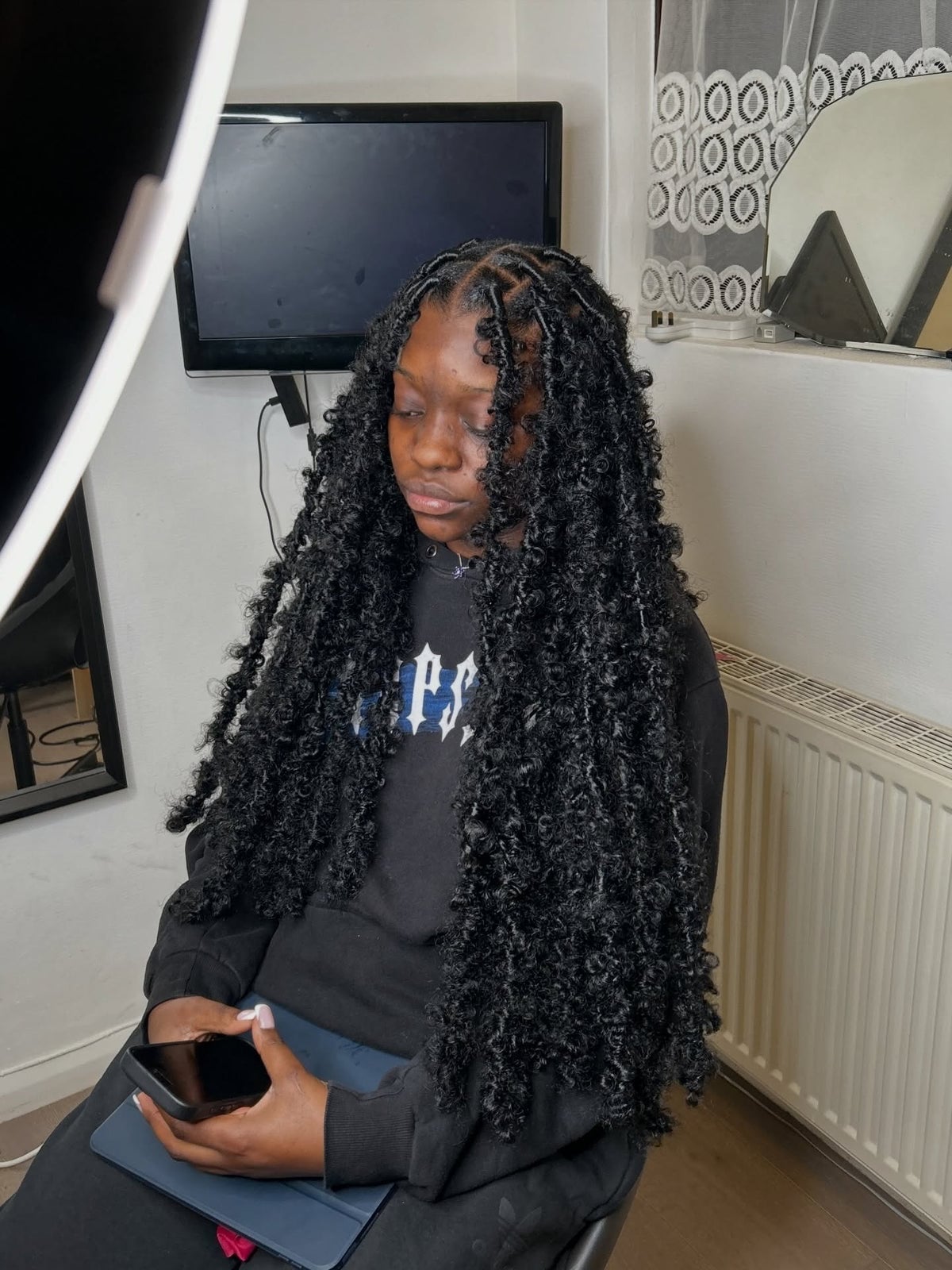
Deep black reads differently at length. Loose locs that fall past the shoulders carry weight that shorter versions cannot match. The center part keeps the volume split evenly, so neither side overpowers the other. Thick, wavy, coily texture gives each loc enough body to hold its shape without collapsing into the next one. Avoid it if you prefer a shorter style that requires less detangling or a color that breaks up the black.
Long locs tangle at the ends when they rub against clothing. Finger-detangle every few days before bed. Sleep with a satin scarf to reduce friction. The hold is strong. The style lasts weeks without needing a re-wrap. A quick shake in the morning resets the fall. No brush required.
Textured blonde butterfly locs updo
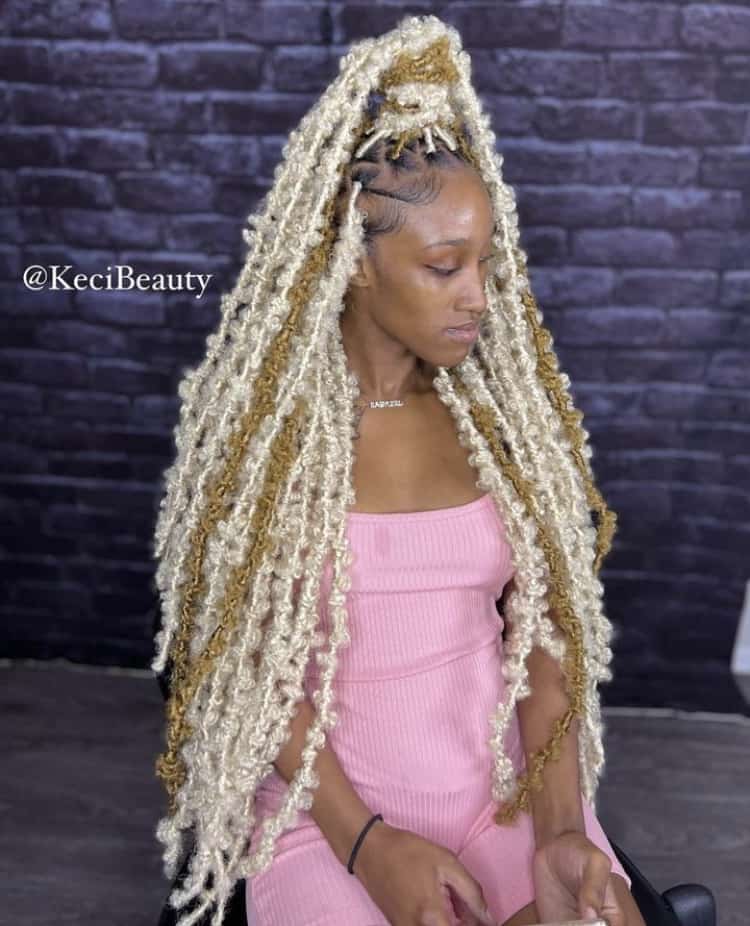
Start with the base. You need thick, wavy hair for an updo with loose strands to hold its shape. A middle part keeps the front framing even. That is not a quick morning style: the braiding takes time. Blonde with honey highlights gives the texture room to show. The updo lasts the day when secured well. Gently arrange the loose strands around your face after pinning. Request from your stylist: blonde butterfly locs updo with loose strands. Avoid it if you prefer a darker color or wearing your locs down. The wavy texture keeps the style from looking stiff.
Long, wavy dark brown butterfly locs
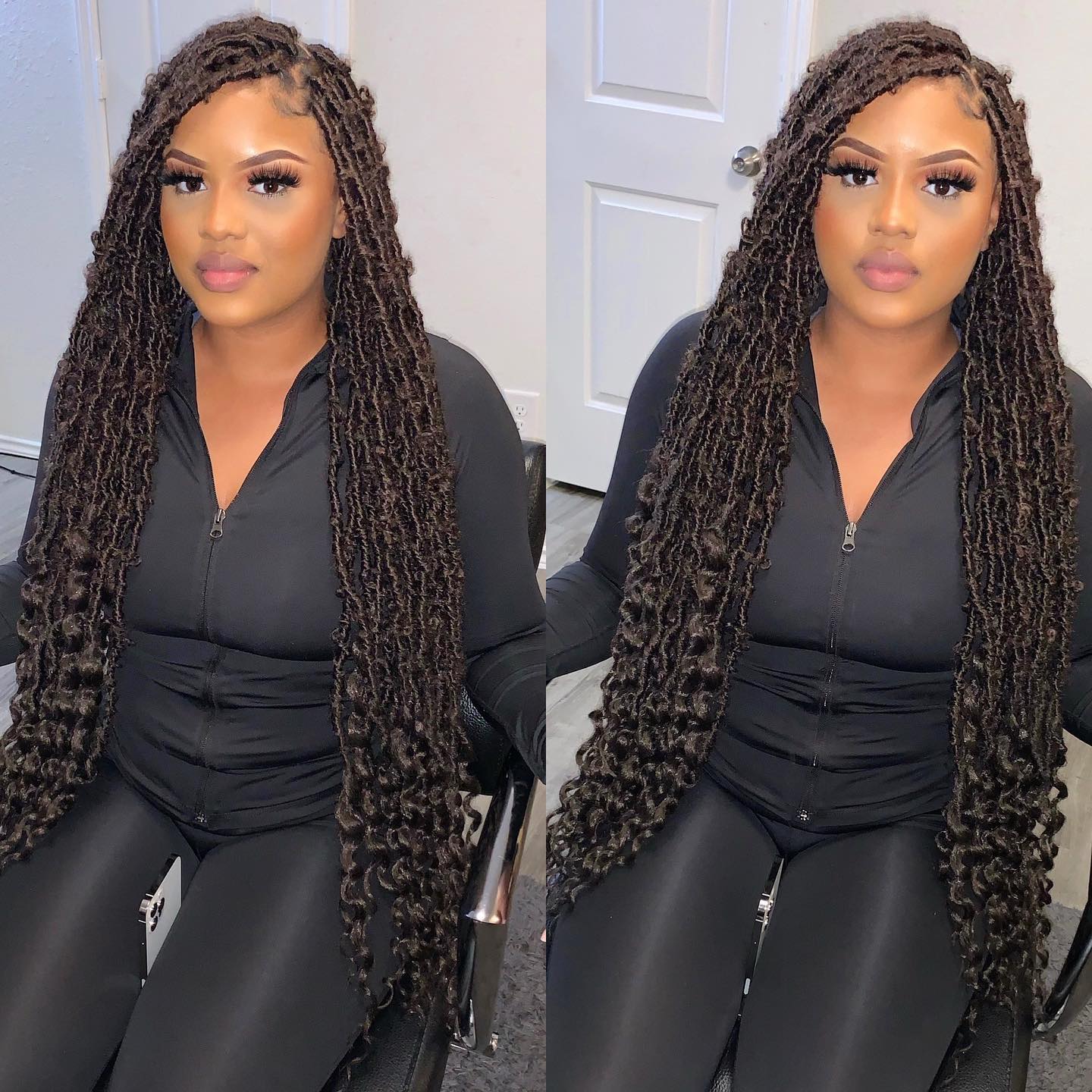
Consider a center part before you book this one. A side part changes how the volume falls. Long, wavy dark brown locs suit thick hair that holds a wave. The texture prevents a flat look. That is a straightforward look: no color work, no beads. The wavy pattern needs a light hand when refreshing. Scrunch the locs when damp to maintain the shape. A leave-in conditioner keeps the hair soft. Not for you if you want a middle part or a lighter color. The hold depends on how well the wave is set.
Dark brown is a reliable base. It does not show new growth the way a lighter shade would. The side part adds asymmetry. That is an everyday style that works for the office. The wavy texture adds deliberate movement without extra effort.
Reddish brown butterfly locs with beads and charms
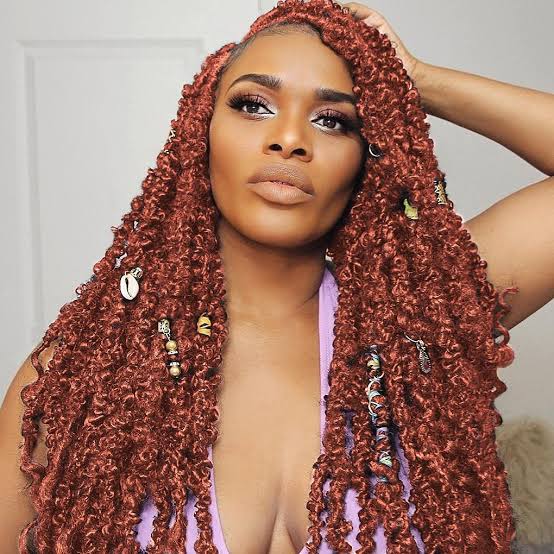
Decorative beads and charms add weight. Long reddish brown locs with a thick, coily texture hold them well. The center part keeps the face framing even. Secure each bead and charm tightly to prevent slipping. Gently clean the scalp and the locs around the embellishments. That is not a style you refresh in five minutes. The coily and wavy texture gives the beads a place to sit. The reddish brown shade is rich without being loud.
Check the attachments weekly. A loose bead pulls on the loc. The hold of the style depends on the installation. Request from your stylist: reddish brown butterfly locs with beads and charms.
Vibrant red butterfly locs with loose waves
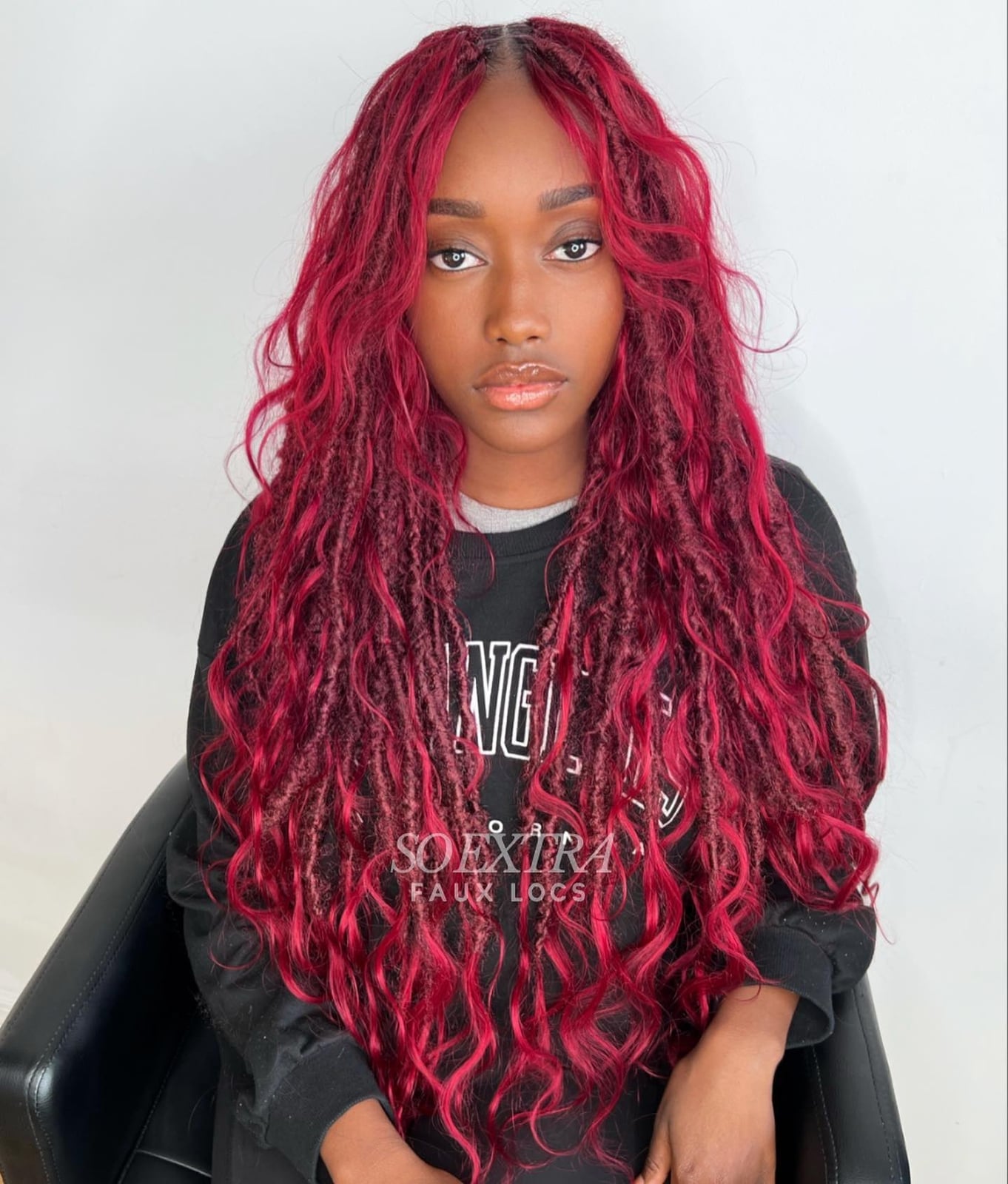
Bold color needs a solid base. Vibrant red with darker undertones works best on thick, wavy hair. The center part lets the color show evenly. Loose wavy curls keep the look from feeling heavy. A coily texture adds volume without extra product. That is a statement look. The color holds better when you use a color-safe shampoo. Gently scrunch the locs to refresh the wave shape. This shade is best for those who want a vibrant, intense color. The wave is natural, not set with heat.
Black and blonde butterfly locs with contrast
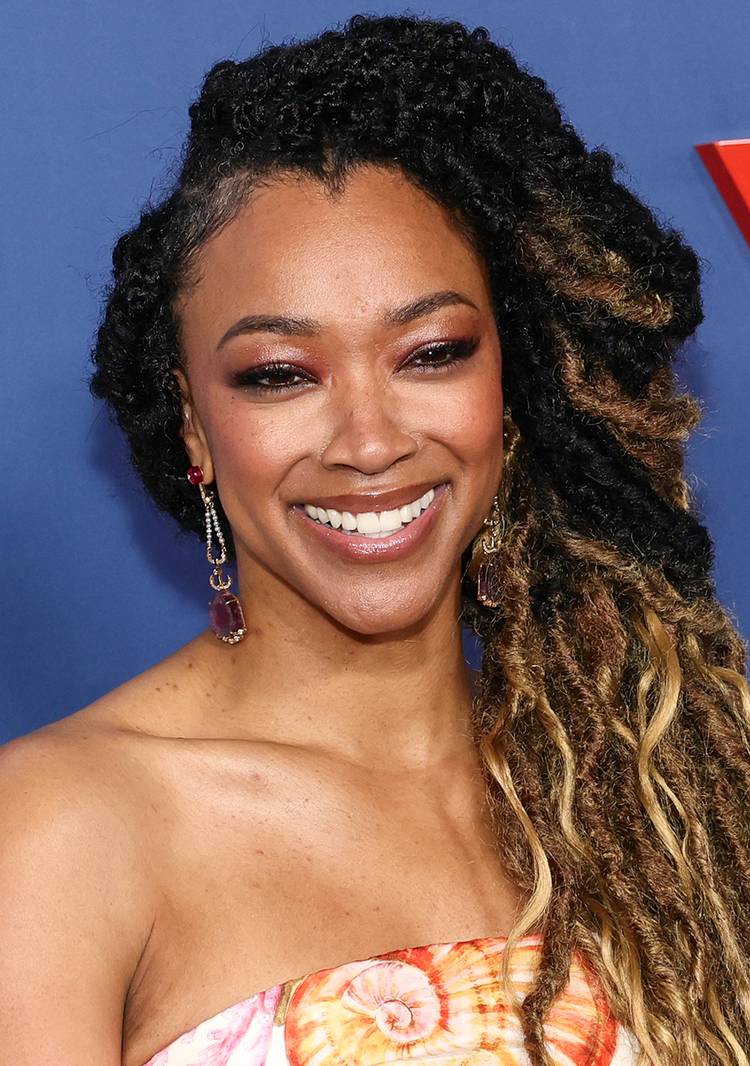
Two tones mean two sets of care rules. Black roots transitioning into blonde highlights create a dramatic shift. The center part puts the contrast front and center. Thick, wavy locs hold the color transition well. The drawback: the blonde section needs a color-safe shampoo, while the roots do not. Avoid over-conditioning the dark roots to keep the contrast sharp. That is not a wash-and-go color. The wavy texture helps blend the two shades. A solid color or a more subtle blend is an alternative. Request from your stylist: black to blonde butterfly locs. The style is held by the locs themselves.
The contrast fades if you use the wrong products. Use a shampoo that works for both dark and blonde tones. The wave pattern stays consistent from root to end.
Side part offers striking front framing
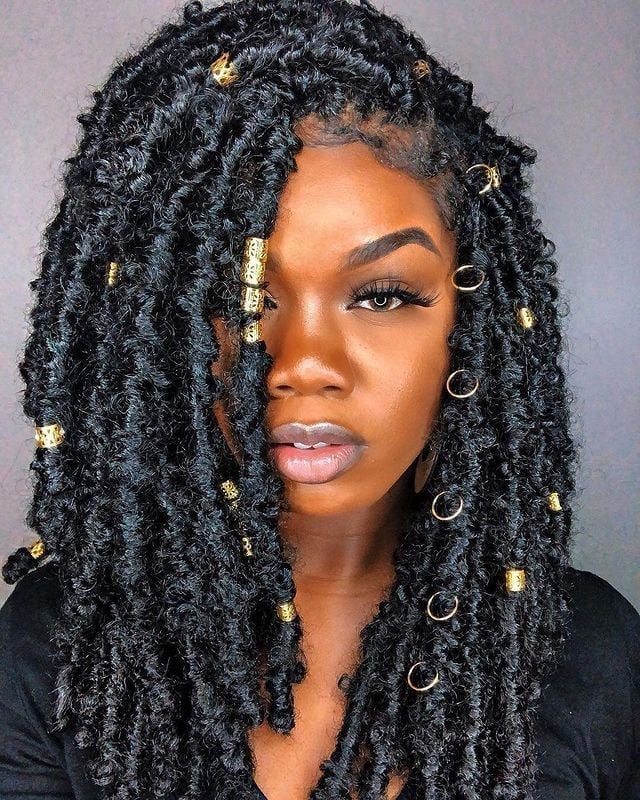
Gold hair cuffs and rings woven through deep black locs create an immediate focal point. The side part angles the weight, so the thicker side frames your face while the thinner side stays tucked behind an ear. Wavy, thick texture holds the metal accents without slipping, which means you can place them yourself at home. For a minimalist style where the locs do all the work, the cuffs demand attention.
The placement matters more than the number; distribute them evenly so the balance looks deliberate, not random. A gentle scalp cleanse every few weeks keeps the base healthy without disturbing the accessories.
Coiled ends are best achieved in salon
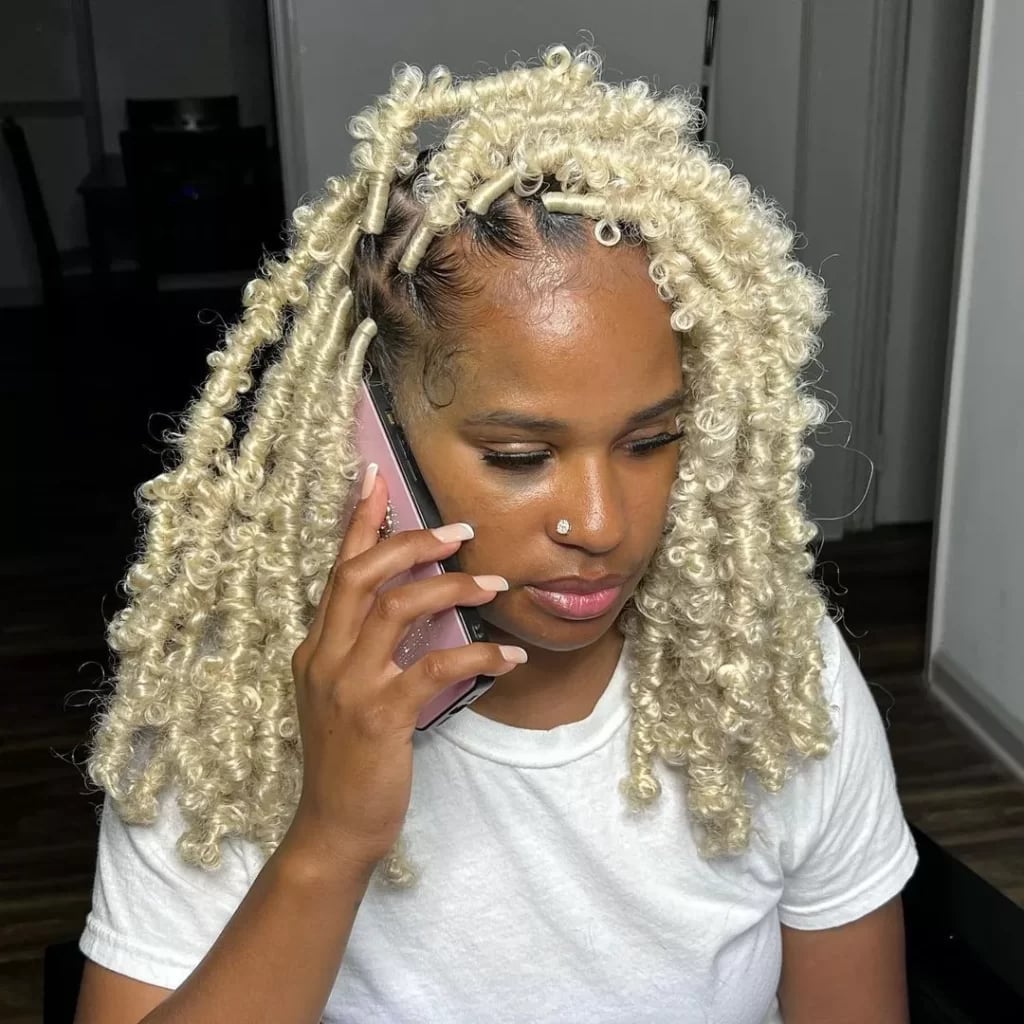
Platinum blonde butterfly locs with tightly coiled ends require a steady hand and a clear appointment slot. The wavy, coily, thick texture is built from the root down, but the end curl is a separate step. Each loc gets twisted and set while damp. A center part keeps the volume even on both sides. Avoid it if you prefer a darker color or a smoother finish at the tips; the coiled end is the whole point here.
Ombre butterfly locs from black to honey blonde
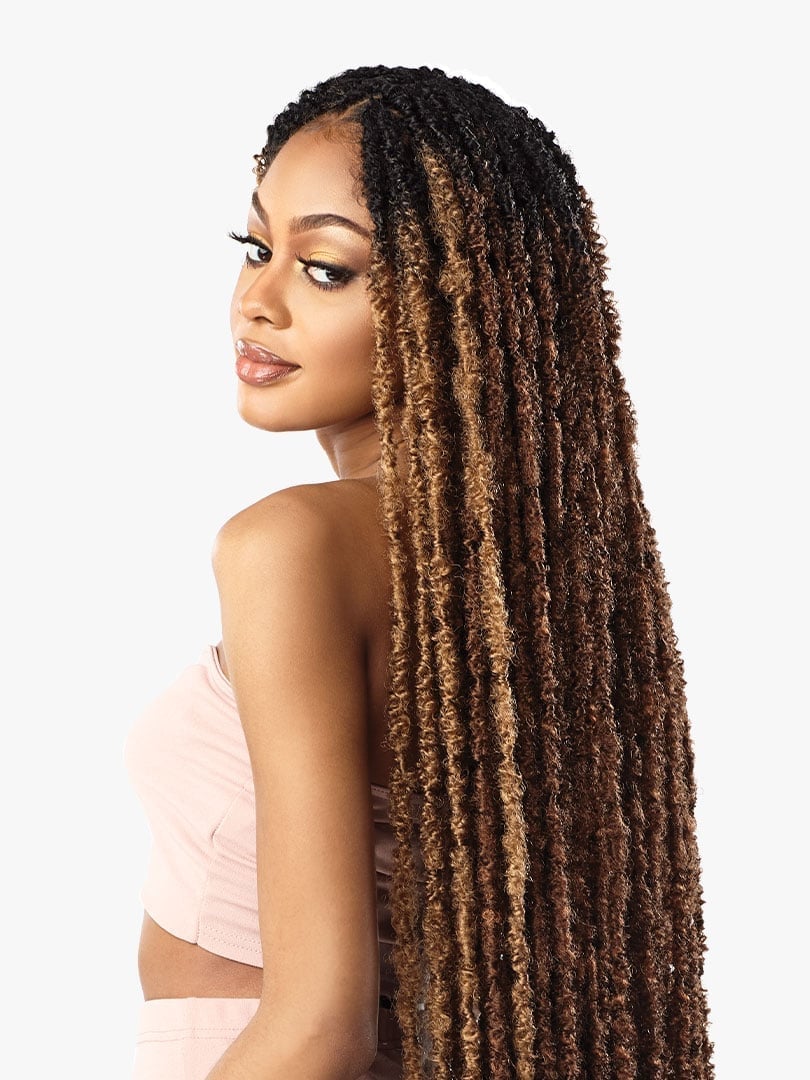
Two tones make the upkeep obvious: the black root stays rich, but the honey blonde ends need a color-safe routine to keep from dulling. Thick, wavy, coily texture gives the ombre a natural gradient because the color catches the light differently on each loc. A center part splits the volume cleanly, so the transition looks intentional.
Wash frequency matters here. Over-washing fades the honey, so stretch to every ten days with a dry shampoo refresh at the scalp. Request from your stylist: black to honey blonde ombre butterfly locs. They will blend the transition zone roughly six inches down so no harsh line appears.
Deep black locs have playful curly ends
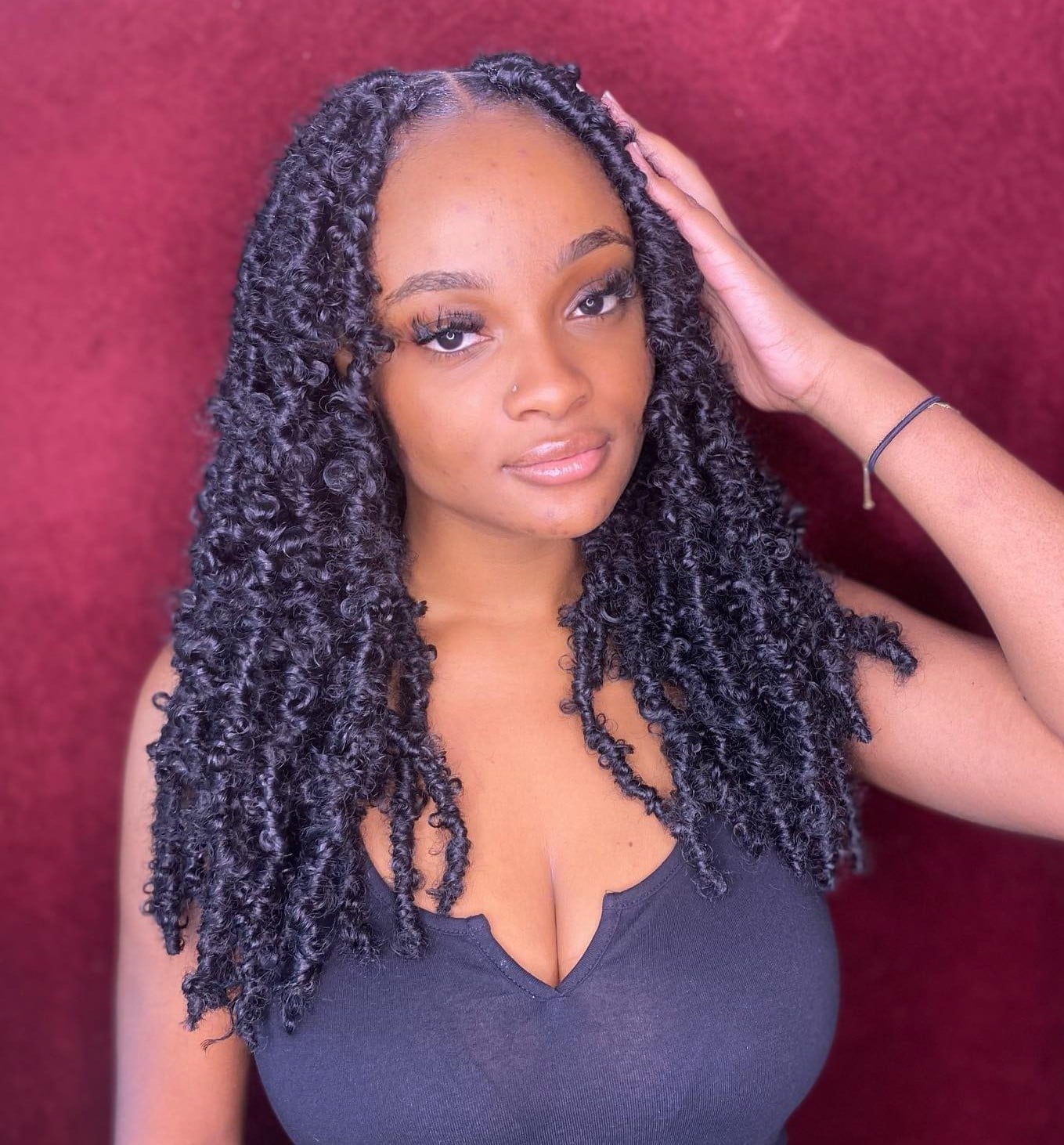
Curly ends on deep black locs add a texture shift that keeps the style from feeling heavy. The center part opens the face, while the loose, wavy body of each loc tapers into a defined curl at the tip. Thick hair carries the weight well, so the ends bounce instead of droop. A uniform finish from root to tip is not part of this style.
The curly end is built during installation. Each loc gets a curl set at the final inch, which holds for the style’s duration. No heat needed after that; just a light serum on the ends to keep them defined.
Final Thoughts
Pick the butterfly locs style by your morning routine and your tolerance for maintenance.
- Ten minutes or less in the morning: loose, dark brown locs with no accessories.
- Want maximum wear time: a salon-leaning ombre set with defined ends.
- Thin hair that needs volume: thick, wavy locs with a side part and textured strands.
- Hate frizz by day three: install with curled or coiled ends and sleep in a satin wrap.
Choose the one that stays out of your way and still gets noticed.