34 Chic Braided Ponytail Hairstyles 2027 for an Upgraded Look
Chic Braided Ponytail 2027 hairstyles featuring face-framing details, ash blonde shades, and beaded accents. See 34 looks for an elegant finish.

You are scrolling through saved pins, bookmarking the same high ponytail with cornrows and gold cuffs for the third time this week. The braided ponytail keeps showing up because it holds for days, photographs from every angle, and turns a five-minute morning into a finished look that looks deliberate.
34 variations of the Sharp Braided Ponytail 2027 fill so many saved boards for a reason: the range runs from intricate salon cornrows to a bubble pony you can do yourself in ten minutes. Whether your hair is straight, coily, wavy or fine, there is a version here that stays put past lunch.
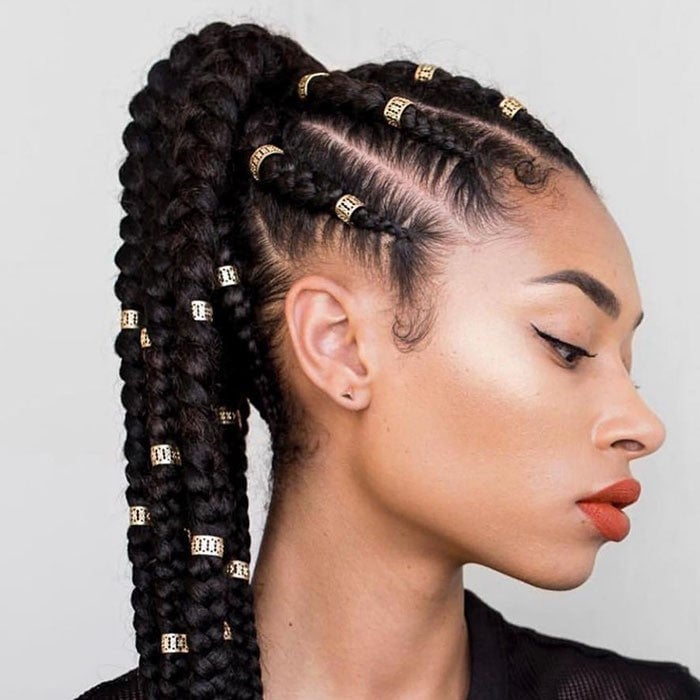
High braided ponytail with gold cuffs and multiple cornrows
Multiple cornrows sweep back into a single high ponytail, each braid catching light through a gold cuff. Thick coily texture holds the shape without a single flyaway. The slicked-back parting keeps the focus on the metal details spaced evenly down the length. Suits oval and heart-shaped faces best. The catch: very fine hair lacks the density to keep cornrows snug for more than a few days. Ask your stylist for a high braided ponytail with multiple cornrows and gold cuffs. Styling time runs about two hours in the chair, and the cuffs stay put with a firm gel seal.
Braided ponytail with face-framing cornrows and curly extensions
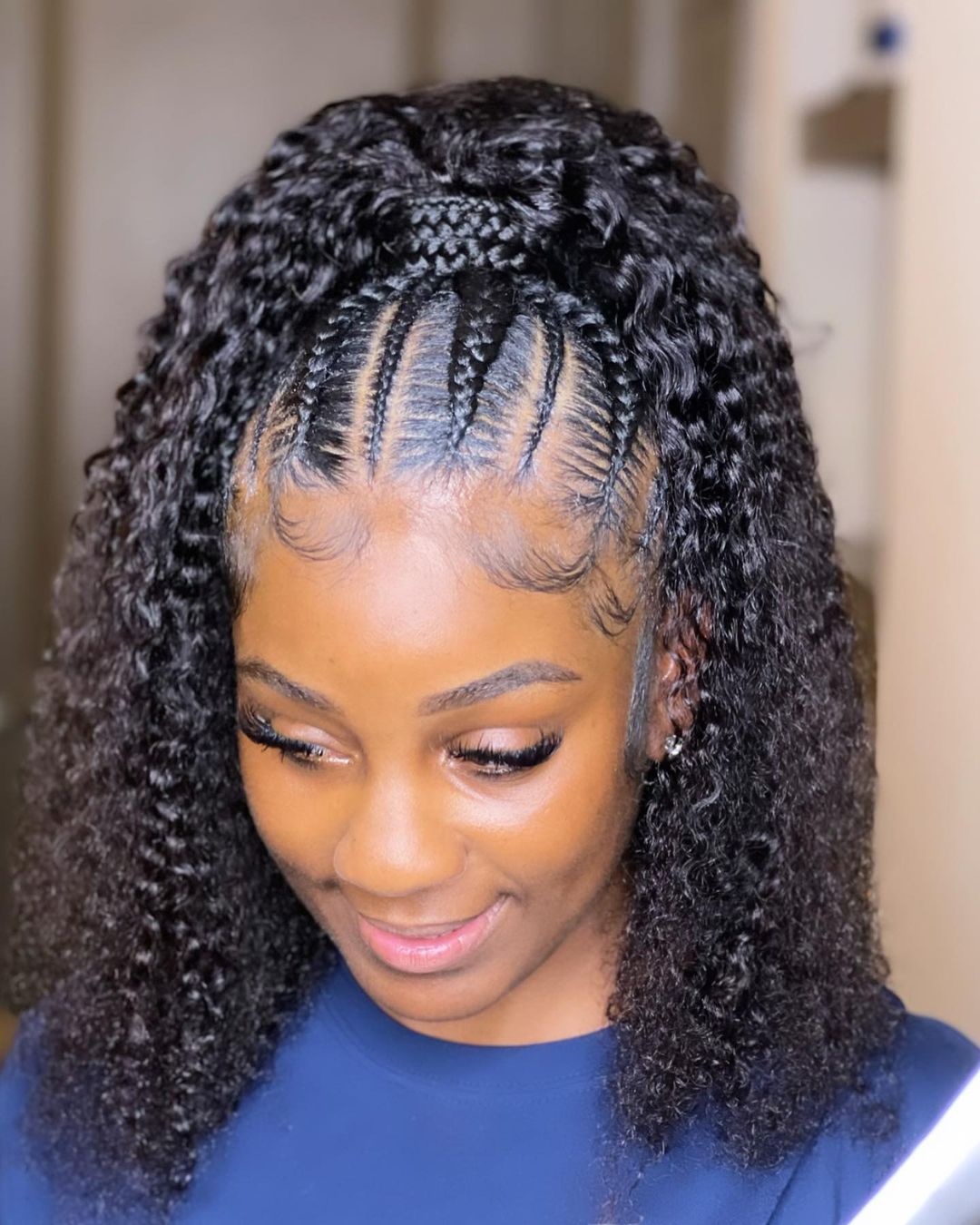
Want the braid detail without losing volume at the ends? Cornrows trace from a middle part along the hairline, then feed into a voluminous ponytail built from curly extensions. The contrast between the sleek scalp work and the loose, bouncy length is the whole point. Round and long faces get the most from this balance of flat and full. Pass when your natural texture is fine and extensions would feel heavy. A light serum keeps the curls defined between wears.
Gold cuffs and beads on a high voluminous ponytail
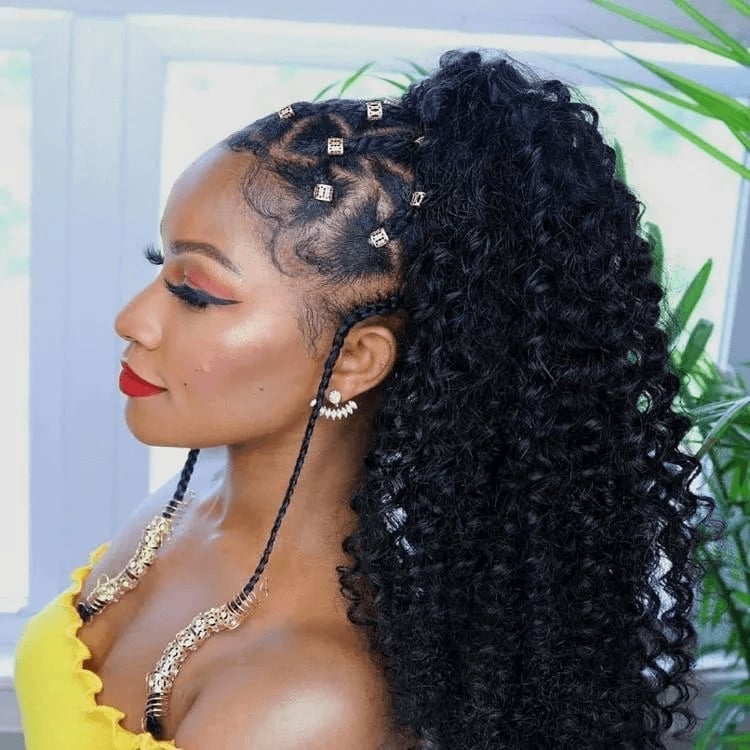
Versus the plain ponytail, this one adds weight. Gold cuffs and beads sit on intricate braids that rise from a slicked-back parting into a high, curly ponytail. Layers in the cut let the natural curl stack without looking blocky. Suits square and oval faces. Skip it if ornate accessories feel like too much for your daily routine. Ask your stylist for a high braided ponytail with gold cuffs and beads. Secure the braids firmly so the metal pieces don’t shift during the day.
Striking contrast with ash blonde cornrows and wavy texture
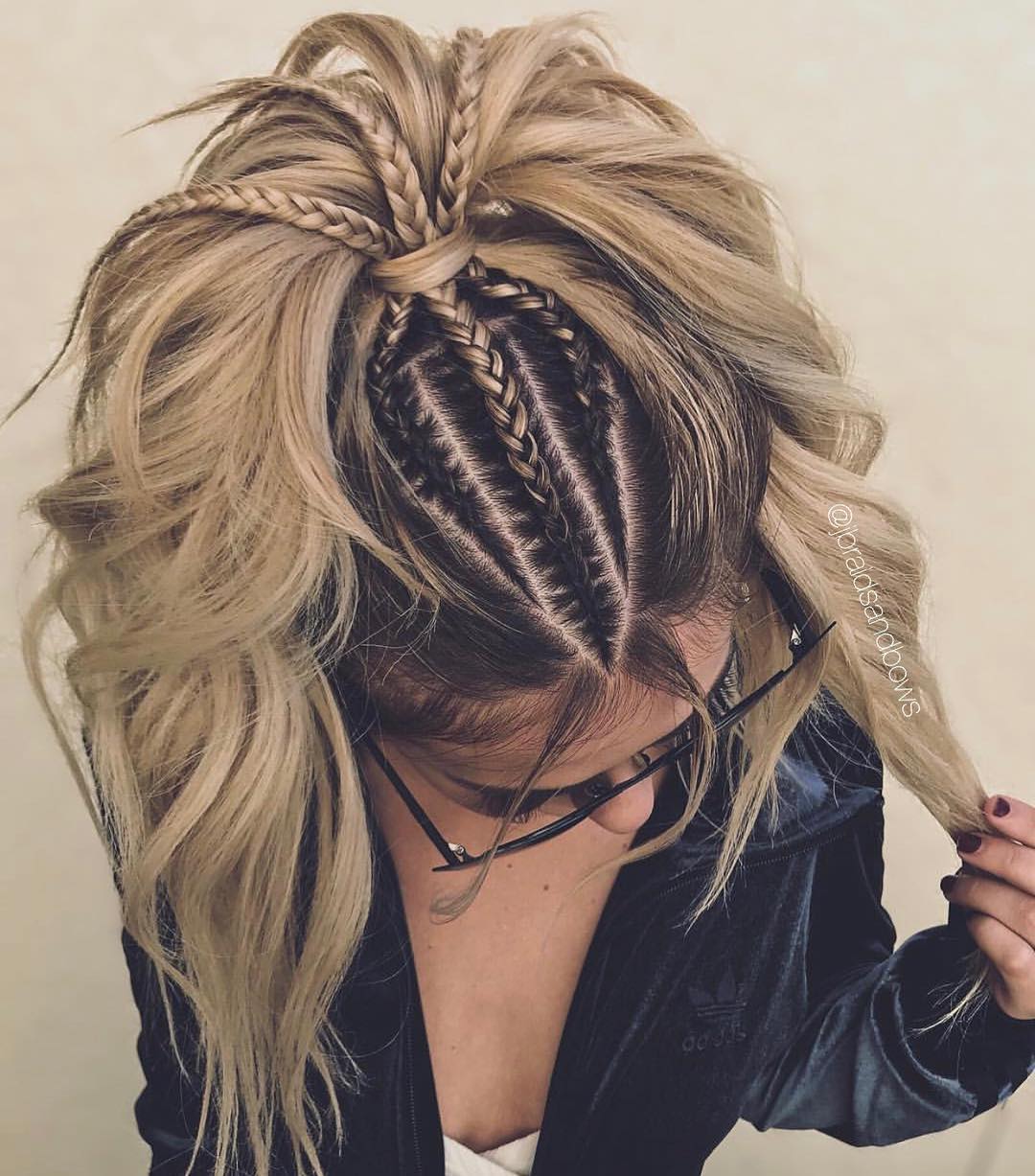
Ash blonde hair with darker roots creates the divide. Intricate cornrows lead from a slicked-back top into a wavy ponytail that holds volume without curling iron work. The technique relies on a clean transition from flat braid to loose wave at the nape. Heart and diamond faces benefit from the vertical line. Not for anyone committed to a single, uniform color. Words for the chair: ash blonde braided ponytail with cornrows and wavy texture. A texturizing spray on the wavy section keeps the two textures looking one piece.
Chunky braid with loose curls cascading down
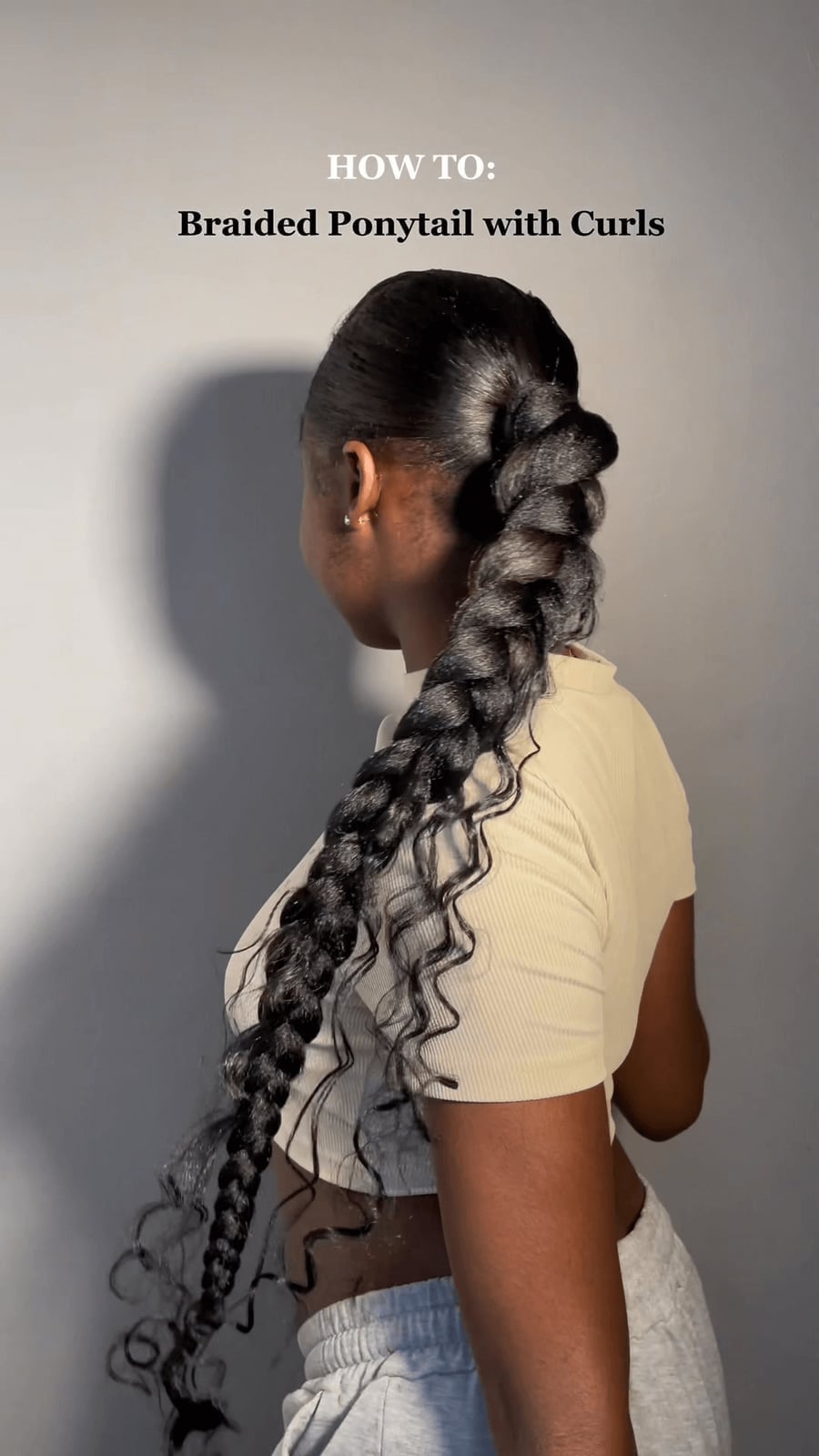
A slicked-back parting leads into one chunky braid that drops down the back, then opens into loose curls at the ends. Thick wavy hair gives the braid heft, but the loose finish keeps it from looking severe. Oval and square faces handle the strong central line well. The real drawback: this look requires extensions for the length and thickness shown, so the chair time is longer and the cost higher than a simple three-strand. Avoid it if you dislike the feel of added weight or prefer a sleeker, all-braided finish. Ask your stylist for a chunky braid with loose curls and a slicked-back parting. Refresh the curls with a curling iron between wears to maintain the contrast.
Large fishtail braid on a slicked-back ponytail
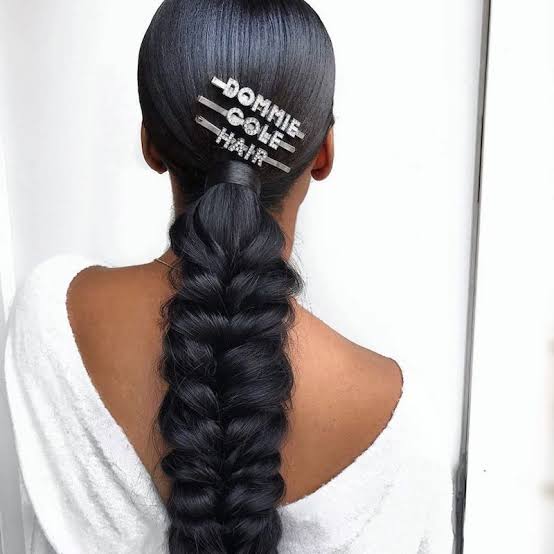
A fishtail braid this wide needs a solid foundation. The slicked-back parting keeps the crown smooth while the braid becomes the main event, thick, straight black hair woven into a pattern you can actually see from across the room. Decorative hair clips add a finished edge without trying to hide the elastic.
You need at least mid-back length and serious density for this look to land. The braid will look thin rather than substantial with fine hair. A texturizing spray before braiding gives the sections grip, then secure the whole thing with pins and hairspray. The hold lasts through an evening, but plan on a full redo the next day.
Intricate zig-zag cornrows leading to a fishtail braid
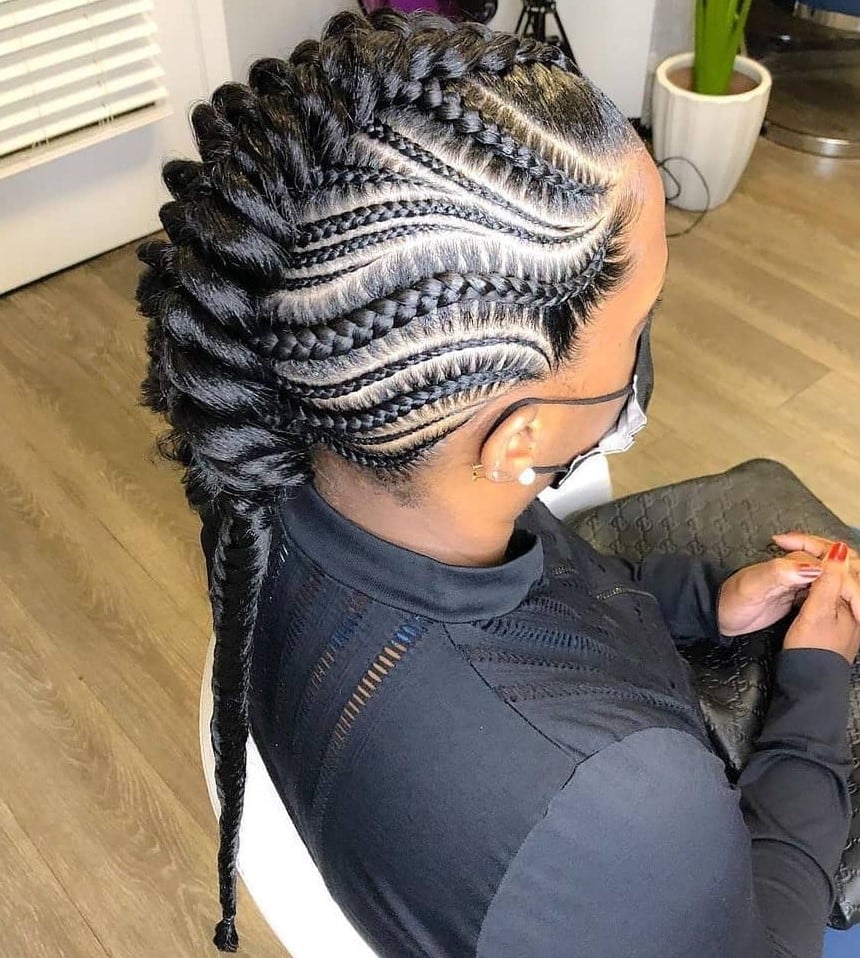
Zig-zag cornrows trace a geometric path from the hairline back to the crown, then drop into a thick fishtail braid. The pattern requires a steady hand and a clear plan. This is not a bathroom-mirror job. One wrong angle and the whole line shifts. Slicked-back styling keeps every row visible, so no detail gets lost in the texture.
Ask your stylist for: zig-zag cornrows, thick fishtail braid. Collarbone-length hair is the minimum; any shorter and the fishtail section won’t have enough weight. A salon visit runs about two hours for the cornrows alone. Avoid it if you dislike geometric patterns or want to switch styles mid-week. The cornrows stay put until you take them out.
Dramatic statement with a thick, straight, slicked-back braid
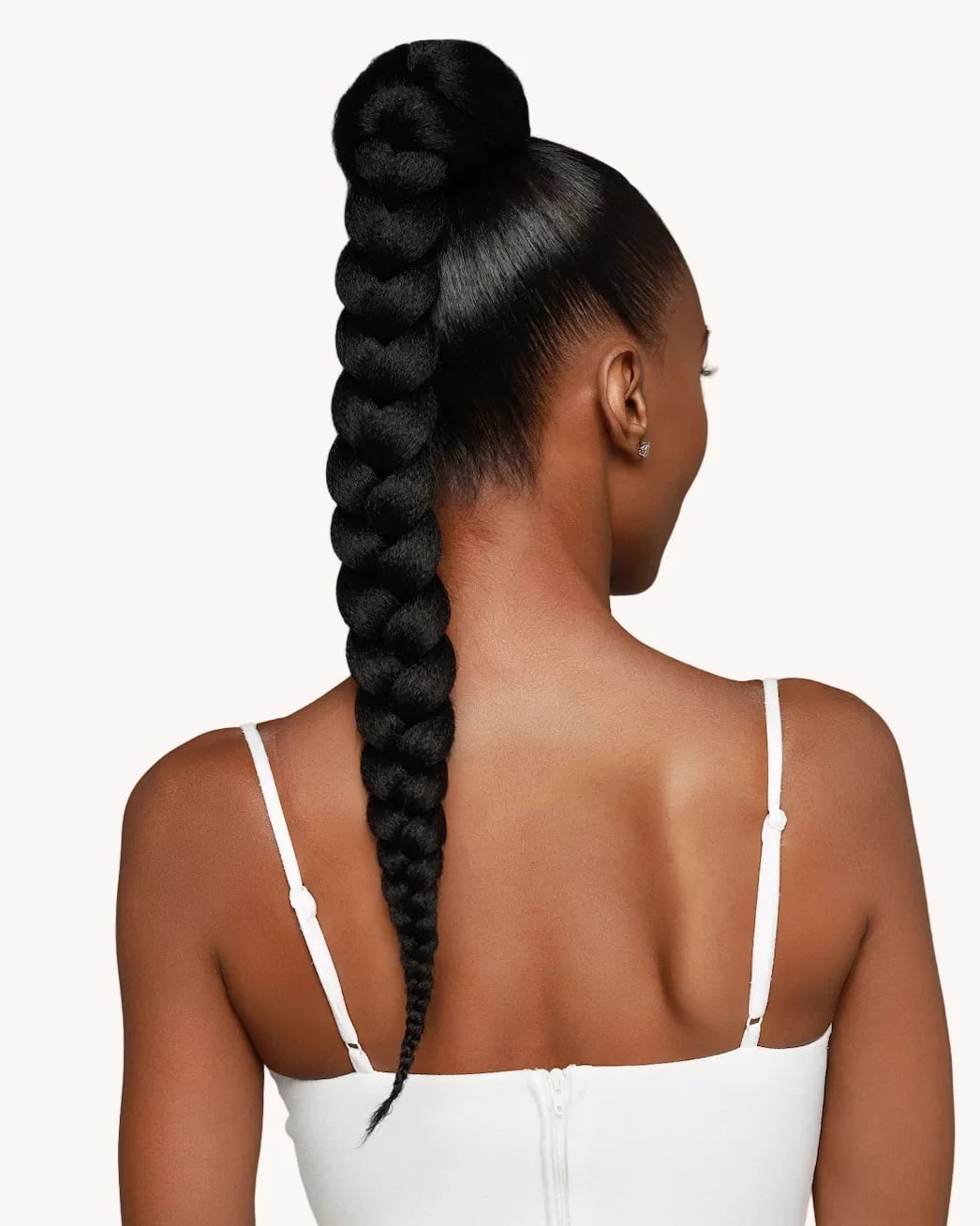
A chunky braid wants volume, not complexity. This version skips the tiny sections and goes straight to a thick, straight braid that looks one solid piece. Deep black hair pulled back into a high ponytail, then braided from the base to the ends. No loose strands, no taper, just a clean column of hair.
It lands best at evening events where a simple ponytail would feel too casual. The slicked-back front keeps the look sharp, and the braid does the work of filling the negative space around your shoulders. Extensions are likely for this length, so factor that into your planning. Pass when you prefer softer textures or styles that move more freely. This one stays put.
Extra-thick braid on a slicked-back dark brown ponytail
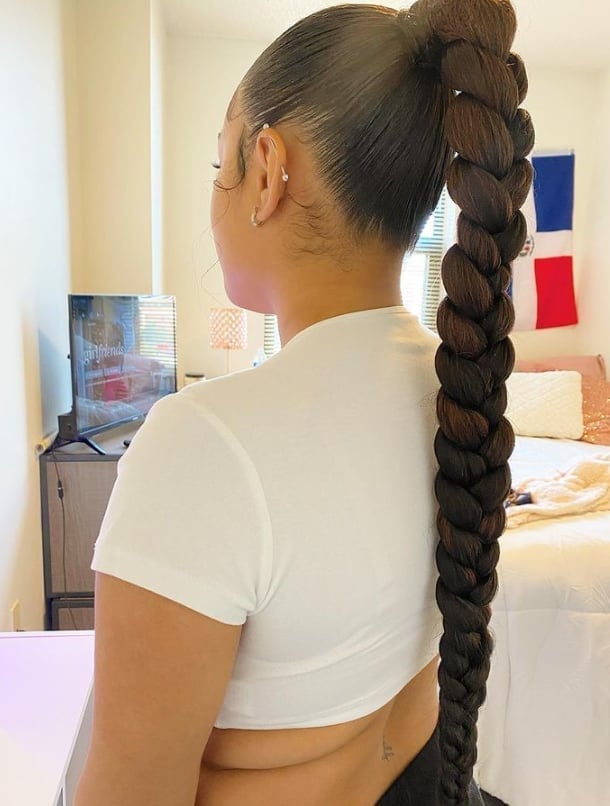
One braid, maximum width. The dark brown hair is sectioned into three parts, each pulled tight, then woven into a braid that nearly matches the thickness of the ponytail itself. Slicked-back from the hairline, no part visible, no flyaways. The whole shape looks a single deliberate piece.
You need at least mid-back length and a straight texture for the braid to lie flat. Thinner hair will struggle to fill the sections; extensions solve that but add chair time. Tell your stylist: high ponytail, extra-thick braid, slicked-back. A smoothing serum on the ponytail before braiding keeps the strands aligned. The hold is secure enough for a full day, but expect to redo the braid if you plan on sleeping in it.
Sharp black bubble ponytail with coily texture
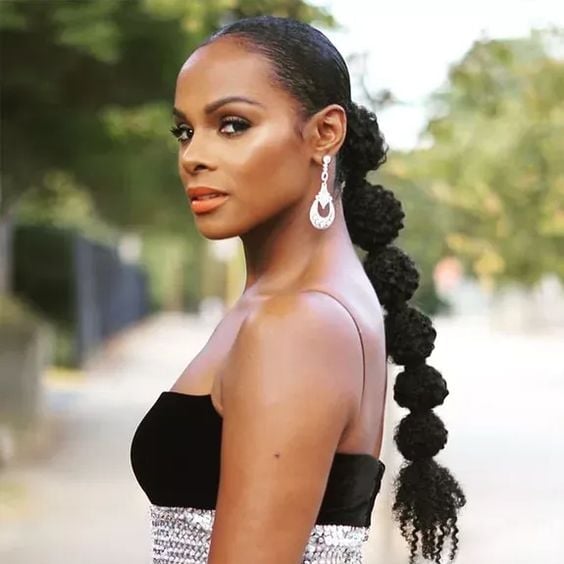
To get volume without a braid, section the ponytail into segments, secure each with an elastic, then gently puff the hair between them. The result is a bubble ponytail, a series of rounded sections that show off the natural coily texture at the ends. Slicked-back front keeps the silhouette clean.
Thick coily hair at least collarbone length gives the best shape; finer textures may not hold the bubbles. The vertical line works well for oval and heart faces. This style is not for those who prefer traditional braids or want a style that moves freely. The elastics hold everything in place.
Chunky, oversized braid on a slicked-back coily ponytail
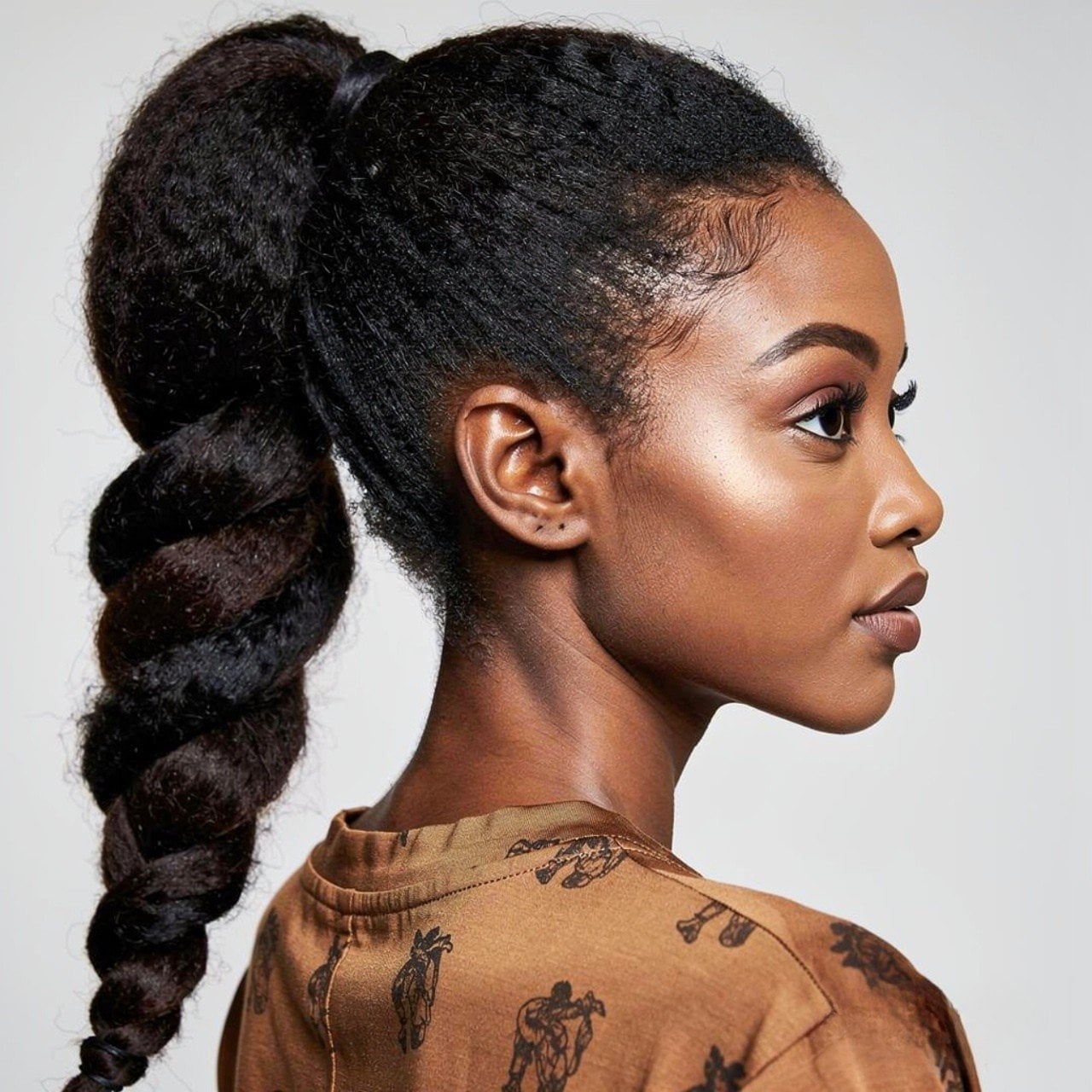
Consider this the dramatic cousin of a standard braided ponytail. Thick, coily hair is slicked back and gathered into a ponytail that becomes one chunky, oversized braid, the kind that takes up space and announces itself. You need hair at collarbone length or longer to pull off the volume. One thing to note: fine-textured hair will not hold the proportion, so plan for extensions if yours is on the thinner side. A strong-hold gel at the roots keeps the slicked-back base neat all day. The braid itself stays intact without constant fussing.
Salon expertise for intricate braids with pins
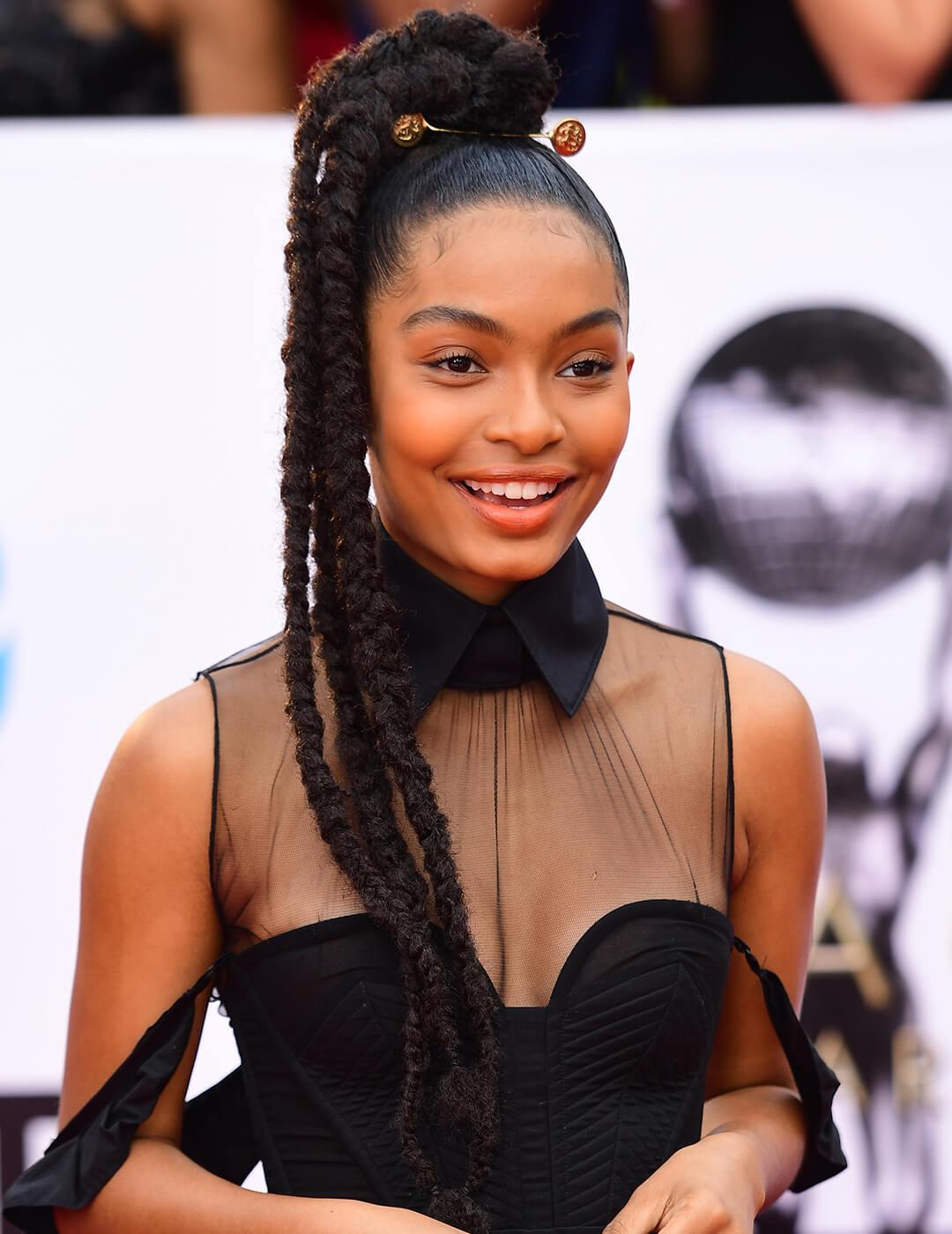
Gold hair pins sit along the braid, each one placed to catch the light and secure the plait. Thick, coily hair forms the base, parted down the middle with no bangs to interrupt the symmetry. The hold is solid. The braid does not unravel, and the pins stay put through a full evening. One drawback: the pins can pull if placed too tight against the scalp, so mention that to your stylist. This is not a style you rush through; it requires precise sectioning and even tension throughout.
Cornrows leading to a voluminous curly ponytail
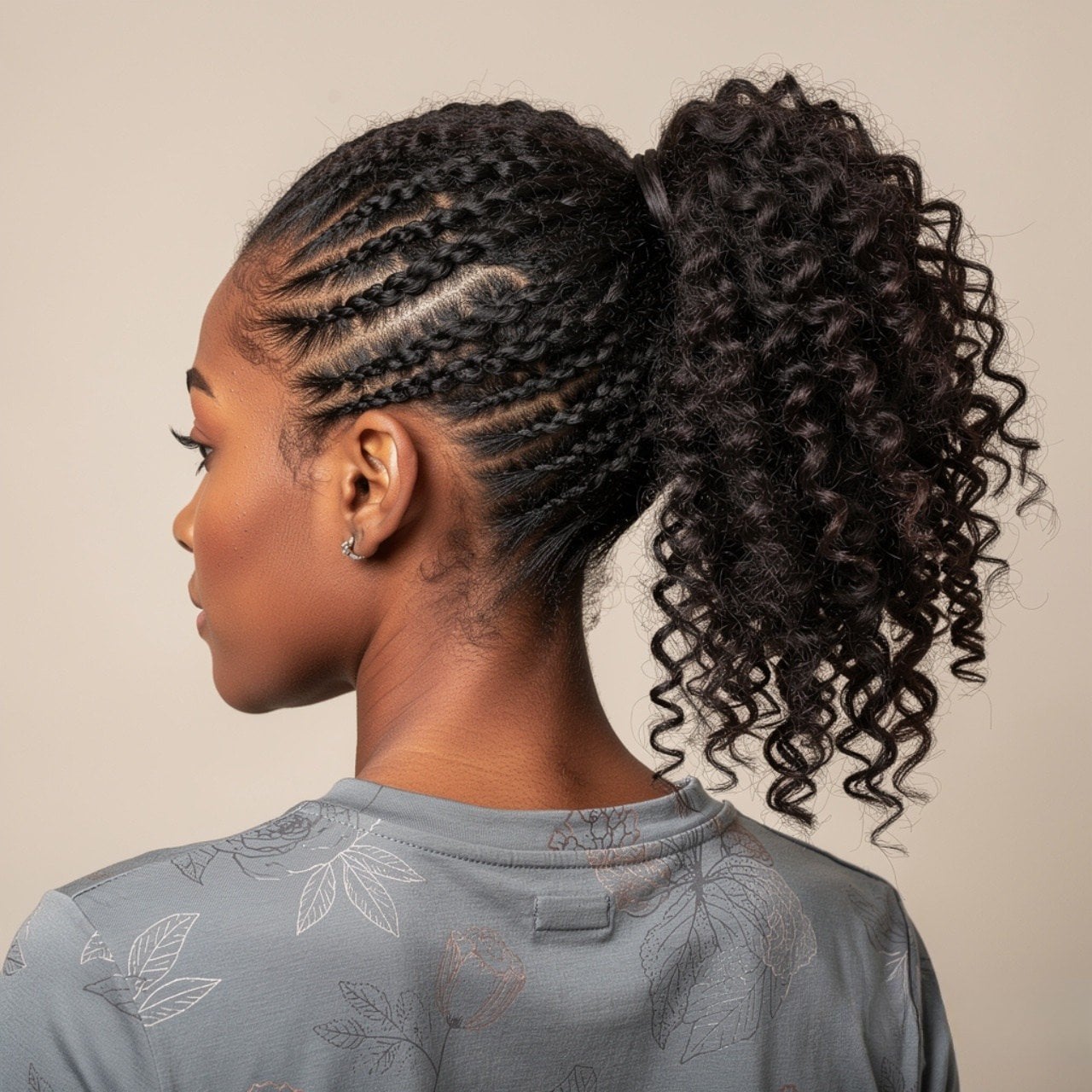
Intricate cornrows run from the temples back to the crown, where the hair releases into a high ponytail of voluminous, dark curls. The contrast is the point, smooth, linear braiding against a mass of coiled texture. The vertical line the cornrows create can flatter oval and heart-shaped faces. This style requires hair with density to achieve that fullness in the ponytail. A curl-defining cream on the ends keeps the coils from frizzing out by midday.
Geometric cornrow pattern with face-framing braids
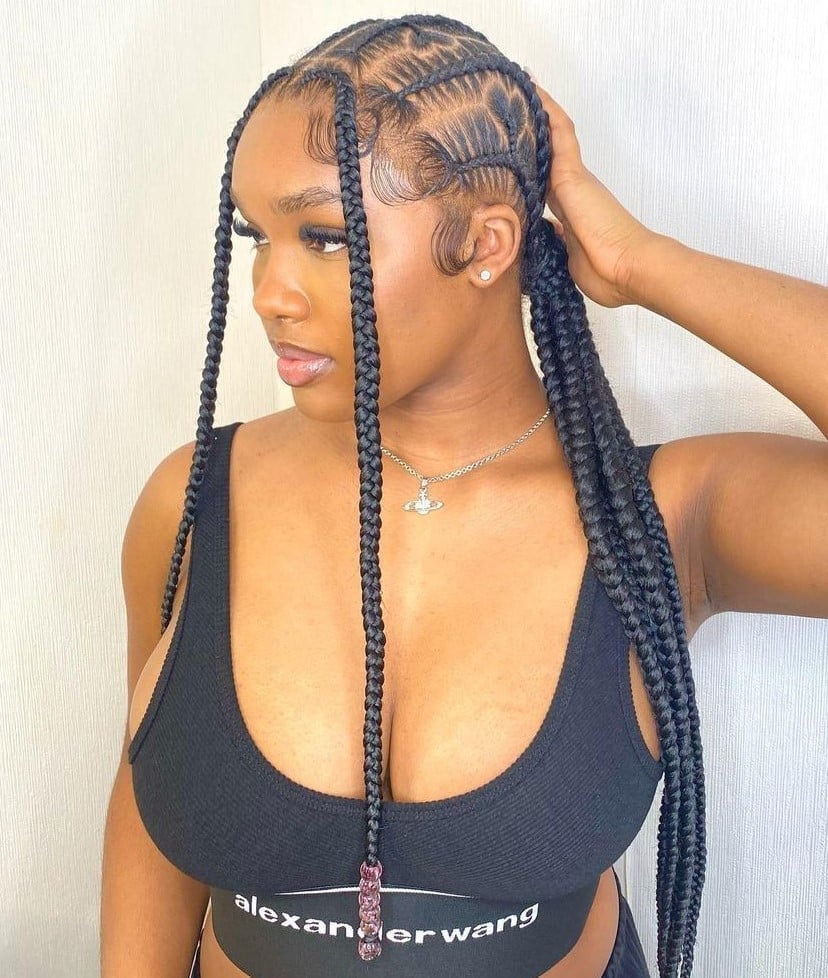
Angled cornrows form a precise geometric pattern across the scalp, leading back into long, thick black braids. Two face-framing braids drop forward, styled with neat baby hairs at the hairline. The pattern requires a steady hand and a clear eye, not a design for a rushed appointment. Edge control keeps the baby hairs smooth for several days. The braided ponytail itself holds its shape well, though the face-framing pieces may need a touch-up after sleeping on them.
Two high braided ponytails with geometric cornrows
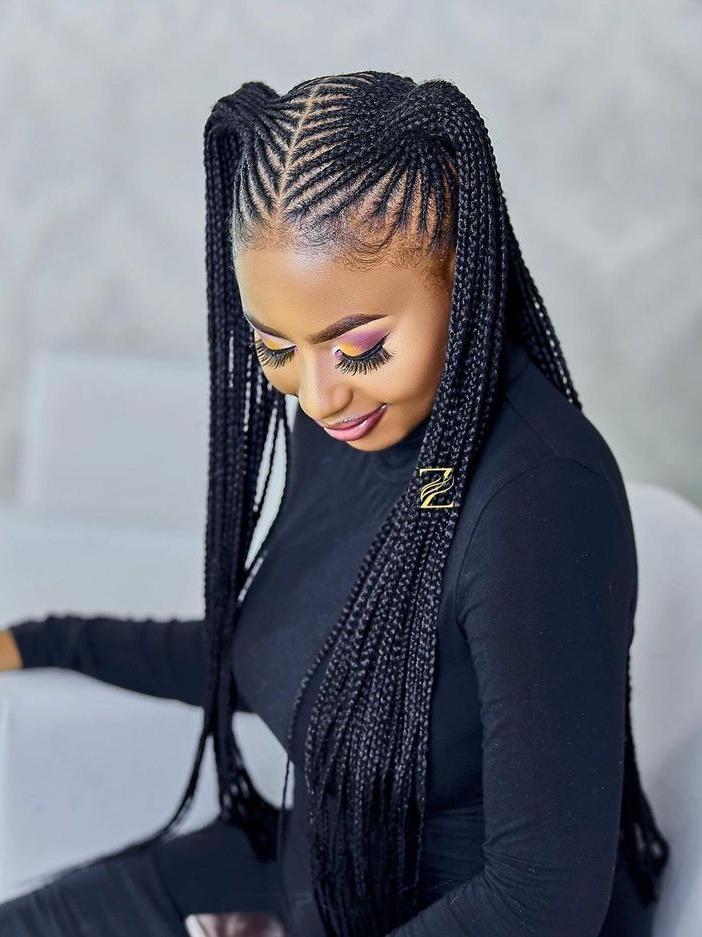
Two high ponytails rise from a crown of geometric cornrows, each braid long and deep black. A gold Z-shaped accessory clips onto one side, adding a deliberate asymmetry. This is a salon-only construction, the symmetry between the two ponytails and the precision of the cornrows demand professional sectioning. For a DIY attempt, the spacing between the two ponytails will likely drift off-center. The accessory needs a firm grip to stay in place through movement; check the closure before you walk out the door.
White ribbon bows on two thick braids
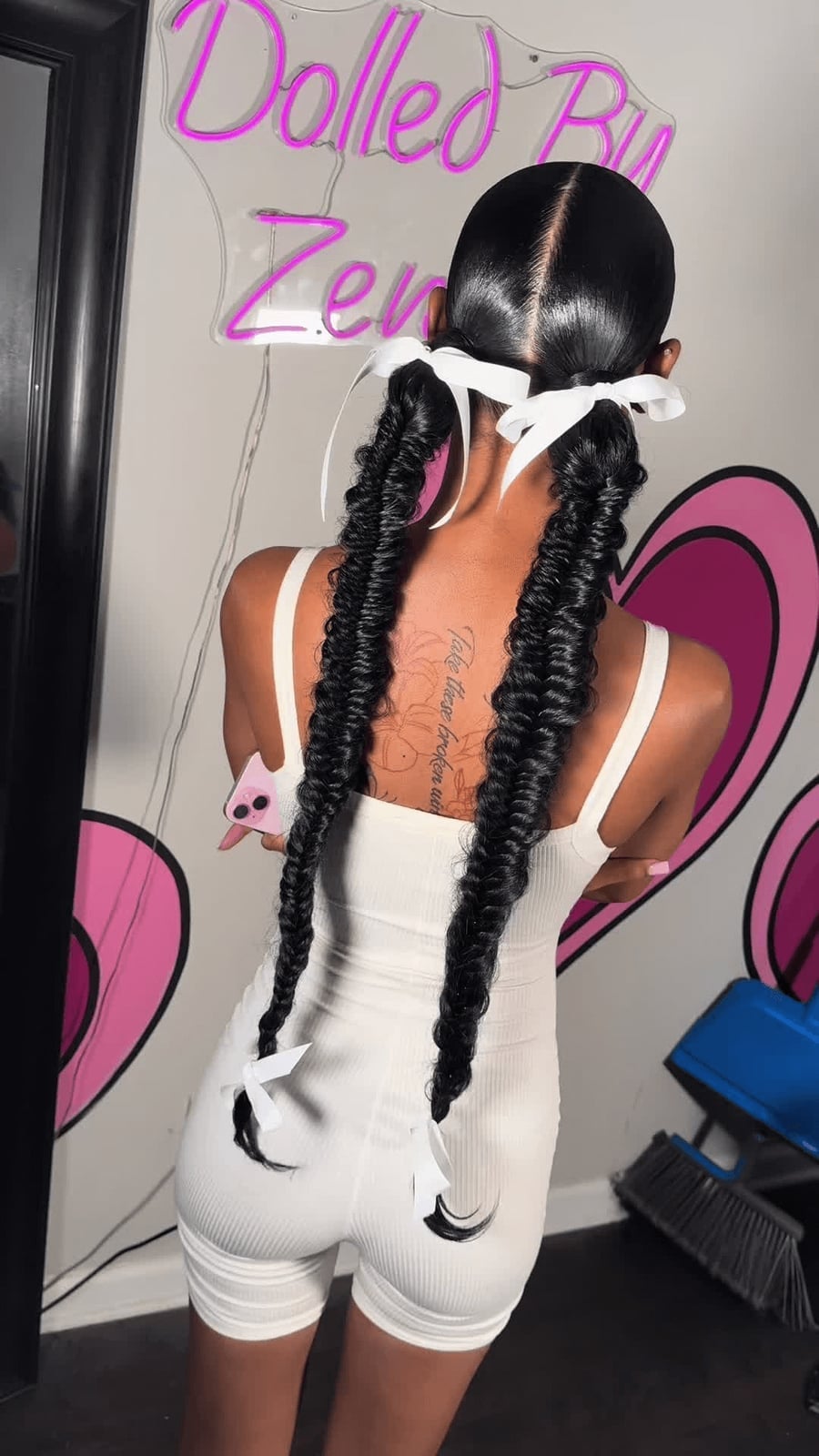
Two thick braids instead of one changes the entire silhouette. The middle part keeps both sides equal, and the black hair has a high-shine finish that makes the braiding technique visible from across a room. White ribbon bows at the ends add a crisp, playful note. Thick, straight hair starting at collarbone length works best here. Tie the bows tightly so they secure the braids; loose ribbon shifts fast. The look suits all face shapes equally.
Standout two-tone braiding technique on a high pony
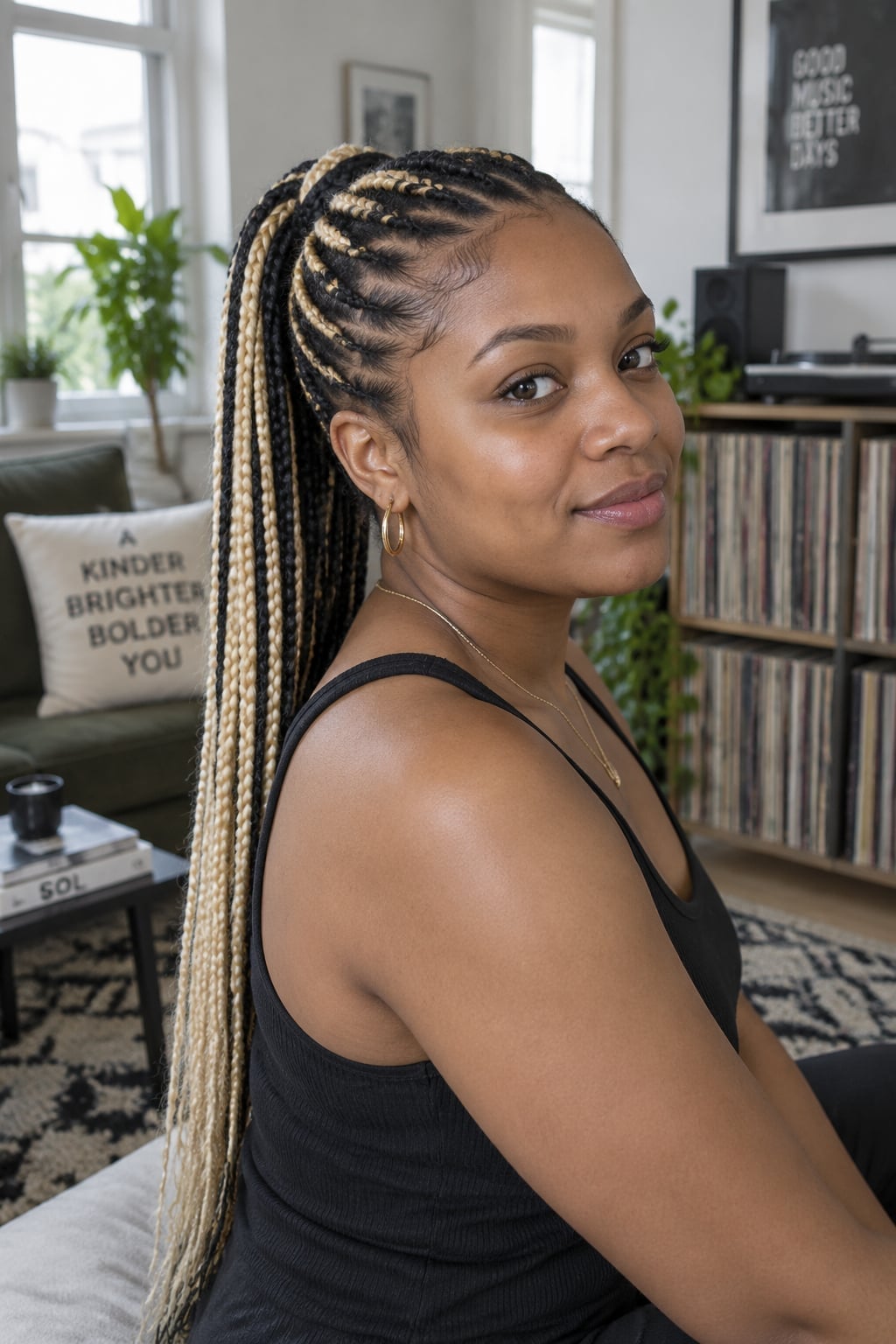
Black and blonde in one braid creates a visual split that looks carefully styled. The middle part leads into a high ponytail, and the two-tone braiding technique means every twist shows both shades. Straight, thick hair at collarbone length holds the distinction between colors best. A color-safe shampoo keeps each tone from bleeding into the other. Suits oval and heart faces. Ask your stylist for: a two-tone braided ponytail.
Playful elegance with black bows on a bubble pony
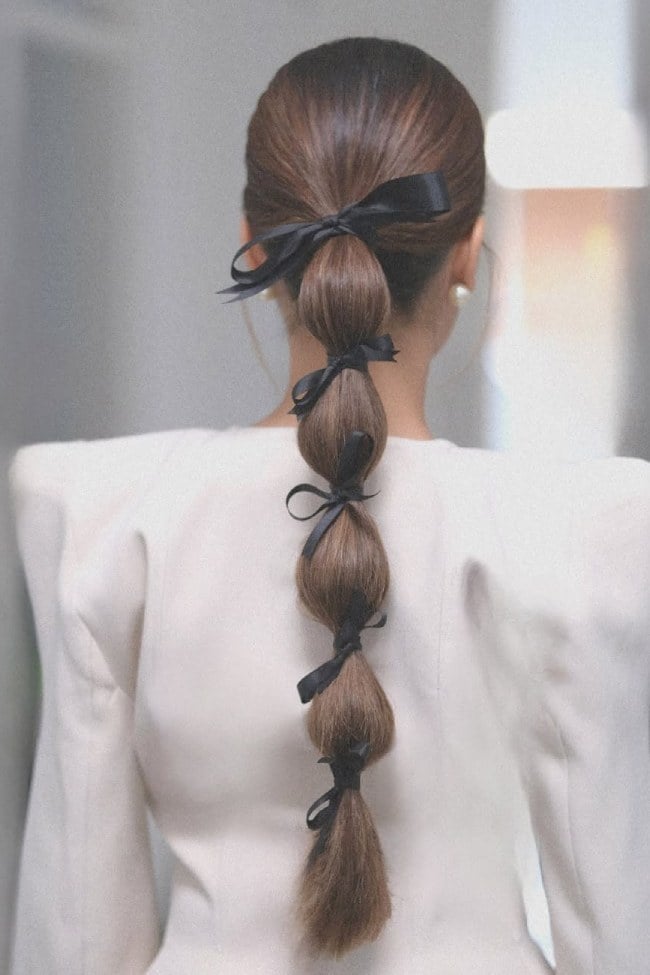
This is a bubble ponytail with multiple black bows spaced down the length. Medium brown hair pulls back from a middle part into a thick, straight style, and each bow marks a distinct section. Space the bows evenly for a balanced look. Use clear elastics under the bows so the base stays invisible. Thick, straight hair starting at collarbone length suits all face shapes.
Segmented bubble ponytail in ash blonde
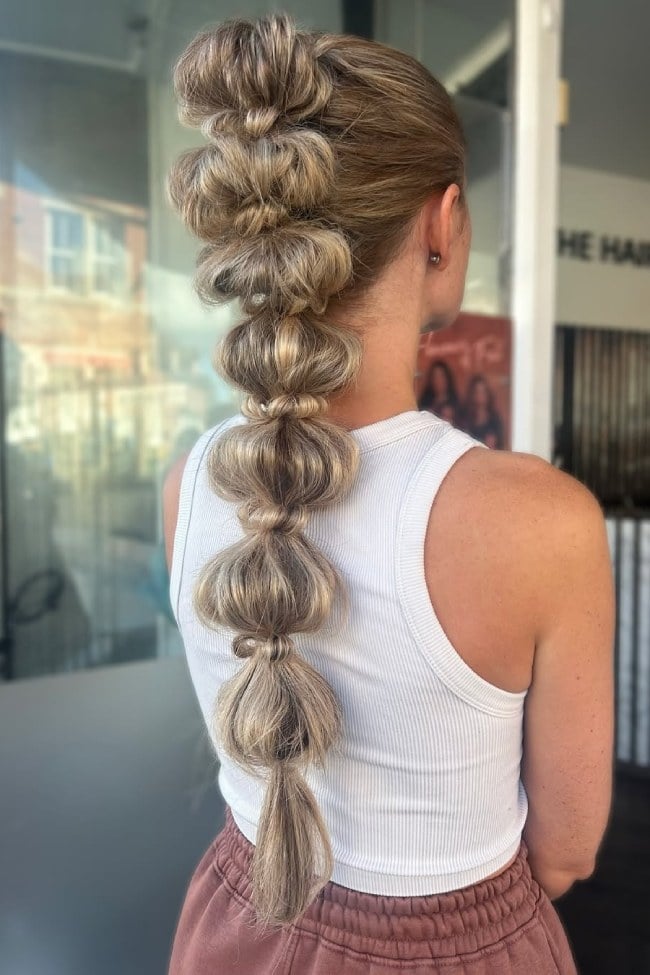
Ash blonde with lighter highlights is the color here, and the wavy texture gives each bubble section body. Unlike a straight bubble style, this one relies on the wave to fill each segment without pulling. Small elastics at intervals create the segmented effect. Gently pull each section for a fuller look. Thick, wavy hair starting at collarbone length suits oval and heart faces.
DIY style with elastics on a blonde pony
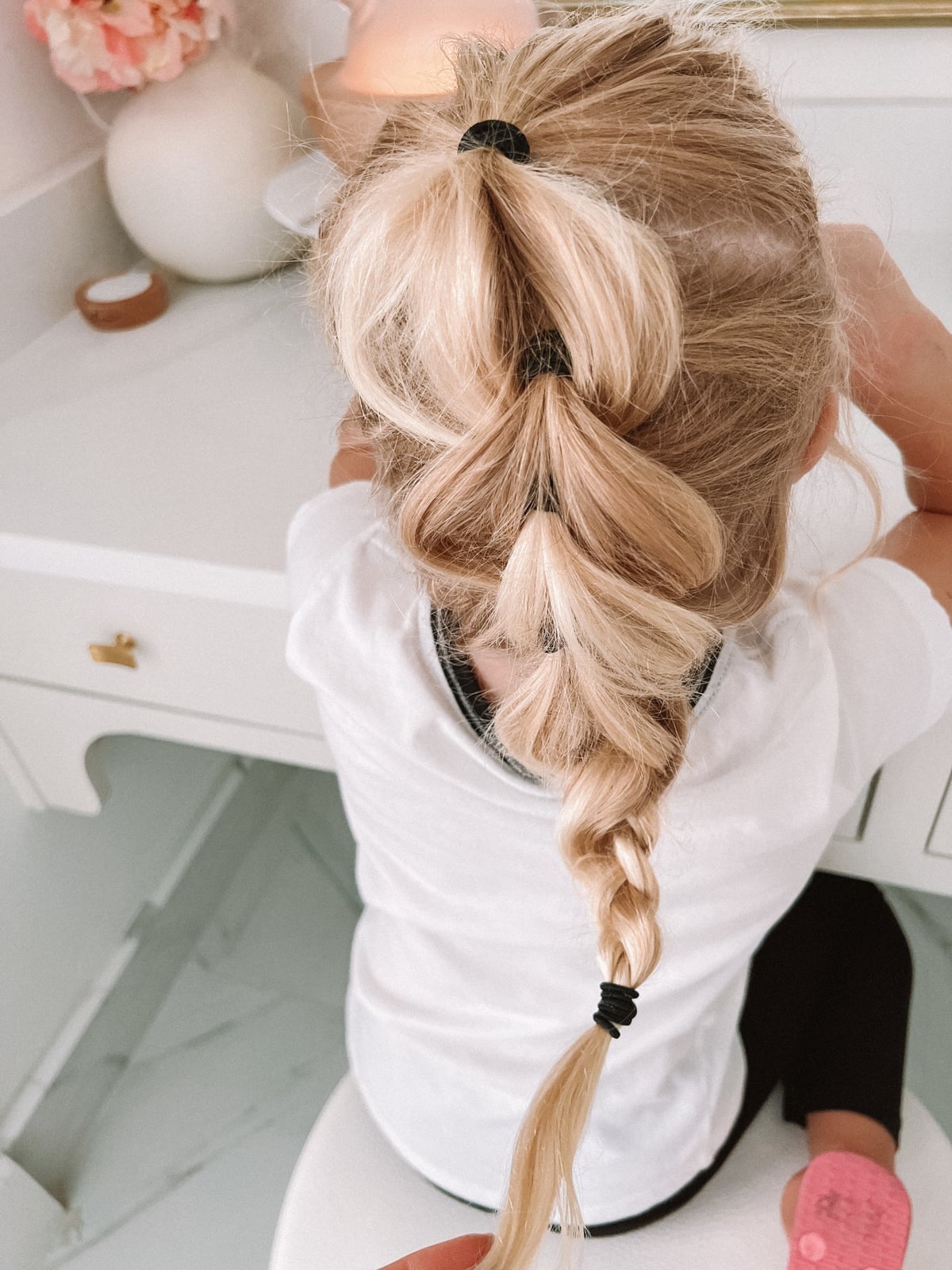
A layered cut is the starting point here, and the fine wavy texture makes the bubble braid effect possible without bulk. Blonde hair with lighter highlights is pulled back from a middle part into a braided ponytail with distinct bubble sections. Ensure elastics are tight to create defined sections. Gently pull for volume. Thick, wavy hair starting at collarbone length suits oval and heart faces. Traditional braids or very fine hair make this style less suitable. Ask your stylist for a braided ponytail with bubble sections.
Voluminous, oversized pull-through braid ponytail
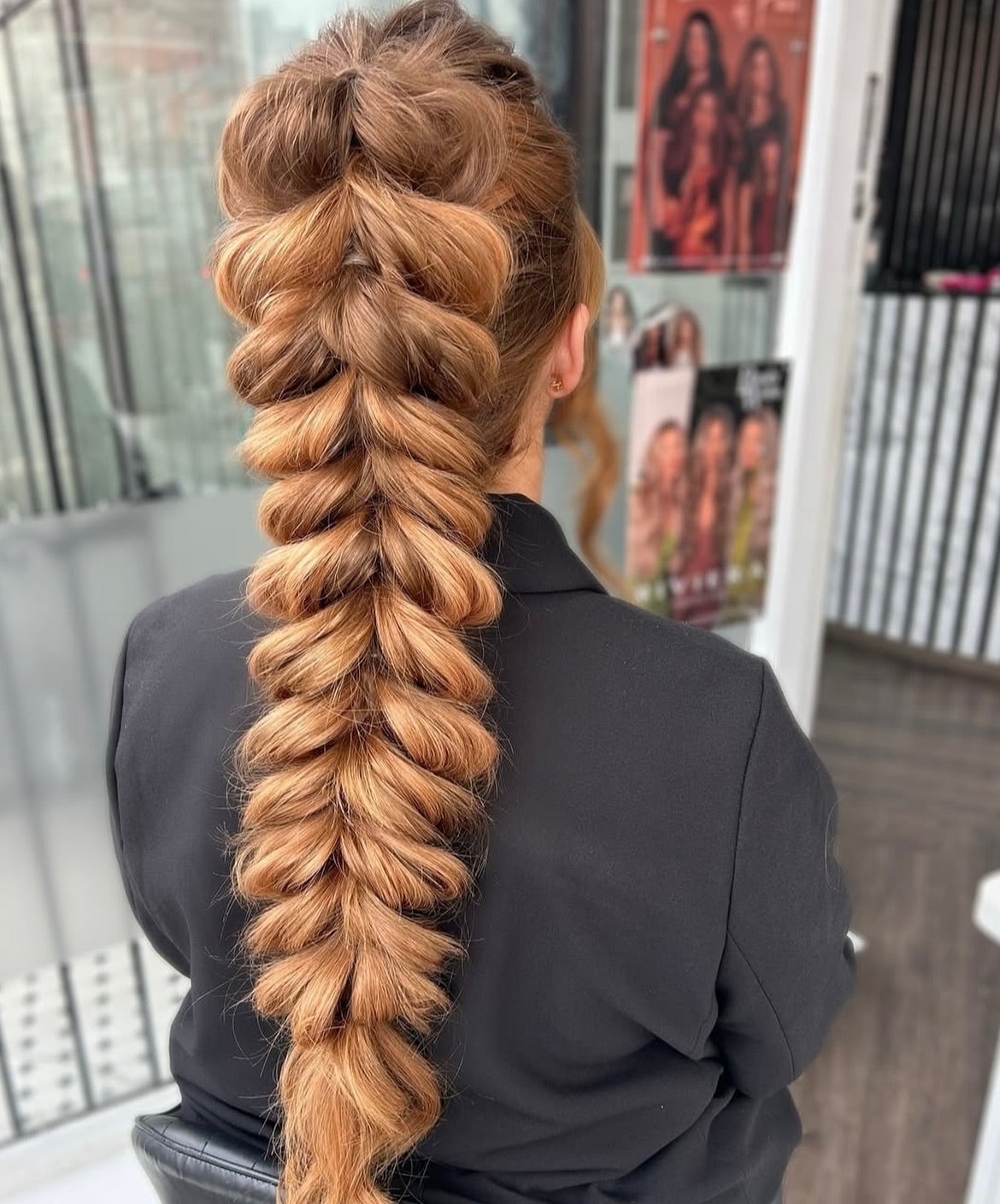
Pull-through braids need thick hair to start. Warm brown with blonde highlights keeps the oversized sections from flattening into one mass. Slick the top back tight, then gently tug each loop until the braid has visible volume, not accidental puff. Avoid it if straight extensions are your preference. The wavy, thick texture is the whole point here. One thing to note: a pull-through braid ponytail this full takes more grip than a standard braid.
Woven detail at the base of a braided ponytail
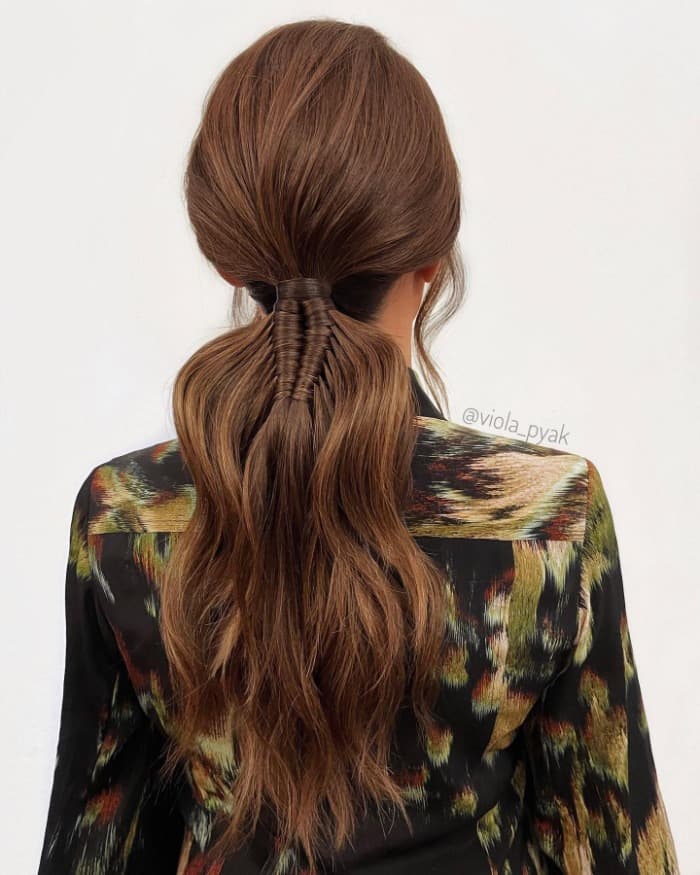
A woven detail at the ponytail base turns a standard braid into a design element. Medium brown with subtle auburn undertones keeps the look grounded. The weave looks intentional, not a repair job. Loose, textured waves soften the structure. That base detail holds firm through a workday, but the waves lose shape by hour six. A sea salt spray refreshes the texture without weighing the braid down. Trim the layers every eight weeks so the woven section stays clean. Ask your stylist for: braided ponytail with woven detail, textured waves.
Dimension from a braid wrapped around wavy hair
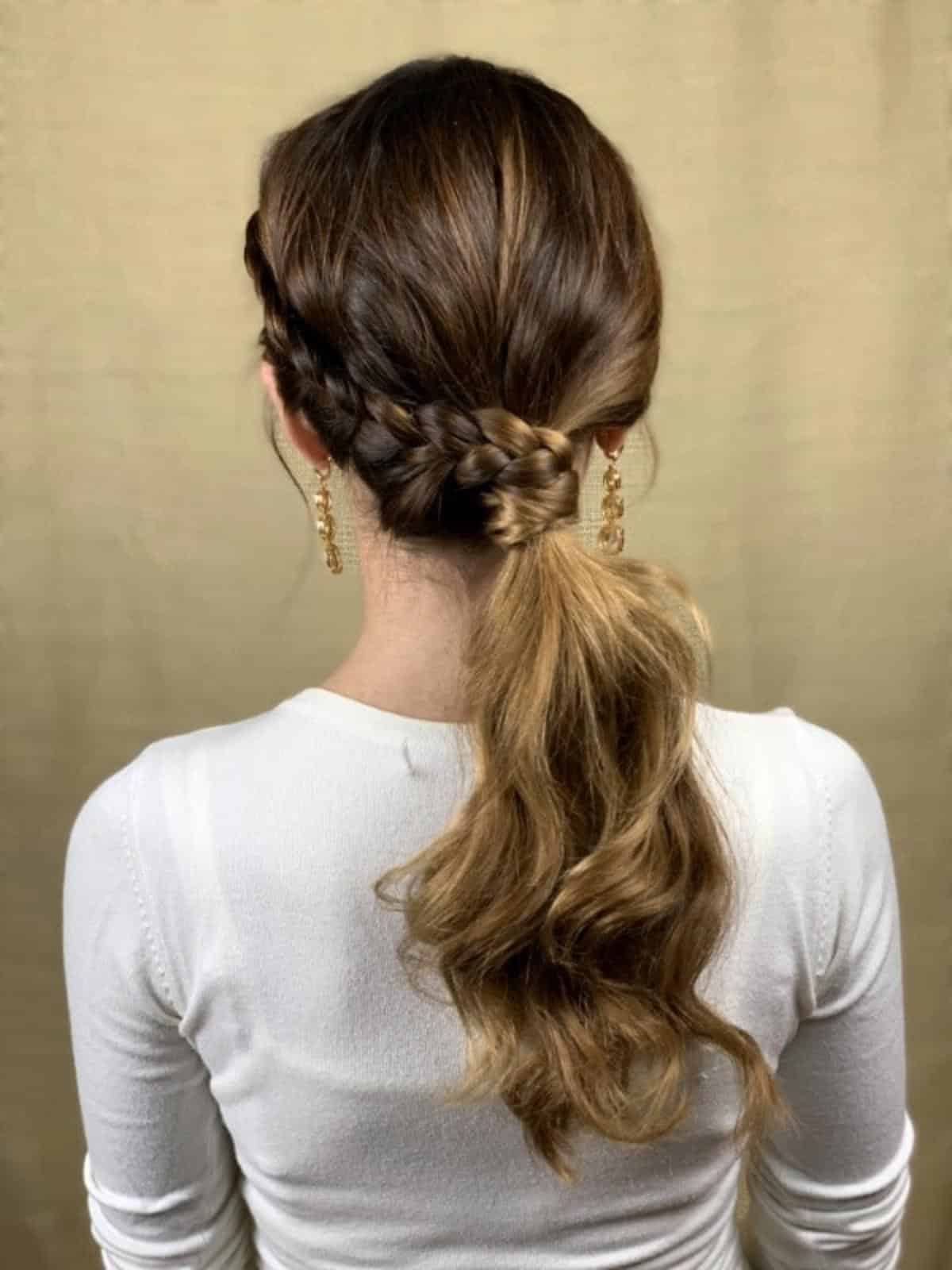
This one lives somewhere between salon and doable at home. A chunky braid wraps the base, holding a loose wavy ponytail in place. Dark brown with honey highlights creates the dimension, the contrast between the wrapped braid and the wavy section reads clearly. Middle part keeps the front clean. The wrap takes practice to get tight enough to stay but loose enough to look natural. Plan for a dry run before wearing it out.
Large textured braid with gold accessories
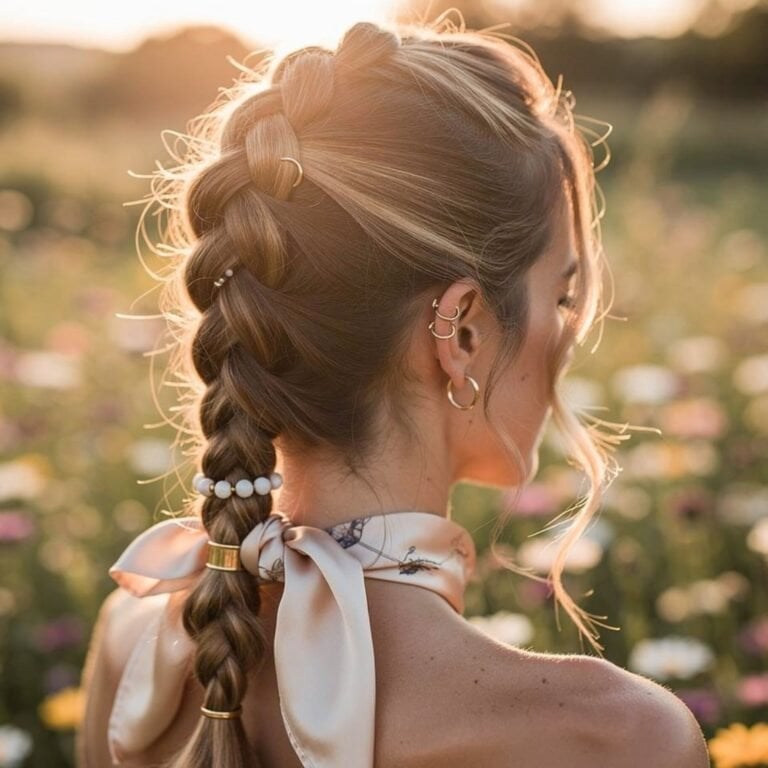
Gold rings and beads on a large textured braid read differently in summer light than they do under indoor bulbs. Dark blonde with lighter highlights catches both. The side view shows how the accessories sit along the braid, spaced enough to avoid a cluttered line. Skip the layers if the braid is the focus; subtle layers here let the texture and metal share the attention. Middle part keeps the face open. Not the style for a casual Tuesday, but for an event where the hair gets noticed, it earns the chair time. Ask your stylist for: large textured braid, gold accessories.
Scarf woven into a wavy braid for style
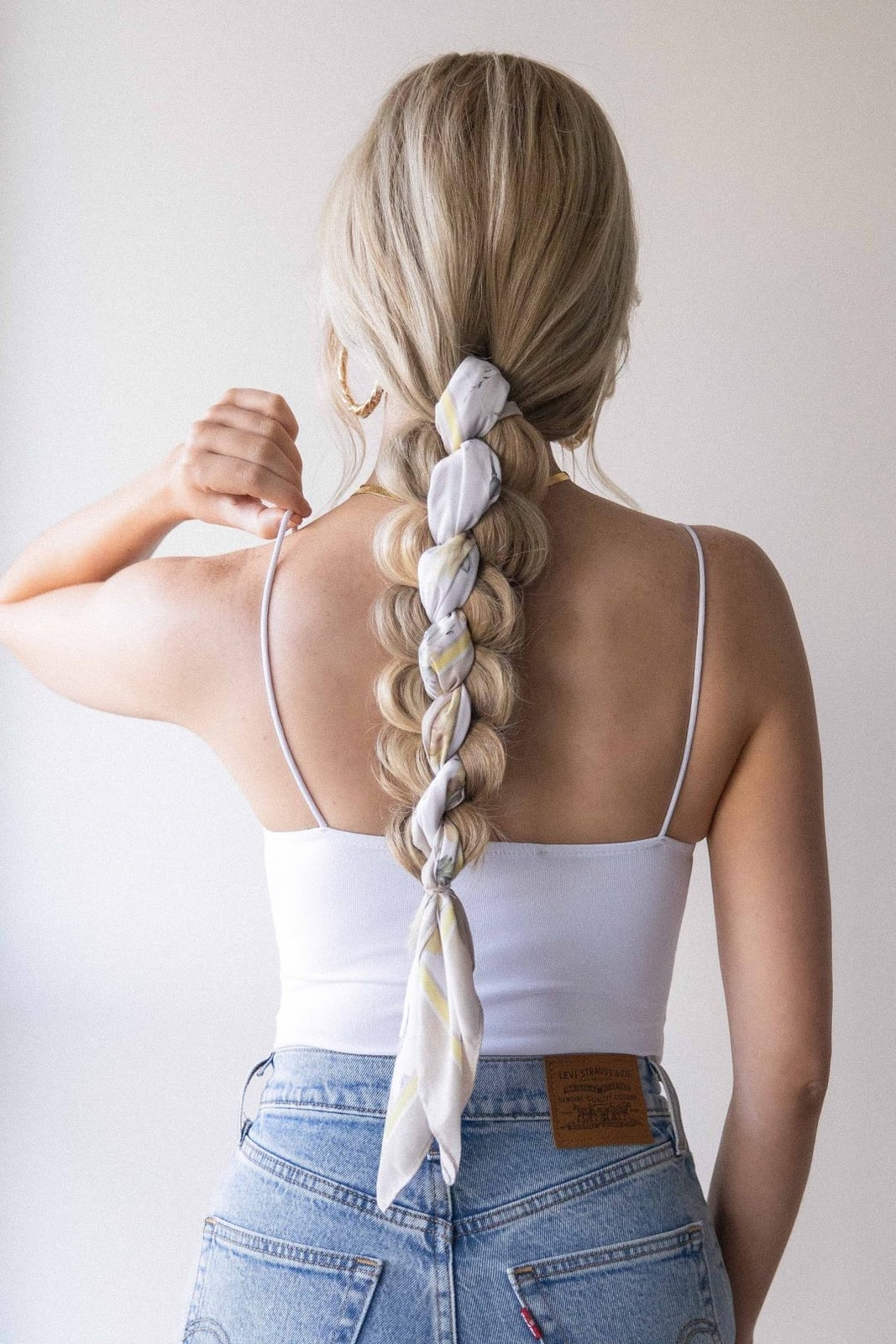
Scarf woven into a braid, sound fiddly, works fast. Ash blonde with subtle highlights provides a neutral backdrop so the scarf pattern reads clearly. Middle part and thick wavy texture give the braid enough body to hold the fabric. Weave the scarf in at the nape, not at the crown, or the weight pulls the braid off-center. A two-minute add-on to a basic braided ponytail. Pull the scarf ends through the last loop and let them hang.
Platinum blonde French braid into a low ponytail
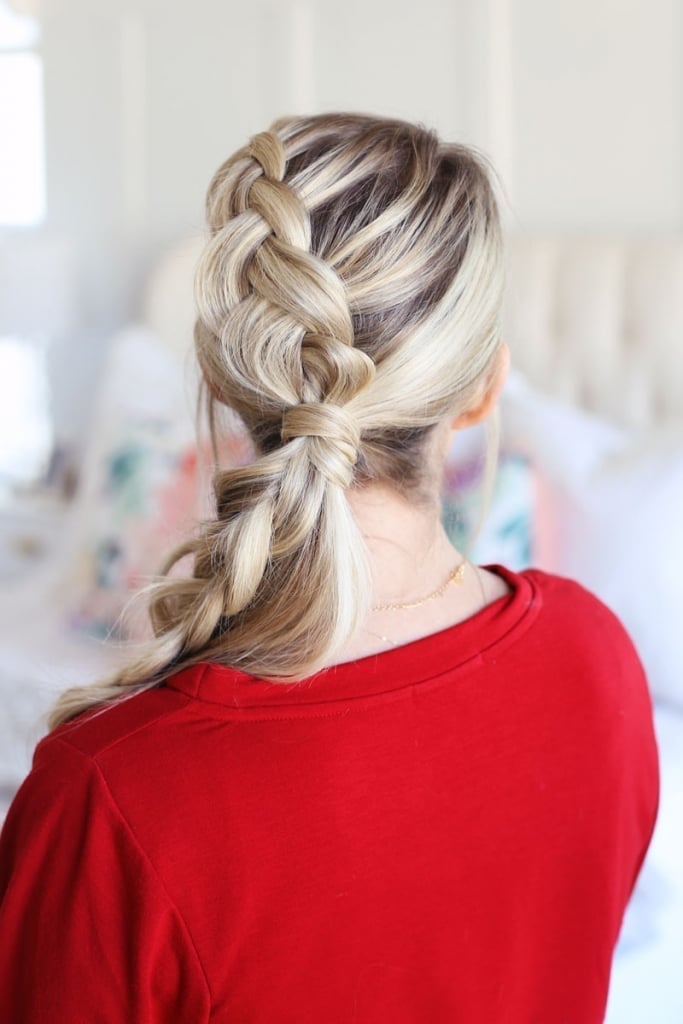
Start with a thick french braid from the crown, not a skinny one. The chunky sections keep the platinum blonde visible through each twist, with dark blonde highlights adding just enough depth so it doesn’t wash out. Wavy, thick hair starting at collarbone length gives the braid the body it needs. A centered part keeps the whole thing symmetrical. Avoid it if low ponytails make your face feel wider. The braid adds bulk at the nape. Ask your stylist for: french braid into low ponytail, platinum blonde. The waves in the ponytail need a refresh with a curling iron every second day, and a light pomade on the braid stops flyaways from blurring the definition.
Thick French braid into a sleek low ponytail
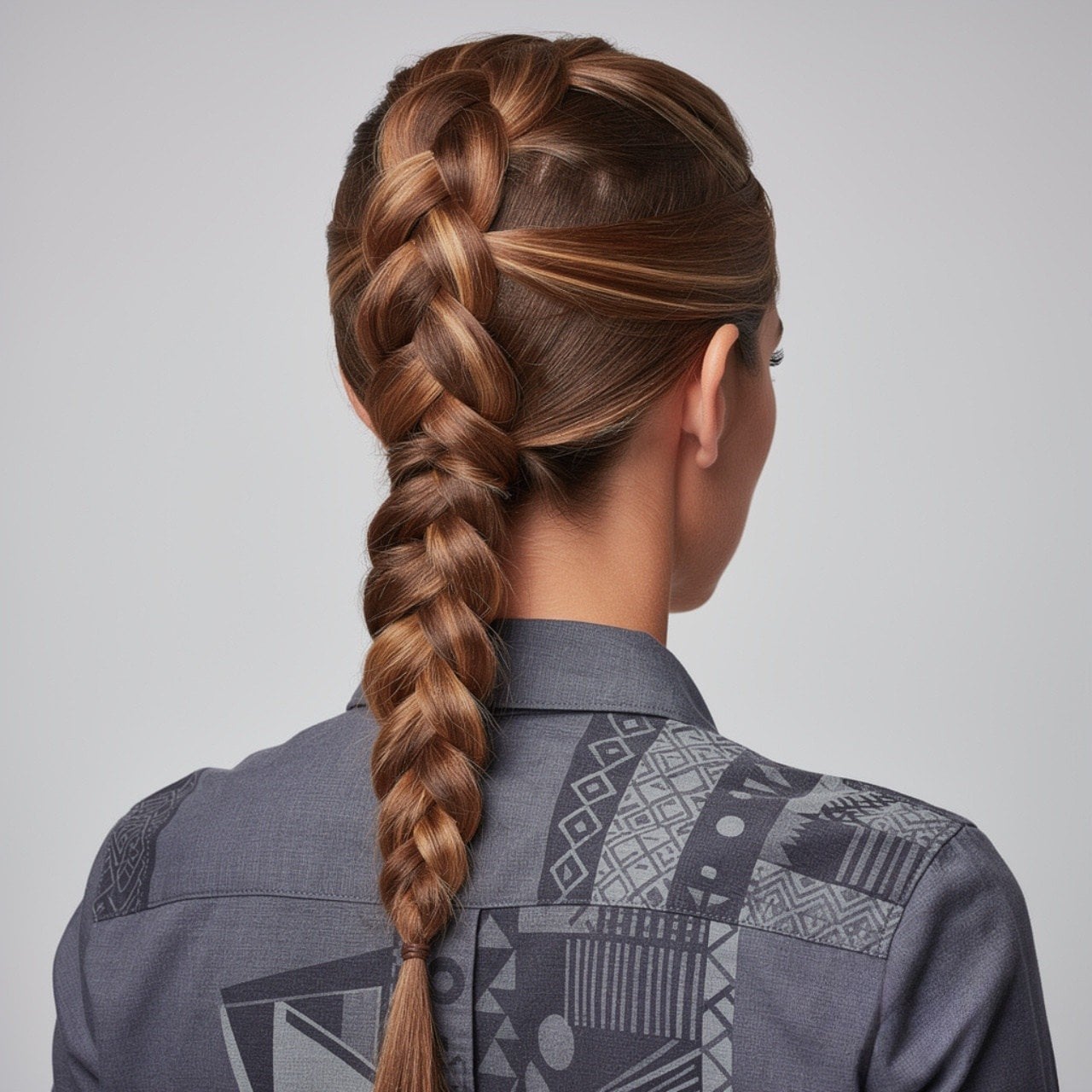
Where the platinum version leans on contrast, this one bets on polish. The thick french braid sits tight against the head, every strand accounted for, and the low ponytail falls straight. Medium brown hair with subtle golden highlights gives the braid a quiet sheen rather than a flash. Thick, straight hair starting at collarbone length holds the sleek lines best. One thing to note: if your hair has natural wave or bend, you will spend extra time with a flat iron to get that glassy finish. A smoothing serum on the ponytail keeps the ends from fanning out. Avoid it when you prefer your braids with volume at the crown rather than a flat, fitted start.
Crown braid detail leading to a low ponytail
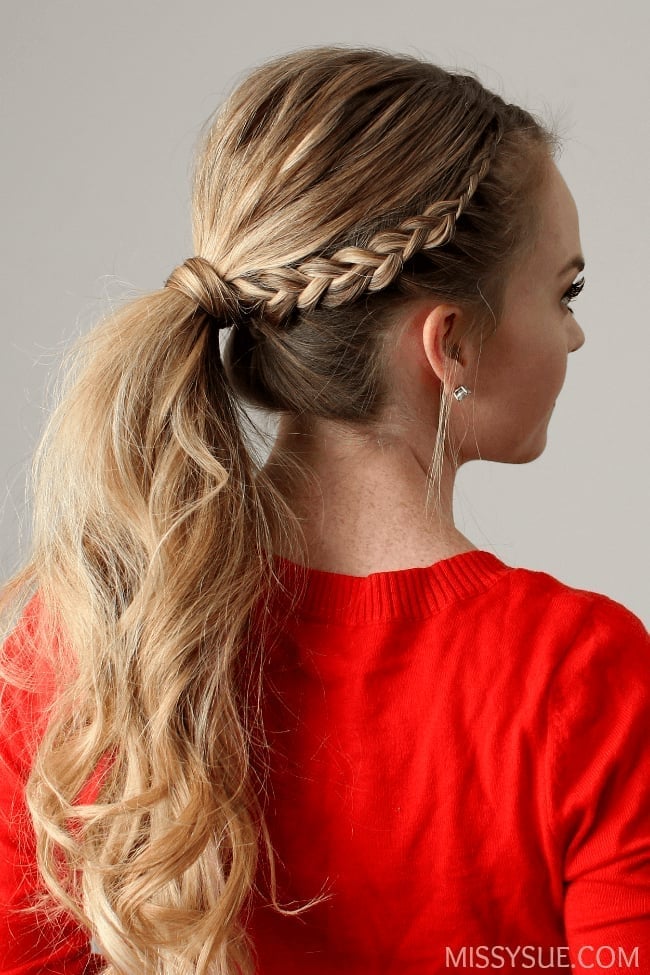
One drawback first: a crown braid this delicate takes time. The braid wraps around the head like a headband, then feeds into a low ponytail with textured waves. Ash blonde with lighter highlights keeps the braid visible against the scalp, dark colors can swallow the detail. The waves in the ponytail add movement, but they also need resetting every day with a curling iron or rollers. Thick, wavy hair starting at collarbone length gives the crown braid enough weight to stay put without pins slipping. Layers in the cut help the ponytail curl evenly rather than bunching at the ends. Not for you if your hair is fine or thin. The braid can look scrappy rather than deliberate.
Soft waves in a two-tone crown braid ponytail
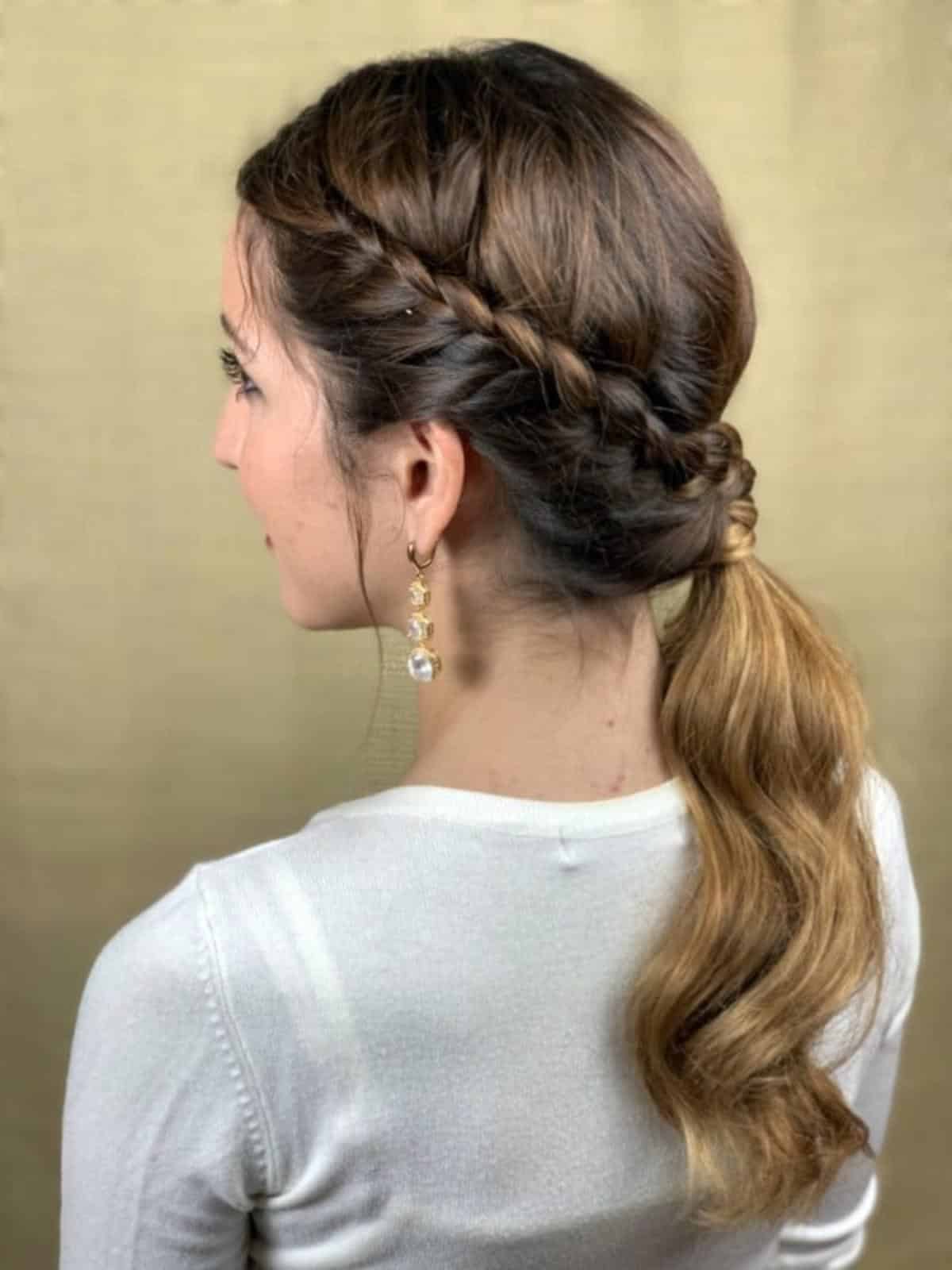
Two tones in a crown braid mean you see the technique, not just a solid stripe. Dark brown at the roots shifts to honey blonde through the braid, then the ponytail drops into soft waves that mix both shades. A side part keeps the two-tone effect asymmetrical. Thick, wavy hair starting at collarbone length gives the crown braid enough substance. Suits oval and heart faces because the waves at the nape balance a narrower chin. Hair shorter than collarbone will not work. The braid needs length to wrap the crown fully without tugging at the hairline. The waves hold about a day and a half before they soften into a loose bend.
Sleek face-framing pieces on a braided pony
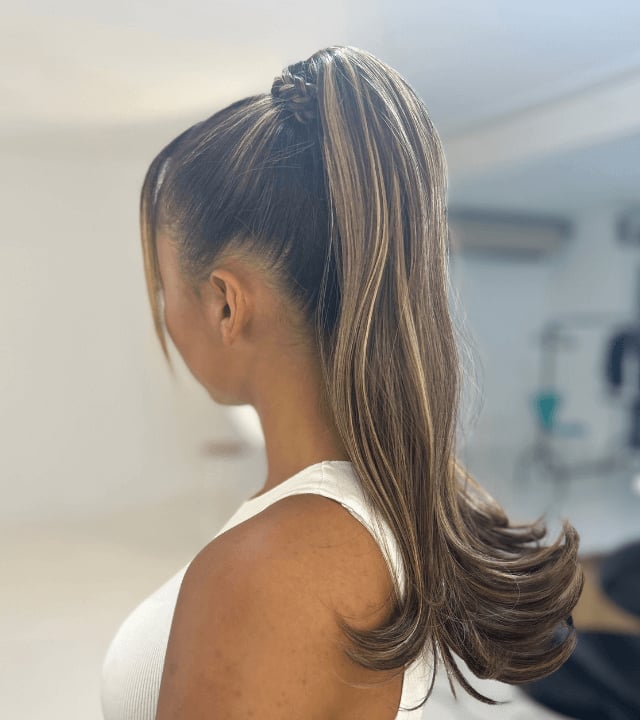
Face-framing pieces make a high ponytail feel less severe. The braided detail sits at the base, wrapping the elastic, while the rest of the hair falls straight and thick. Dark brown with blonde highlights keeps the braid from blending into the pony. The face-framing sections need a quick pass with a flat iron every morning. They show every bend from sleeping or a ponytail holder. Thick, straight hair starting at collarbone length gives the high ponytail enough weight to stay lifted rather than drooping. Works best if you already have a middle part, since the pieces are cut to fall symmetrically from it. The braided detail at the base lasts until you take it down, but the hair tie underneath needs tightening after eight hours.
Copper red braided ponytail with a thin braid accent
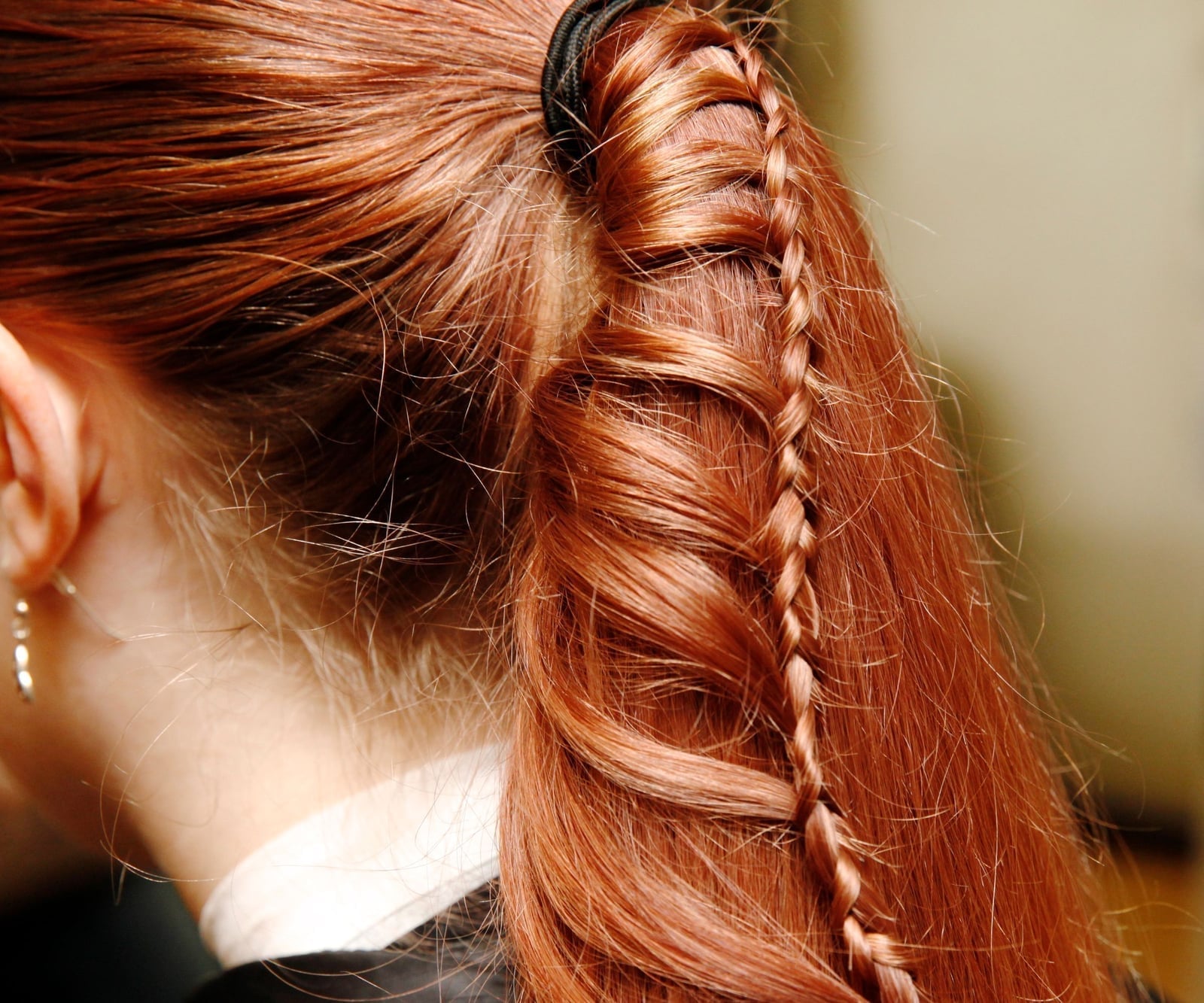
Fine hair needs a rule: one detail is enough. A copper red ponytail with a single thin braid woven through the length proves it. Wavy texture gives the braid grip without bulk, so it stays visible from a side view. The copper red hue demands a color-depositing conditioner every two weeks to keep the tone from shifting brassy. This look works for oval and heart face shapes, where the thin braid draws the eye down without adding width. You can do it yourself at home with a small section and a clear elastic, but a salon version lasts the whole week.
High braided ponytail with long, thick braids
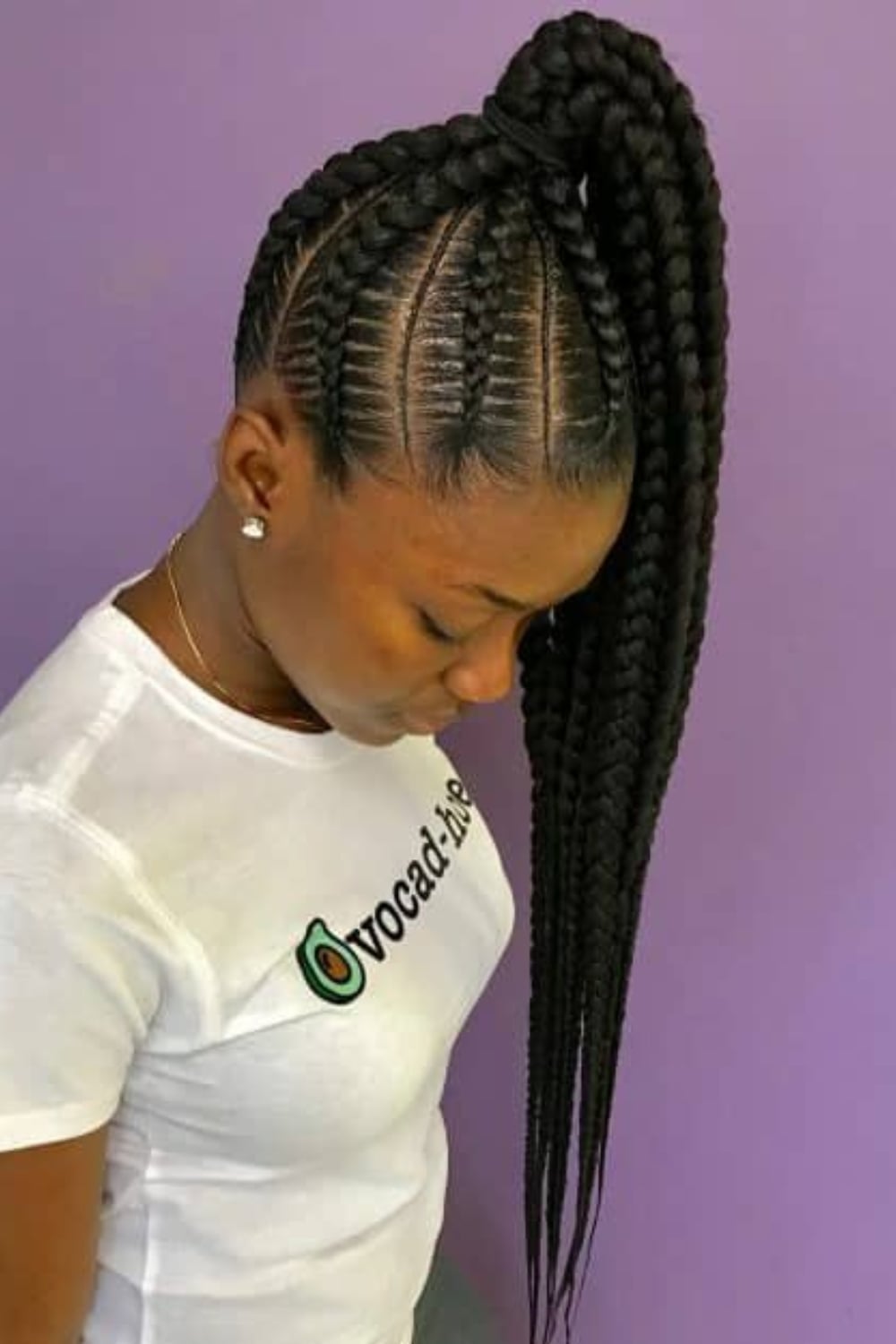
Thick hair finally gets its moment. A high ponytail with long, thick braids suits the colder months, when a heavier style holds its shape. The middle part and cornrow braids at the scalp anchor the look, while the ponytail itself carries the volume.
Black, straight hair provides the clean lines this design requires. Tell your stylist: high braided ponytail, long thick braids. The cornrows need a touch-up every three weeks to keep the parting sharp. This one works for round face shapes because the height elongates the profile. Not a style that packs flat for a helmet or a hat. The ponytail has presence, and it intends to keep it.
Neat look with two long, thick braids
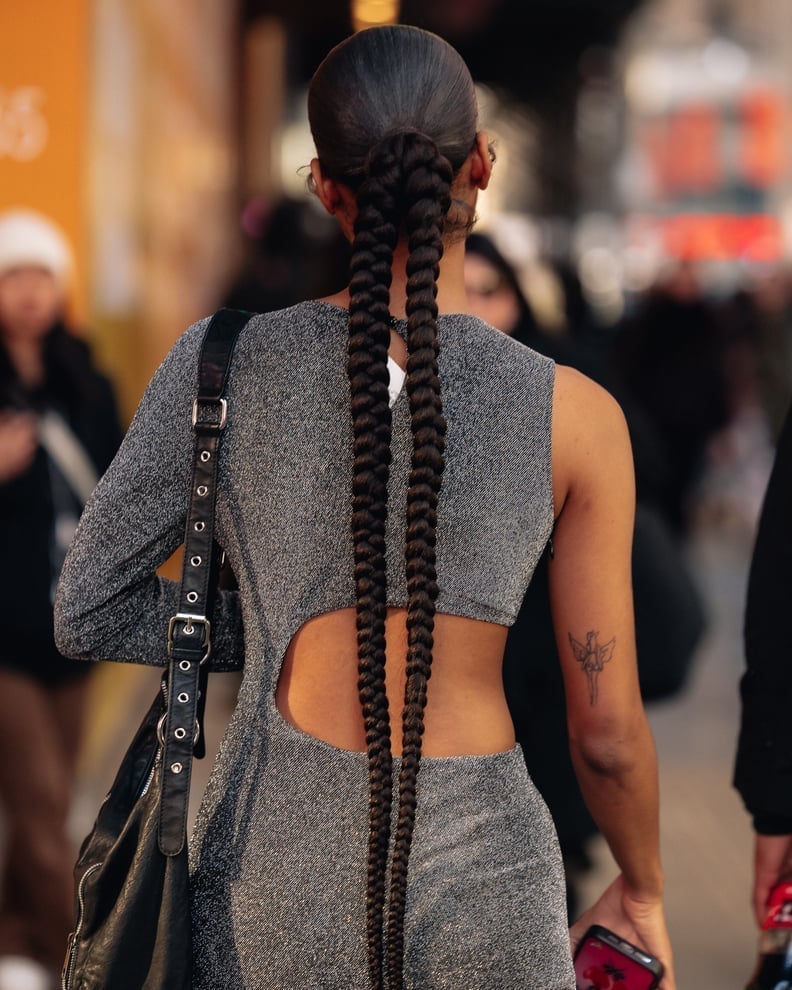
Two braids look more deliberate than one. A sleek, middle-parted ponytail pulled back tightly divides into two thick, long braids that fall together. The effect is symmetrical, which works for long face shapes because the width at the sides balances the length. Dark brown, straight hair holds the tension without frizz. The chair line is the only way to guarantee both braids match in thickness and tension. Pass when you dislike a middle part. The part is the foundation here, not an optional detail. A strong hold hairspray keeps the edges smooth through a full day.
Sophistication with a single long braid
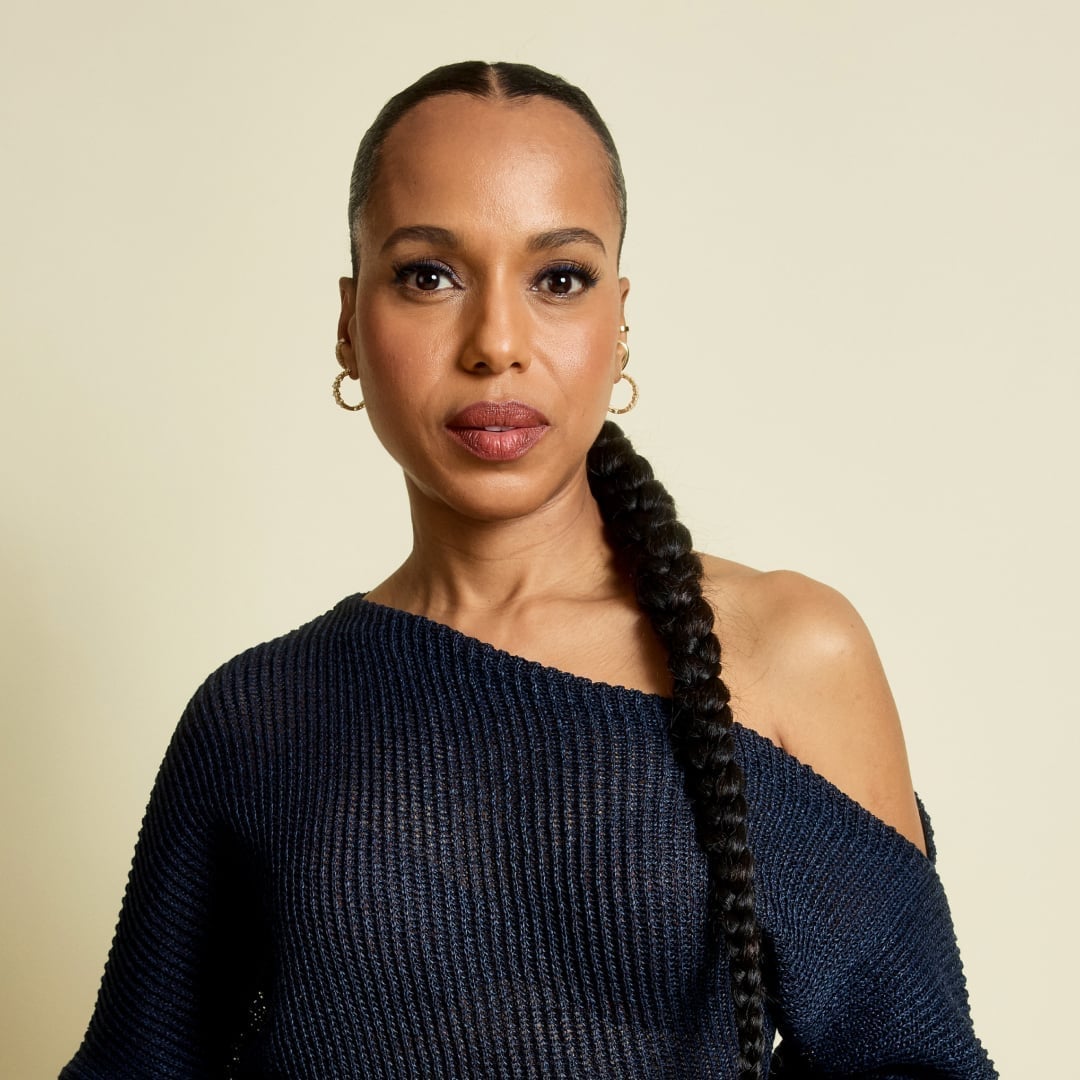
A single long braid is the closest thing to a uniform. Dark brown, straight hair, middle part, pulled back into a ponytail and braided in one clean section. The layers in the cut help the braid taper naturally rather than end in a blunt block. One drawback: a single braid this thick takes time to dry completely, so start with fully dry hair or the interior stays damp. Tell your stylist: thick single braid ponytail, dark brown. The smooth finish suits square face shapes because the vertical line softens the jaw. Avoid it if you want texture or a piece-y look. This braid is a solid column, and that is the point.
Final Thoughts
Pick the braided ponytail by your schedule and your texture.
- Intricate cornrows and extensions: book a stylist every 2-4 weeks.
- Bubble or pull-through styles: DIY with elastics in under 15 minutes.
- Wavy or coily textures: seal ends with a light oil before braiding.
- Gold cuffs, beads or ribbon: add after the braid is finished.
Find the version that fits your chair time and your morning.