21 Beautiful Starter Locs Styles for 2027
Beautiful Starter Locs 2027 feature twisted styles, air dried looks, and face-framing ponytails. See 21 starter locs hairstyles for your journey and save.

You are sitting in the chair, a stack of reference photos on your phone, and the stylist asks about parting. The loc journey starts here, with the shape you commit to today. A clean part or a soft air-dried finish, each choice sets the tone for the months ahead.
21 styles walk the line between structure and ease, from high ponytails that hold all day to geometric grids that photograph well. Which is why Beautiful Starter Locs 2027 fill so many saved boards. The struggle is not finding a look. It is picking one that still looks good at week six.
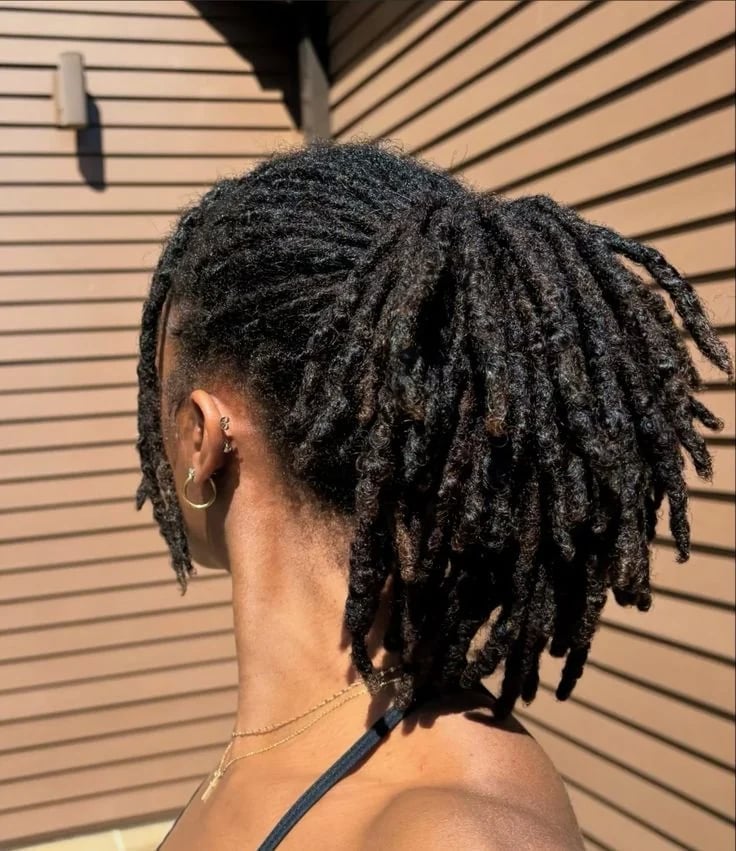
Starter locs styled into a high ponytail
Middle part, neat formation, high ponytail. The photo shows a side view of black starter locs styled into a ponytail. Coily and thick locs hold the ponytail shape without a second elastic; the weight does the work. You need enough length to gather, but the style itself asks nothing complicated. Tell your stylist: starter locs, high ponytail. Initial salon time buys you weeks of pull-and-go mornings.
Neatly twisted black starter locs ending at the ear
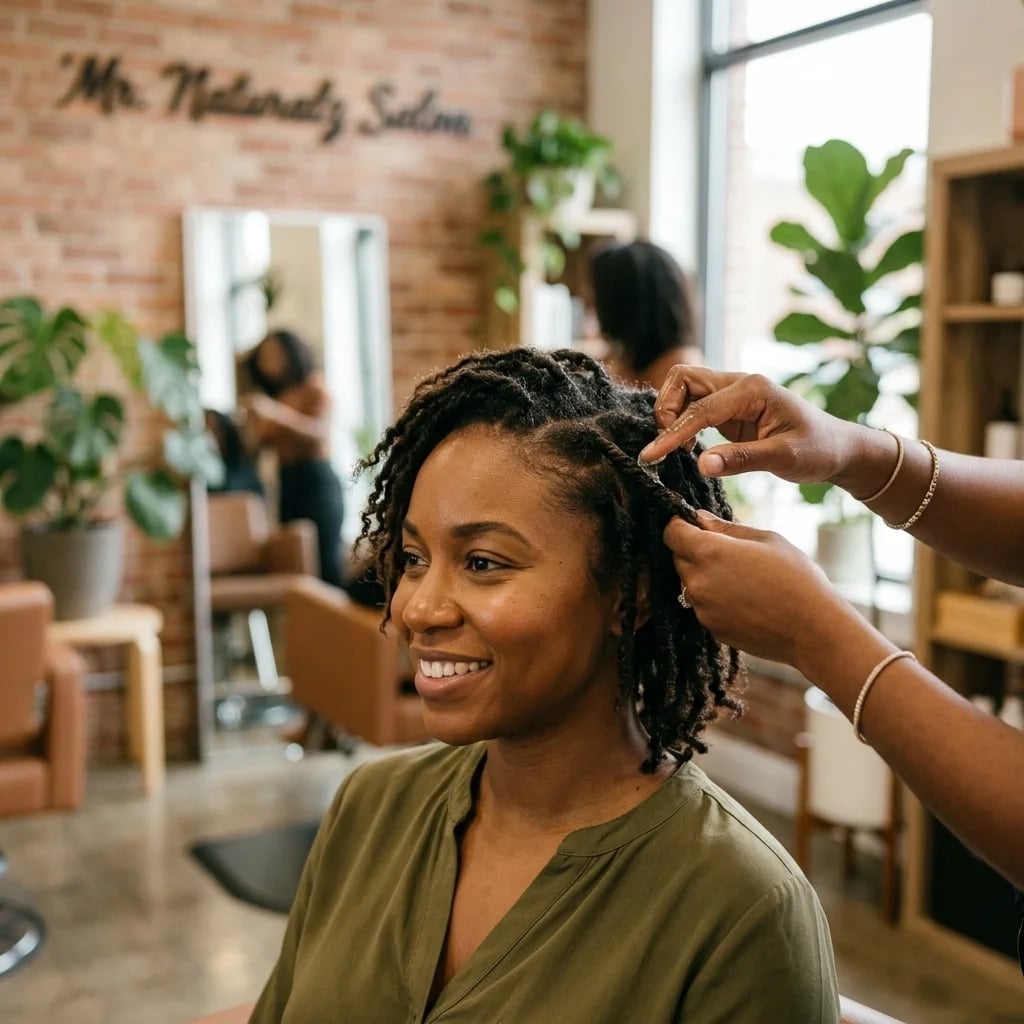
Ear length changes the math on starter locs. These twisted black locs sit cleanly at the ear, thick and coily, with a middle part that keeps everything symmetrical. You are not waiting for length to make an impression. The catch: the neatness here requires a salon-leaning process to get the twist pattern consistent. Skip this style if you prefer letting locs form without a strict grid. For everyone else, it is the most neat way to begin the journey and stay there.
Air-dried black starter locs with a middle part
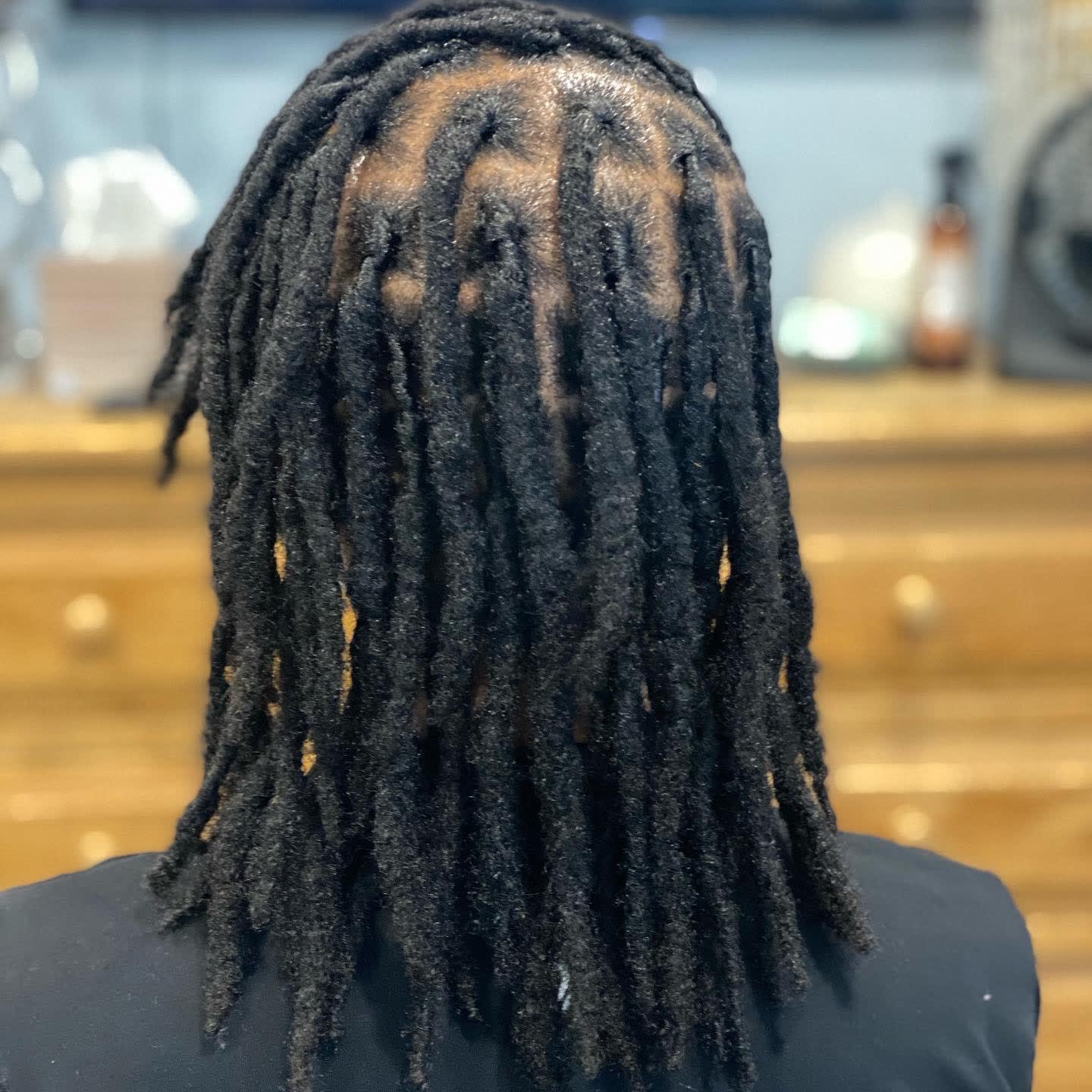
Air-dried starter locs sit opposite the neat ponytail. Both start with a middle part and coily, thick black texture. One requires a setup session; the other lets the hair settle as it wants. The air-dried finish looks less deliberate, which is exactly the point for week two or three. You re-train the part as needed, but nothing fights the natural texture. A trim every eight weeks keeps the ends from unraveling. A clean, defined look with zero heat and zero tension, the low-friction starter loc option.
Thick coily black locs in a high ponytail
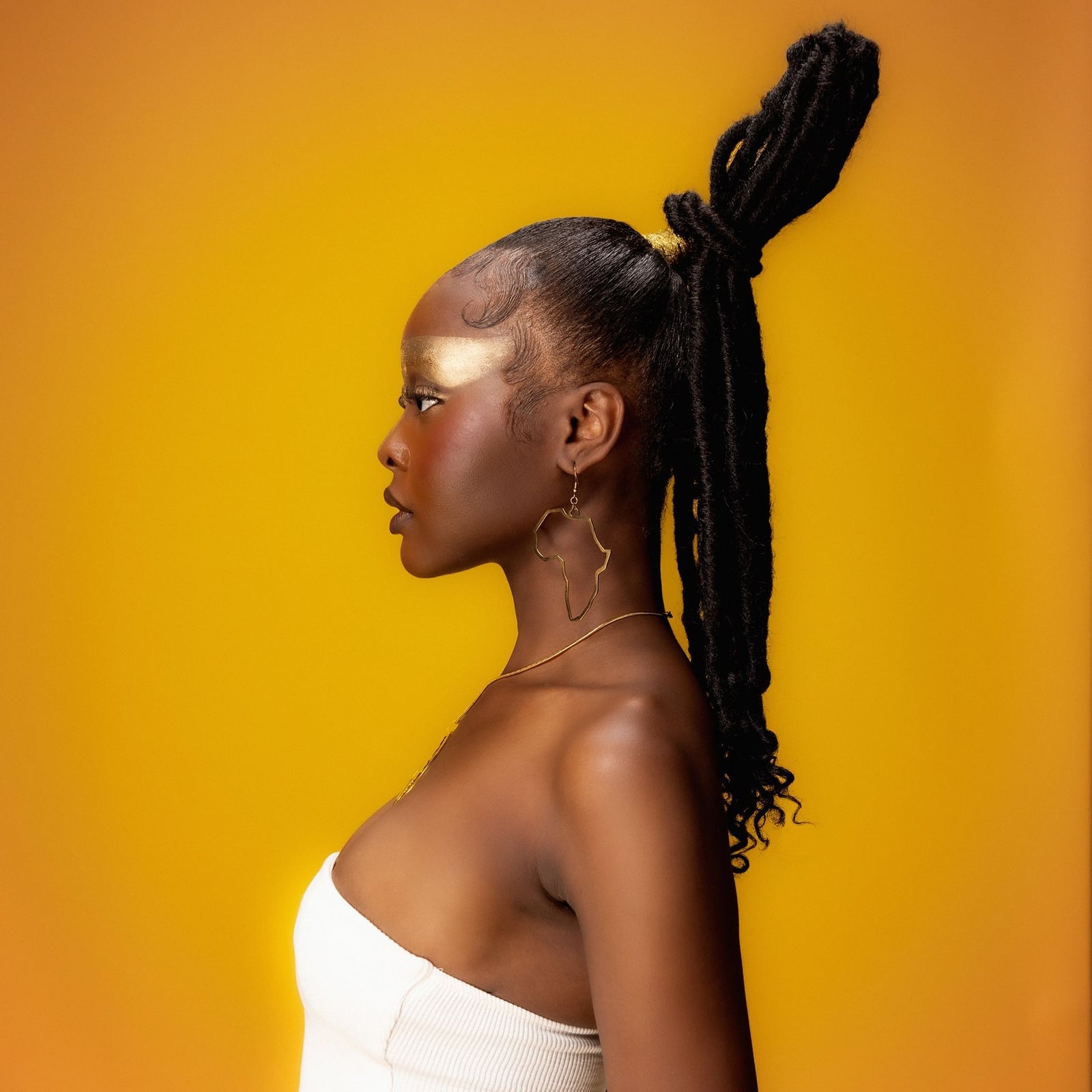
High ponytail, thick coily locs, black color, middle part, the same building blocks as the first section, but the difference is the density. These locs are thicker at the base, so the ponytail reads fuller and heavier. You are relying on the locs themselves to create volume, not a styling trick. The hold is straightforward: the weight of the hair keeps it in place. Skip it if your locs are on the finer side and cannot maintain the shape without extra securing. A practical, shape-forward option for starter locs that already have presence.
Starter locs styled into a face-framing high ponytail
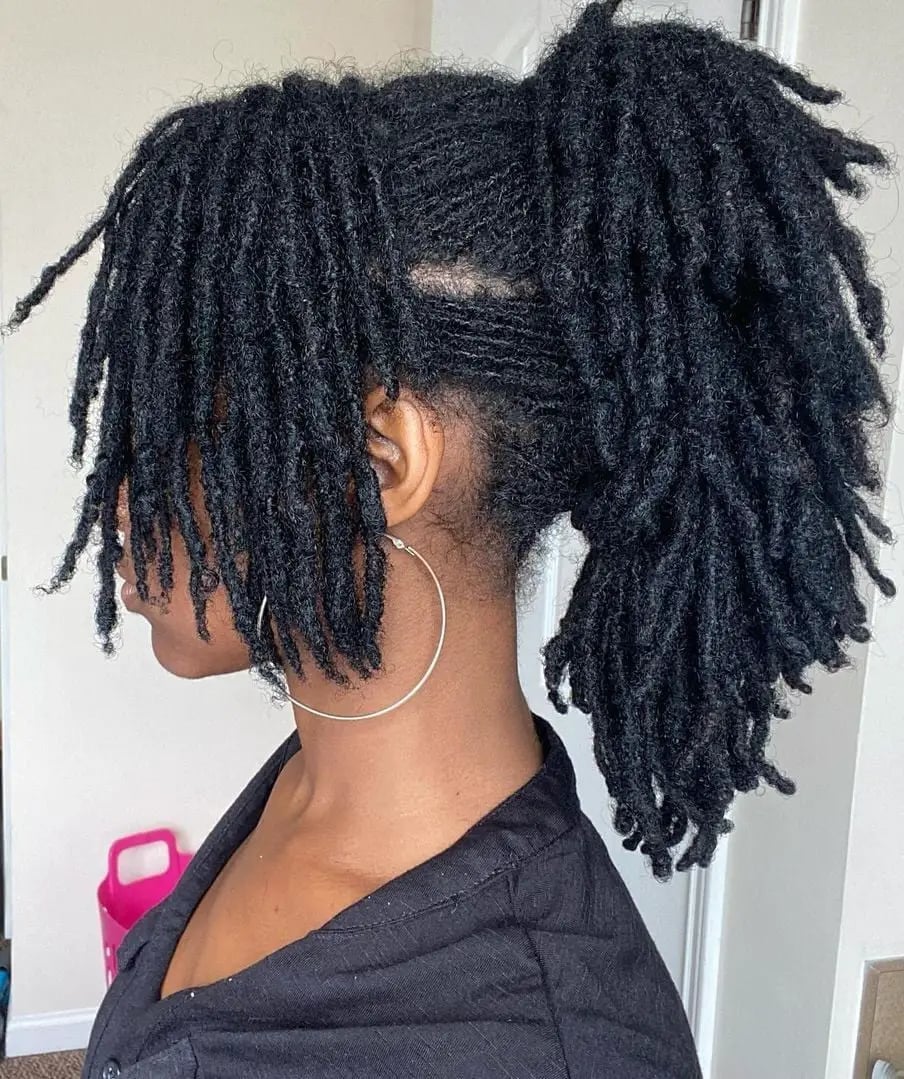
How do you get the ponytail without losing the softness around your face? You leave strands out. These black starter locs are thick and coily, pulled high with a middle part, but a few pieces stay forward to frame the sides. The words for the chair: starter locs, high ponytail, face-framing strands. The hair holds in the ponytail, so the style still looks neat. The loose pieces are the detail that keeps it from feeling severe. A subtle ask that changes everything about how the ponytail sits on you.
Voluminous auburn coily loc updo with face-framing strands

Evening events call for a design that holds its shape without fighting your texture. Auburn coily locs this thick keep their shape in a voluminous updo secured high on the head, with loose strands falling around the face and neck for softness. The middle part keeps the silhouette balanced. Ask your stylist for: locs, voluminous updo, auburn color. This one asks for texture and height.
Black starter locs in a high bun with loose strands
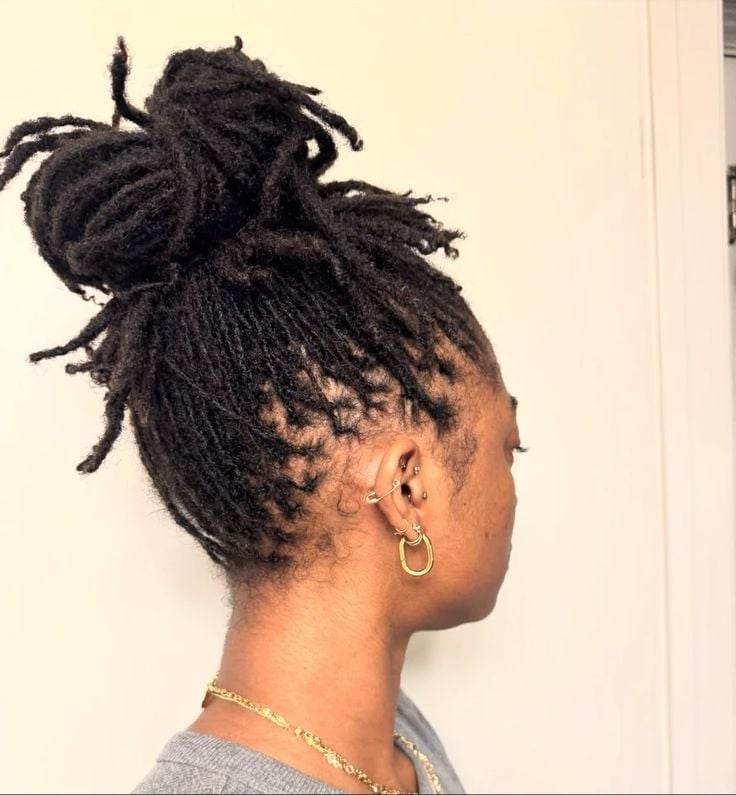
A high bun sounds simple until you have starter locs that want to fight the elastic. Black coily thick hair gathered upward into a voluminous silhouette works when you leave loose strands framing the face and nape. It buys you a second day between retwists, the loose pieces hide the new growth. The catch: strands at the nape will need a pin by hour four.
Short black locs with honey highlights and an air-dried finish
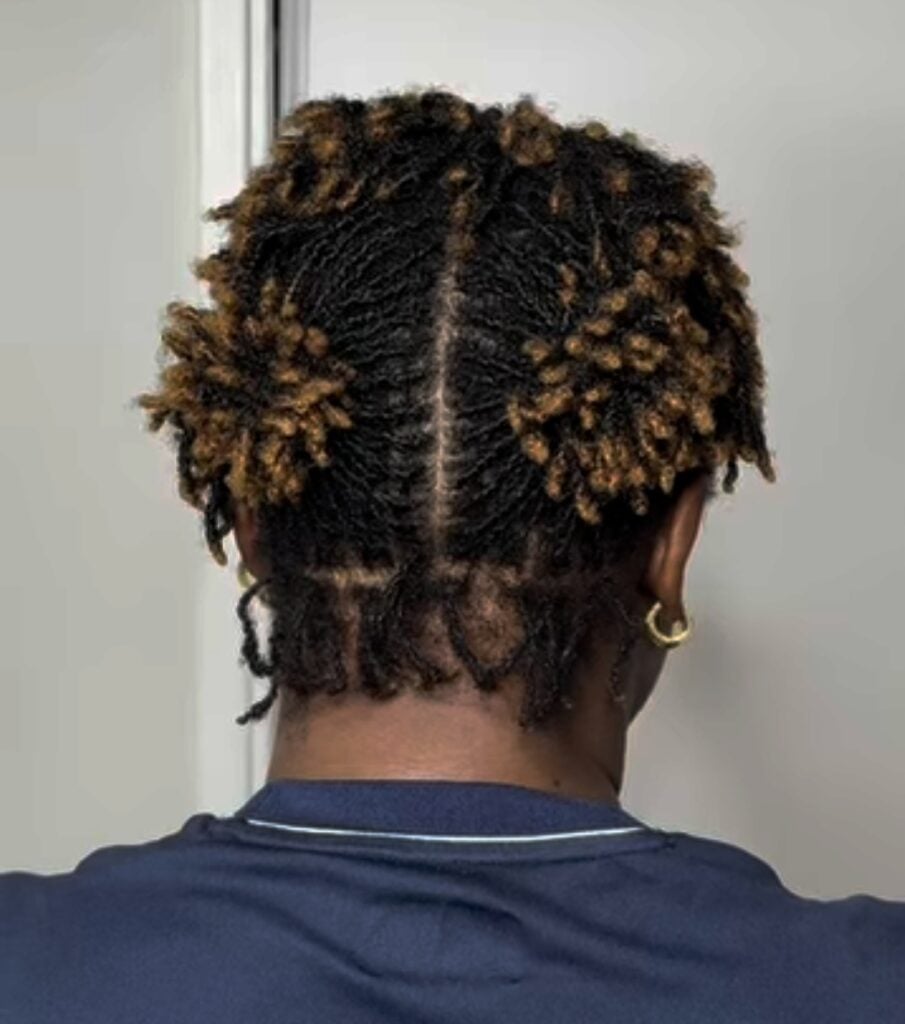
Honey highlights on a black base read differently at ear length than they do longer, closer to the root, the contrast hits harder. Short coily locs parted down the middle and air-dried keep the texture open, which lets the honey catch light without product. Ask your colorist for: short starter locs, honey highlights, air-dried. A solid-color version would read simpler; the highlights add a deliberate finish.
Two high buns with geometric parting on black starter locs
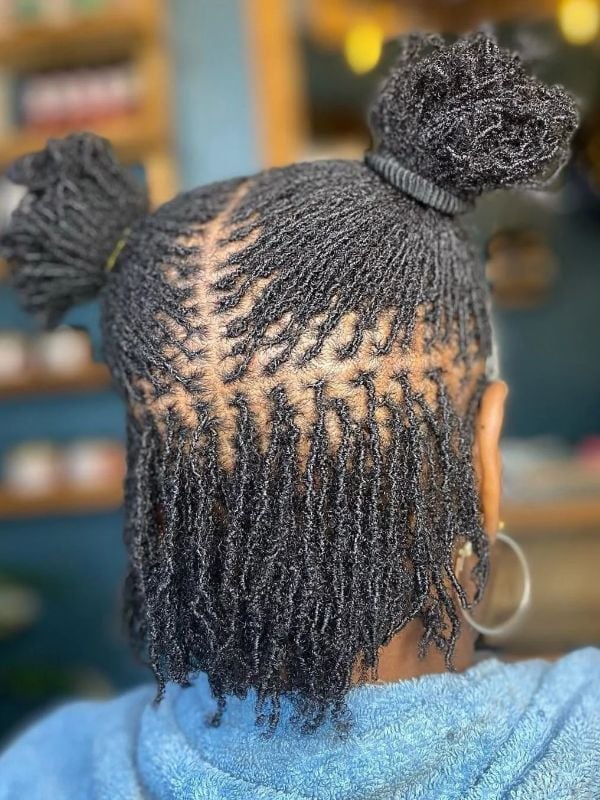
Two high buns demand a parting that holds its line. A precise middle part with geometric edges sections the black coily locs into clean halves, with the remaining locs left to fall. The buns sit high enough to clear the nape. The geometry only works if the starter locs are uniform in size, a stylist who rushes the sectioning will leave you with uneven halves.
Side view high bun on coily black locs
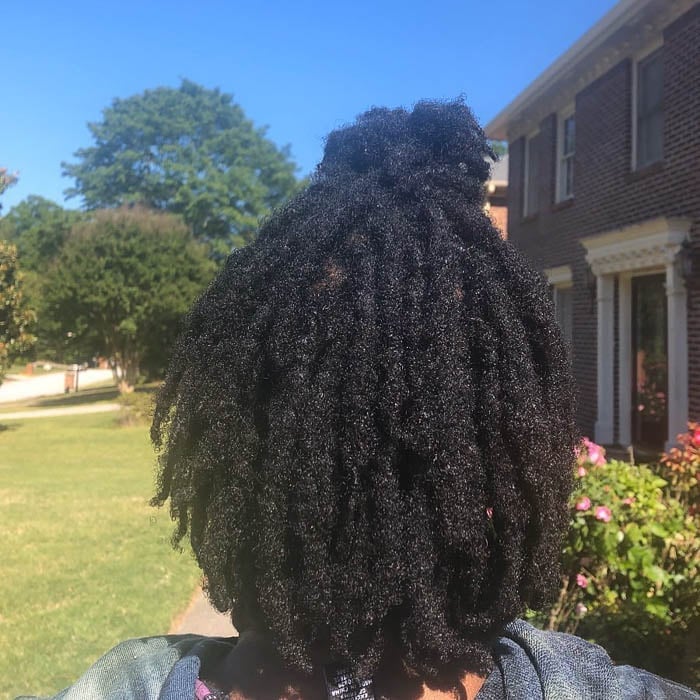
A side view tells you what the front hides. This high bun sits cleanly on thick coily black locs, no bumps at the crown. Bob length or longer works for the gather. The middle part keeps the line simple. Tell your stylist: starter locs, high bun. Re-tighten the edges every three days with a silk wrap or the silhouette softens by midweek.
Braided locs with a diamond grid pattern
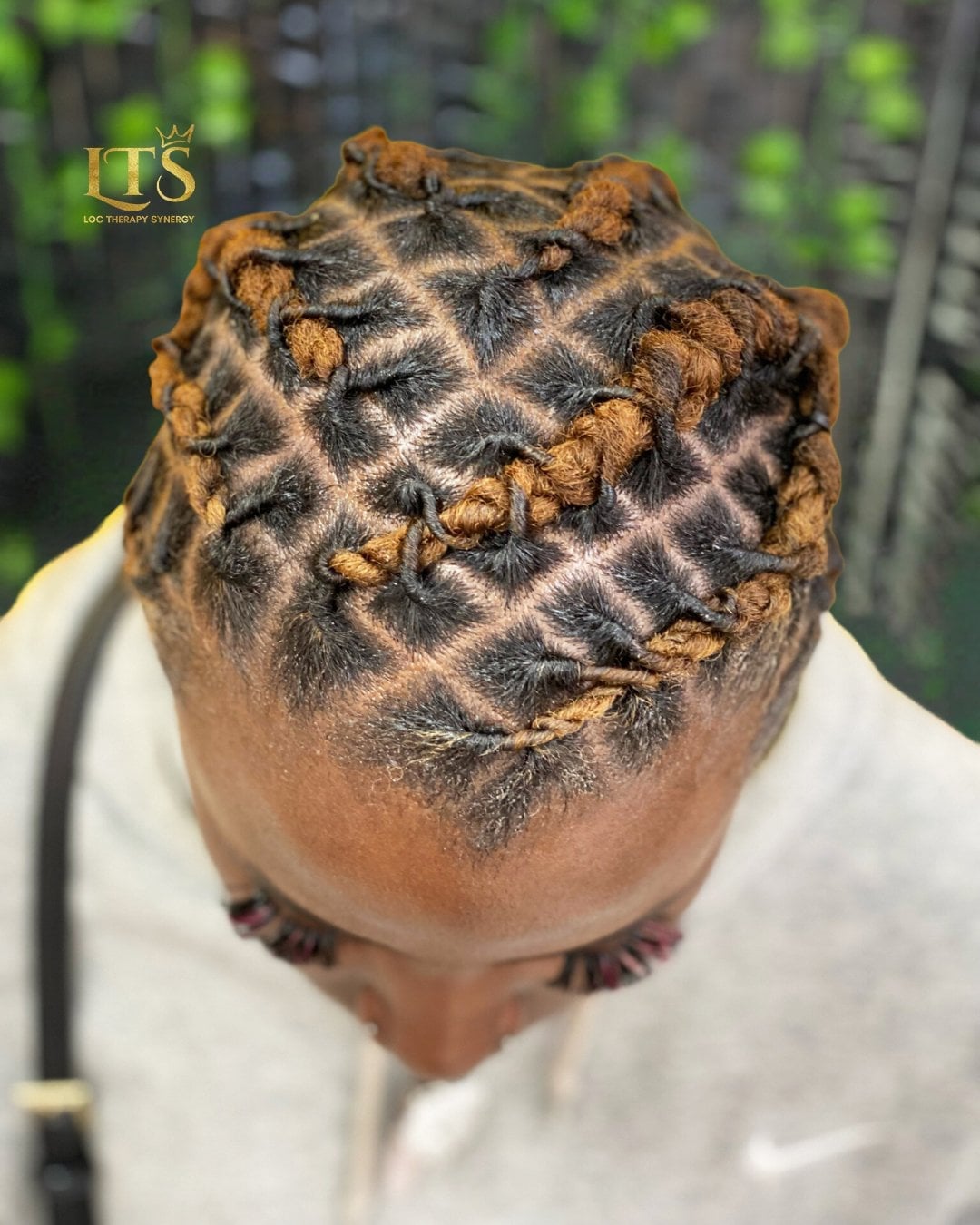
Braided starter locs typically look neat and uniform. This version makes the parting itself the focal point. Black and honey blonde accents alternate across a diamond grid, so the pattern holds attention whether the locs are worn down or pulled back. Thick, coily hair sections well into those small braids, and the honey tones keep the overall look from feeling too heavy. This style requires precision. The salon time is significant, but the pattern stays readable as the locs mature.
Bob length starter locs with defined square parts
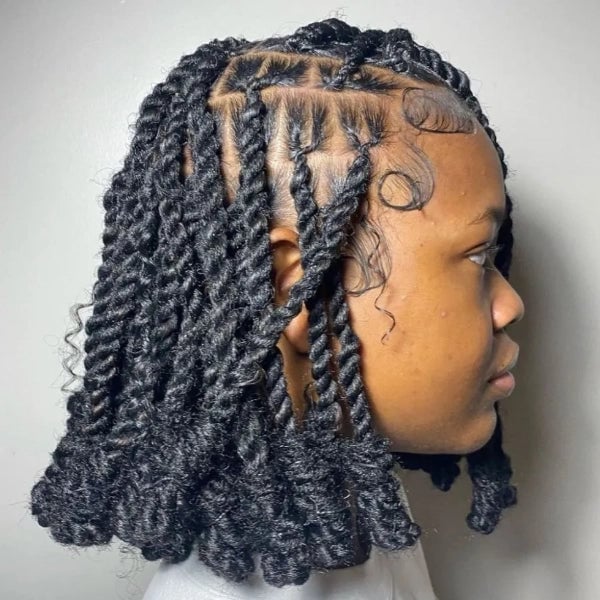
Square parts on a bob give the shape a structure that rounded sections cannot. The middle part and neat edges anchor the symmetry, while the twisted, coily locs keep the finish natural rather than severe. Thick hair holds those square sections cleanly, and the bob length means less weight pulling at the roots. Pass when you prefer rounded or freeform parting. The geometry here is precise. Tell your stylist: starter locs bob, defined square parts, twisted. The parting needs a re-touch every few weeks to stay crisp, but the bob itself grows out gracefully.
High ponytail with geometric crown parting detail
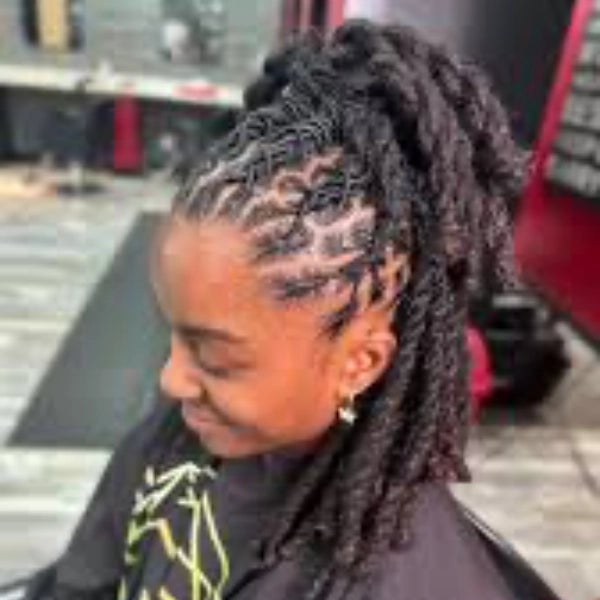
Geometric parting at the crown turns a standard ponytail into a deliberate design. The lines radiate from the center, drawing the eye upward before the locs fall into the ponytail. Thick, coily black locs hold that pattern without slipping, and the high placement keeps the length from dragging the shape down. The geometric parting starter locs ponytail works best on hair that can be sectioned into small, even parts. A side view shows the depth of the parting lines, something a front-facing ponytail often hides.
Air-dried starter locs with honey-toned tips
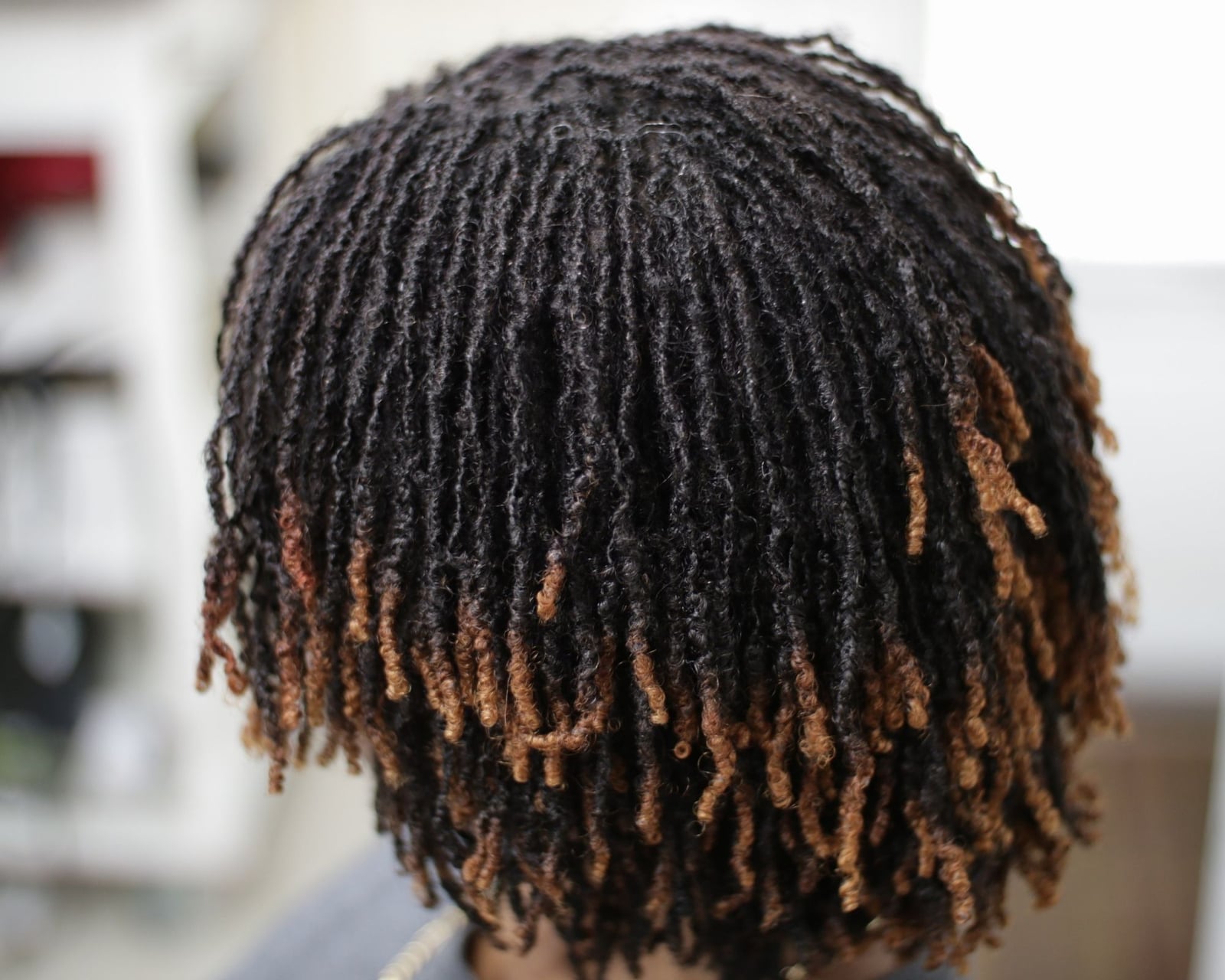
Air-dried starter locs do not need much help to look finished. This version adds honey-toned tips to the dark base, so the color draws attention without a full commitment to highlights. The ear length keeps the style practical. Nothing gets in the way. Thick, coily texture takes to air drying naturally, and the middle part keeps the shape balanced. The catch: honey tones on the tips mean the color fades faster than a solid shade, and touch-ups are needed to keep the contrast visible. A uniform color that requires less maintenance is a simpler option.
Long cascading black coily locs air-dried with a middle part
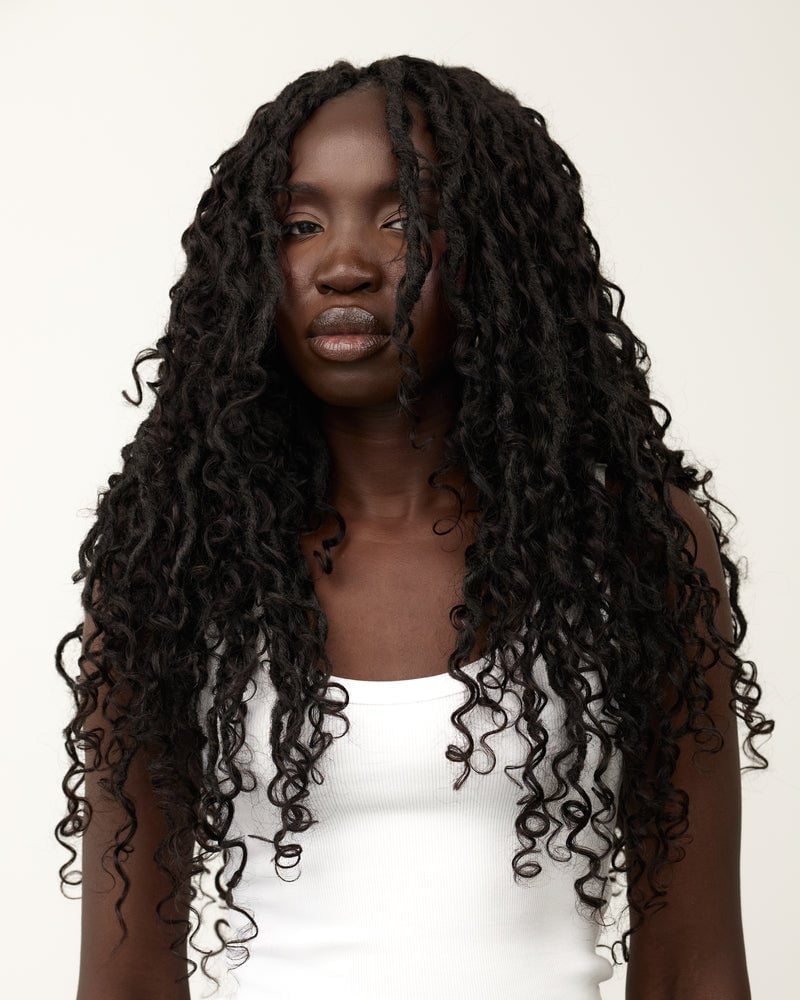
Long locs air-dried look deliberate rather than undone. The middle part lets the locs fall evenly on both sides, with some strands drifting forward to break the symmetry. Thick, coily texture gives the cascade volume without extra product. Compare this to the same locs pulled into a ponytail: the air-dried version shows the full length and natural movement, while a ponytail compresses that mass into a single line. This style favors those who want the locs to move freely and are willing to let the shape settle as it dries. A front view communicates the density better than a side angle can.
Dark brown starter locs ending at the ear
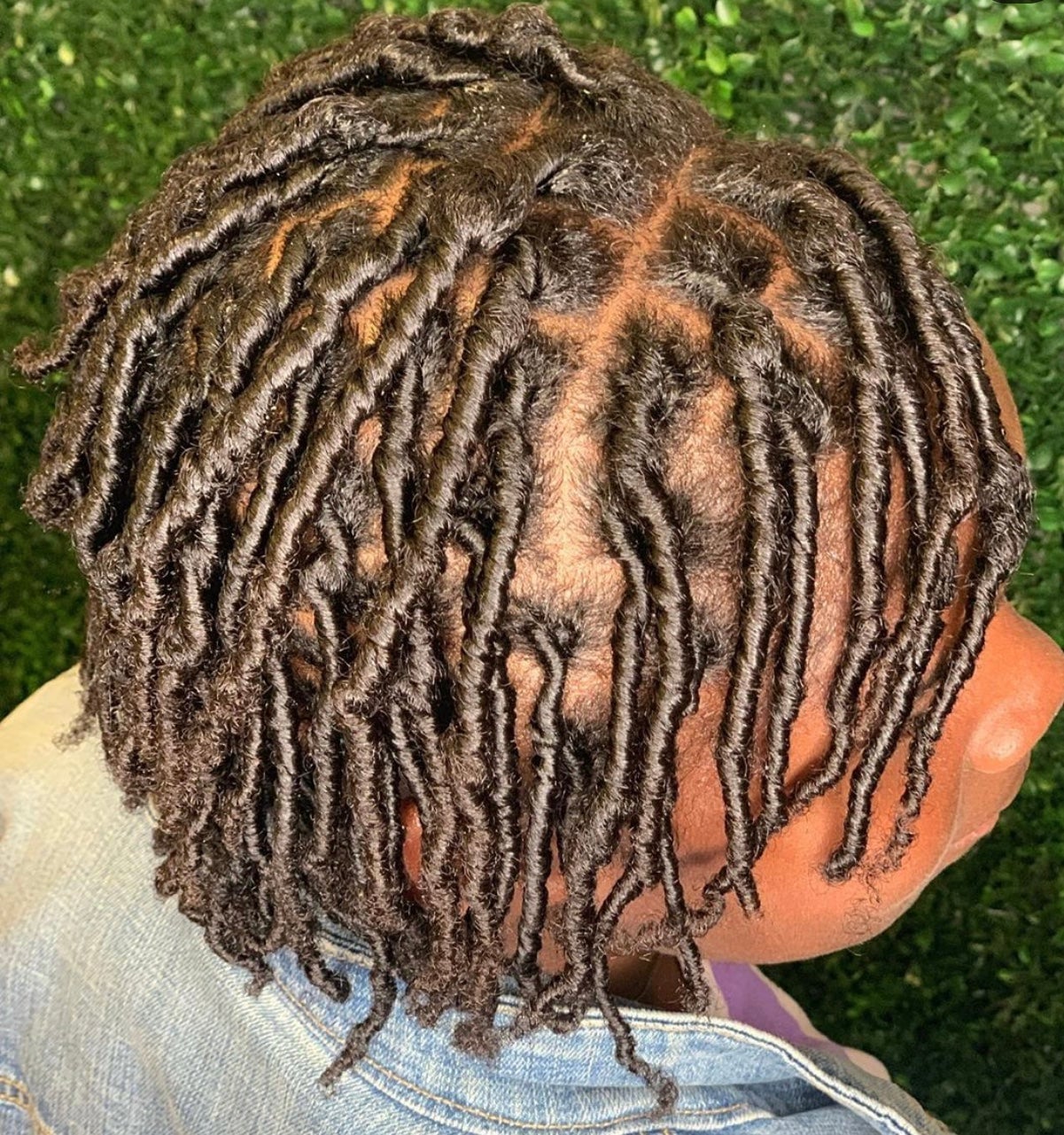
You want neatly formed starter locs that look intentional, not accidental. Dark brown at ear length, air-dried with a middle part, this is the clean base that lets the coily texture speak. The decision suits thick hair of ear length or longer. Tell your stylist: starter locs, dark brown, ear length, air-dried. The precision required for uniform strands means this is a salon-leaning process.
Double buns with locs cascading to collarbone on black starter locs
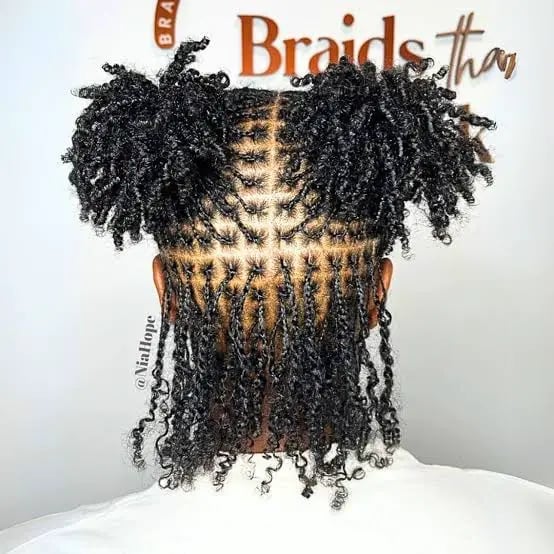
Two buns at the crown with the rest falling to collarbone length is a clear one-line assessment: playful but precise. Black starter locs with a middle part and a neat grid pattern create the structure for this coily, thick style. Thick, coily hair at collarbone length or longer suits most face shapes. A single updo or locs kept out of the face entirely are other options. The salon-leaning parting and starter locs require a steady hand, not a quick twist at home.
Grown-up high bun with defined black starter locs
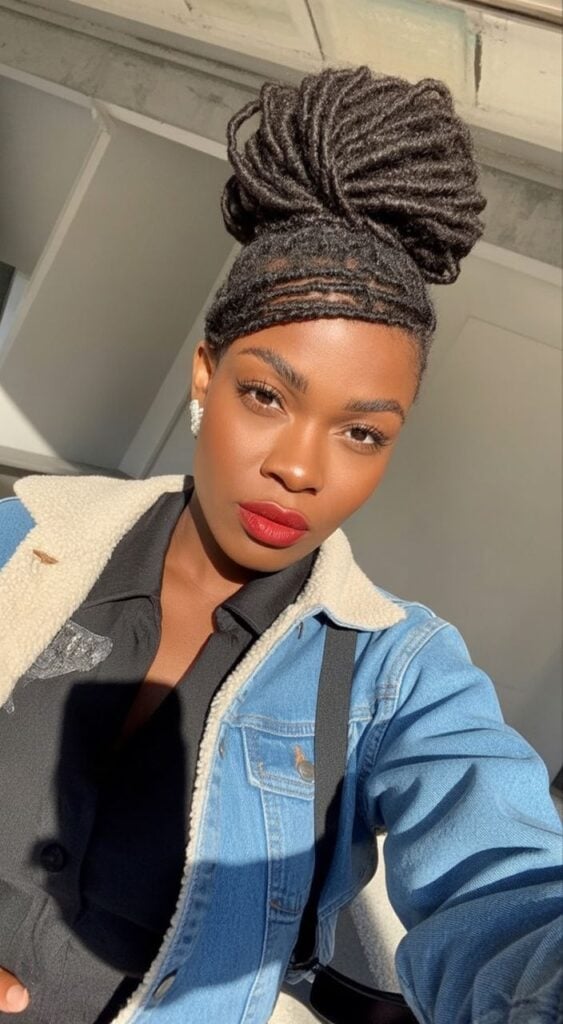
A high bun works when the locs are defined enough to hold their shape. Black starter locs pulled up neatly with a side part create a voluminous silhouette that is grown-up, not severe. Thick, coily hair of any length that can be gathered into a high bun suits this style. A casual look or a different parting changes the effect. The side part and clean pull-back are what make this design work, turning everyday locs into something for work, evening, or formal occasions.
Ear length dark brown starter locs with green highlights
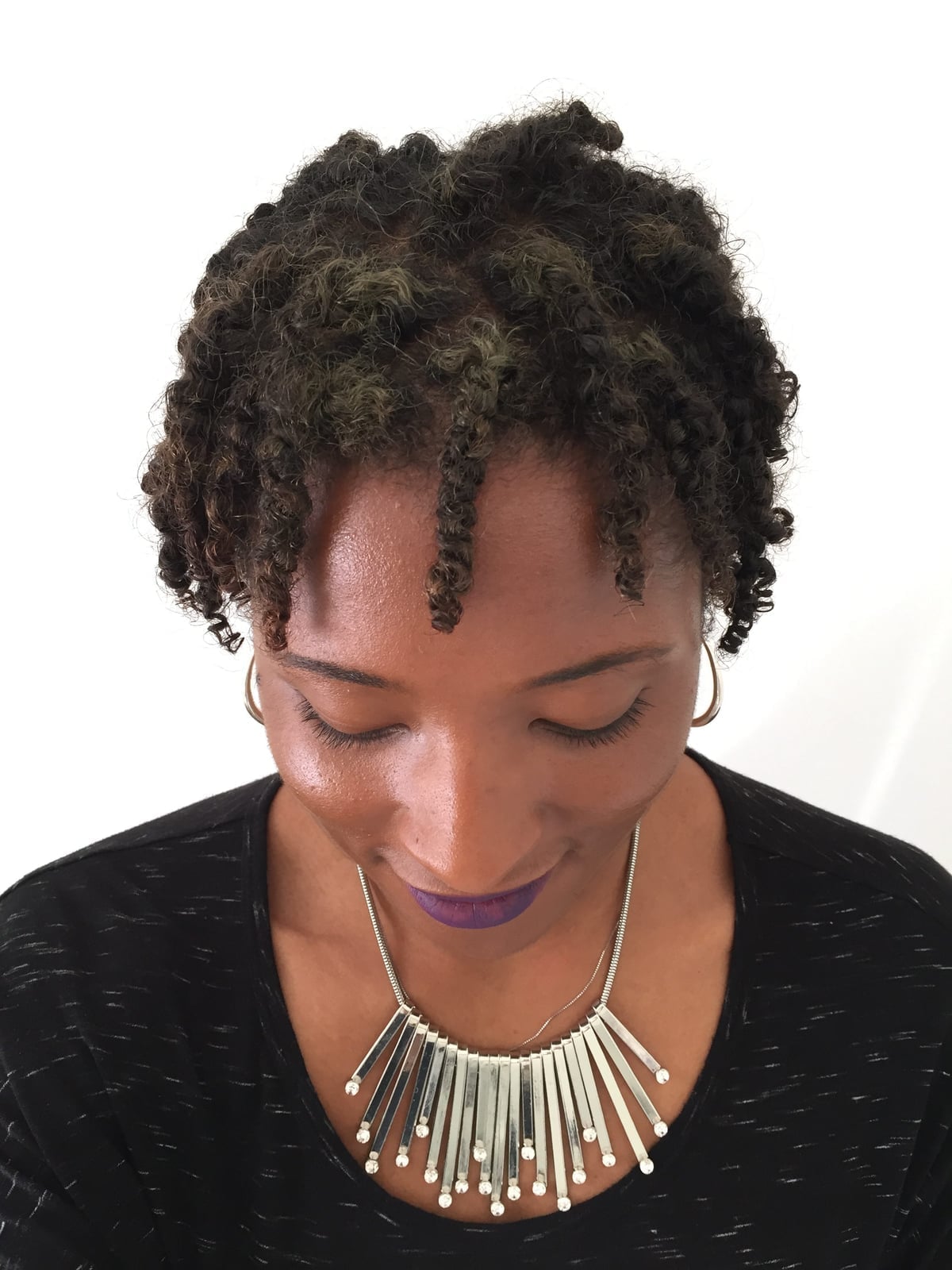
Set it against black: dark brown with subtle green highlights lands differently. Ear length starter locs with a middle part frame the face without hiding it. Thick, coily hair at ear length suits this style. The salon-leaning maintenance for both the defined starter locs and the highlights means regular touch-ups. Upkeep reality: the green fades faster than the brown, so plan for toning every few weeks.
Structured twisted locs with geometric sectioning
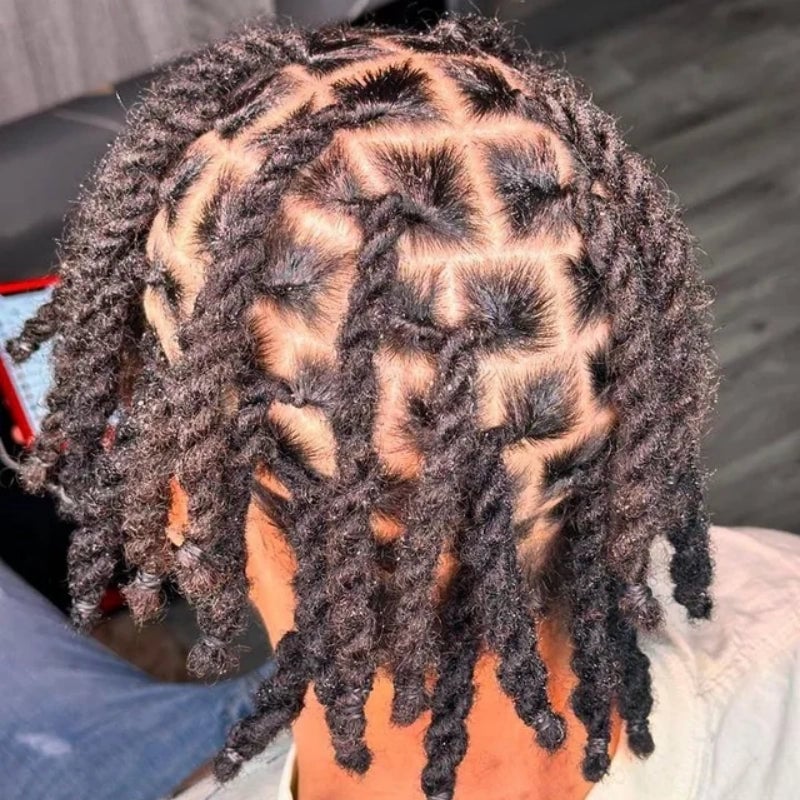
Start with clean, square sections before you twist. Black starter locs with a defined geometric parting system create a neat, structured look that emphasizes precision. Thick, coily hair that can be precisely sectioned and twisted suits this style. A rat-tail comb is your best tool here; the geometric sectioning requires patience, not speed. The result is a clean canvas for loc growth that looks intentional from day one.
Neatly formed air-dried black starter locs for 2027

Thick coily locs formed with precision hold their shape without product buildup. A middle part keeps the pattern symmetrical, and the air-dried finish means zero heat passes before you leave the house. It suits most face shapes because the uniform thickness balances proportion naturally. Tell your stylist: starter locs, neatly formed, air-dried. Skip it if salon-leaning maintenance feels like a second job right now. These need palm-rolling or retwisting every four to six weeks to stay this tidy. The hold is firm but not stiff, so the texture still moves as a single unit. Black reads clean against the scalp, which makes the parting lines the star of the style.
Final Thoughts
Pick the starter style that matches your mornings, not your mood boards.
- Ten minutes in the morning: air-dried with a middle part
- Salon visit every six weeks: geometric parting or intricate buns
- Color that grows out softly: honey-toned tips or auburn strands
- Fine hair that needs volume: defined square parts and coily texture
Choose a starter loc style that suits your lifestyle and hair texture.