26 Beautiful Cornrows Hairstyles 2027 for Any Occasion
Beautiful Cornrows Hairstyles 2027: Explore 26 looks featuring sleek black cornrows with baby hair and defined cornrows into long braids.

You have the appointment booked, the reference photos saved, and a vague sense that you want something beyond basic cornrows. The question is which pattern, which length, which finish will actually work for the next few weeks without driving you crazy.
This is why Beautiful Cornrows Hairstyles 2027 fill so many saved boards, the collection solves the gap between inspiration and execution. 26 ideas span from straightforward scalp braids to intricate geometric designs, each with a note on hold time, texture needs, and the honest upkeep reality. For anyone who wants a protective style that looks intentional without requiring a second appointment every week.
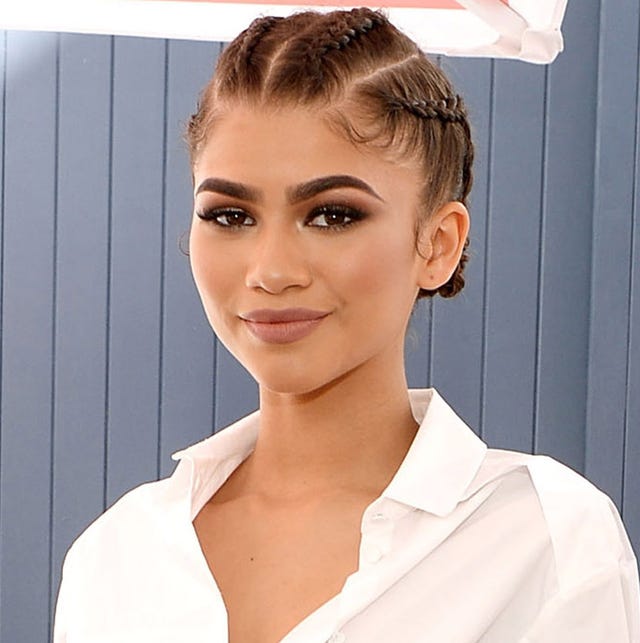
Neat dark brown cornrows with baby hairs framing the face
Middle part, dark brown cornrows, and a hairline that looks deliberately finished. That is the formula. The coily, thick texture holds each braid close to the scalp without slipping, which means the part stays straight and the rows stay even for weeks. Baby hairs get the same attention as the braids themselves, swept into soft arcs that soften the frame without looking fussy. The catch: those edges need daily attention. A dab of edge control and a small brush in the morning keeps the shape intact. This style requires daily edge maintenance to keep the baby hairs neat.
Light brown cornrows with darker roots and sculpted baby hairs
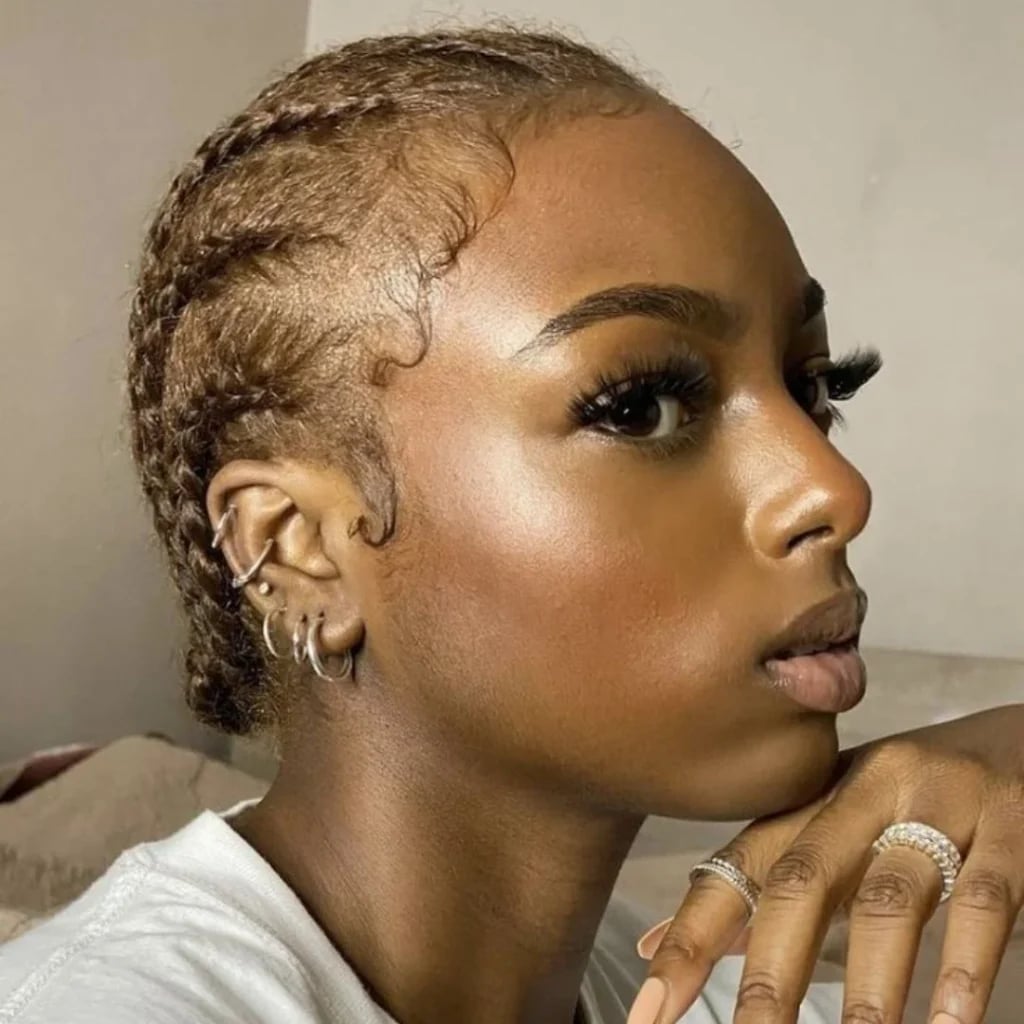
How do you get a cornrow style that looks dimensional without adding extensions? You let the root grow in darker. Light brown rows with a deeper base create depth that flat color cannot match. The coily, fine texture here works for the sculpted baby hairs. They hold a curve without heavy product. Book it as: light brown cornrows with darker roots and sculpted baby hairs. A fine-tooth comb and light-hold gel keeps the edges crisp between trims.
Sleek black cornrows with intricate baby hair edges
Straight, thick hair versus coily texture: which one holds a cornrow better? Straight hair gives you this look, a flat, sharp cornrow that sits like a line drawn on the scalp. The deep black color and intricate baby hair edges look deliberate, not accidental. Pass when your natural texture has more wave than straight; the braid will lift and the edge work will soften overnight. A light mist of setting spray after styling keeps the baby hairs from escaping.
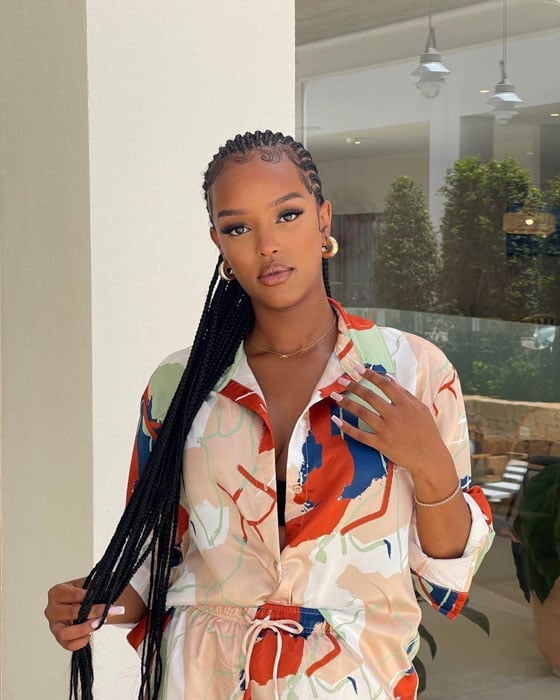
Neatly defined black cornrows transitioning into long braids
Scalp cornrows that turn into long, thick braids require precision at the transition point. A middle part and slicked edges anchor the front, while the braids themselves carry the weight. This works best for thick, coily hair. The extension braids need density to look smooth.
This style works for those who want braids that start at the crown. A light serum on the braids controls flyaways and adds a neat sheen. The hold lasts roughly three weeks before the roots need attention.
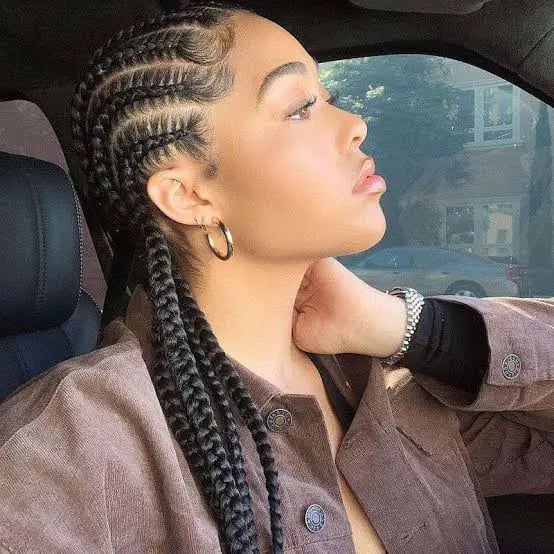
Long thick cornrows cascading down the front
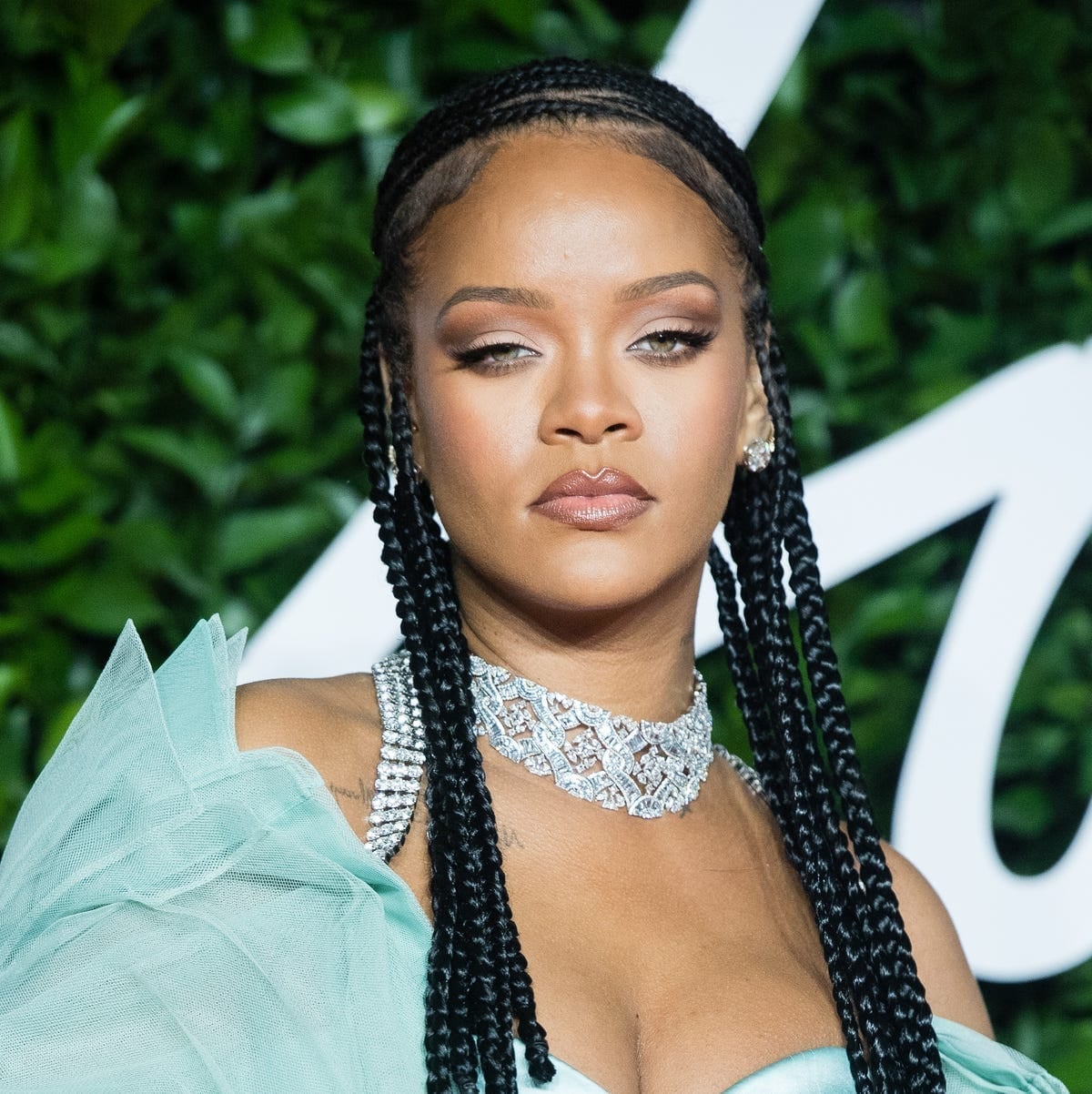
Cornrows that fall forward change the silhouette entirely. Thick, coily hair braided from the crown down past the shoulders, with a middle part that keeps the distribution even. The weight of the braids pulls them forward, which means the scalp cornrows stay taut and the front framing stays consistent. Ask your stylist for: long thick cornrows with a middle part. These braids are meant to hang. A silk scarf at night preserves the sleekness without crushing the rows.
Heart-shaped cornrow design with copper and blonde extensions
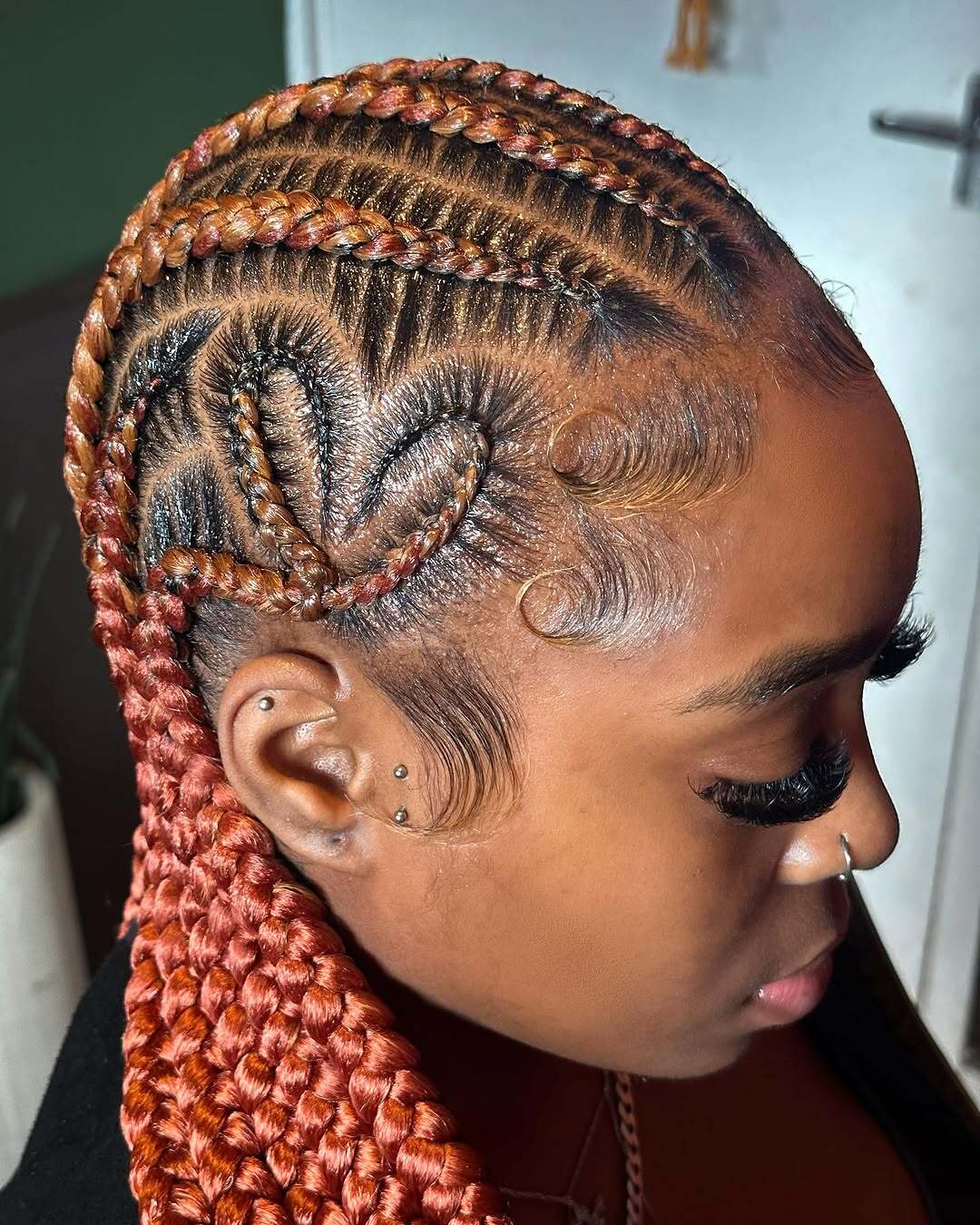
You could go with straight rows, or you could do this. A middle part splits the scalp, and from each side a heart shape is braided in neat cornrows before the hair drops into copper and blonde extensions. The coily texture holds the design crisp, and the laid edges keep it from looking like a rough sketch. The color is the point, two tones that create a deliberate look. A soft brush and a dab of gel keep those edges intact for the night.
Cornrows leading into long, curly extensions with a beaded headband
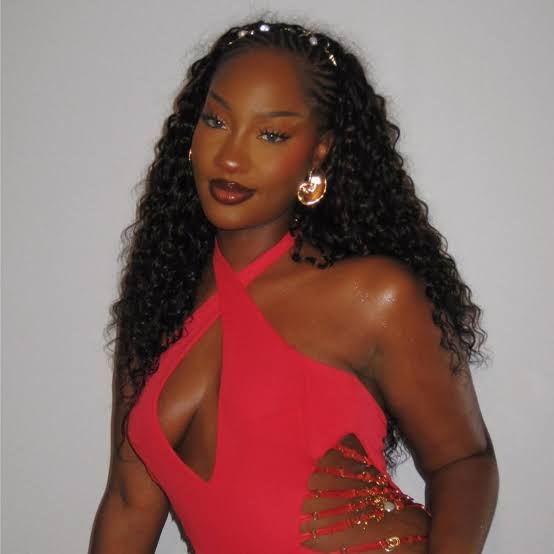
Can you add a headband without it looking like a costume? Yes, if the braids are the foundation. Cornrows start at the scalp and feed into long curly extensions, all black, all thick, parted straight down the center. The beaded headband sits across the crown, catching light without competing with the braids. Ask your stylist for: cornrows into long curly extensions, beaded headband.
The headband is not glued in, which means it can shift during the day. Push it back into place gently, no tugging on the cornrows underneath. The curly extensions need brushing from the ends up, same as any added length. A centered part keeps the whole thing symmetrical, and that symmetry makes the accessory look deliberate.
When you want box braids without beads
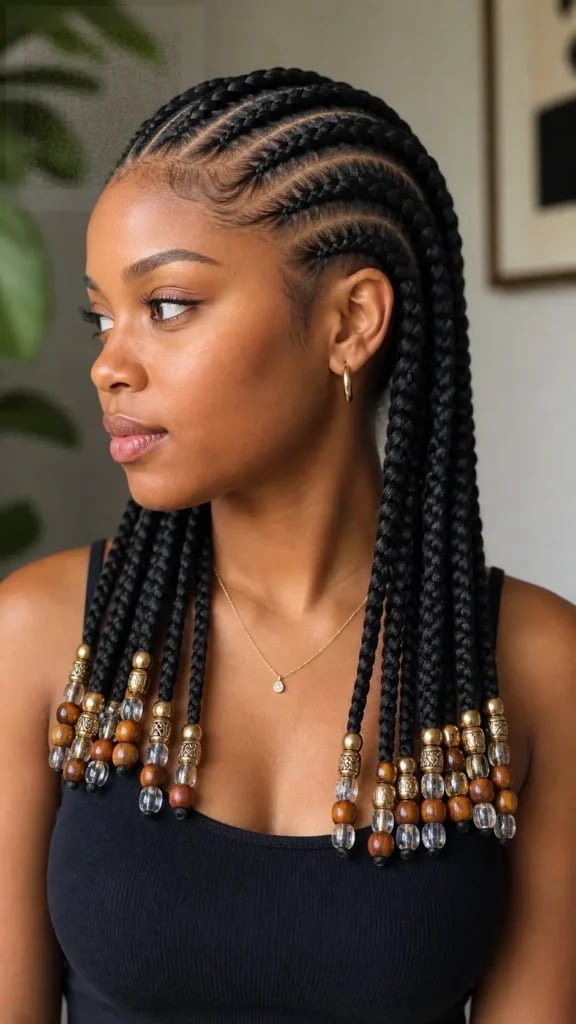
Cornrows tight against the scalp transition into thick box braids, and the beads are the detail that makes it a conversation. Wooden rounds and metallic cylinders are threaded onto the ends, clicking together when you move. The middle part keeps the sections even, and the black color means the beads are the only accent.
Those beads can slide off if the knot is loose. Check each one before you leave the chair, and ask for an extra knot if you hear a rattle. The box braid section holds the weight, so the cornrows stay flat and comfortable. Skip it if you dislike the sound of beads or prefer a simpler finish. A silk scarf at night keeps the braids from frizzing and the beads from catching on the pillowcase.
Curved cornrows leading into a thick braided ponytail with beads
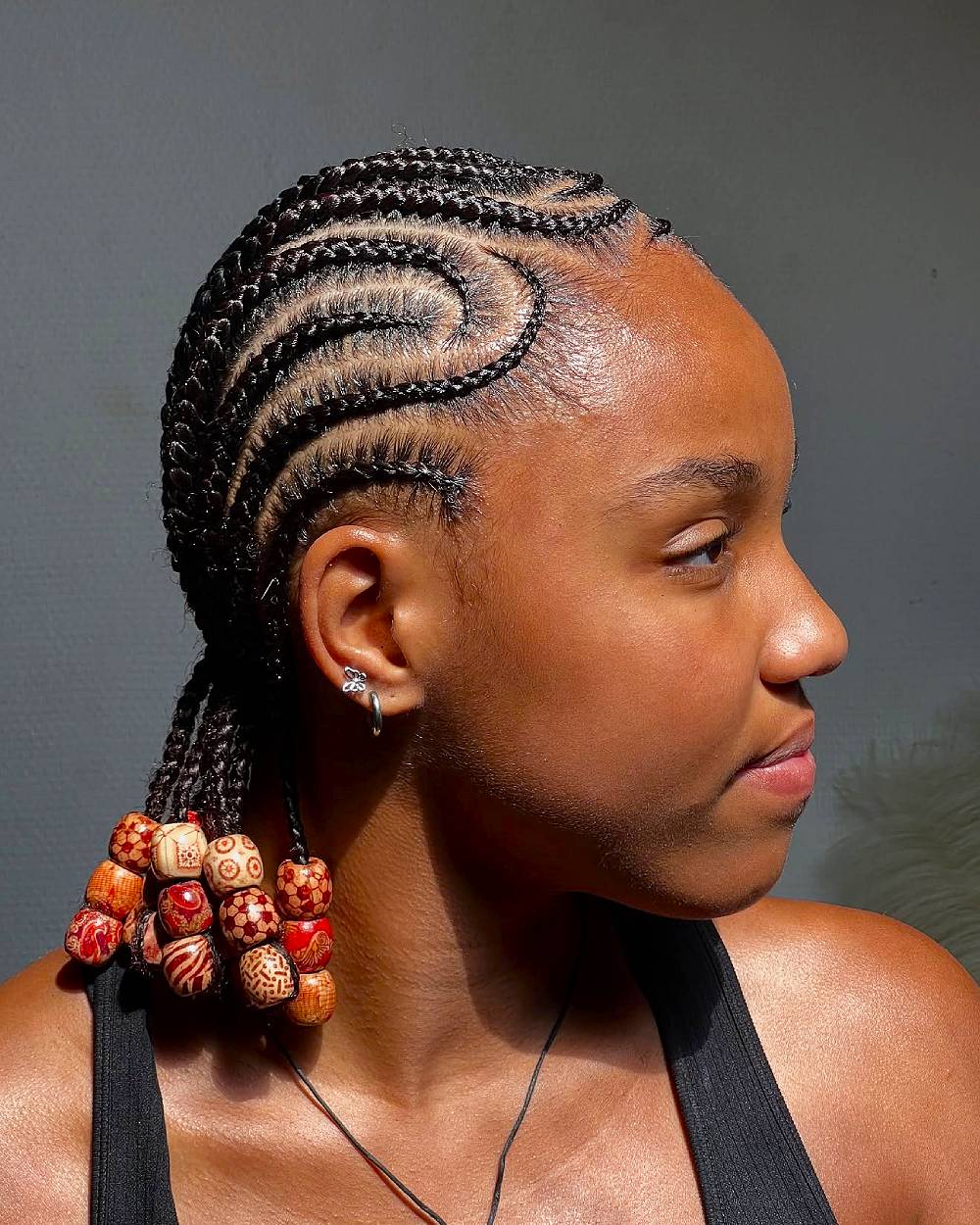
Straight-back cornrows are reliable, but curved lines change the shape of the head. Here the cornrows arc around the side before feeding into one thick coily ponytail. The ponytail is the destination, and a cluster of decorative wooden beads in red and natural tones hangs from it. Ask your stylist for: curved cornrows into a thick ponytail, decorative beads. The beads are not a last-minute add-on. They need to be threaded onto the braid as it is formed, not clamped on afterward. Skip it if you want your hair worn down or dislike the weight of beads.
Cornrows on top with voluminous curly extensions and brown highlights
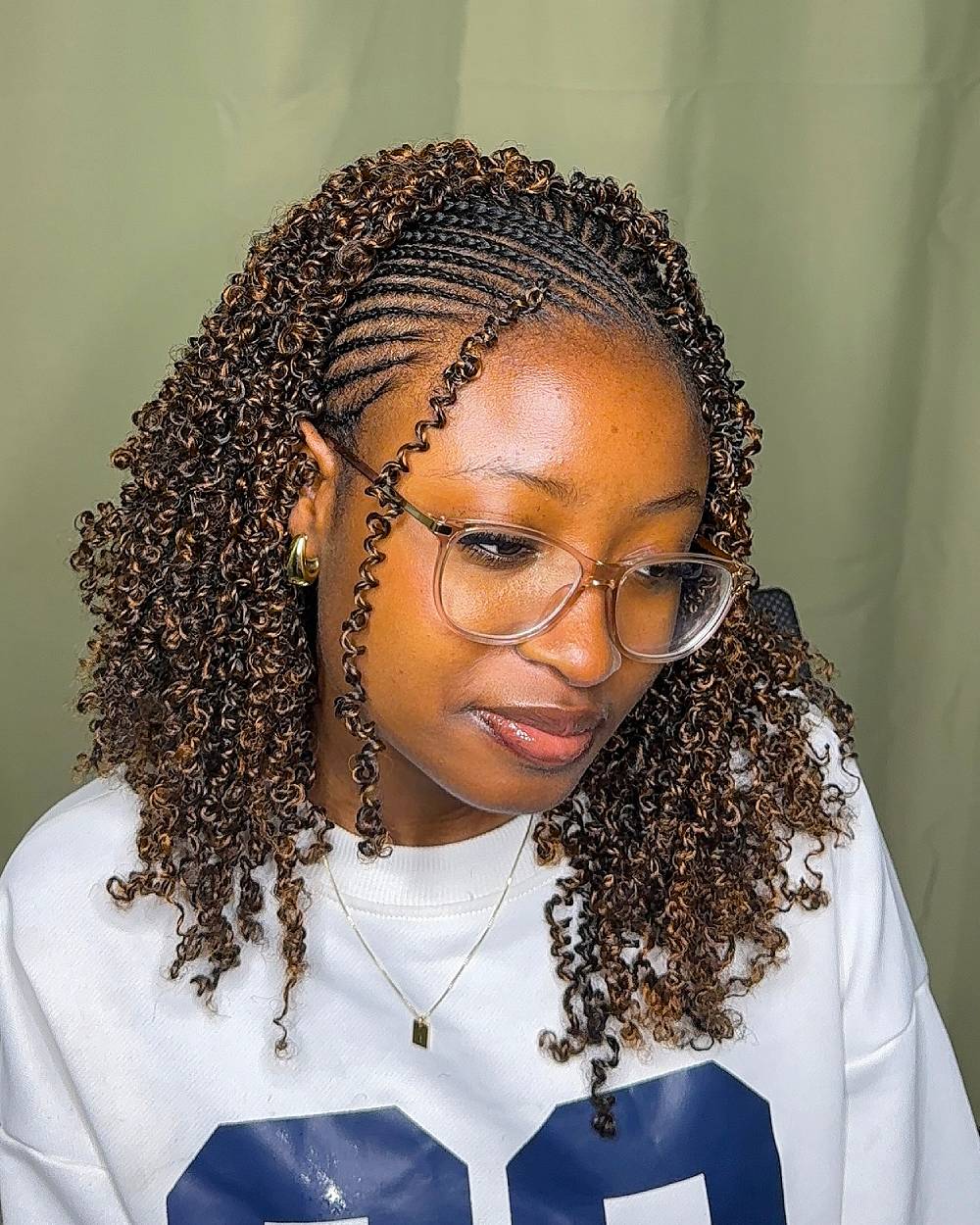
The top half is cornrows, flat and precise, parted down the middle. The lower half is voluminous curly extensions, dense enough to hide the transition. Brown highlights are woven into the dark base, subtle enough that you catch them only when the light hits. The contrast between the sleek scalp braids and the full curl below is the whole trick. The middle part is not optional here, it is the anchor that keeps the two textures balanced. Thick coily hair holds the cornrows without slippage, and the extensions add length without looking separate.
Intricate cornrows lead into dark brown and blonde box braids
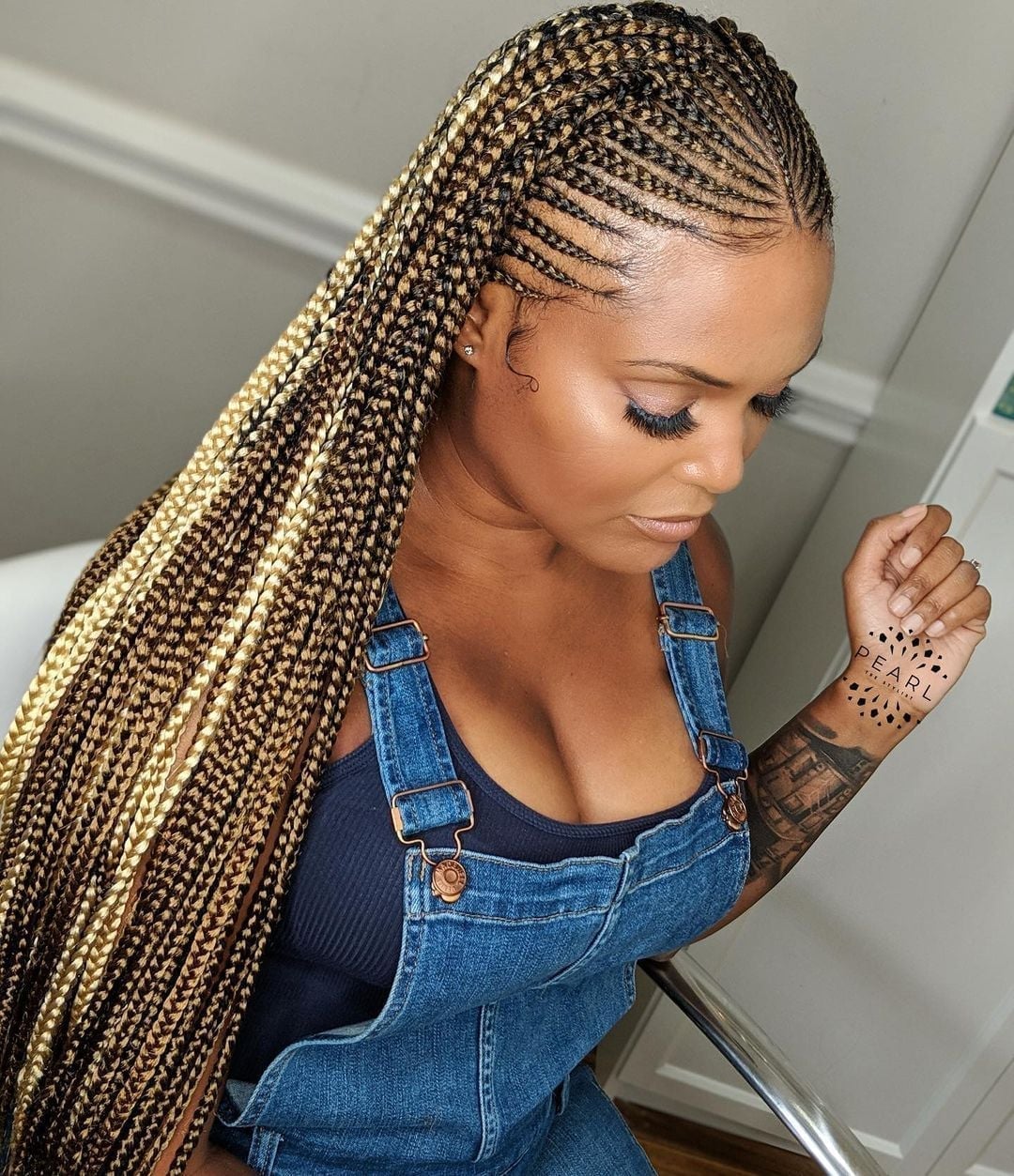
Two tones in one style require a colorist who understands how dark brown and blonde work together. The cornrows at the scalp stay neat and tight, then release into long box braids that carry the blend downward. Thick, coily texture holds the pattern well, but the real test is the color contrast. The words for the chair: cornrows into box braids, dark brown and blonde two-tone. A deep conditioning treatment every week keeps the color from turning brittle. Skip it if a single shade feels more your speed.
Cornrows with subtle brown undertones and clean scalp parting
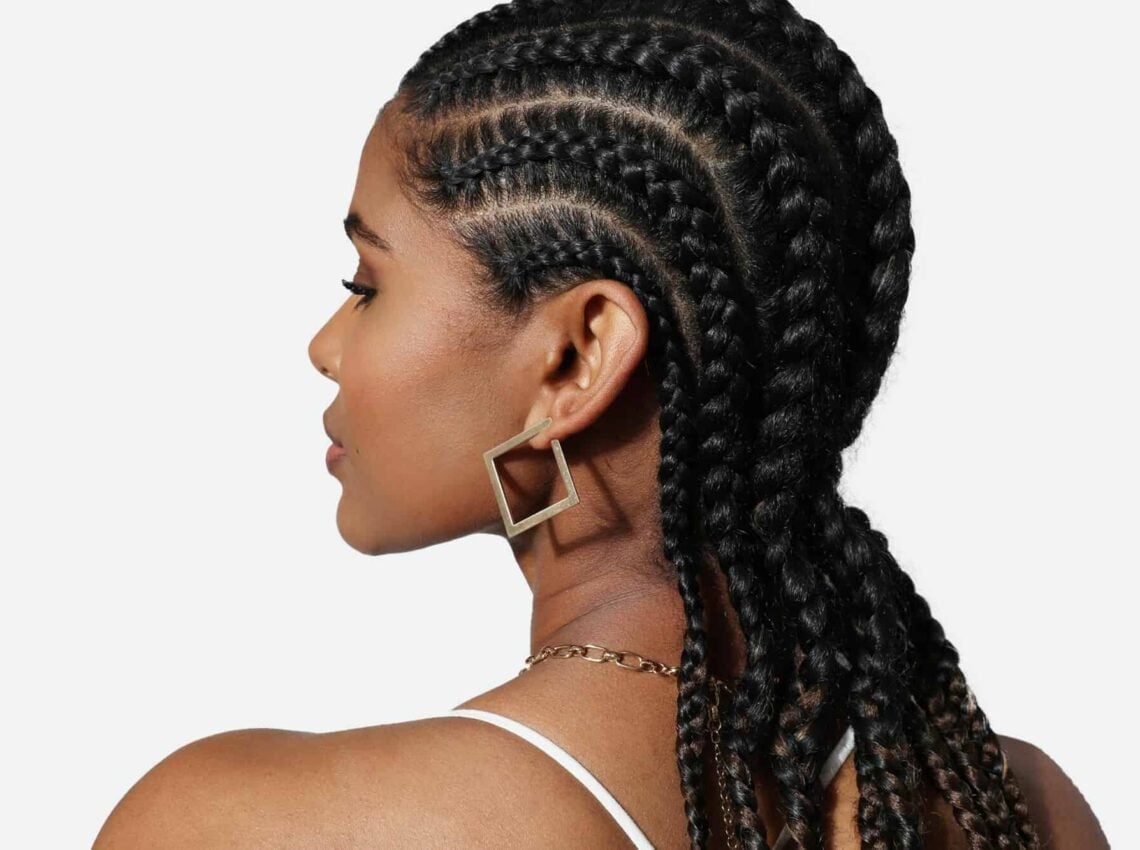
Clean partings demand precision. Here the middle part runs straight from hairline to nape, and the cornrows follow without a single wandering row. The black base carries subtle brown undertones that catch the light, not a full highlight but a quiet depth. Thick, coily hair gives the braids body and keeps the part crisp. Tell your stylist: neat cornrows, subtle brown undertones, clean parting. A scalp oil along the part stops dryness before it starts. Not for those after vibrant color.
Defined scalp braids with intricate braiding pattern
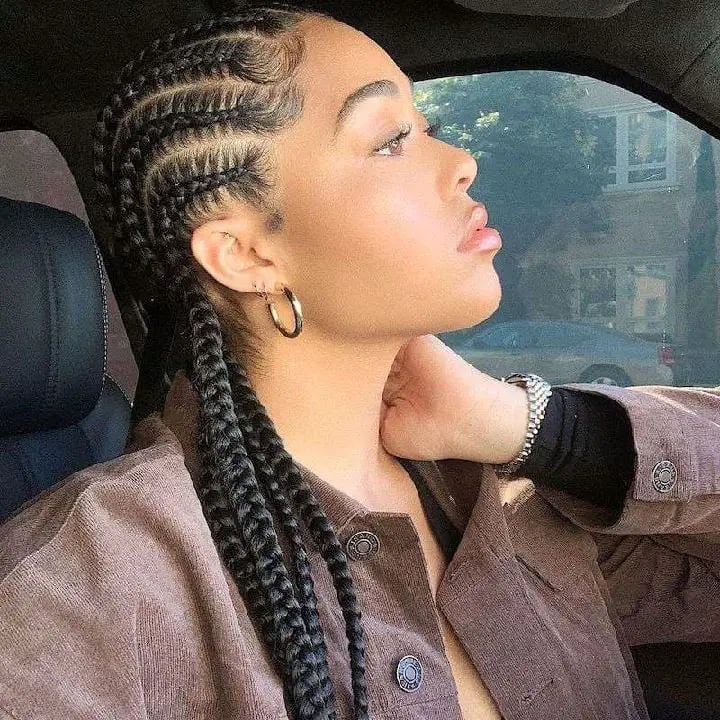
The effect is a highly structured finish with visible texture. Thick, coily hair works best here because each braid needs enough grip to stay raised. Avoid pulling or tugging at the braids to keep the pattern from loosening early. The hold is solid for weeks.
Artistic swirls frame the hairline with precise black cornrows
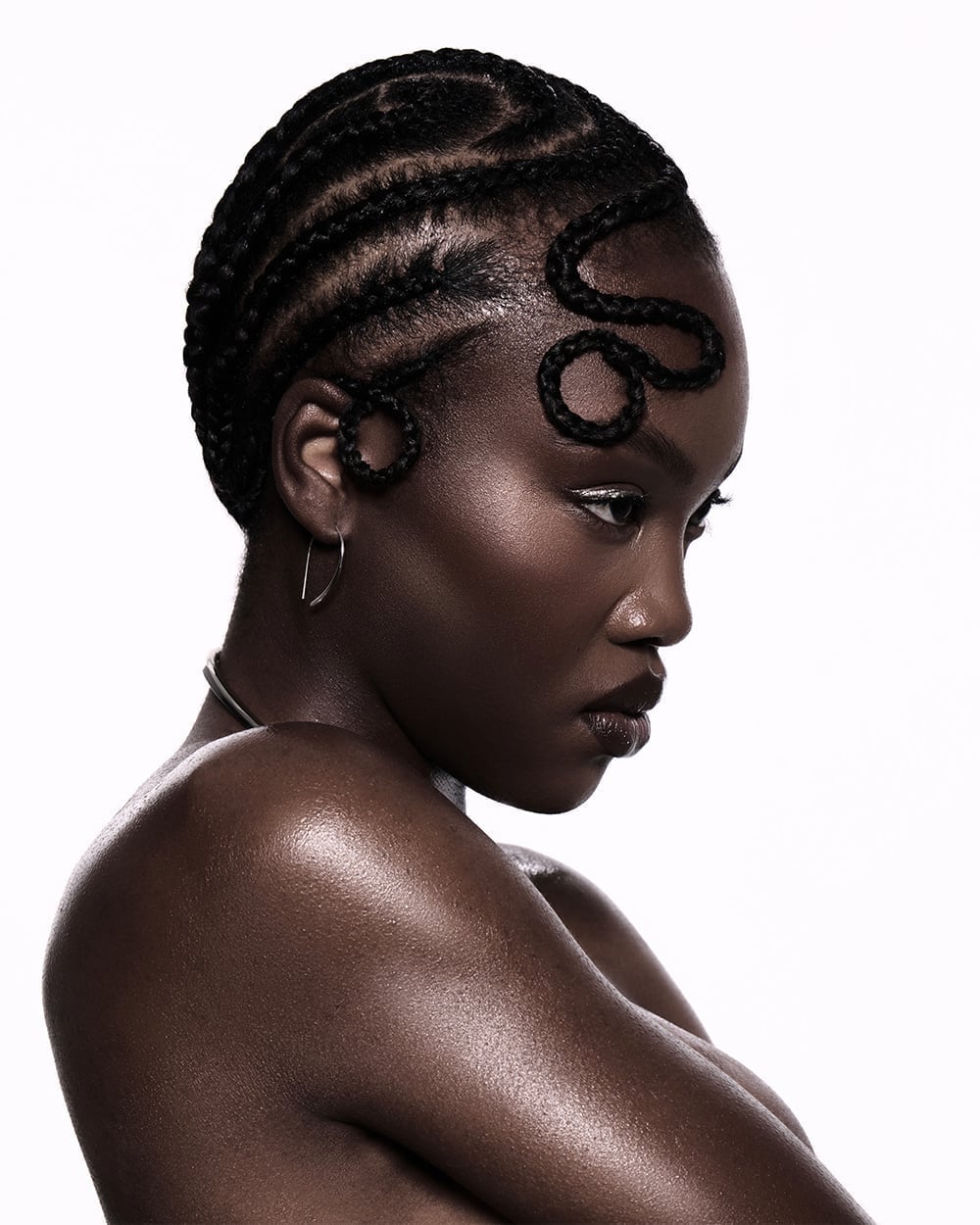
Decorative braided swirls change the geometry around the face. The center part is clean and straight, but the hairline gets sculpted curves that curve inward toward the temple. Thick, coily texture keeps the swirls defined without slipping. Straight cornrows run back from the part, so the overall line stays orderly even with the decorative work. Tell your stylist: cornrows with decorative braided swirls. A touch of edge control keeps the swirls smooth between washes.
Cornrows leading into a high ponytail with face-framing braids
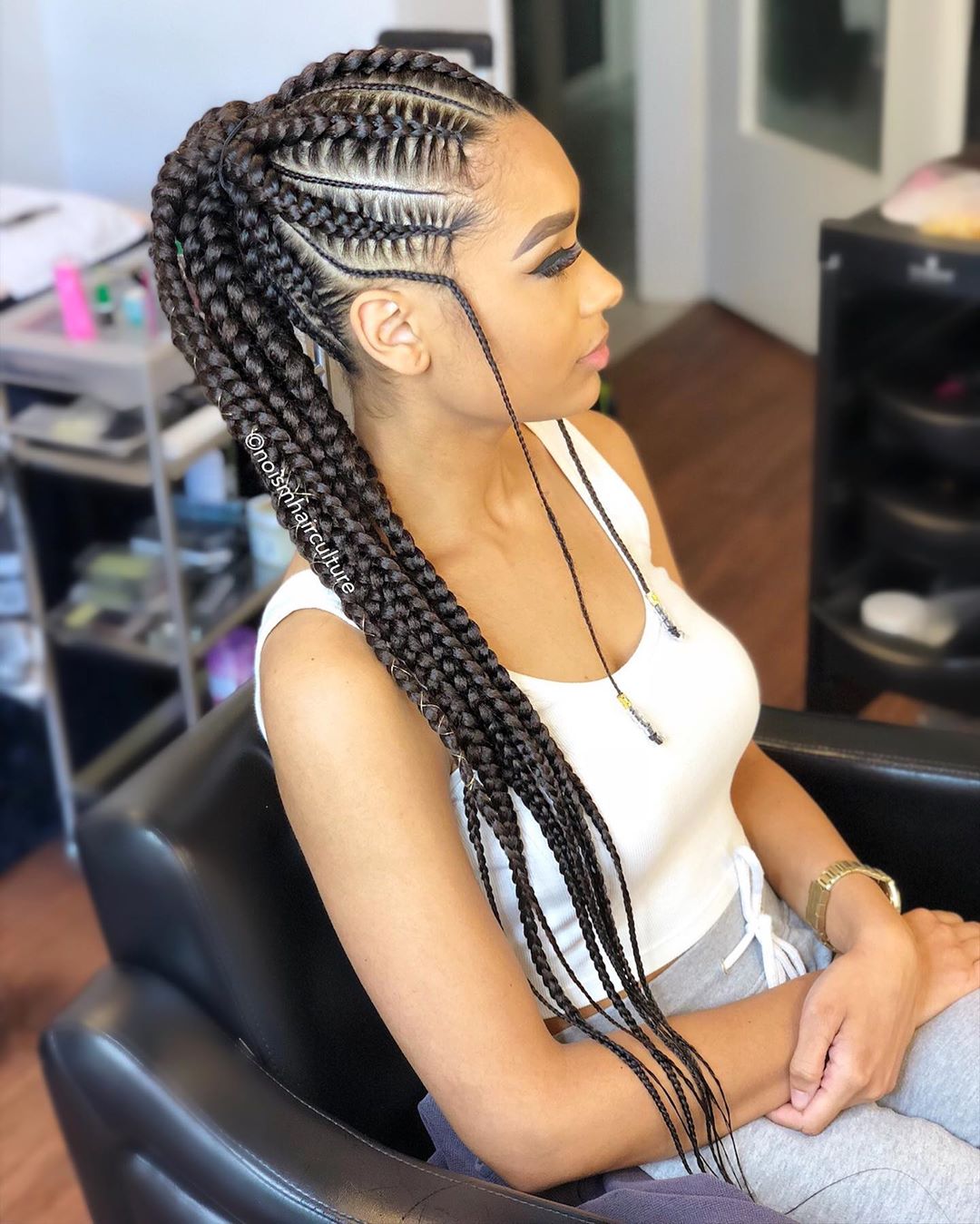
A centered part gives the cornrows a symmetrical base. They run straight back and gather into a high ponytail that drops thickly past the shoulders. A few loose braids break the line and frame the face on each side. Thick, coily texture supports the weight of the gathered ponytail without strain. Wrap a braid around the elastic base to hide the band. The ponytail holds its shape all day.
Sleek black cornrows styled into a neat bun at the nape
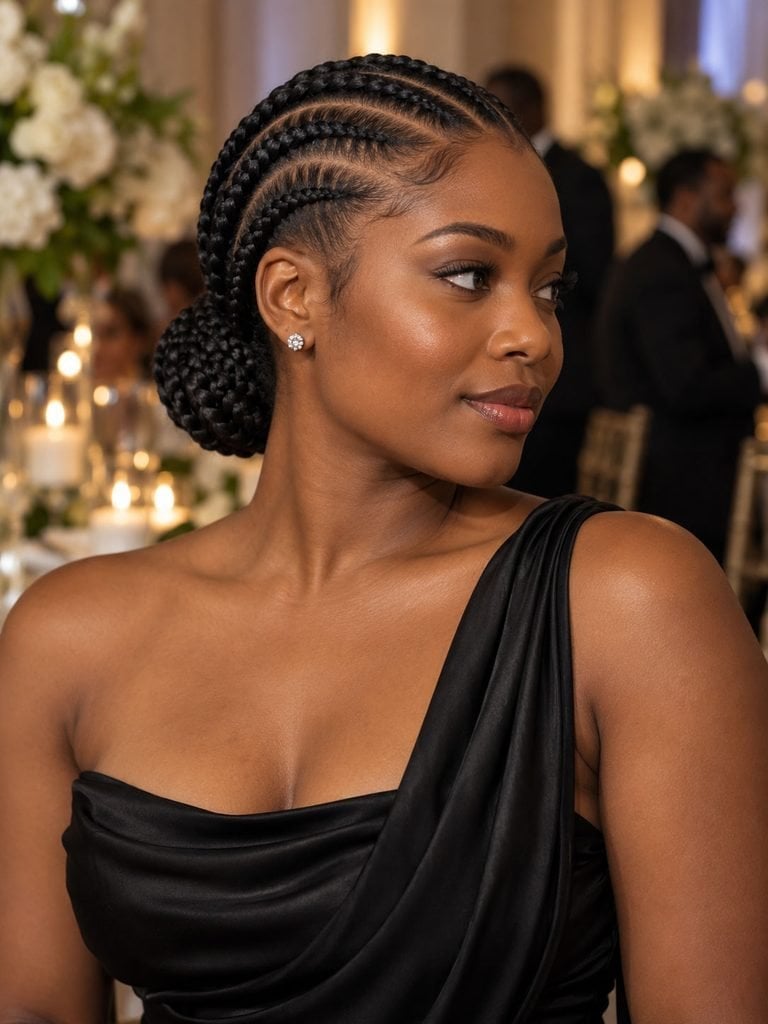
Between a nape bun and a crown bun, the nape version sits lower and appears more formal. Thick, tightly woven black cornrows travel from the hairline straight back into a neat coil at the nape. The middle part keeps the braids symmetrical. You need thick, coily hair for the density to hold the bun without gaps. A few bobby pins around the bun base keep stray ends invisible.
Brown and blonde highlights blend into a large braided bun
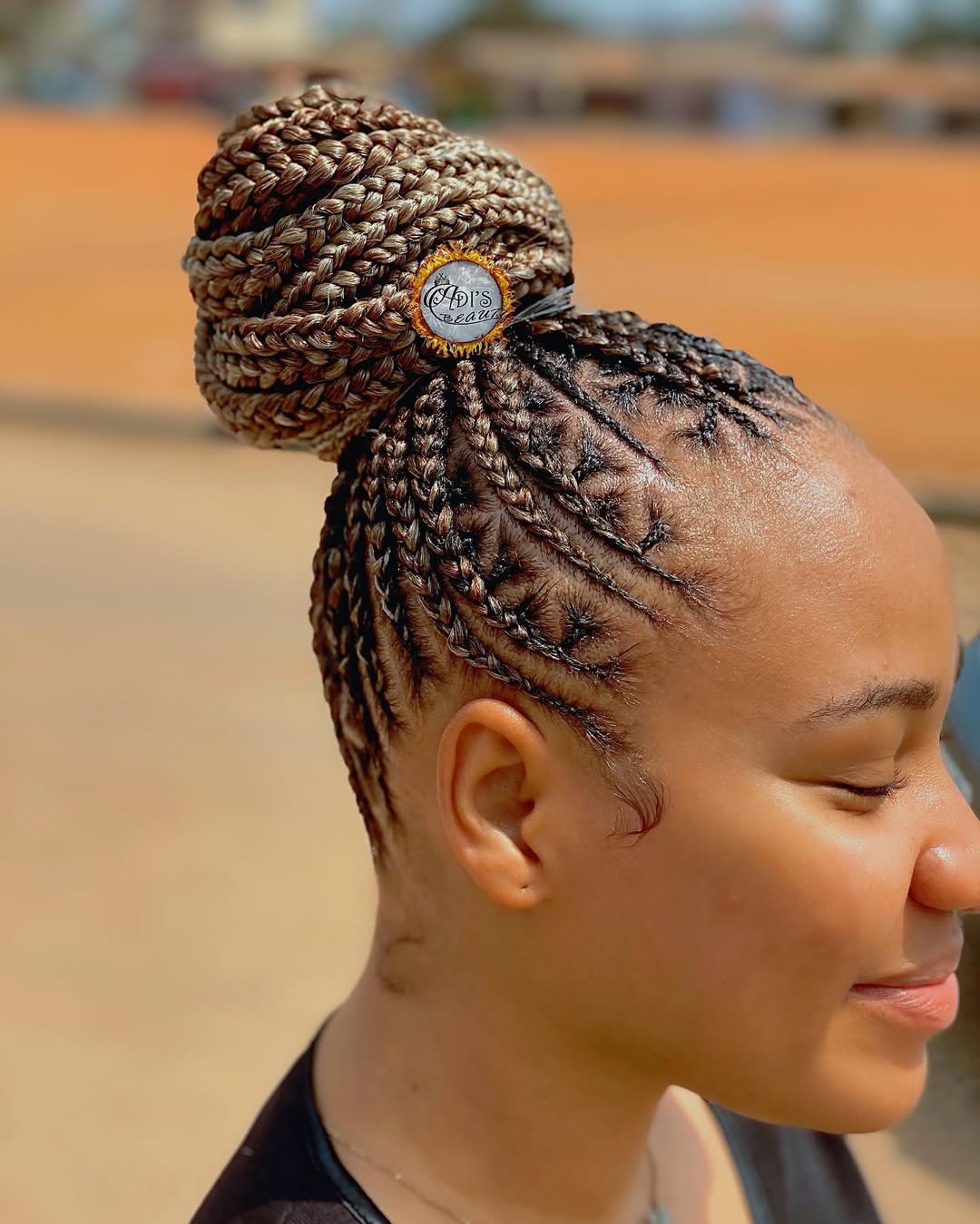
The size of the bun does the talking here. Cornrows feed into a voluminous braided shape secured at the crown, and the brown and blonde highlights prevent the mass from looking one dark block. A decorative accessory sits at the bun center; it is the one piece that asks to be noticed.
Thick, coily hair gives the bun its width. Ask your colorist for: brown and blonde highlights. The strands need to be long enough to wrap into that scale. A smaller, more understated shape or no added color is an alternative. Secure the bun with firm pins and check the accessory placement before you leave the chair.
Defined cornrows leading into a braided updo with loose tendrils
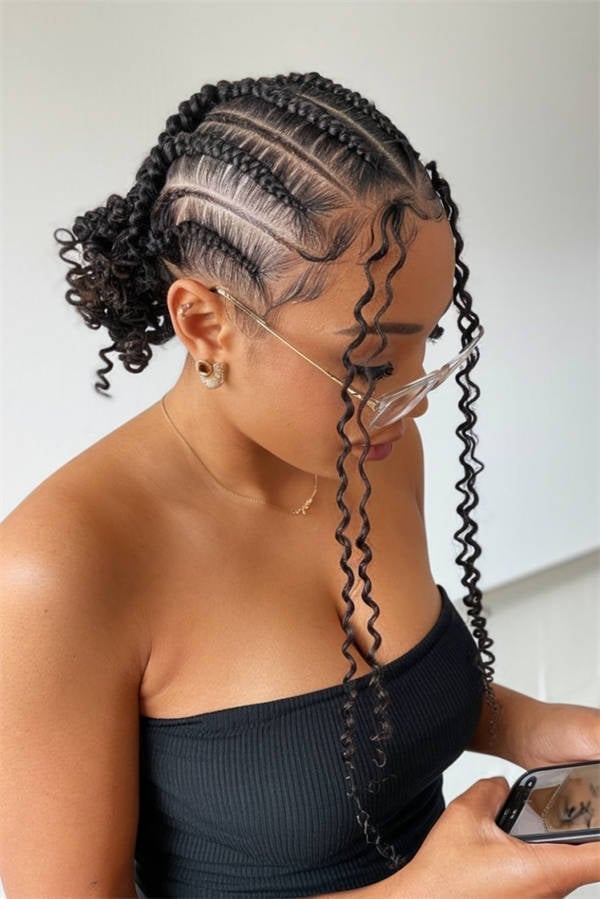
A centered parting and defined cornrows lead into a braided updo at the back. The loose, curly tendrils left out around the face are the part that softens the whole structure. Baby hairs are laid along the hairline for a clean finish. Misting the tendrils with hairspray holds their curl without making them stiff. Thick, coily hair works best for this contrast between sleek braids and soft texture.
Cornrows styled into a high ponytail with long straight strands
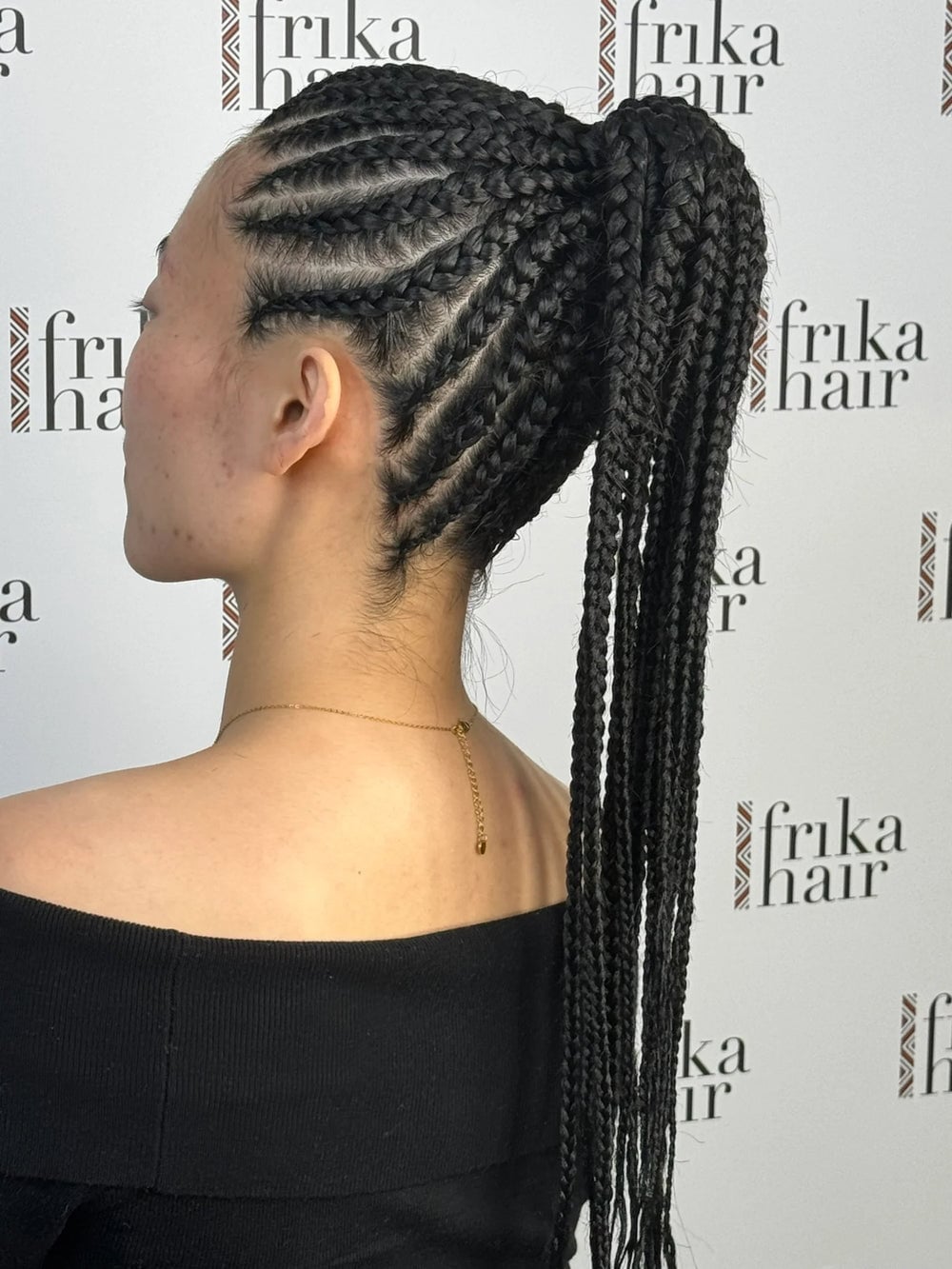
A geometric pattern across the scalp can look sharp, but the common mistake is letting the ponytail attachment feel separate. The cornrows here feed directly into thick, straight strands that fall past the shoulders, so the transition is one continuous piece. The middle part and black color keep the lines clean.
Thick, straight hair holds the smooth texture best. Ask your stylist for: cornrows into a high ponytail with long straight strands. Not for very coily textures that resist a straight finish; the braided scalp and the straight fall look disjointed. The ponytail needs a smoothing product to control flyaways.
Cornrows on the sides leading into a voluminous top knot
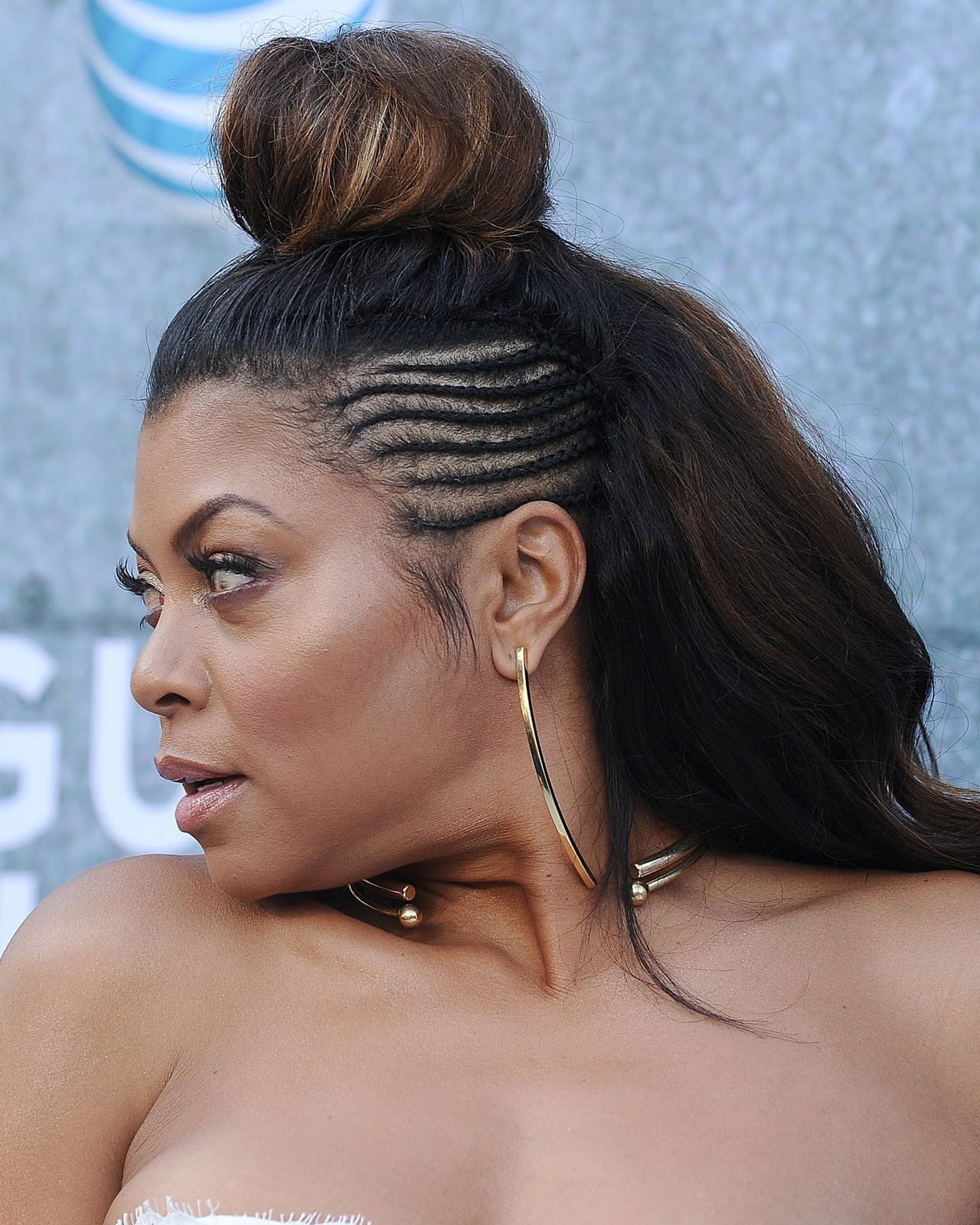
Intricate cornrows braided along both sides of the head create a structured frame that narrows toward the top knot. The knot sits high, and its volume contrasts with the flat braided sides. Dark brown hair carries subtle blonde highlights. Thick, coily hair gives the top knot the fullness it needs. This style is salon leaning because intricate braiding requires skill.
One swirling pattern across the scalp with thick coily hair
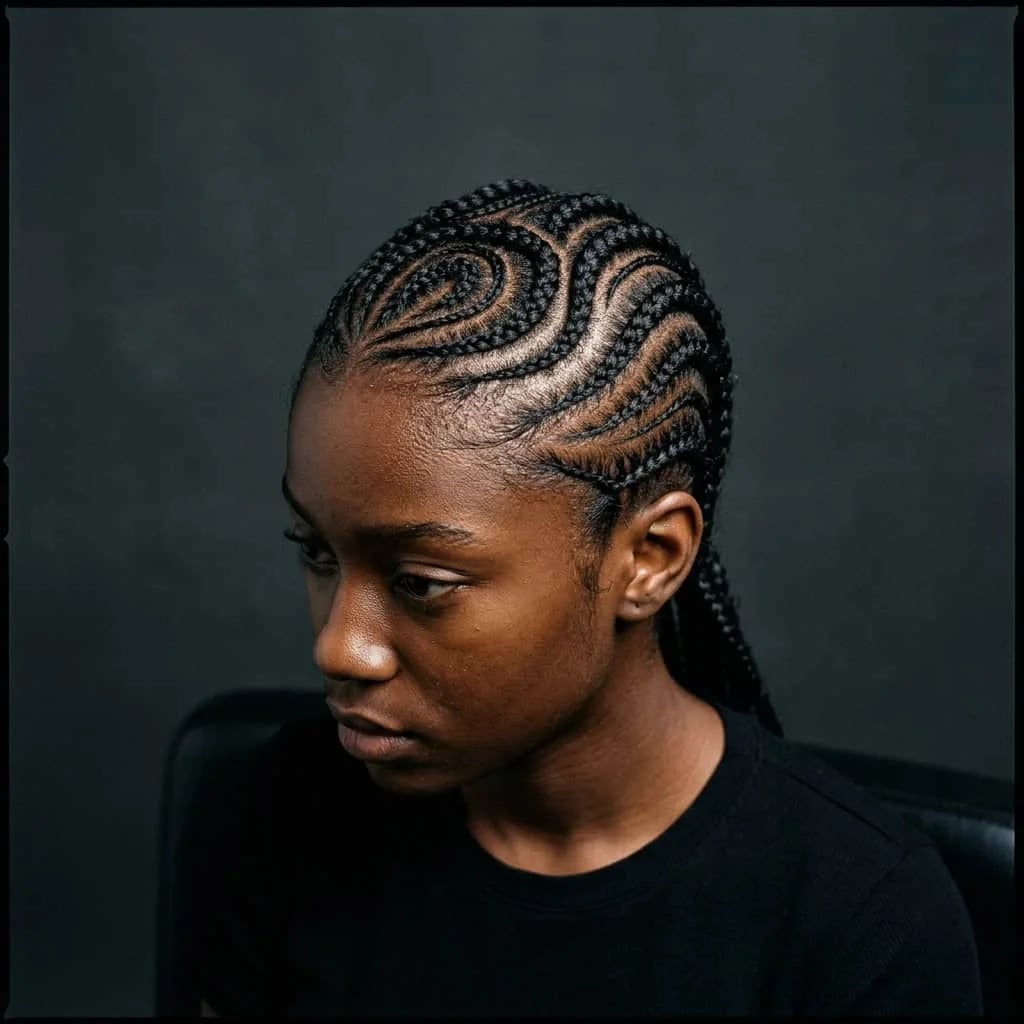
A single swirling pattern covers the entire scalp, no breaks in the flow. Thick coily texture holds the curve without frizz, so the design reads clearly from every angle. It suits round and oval face shapes best, the concentric lines draw the eye inward. Ask your tech for: cornrows in a swirling pattern.
Geometric cornrow patterns flowing into thick coily braids
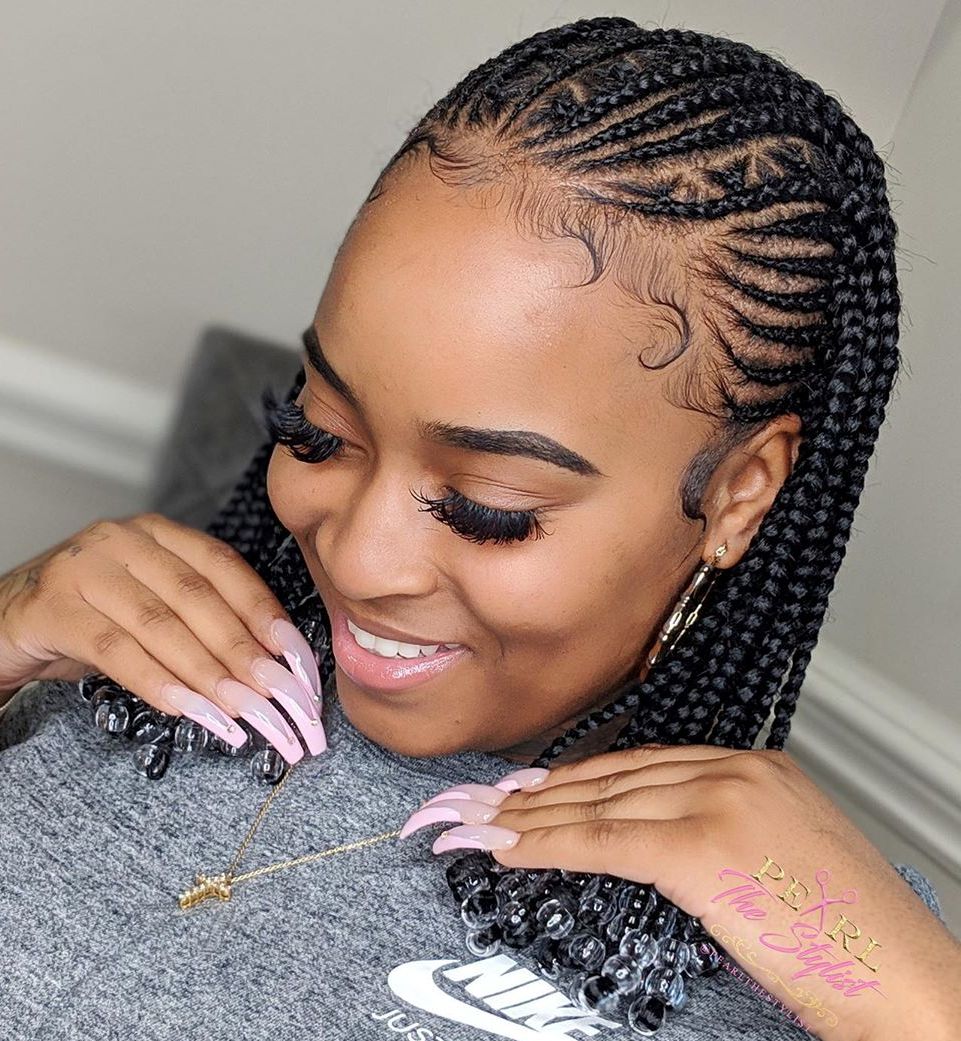
This one genuinely flatters long face shapes. The geometric pattern at the crown adds horizontal width, while the thick coily braids falling past the shoulders balance the vertical line. A middle part keeps everything symmetrical. Skip it if your hair is fine or thin. The sharp angles rely on density to hold their structure.
Two large braids falling down the back with cropped sides
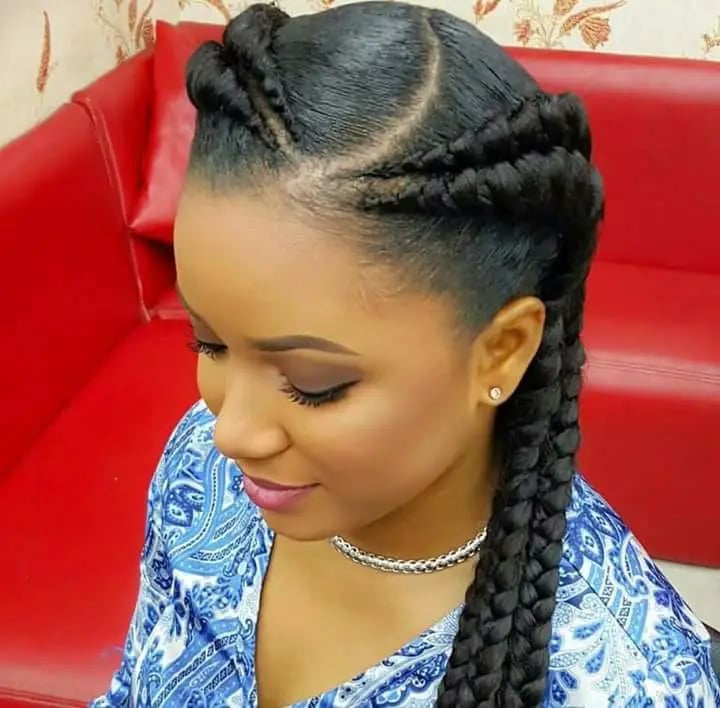
Cropped sides mean less braiding time, but they also mean a trim every three weeks to keep the contrast sharp. The curved cornrow detail on top transitions into two thick braids that fall past the shoulders. Coily texture grips the braid well, so the ends stay sealed without extra product. A middle part keeps the front tidy. The catch: once the sides grow out a quarter inch, the whole look softens.
Sleep on a satin scarf to preserve the braids and the cropped line. Styling takes about five minutes, just lay the edges and go.
One geometric pattern radiating from the crown with sharp lines
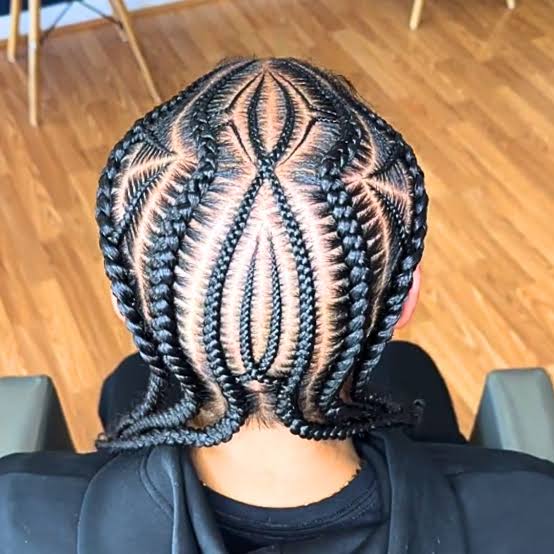
The mistake most people make is letting the pattern get muddy. This look requires tight braiding from the crown outward so each line stays distinct. Thick coily texture is ideal. It holds the angle without slipping. A middle part anchors the symmetry. The precision fades as new growth appears, so this style is best for a shorter wear time. Ask your stylist for: geometric cornrow pattern from the crown.
Swirling cornrow pattern with neatly laid edges and curls
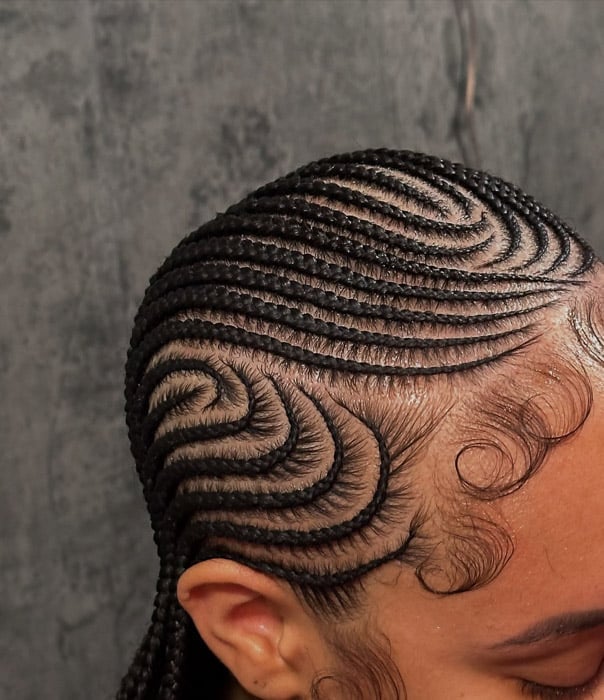
The swirl pattern needs a skilled hand, uneven tension will distort the curve. Thick coily hair keeps the braid raised off the scalp, which makes the pattern more visible. The drawback: laid edges this precise need a refresh every two to three days. A side profile shows the full sweep of the design, so the parting should be clean from ear to ear.
Braiding neat, evenly spaced cornrows from front to back
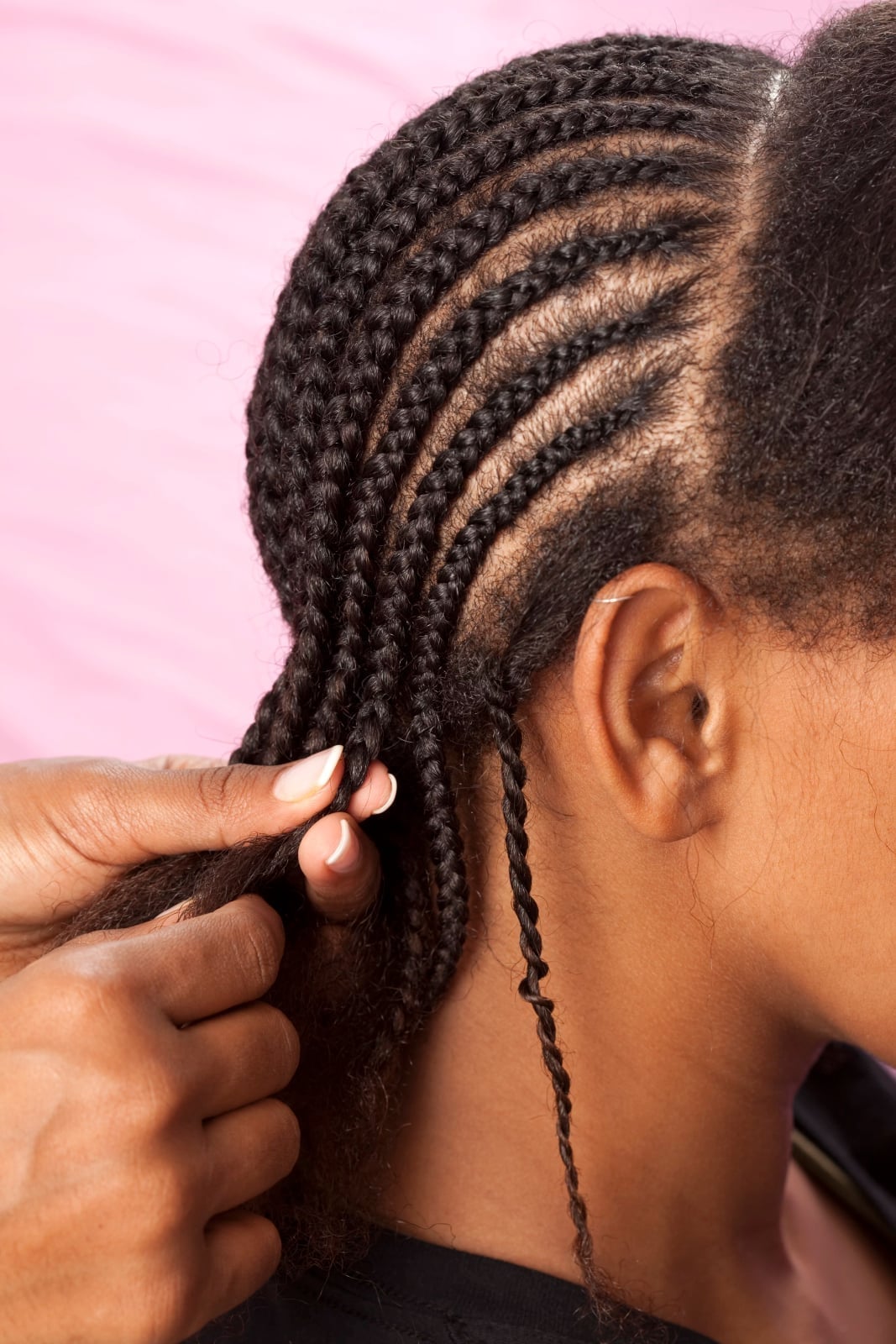
Neatly sectioned cornrows demand precision before the first braid even starts. The deep black color and thick, coily texture hold the pattern cleanly, each row running straight from front hairline to nape with a middle part dividing the work. Skip this look if you prefer intricate swirls or added accessories, the appeal lives in the geometry itself. Ask your stylist for: neat evenly spaced cornrows, middle part. Upkeep means checking the scalp for tension every few days and sleeping with a satin scarf to preserve the part lines.
Final Thoughts
Pick your next set by how much time you want to spend in the chair and how long you want the style to last.
- Fine hair: choose small, tight sections to avoid slippage.
- Ten minutes in the morning: a straight-back style with laid edges.
- Intricate pattern: budget an extra hour for the parting.
- Four-week wear: cornrows that lead into braids or a ponytail.
Cornrows offer endless creative possibilities for protective styling.